
HEALTH
Juno Bio Bets $3.8 Million on Its Own Vaginal Health Lab
Juno Bio raised $3.8 million and opened a CLIA-certified lab in Oakland to run its clinical vaginal microbiome and STI testing in-house.

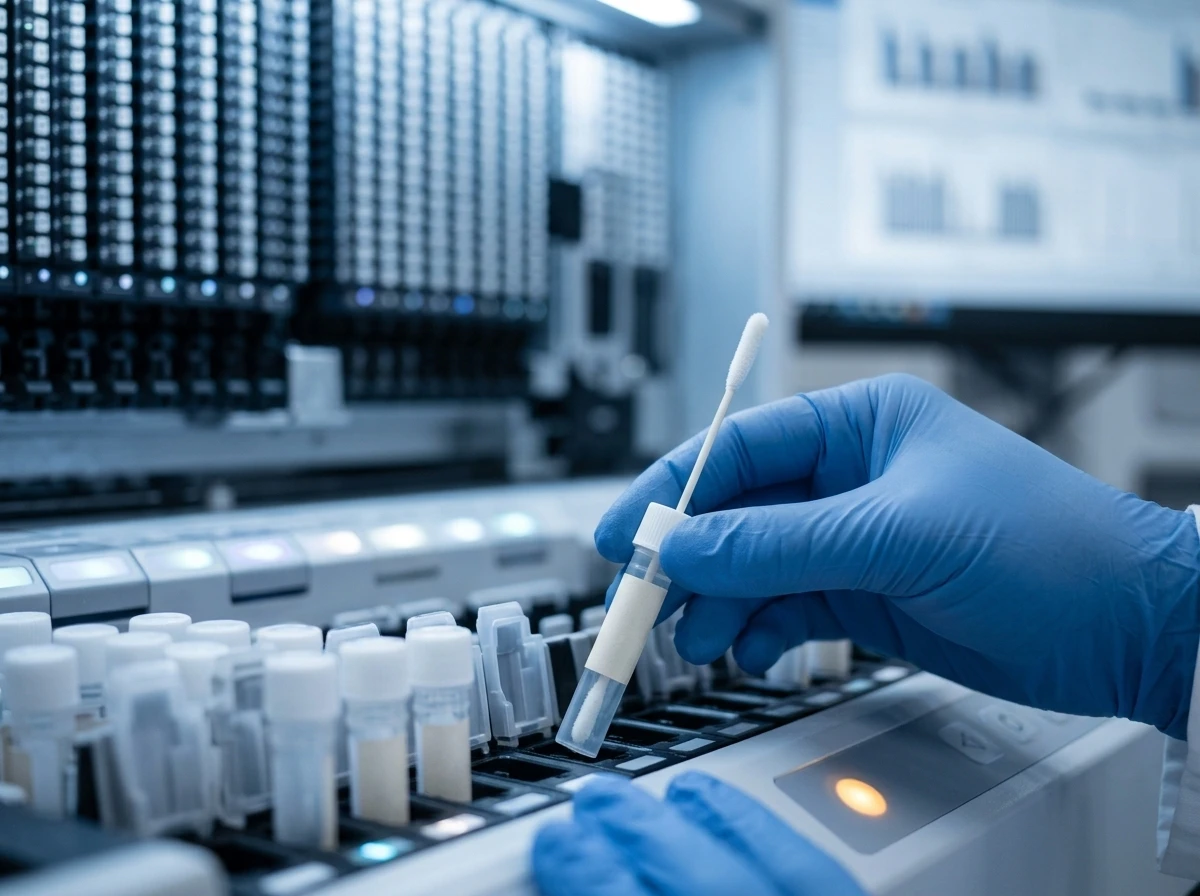
Juno Bio has raised $3.8 million and switched on its first in-house sequencing lab, a CLIA-certified facility in Oakland, California, built only to test the vaginal microbiome. CLIA, the Clinical Laboratory Improvement Amendments, is the federal standard a lab must meet before its results can inform real patient care.
The London-founded startup’s new test screens roughly 10,000 species of bacteria and fungi alongside four sexually transmitted infections (STIs), all processed under one roof for the first time. Juno Bio is betting that owning that lab, and the data it generates, is what turns vaginal microbiome science into everyday clinical care.
The Guesswork This New Lab Is Built to End
A vaginal infection normally gets diagnosed in minutes: a swab, a look under a microscope, sometimes a pH strip. Juno Bio’s new test replaces that with next-generation sequencing, reading the full microbial community in a sample instead of checking for a handful of known culprits.
Dr. Leighton Turner, the company’s co-founder and chief science officer, said, “The vaginal microbiome is still one of the least understood systems in the body at a clinical scale.”
The platform is built to flag co-infections and subclinical patterns a standard exam misses, then combine that with symptoms and clinical review to help sort out bacterial vaginosis, yeast infections, aerobic vaginitis, cytolytic vaginosis and estrogen-related changes.
The company’s own numbers explain why that distinction matters. Before switching to Juno Bio, 67.5% of customers had been misdiagnosed, underdiagnosed or overdiagnosed, and only 13% had been successfully treated. Roughly half had co-infections that conventional testing missed entirely.
A peer-reviewed review in Frontiers in Cellular and Infection Microbiology has linked vaginal microbial imbalances to conditions well beyond infections, including a higher likelihood of polycystic ovary syndrome and early signals of endometrial cancer.
Seven Years from a Swab Study to a Sequencing Lab
Juno Bio’s path to its own lab took most of a decade.
- 2018: Hana Janebdar and Dr. Leighton Turner found Juno Bio in London, aiming to build a dataset around a body system mainstream diagnostics had largely ignored.
- 2019: More than 1,000 women across the United States join what the company called the Juno Study, gathering samples to seed one of the field’s larger vaginal microbiome repositories.
- 2020: Juno Bio launches its first at-home wellness kit, advised by a former NIH Human Microbiome Project investigator, with the test described at launch as intended for wellness purposes only.
- 2026: The company opens its Oakland CLIA lab and raises $3.8 million to launch a clinically actionable version of the test.
The company has sold more than 20,000 tests since that first launch, all before this year’s clinical version existed.
Four Investors Betting on the Vaginal Microbiome
The round was led by Ada Ventures, with participation from Artesian, Entrepreneur First and Illumina Accelerator.
- Ada Ventures – the lead investor, built around backing founders in overlooked markets.
- Illumina Accelerator – tied to Illumina, the sequencing equipment maker whose technology underpins the new lab.
- Entrepreneur First – the London program that helped Janebdar and Turner start the company in 2018.
- Artesian – a venture firm rounding out the syndicate.
Ada Ventures itself was built by Francesca “Check” Warner and Matt Penneycard around a thesis of funding overlooked founders. The firm’s debut $34 million fund counted Juno Bio among its earliest bets, backing what it described at the time as a project to decode the vaginal microbiome and improve IVF success.
What they’ve built at this stage, with this level of capital efficiency, is exceptional.
Check Warner, co-founding partner at Ada Ventures, made that case for the round. Hana Janebdar, the company’s founder and chief executive, framed the raise as fuel for expanding access to care and continuing the company’s work on closing the gender health gap.
Juno Bio Is Racing Evvy and Daye for the Same Niche
Juno Bio is not the only company sequencing this territory.
| Company | Headquarters | Funding Raised | Reported Scale |
|---|---|---|---|
| Juno Bio | Oakland lab; founded in London | $3.8 million in this round | 20,000+ tests sold; about 10,000 microbial species screened per test |
| Evvy | New York | $19 million to date, including a $14 million Series A led by Left Lane Capital | 75,000+ patients and 2,000+ providers as of October 2025 |
Daye, a third rival, is pursuing the same problem through tampon-based sample collection rather than a swab. Evvy and Daye both lean toward consumer wellness and virtual care. Juno Bio is positioning its lab as clinical infrastructure that pharmaceutical researchers and providers can build on.
Is Vaginal Microbiome Science Ready for the Clinic?
Not entirely, according to independent reviewers. Sequencing can spot microbial patterns a standard microscope exam cannot, but the field still lacks standardized lab methods, agreed reference ranges, and enough proven treatments to act on an unusual result. Juno Bio’s own medical advisors sound more confident about that gap closing than outside reviewers do.
Dr. Anna Powell, a Johns Hopkins physician who serves as a Juno Bio medical advisor specializing in reproductive infectious disease, said, “Vaginal microbiome testing has the potential to significantly reshape how we understand and manage vaginal health.”
A review published by the physician-facing outlet MDLinx found a lack of standardization across laboratories and minimal regulatory oversight of the category. One physician quoted there, Dr. Ensign, said the field still lacks much available research for “meaningfully changing the vaginal microbiome composition in a robust manner.”
A separate review, co-authored by the UK’s Medicines and Healthcare products Regulatory Agency (MHRA), found the vaginal microbiome could dramatically improve outcomes for millions of women, reaching a similar verdict in 2025: real promise, thin evidence.
- Dr. Anna Powell (Juno Bio medical advisor, Johns Hopkins) sees sequencing as a complement to diagnosis for recurrent or unexplained symptoms.
- Dr. Ensign (quoted by MDLinx) warns the field still lacks reliable ways to act on an abnormal result once it turns up.
- The MHRA-co-authored review calls the vaginal microbiome under-researched relative to the impact it could have on women’s health.
Women’s Health Still Gets a Sliver of Investment
Juno Bio’s raise lands inside a market that is only just recovering. Women’s health venture funding in the US saw a $1.2 billion pullback in 2025, according to Silicon Valley Bank (SVB), though early signs point to a rebound this year.
The gap looks structural. Women’s health has historically captured just 6% of private healthcare investment, despite women making up about half the population, according to the World Economic Forum’s 2026 outlook.
The broader precision medicine market Juno Bio is entering keeps growing regardless. Grand View Research projects it will expand from around $112 billion in 2025 to more than $207 billion by 2030. The $3.8 million round is modest next to that total, and smaller than several rounds already closed by rival women’s health platforms.
Frequently Asked Questions
What Does Juno Bio’s New Clinical Test Check For?
The test screens for roughly 10,000 species of bacteria and fungi alongside four common sexually transmitted infections, all processed in Juno Bio’s own CLIA-certified lab in Oakland. Combined with a clinician’s review, it is designed to help sort out overlapping conditions such as bacterial vaginosis, yeast infections, aerobic vaginitis, cytolytic vaginosis and estrogen-related changes rather than flag just one culprit at a time.
How Is This Different from a Standard Test at a Doctor’s Office?
Conventional clinical diagnosis of bacterial vaginosis still leans on decades-old methods such as Amsel’s criteria or the Nugent score, which grade a sample under a microscope for a handful of visible markers. Sequencing instead reads the full microbial community in a sample, which is how Juno Bio says it catches co-infections a single-target test would miss.
Who Founded Juno Bio, and When?
Hana Janebdar and Dr. Leighton Turner founded the company in London in 2018, backed early on by the startup program Entrepreneur First. Janebdar is chief executive; Turner, who holds a doctorate in molecular genetics, is chief science officer.
Is Vaginal Microbiome Testing Considered Scientifically Validated?
Not fully. Independent reviewers, including a review flagged by MDLinx and a separate assessment co-authored by the UK’s MHRA, describe the field as promising but still short on standardized lab methods and proven follow-up treatments. That does not mean the tests are meaningless, only that results are best read alongside a clinician rather than on their own.
How Does Juno Bio’s Funding Compare with Rivals?
At $3.8 million, Juno Bio’s round is smaller than Evvy’s $19 million raised to date, which included a $14 million Series A led by Left Lane Capital. Evvy has said it now serves more than 75,000 patients and 2,000 healthcare providers, a scale Juno Bio’s clinical arm is only beginning to build toward.
Can Patients Access the New Test Now?
Juno Bio says the clinical test is reaching patients through telehealth and pharmacy integrations alongside its network of medical advisors, rather than as a straight consumer purchase. The company has not published a retail price or insurance coverage details for the clinical version.
Disclaimer: This article is for informational purposes only and does not constitute medical advice. Vaginal microbiome testing is an emerging diagnostic category; readers with health concerns should consult a licensed clinician. Figures are accurate as of publication.


Flower Labs Puts Endeavor 1.0 on Customer Servers

Cummins Bets on Emerald to Scout the Next Power Shift

Holifya Raises €2 Million to Wrap Italy’s GLP-1 Care

INLEAP Photonics Places a Factory Bet on Laser Defences

Instarc Takes €1.25 Million After a Quiet July Recap

nordIX Bets €21 Million on ID Finance’s Spanish Loans

Space Cargo Buys Into France’s Zero-G Flight Company

The $399 Omni Walks Away, Then Asks for a Dock

TECNO’s 0mm Bezelless Phone Still Needs a Rim

The Ryobi Tools That Unblocked a Garage Workbench

30-Year Yield Hits 5.32% Highest Since 2007 as Debt Supply Locks In Costs

Walter’s TWG Insists No Fraud as Insurer Probes Force Cleanup

Strategy Parks $1.59B Cash While Bitcoin Stack Stays Flat

Astute’s $1.2M bet makes B2B creator deals feed AI discovery

PCE Stays at 3.7% as Gas and Tariffs Outrun Coming Revisions

SpaceX Stock Rebound Tests Real Demand Before Huge Unlock

The 20% Savings Ideal Meets a 2.7% Reality Check

Amber’s €7M locks Mittelstand knowledge inside Europe

Monzo chair Gary Hoffman exits after board revolt fallout

Nvidia’s $16,000 RTX Pro 6000 Turns Local AI Into a Luxury
-
 FINANCE3 months ago
Zcash Patched a Double-Spend Bug as ZEC Climbed 5%
-
 ENTERTAINMENT3 months ago
Steam Summer Sale 2026 Locks In June 25 to July 9 Dates
-

 FINANCE2 months ago
CLARITY Act Final Text Expected This Weekend as 60-Vote Hurdle Looms
-
 NEWS4 months ago
Meta Adds AI Replies to Threads, But Users Can’t Block It
-

 NEWS3 months ago
YouTube Shorts is testing a heart in place of the thumbs-up
-

 NEWS1 month ago
Senators Force Apple Off Chinese Memory as Big Three Cash In
-

 NEWS3 months ago
NEURA Robotics’ $1.4B Series C Redraws Europe’s Physical AI Bet
-
 ENTERTAINMENT5 months ago
Extraction 3 Is Officially Coming to Netflix in 2027