
BUSINESS
Europe’s Omnichannel Retail Boom Is Leaving Small Shops Behind
Eurostat and OECD data show big European retailers unifying stores and apps while most small shops still run on paper, widening a two-speed retail market.

EU retail trade grew 1.9% in May compared with a year earlier, Eurostat reported on July 6, and that growth barely stays inside one channel anymore. Shoppers check prices on a phone while standing in a store aisle, then finish the purchase wherever it lands cheaper or faster.
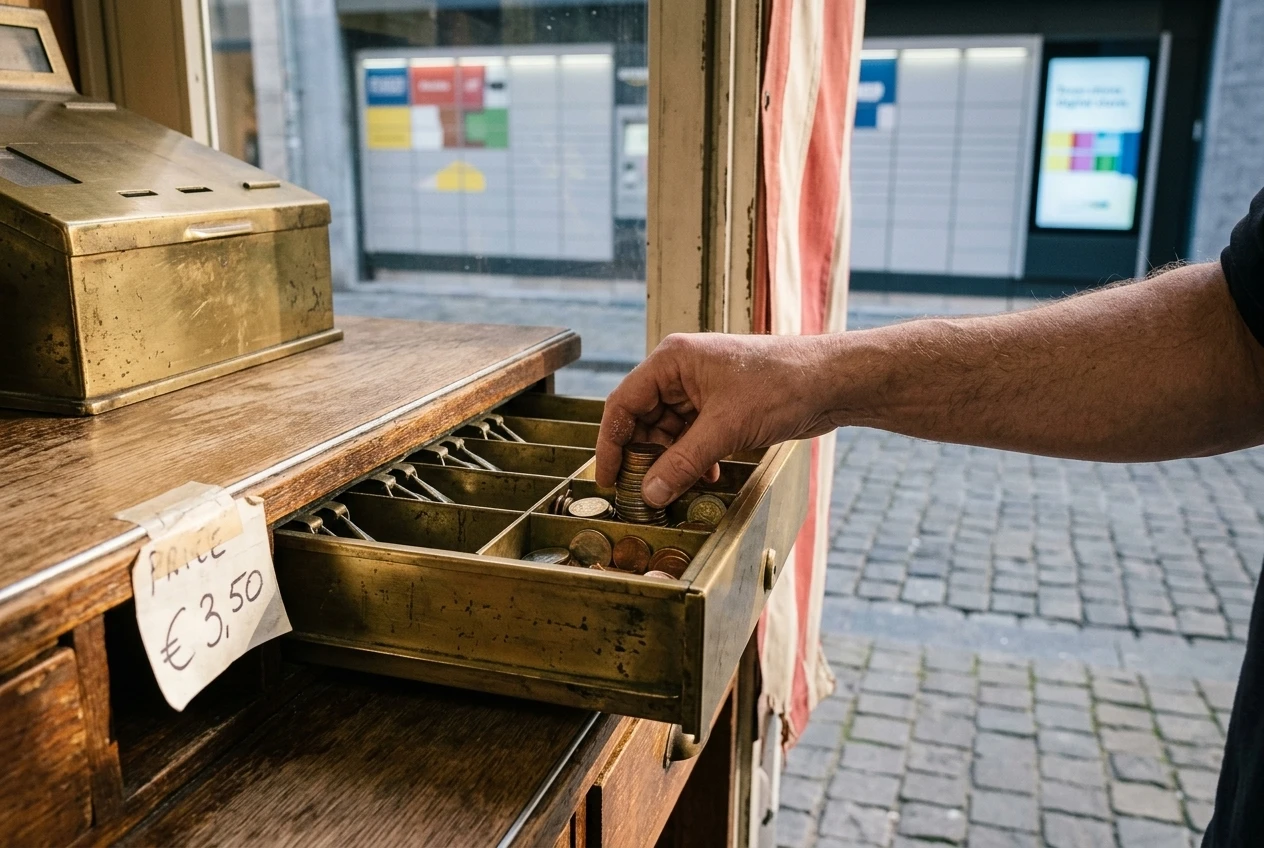
That fluid behavior rewards retailers with the systems to track it and punishes those without one. Zalando, Inditex and Decathlon have spent the past two years fusing their stores and apps into single operations. Most of Europe’s small shops still run on a till drawer and a notebook.
Stores Still Win the First Look
Physical stores remain where most shoppers notice a product first. A 2026 consumer study from product content firm Salsify found physical stores are the top discovery channel for 60% of shoppers, ahead of online marketplaces at 57% and social media at 52%. The survey covered shoppers in the United States, the United Kingdom and Canada rather than the EU specifically, but the behavior it describes matches what European regulators track separately.
The same research found 67% of shoppers webroom, researching a product online before buying it in a store, and 53% showroom, testing something in person before ordering it online later. Neither figure has moved much in years. What changed is the speed of the phone already in a shopper’s hand.
Eurostat’s own numbers back the direction, even if the split looks different. Retail trade volume rose 0.5% across the EU in May from April, a second straight month of gains after an April dip. Online buying keeps climbing without brick-and-mortar stores losing their grip on that first look.
Zalando, Inditex and Decathlon Rewire the Back End
The retailers pulling ahead share one habit: they stopped treating the store and the website as separate businesses. A market analysis of Europe’s omnichannel retail adoption lays out how far that rewiring has already gone at some of the continent’s biggest names.
- Decathlon has extended in-store pickup and return service across France, Germany and Spain, cutting delivery times and logistics costs while pulling more foot traffic into stores for cross-selling.
- MediaMarktSaturn runs unified pricing and inventory visibility across its European electronics stores and its e-commerce platforms, so a shopper sees the same price and stock count wherever they look.
- Marks and Spencer has integrated its UK food halls with its online grocery platform, letting customers order digitally and collect from a nearby store.
- Inditex runs a centralized stock system across its European markets that gives real-time inventory visibility to stores and online channels alike, supporting ship-from-store during seasonal transitions.
- Zalando has poured investment into return logistics across Germany and Poland to manage cross-border volume in fashion, one of the categories where returns run highest.
That kind of integration costs real money, and it is becoming the entry price for competing at scale rather than a nice extra.
The Size Gap Eurostat Can’t Hide
Eurostat’s enterprise survey, which covers every sector rather than retail alone, still draws the divide in plain numbers. Looking at 2024 e-commerce activity broken down by company size, the gap between large and small firms shows up in both participation and revenue.
| Enterprise Size | Share Making E-Sales | Share of Turnover From E-Sales |
|---|---|---|
| Large enterprises | 48.48% | 24.24% |
| Medium enterprises | 31.67% | 15.41% |
| Small enterprises | 21.38% | 8.65% |
A large company is more than twice as likely as a small one to sell online at all, and it earns close to three times the turnover share from doing so. Retail specifically skews even more lopsided, because the biggest names in the sector are also the ones with the deepest technology budgets.
Ninety-Three Percent of Europe’s Shops Are Tiny
Scale is the real divider, and most of European retail has very little of it. An analysis published through ecommerce agency scandiweb found 93% of European retail businesses employ ten people or fewer, with turnover under 2 million euros a year.
- 93% of European retail businesses have ten or fewer employees and turnover under 2 million euros.
- 14% of smaller European retailers had an in-house IT specialist as of 2020, a gap with years to widen since.
- $124 billion is the estimated global retail IT spend for 2026, climbing toward $172 billion by 2035, with Germany alone accounting for 22.5% of the European share.
- 22% median revenue decline hit small German online retailers in non-food categories since the third quarter of 2023, per Investing.com’s review of the same underlying data, with one in six calling their future uncertain.
That fragility is exactly the gap a startup called Retailgrid is betting money on, closing a €358,000 pre-seed round built around retail’s spreadsheet habit, wagering enough small shop owners will trade paper stock counts for software before the gap above turns permanent.
Why Did Every Aisle Become a Price Check?
Because a smartphone turns any shelf into a live price comparison, and shoppers now reach for it without thinking twice. That habit is squeezing margins hard enough that Deloitte’s 2026 retail outlook found most retailers responding with cheaper assortments rather than richer service alone.
Seventy percent of retailers surveyed by Deloitte plan to expand value-priced assortments this year, with stronger private-label ranges close behind as the next most cited growth move. Forty-six percent point to better omnichannel experiences as their top lever for adding value, and 36% lean on loyalty programs instead of discounting alone.
Both moves cost money to execute well: personalization software, loyalty platforms, private-label sourcing all take budget. That is where scale bites again. A chain with data on every customer across every channel can target a narrow discount at one shopper; a shop with a till and a notebook can only cut its price for everyone at once.
Brussels Tilts the Playing Field Too
Regulation adds a second axis to the divide, separate from technology budgets. An OECD study of retail small and medium enterprises found large retailers benefit from dedicated IT teams while many smaller firms still struggle with basic digitalization, even as digital adoption has measurably lifted productivity across the sector.
The same report found advanced digital technology raised output per hour worked in retail by 16.5% on average, and roughly 13.5% of EU enterprises had adopted some form of AI by 2024. Small retailers are moving too, just from further back, and closing that distance takes capital many of them do not have.
Eurostat publishes its June retail trade figures on August 6, the next test of whether the gap between Europe’s two retail speeds is narrowing or pulling further apart.
Frequently Asked Questions
What is the difference between omnichannel and multichannel retail?
Multichannel retail means a business sells through several separate channels, a store, a website, a marketplace listing, that mostly operate on their own. Omnichannel retail connects those same channels into one system, so inventory, pricing and customer history follow the shopper from one to the next instead of resetting at each door.
Which European countries shop online the most?
Ireland and the Netherlands lead the EU, with 95.3% and 94.4% of individuals making an online purchase in 2025, according to Eurostat. Italy (61.7%) and Bulgaria (57.0%) sit at the bottom of that ranking, a spread wide enough that no single EU-wide figure describes any one country well.
Why do non-EU marketplaces worry European regulators?
The OECD has flagged that some non-EU platforms sell goods that do not meet EU product standards, which regulators treat as unfair competition against compliant European retailers and a breach of the bloc’s Digital Services Act. That fight runs alongside the technology gap and adds to the pressure smaller EU sellers face.
How big is click-and-collect as a share of online sales?
In the United States, where the most detailed forecasts exist, click-and-collect sales are projected to make up 19.9% of multichannel e-commerce sales in 2026. Europe does not publish an equivalent bloc-wide figure, but retailers like Decathlon and Marks and Spencer are pushing a similar model through their own store networks.
Do small online retailers rely on their own website or on marketplaces?
Mostly their own site. Eurostat found that among small EU enterprises making online sales, 91.19% did so through their own website or app, while a smaller share used automated order systems tied to bigger trading partners. Owning that channel gives small retailers more control over price and branding, even if the volume behind it stays modest.


British Business Bank’s Zinc Fund Will Mint 80 Startups

Philips Hue IFA Gear Opens TVs and Gates the Hub

Souk Raises $1.6 Million for Its AI Partner Manager

Anthropic Bets on Cheaper Cache for Claude Fable 5.1

Food Processors Back Backbone’s €4 Million Quality Round

Scosche Bets IFA Shoppers Will Buy Fewer Charging Bricks

ELO Bets Sentinel XR Gaming Glasses at IFA Berlin

ShiftCam SuperZoom Lenses Bet on a 350mm Phone Gap

Clooney Defends Ruffalo’s Speech While Collecting Venice’s Lion

Jungheinrich Is the Sole Backer of Uplift’s €100M Fund

30-Year Yield Hits 5.32% Highest Since 2007 as Debt Supply Locks In Costs

Walter’s TWG Insists No Fraud as Insurer Probes Force Cleanup

PCE Stays at 3.7% as Gas and Tariffs Outrun Coming Revisions

Strategy Parks $1.59B Cash While Bitcoin Stack Stays Flat

Astute’s $1.2M bet makes B2B creator deals feed AI discovery

The 20% Savings Ideal Meets a 2.7% Reality Check

SpaceX Stock Rebound Tests Real Demand Before Huge Unlock

Amber’s €7M locks Mittelstand knowledge inside Europe

Monzo chair Gary Hoffman exits after board revolt fallout

Nvidia’s $16,000 RTX Pro 6000 Turns Local AI Into a Luxury
-
 FINANCE3 months ago
Zcash Patched a Double-Spend Bug as ZEC Climbed 5%
-
 ENTERTAINMENT3 months ago
Steam Summer Sale 2026 Locks In June 25 to July 9 Dates
-

 FINANCE2 months ago
CLARITY Act Final Text Expected This Weekend as 60-Vote Hurdle Looms
-
 NEWS4 months ago
Meta Adds AI Replies to Threads, But Users Can’t Block It
-

 NEWS3 months ago
YouTube Shorts is testing a heart in place of the thumbs-up
-

 NEWS1 month ago
Senators Force Apple Off Chinese Memory as Big Three Cash In
-

 NEWS3 months ago
NEURA Robotics’ $1.4B Series C Redraws Europe’s Physical AI Bet
-
 ENTERTAINMENT5 months ago
Extraction 3 Is Officially Coming to Netflix in 2027