
LIFESTYLE
One in Seven Americans Secretly Judge You by Your Phone Wallpaper
A Talker Research survey finds 14% of Americans judge people by their phone wallpaper, but decades of psychology suggest the snap judgment often misfires.

One in seven Americans size up a stranger’s personality from nothing more than their phone wallpaper, and Gen Z does it at more than double that rate. A new survey from Talker Research, a consumer polling firm, finds 14% of 2,000 adults quietly judge people by their smartphone background, a figure that jumps to 33% among Gen Z respondents and settles at 17% among millennials.
That instinct is not new. Psychologists have spent two decades proving people size up strangers from their bedrooms, their office desks and their Facebook pages, and the lock screen is simply the newest surface for an old habit. In Europe, that habit already has plenty to work with. Fresh Samsung backed research finds more than half of Europeans have glanced at a stranger’s screen without meaning to.
One in Seven Americans Admit to Judging by the Lock Screen
Talker Research surveyed 2,000 Americans online between June 11 and June 17, 2026, according to the firm’s published survey results. The headline number is small on its own. Fourteen percent admitting to a secret habit sounds like a footnote.
The generational split is where it gets interesting. Gen Z respondents judge phone backgrounds at more than double the overall rate, and millennials sit in between the youngest group and everyone older.
| Group | Share Who Secretly Judge Phone Wallpaper |
|---|---|
| All U.S. adults surveyed | 14% |
| Gen Z | 33% |
| Millennials | 17% |
Talker Research frames this as a personality tell. Respondents who admit to judging say the image offers a direct read on someone’s character, not just their taste in photography.
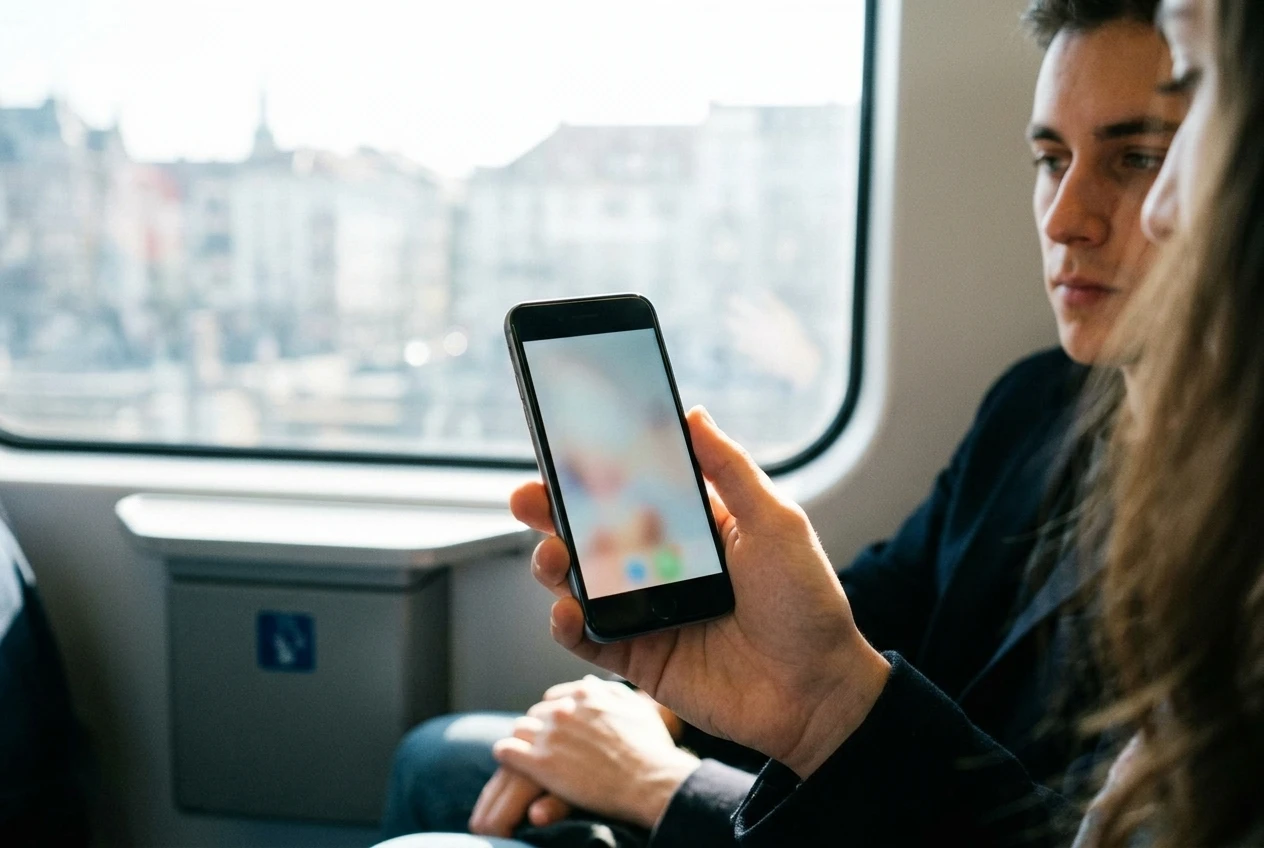
The Science Behind the Snap Judgment
Long before smartphones existed, psychologist Samuel Gosling was already testing whether strangers could read personality from a room. His 2002 study sent observers into real bedrooms and offices with no owner present. In both settings, observers rated occupants most accurately on openness, the trait tied to creativity and curiosity.
Gosling later told an interviewer his framework was never limited to physical space. He said his team could stretch the idea of an environment to virtual spaces like web pages and Facebook profiles, and even to music and clothing. A phone lock screen fits that same category neatly.
“We all form these impressions,” Gosling said in an interview years after the study, describing how automatically the habit kicks in once any personal detail is visible.
The speed of that habit is well documented outside phones too. Psychologists have found people begin forming snap judgments about a stranger’s trustworthiness from a face alone within just 39 milliseconds of seeing it. A wallpaper does not need nearly that long.
Are Europeans Already Watching Your Screen?
Yes, at a documented rate higher than many phone owners probably assume. An April 2026 Samsung commissioned survey of 11,000 people across 11 European countries found most respondents have already looked at a screen that was not theirs, usually without planning to, and often on a train or bus.
The behavior is not rare curiosity. It is closer to a daily occurrence on European public transport.
- 56% of Europeans say they have accidentally looked at a stranger’s phone screen in public.
- 57% name public transport as the single most likely place to notice someone else’s screen.
- 24% admit they looked purely out of curiosity, not by accident.
These figures come from a Censuswide poll commissioned by Samsung to promote a privacy screen feature on a new Galaxy phone. The marketing motive is obvious, but the underlying numbers still describe real behavior on real commuter routes from Lisbon to Helsinki.
Benjamin Braun, chief marketing officer at Samsung Europe, put it plainly in the announcement.
Your phone is one of the most personal things you own, housing your photos, your bank details, your messages and more.
Braun made that comment while introducing the privacy feature, not while discussing wallpaper judging specifically. But it captures exactly why a lock screen functions as an accidental personality quiz for anyone standing close enough to see it.
Pets Beat Partners in America’s Wallpaper Rankings
Talker Research also asked what image actually sits behind the glass. The results split households in a genuinely funny way.
- Family members or children, chosen by 19% of respondents, the single most popular category.
- Nature or landscape scenes, tied for second at 11%.
- Personal photos or memories, also tied for second at 11%.
- Pets, at 10%, edging out romantic partners.
- Romantic partners or spouses, at 7%, trailing pet photos by a clear margin.
- TV shows or movies, at 5%, the smallest named category.
Exactly 10% of Americans skip personalization altogether and keep the factory default image that ships with the phone. That single choice generates more disagreement than any picture on the list.
The Default Wallpaper Splits Opinion Four Ways
Among the Americans who admit to judging phone backgrounds, a stock wallpaper does not read as neutral. It reads as a statement, and people disagree sharply on what that statement means.
Twelve percent view a default background negatively, describing the person behind it as uninspired or unwilling to bother with self expression. Thirty two percent read the exact same choice as a sign of a practical, minimalist mindset. Twenty five percent think it simply means the owner treats the phone as a tool rather than a canvas. The remaining 22% call the whole exercise meaningless.
That four way split is the clearest evidence that these snap judgments are shakier than the confident 14% figure suggests. Business psychologist Sonya Dineva, who has studied phone home screen habits for the retailer Mobiles.co.uk, found the same ambiguity even in choices that look obvious.
This does not necessarily mean that they are very sociable and communicative.
Dineva was describing what a family photo wallpaper supposedly signals, according to her published home screen personality analysis. She added that the same picture could just as easily belong to someone with only one close relationship in their life, not a wide social circle. A single image, in other words, supports opposite readings depending entirely on who is doing the guessing.
Frequently Asked Questions
Does your phone brand say as much about you as your wallpaper?
Some researchers think so. A Lancaster University study examined operating system choice rather than wallpaper and found real statistical differences between groups. Dr. David Ellis, from the university’s psychology department, said the research showed clues to traits based on preferred handset, and the study found iPhone owners skewed younger, more often female and more extroverted than Android owners in the same sample.
How accurate are these snap judgments, really?
Less accurate than the confident percentages suggest. A meta-analysis of nine so called zero acquaintance studies, the academic term for judging someone from minimal information, found consensus correlations among observers averaged just .12 on a scale where 1.0 would mean perfect agreement with reality. Observers often agree with each other. Agreeing with each other is not the same as being right.
Does the same wallpaper photo mean the same thing for everyone?
No, according to psychologist Sonya Dineva’s separate research into home screen choices. She noted that a nature photo carries just as many possible explanations as a family photo, ranging from a love of travel to introversion to simply craving a break from a stressful stretch of life. The image stays constant. The meaning does not.
Why do younger people judge phone backgrounds more than older generations?
Researchers who study smartphone behavior point to how thoroughly younger users treat their devices as an extension of self. Lancaster University psychologist Heather Shaw described phones as having become a kind of digital double for their owners, telling reporters it is becoming more and more apparent that smartphones are turning into a mini digital version of the user. Gen Z grew up with that dynamic already in place, which may explain why 33% of them read meaning into a wallpaper that older generations barely notice.
How do Europeans react when they suspect someone is watching their screen?
They change their behavior on the spot. Samsung’s European research found 62% of respondents have delayed a banking task, 49% have paused before entering a passcode, and 43% have held off reading a private message, all out of concern that a stranger nearby might be looking. The wallpaper is only the visible layer of a much bigger privacy instinct already running underneath it.


British Business Bank’s Zinc Fund Will Mint 80 Startups

Philips Hue IFA Gear Opens TVs and Gates the Hub

Souk Raises $1.6 Million for Its AI Partner Manager

Anthropic Bets on Cheaper Cache for Claude Fable 5.1

Food Processors Back Backbone’s €4 Million Quality Round

Scosche Bets IFA Shoppers Will Buy Fewer Charging Bricks

ELO Bets Sentinel XR Gaming Glasses at IFA Berlin

ShiftCam SuperZoom Lenses Bet on a 350mm Phone Gap

Clooney Defends Ruffalo’s Speech While Collecting Venice’s Lion

Jungheinrich Is the Sole Backer of Uplift’s €100M Fund

30-Year Yield Hits 5.32% Highest Since 2007 as Debt Supply Locks In Costs

Walter’s TWG Insists No Fraud as Insurer Probes Force Cleanup

Strategy Parks $1.59B Cash While Bitcoin Stack Stays Flat

Astute’s $1.2M bet makes B2B creator deals feed AI discovery

PCE Stays at 3.7% as Gas and Tariffs Outrun Coming Revisions

The 20% Savings Ideal Meets a 2.7% Reality Check

SpaceX Stock Rebound Tests Real Demand Before Huge Unlock

Amber’s €7M locks Mittelstand knowledge inside Europe

Monzo chair Gary Hoffman exits after board revolt fallout

Nvidia’s $16,000 RTX Pro 6000 Turns Local AI Into a Luxury
-
 FINANCE3 months ago
Zcash Patched a Double-Spend Bug as ZEC Climbed 5%
-
 ENTERTAINMENT3 months ago
Steam Summer Sale 2026 Locks In June 25 to July 9 Dates
-

 FINANCE2 months ago
CLARITY Act Final Text Expected This Weekend as 60-Vote Hurdle Looms
-
 NEWS4 months ago
Meta Adds AI Replies to Threads, But Users Can’t Block It
-

 NEWS3 months ago
YouTube Shorts is testing a heart in place of the thumbs-up
-

 NEWS1 month ago
Senators Force Apple Off Chinese Memory as Big Three Cash In
-

 NEWS3 months ago
NEURA Robotics’ $1.4B Series C Redraws Europe’s Physical AI Bet
-
 ENTERTAINMENT5 months ago
Extraction 3 Is Officially Coming to Netflix in 2027