
FINANCE
Iran’s Strikes on Kuwait’s Water Plant Push Oil Past $88
Iran’s strike on a Kuwait desalination plant serving 90% of its drinking water sent Brent oil to $88 and exposed a Gulf shipping insurance crisis.

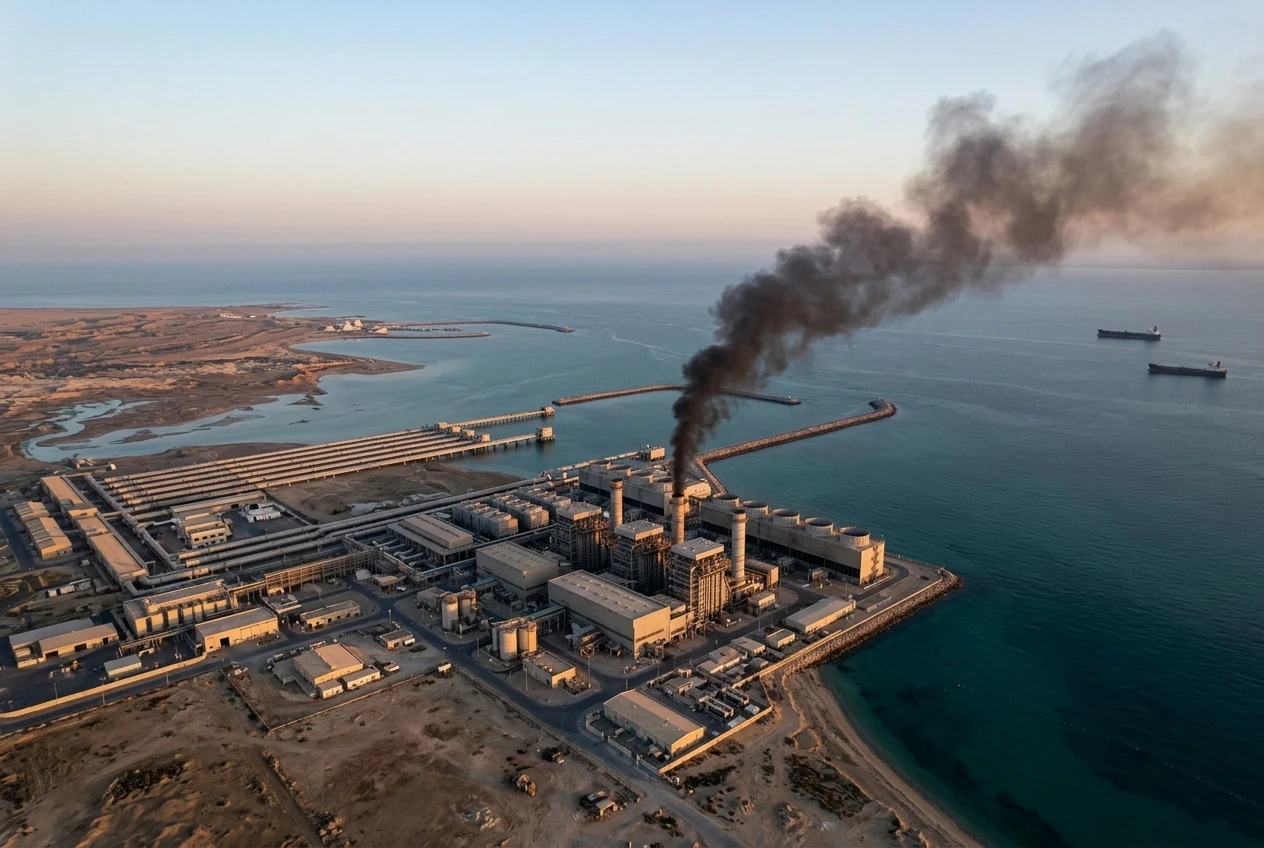
Iran struck a Kuwaiti desalination and power plant on Friday, and Brent crude closed that session at $88.10 a barrel, up 4.6% on the day. Fires burned for hours at the facility before Kuwaiti crews put them out. Bitcoin barely moved, drifting near $64,000 on a headline that pushed oil to its highest close in a month.
Markets are treating this as an energy story. Kuwait manufactures roughly 90% of its own drinking water through desalination, and the plant Iran hit keeps that system running for a Gulf ally with almost no natural freshwater of its own.
A Desalination Plant Becomes a Front Line
Kuwait’s government confirmed on Friday that a desalination and electricity plant had been hit, with many power-generation units sustaining damage, Bloomberg reported. Fires broke out at the site. Kuwaiti authorities said they extinguished the blaze and were still assessing the damage as crews worked to restore the station, according to PBS NewsHour’s reporting with the Associated Press.
About 90% of Kuwait’s drinking water comes from desalination. That single fact turns a damaged power station into a supply problem for a country with almost no rivers or natural aquifers of its own.
Missiles and drones also hit five other countries that day: Bahrain, Jordan, Oman, Qatar and Syria, part of a retaliatory wave across the Gulf within hours. Jordan’s military said it intercepted three incoming missiles that morning.
The strikes followed a pattern. US Central Command carried out its sixth consecutive night of strikes against Iran overnight Thursday into Friday, hitting military logistics sites and maritime targets, according to CNBC. Iran has answered nearly every round of American strikes with attacks of its own on US-linked infrastructure across the region.
Brent Closes at $88 as the Week’s Losses Compound
Brent, which had been trading near $79 a barrel earlier in the week, gained 4.6% on Friday to close at $88.10, CNBC reported. US benchmark West Texas Intermediate settled at $82.49, up 4.5%. Both marks are the highest close in a month.
The rally built through the week in stages, each one tied to a fresh strike.
| Date | Brent Close | What Moved the Market |
|---|---|---|
| July 8 | $76.48 | US revoked an Iran oil sanctions waiver after attacks on three tankers |
| July 13 | $78.82 | US and Iran traded strikes over control of the Strait of Hormuz |
| July 14 | $84.32 | Brent touched $87 intraday before Trump dropped a proposed Hormuz transit fee |
| July 17 | $88.10 | Iran hit Kuwait’s desalination and power plant; CENTCOM logged its sixth strike night |
Oil is now up more than 24% compared with a year ago, according to Trading Economics data tracking the benchmark contract.
The Shipping Insurance Market Is Already in Crisis
While traders watch the futures curve, marine insurers are living through a separate reset. War risk premiums for tankers transiting the Strait of Hormuz have surged to between 3% and 10% of a vessel’s hull value, up from roughly 0.25% before the war, The National reported, citing estimates tied to insurance broker Marsh.
For a $100 million tanker, that is the difference between a $250,000 premium and one running $3 million to $10 million per transit.
- Two supertankers hit: Iranian cruise missiles struck the Adnoc-operated vessels Mombasa and Al Bahyah in the strait, killing one sailor and injuring eight, The National reported.
- 6,000 seafarers stranded: The International Maritime Organization is working to evacuate crews trapped in the region.
- $1.75 billion in implied losses: Reinsurance broker Howden Re calculated that seven damaged tankers, at an average value of $250 million each, would imply losses at that scale by March, before cargo claims.
The Joint War Committee’s reclassification that triggers automatic repricing is what moves premiums overnight, not any single incident. Howden Re’s own documented tanker losses since the war began include crew fatalities on at least three vessels.
Governments with influence over the insurance and reinsurance markets have a role to play in engaging with insurers to ensure premiums reflect current realities, rather than continuing to reflect the peak of the crisis.
Arsenio Dominguez, secretary general of the International Maritime Organization, said in comments reported by The National. Marcus Baker, Marsh’s global head of marine, cargo and logistics, put it more bluntly: “War rates have been on a roller coaster mirroring the development of the price of oil,” he told the outlet.
Trump’s Ultimatum Preceded Iran’s Kuwait Strike
President Donald Trump told Fox News on Tuesday that US forces would target Iran’s infrastructure within the week unless the two sides reached a diplomatic breakthrough, CNBC reported. Washington followed through, hitting Iranian bridges, energy sites and a tower at a key port overnight Thursday, according to PBS NewsHour. Iran’s retaliation landed on Kuwait less than a day later.
What We Know:
- Iran struck six countries on Friday, Jordan intercepted three missiles, and CENTCOM has now completed six consecutive nights of strikes with more than 50,000 US service members deployed across the region, per CNBC.
- The Lloyd’s Market Association has said crew safety, not a lack of cover, is driving the slowdown in Hormuz transits.
What’s Unconfirmed:
- How long repairs to Kuwait’s desalination station will take. Officials said only that assessment work was underway as of Friday.
- Whether Iran will act on its reported instruction to Houthi forces to close the Red Sea route if US strikes on power infrastructure continue.
Bitcoin’s Hedge Story Is Starting to Crack
Bitcoin traded above $65,000 earlier this week before easing back toward $64,000 on Friday morning, down 1.4% from Thursday’s open as a sixth day of US airstrikes dulled appetite for risk, according to Yahoo Finance. Ether opened at $1,863.16 Friday, down 2.8% from Thursday.
On July 13, Bitcoin fell below $63,000 as CENTCOM completed its fourth Iran strike wave that week. Oil surged 4% the same day. Bitcoin dropped less than 2%, a gap that has become its own subplot in this conflict.
- The hedge camp points to Bitcoin holding well above its late-June lows near $58,000 as evidence it can still catch a safe-haven bid once the dollar softens.
- The liquidity sponge camp, including analysts at VanEck, JPMorgan and Bitwise cited in Tech Times’ reporting, argues Bitcoin now trades on Federal Reserve policy expectations first and war headlines second.
Gold has captured most of this year’s safe-haven flows instead. Bitcoin is down roughly 28% from its January high above $93,000, even as US equities have held up better through the same stretch.
The Ceasefire That Lasted Three Weeks
The war stretches back to late February, when Brent traded near $76 a barrel and Hormuz war risk premiums still sat around 0.25% of hull value.
Washington and Tehran signed a memorandum of understanding on June 17, and the truce pushed oil back toward pre-war levels for a few weeks. Bitcoin, which had surged past $72,000 on the ceasefire news, held onto those gains through most of June.
“There was a softening when the memorandum of understanding was signed in June, but an uptick after three vessels were attacked this week,” Neil Roberts, head of marine and aviation at the Lloyd’s Market Association, told Xinhua on July 10.
The truce collapsed by July 8. Trump declared it over, US strikes resumed near the strait, and Iran hit Kuwait, Jordan and Bahrain within days. The sequence has now repeated twice this year: disruption, a diplomatic patch, partial relief, then a new incident resets the clock.
What Happens If Hormuz Stays Choked?
Expect Brent to stay elevated through late summer, with occasional sharp swings in either direction as headlines land, since roughly 20% of global oil trade transits the strait and shippers are already rerouting rather than risking passage.
Mukesh Sahdev, chief oil analyst at XAnalysts in Sydney, expects Brent to hold in the upper $70s through August and September, with occasional spikes and dips outside that range, he said in a note to clients. ANZ and ING analysts have separately warned that hopes for a quick de-escalation are fading.
The World Economic Forum has described this dynamic as governments stepping in as insurers of last resort, as private markets struggle to price a risk this correlated across marine, energy and political-violence coverage at once.
The US has continued refueling flights toward Israel, a detail that suggests preparations for further escalation rather than a diplomatic exit. If Brent keeps climbing toward the levels that once rattled investor portfolios earlier this year, the insurers, seafarers and refiners already stretched thin across the Gulf will not get relief just because a new ceasefire gets announced.
Sahdev’s note included one more detail worth holding onto: long-haul refiners reduced their reliance on Middle Eastern crude months ago, and this latest escalation is likely to reinforce that shift rather than reverse it. Kuwait, for now, is still counting the damage at the plant that makes its water.
Frequently Asked Questions
How much has ship traffic through the Strait of Hormuz fallen?
Traffic through the strait averaged about 178 ships a day in the weeks before the war and has fallen by roughly 95% since fighting began, according to World Economic Forum analysis of the disruption. Some vessels still transit, but many owners are choosing to wait or reroute rather than risk passage.
Could Iran actually close the Strait of Hormuz completely?
Iran has not formally closed the waterway, but its self-declared Persian Gulf Strait Authority has said ships that bypass its preferred routes will not receive safe passage guarantees, Al Jazeera reported. Combined with reduced naval traffic and repeated tanker strikes, the practical effect has already been a near standstill for much of 2026.
What would happen to gas prices if oil stays this high?
Retail pump prices typically follow crude with a lag of a few weeks. Households are already feeling gas prices climb past $4 a gallon in parts of the US, and a sustained Brent price above $85 would likely push averages higher still into autumn.
Is Bitcoin’s muted reaction to war news new for 2026?
Yes, relative to earlier shocks. Bitcoin fell more than 7% over three days after Israel’s June 2025 strikes on Iranian nuclear sites, but by July 2026 it is down only modestly on comparable news even as it trades roughly 28% below its January peak above $93,000, according to Tech Times’ analysis of the pattern.
Disclaimer: This article covers oil and cryptocurrency market moves for informational purposes only, not investment advice; prices are volatile and figures are accurate as of publication on July 18, 2026, so consult a licensed financial adviser before acting on them.


Nvidia Buys Hugging Face, the Platform That Turned It Down

OpenAI Names GPT-6 Astra AGI, Then Locks It Down

Relay Q Bets a $150 Puck Can Beat Dictation Apps

Accel Backs Atira to Automate Industrial Sales Engineering

Beyerdynamic Hides a Spare Battery in the Aventho Y

Lummis Pushes the CLARITY Act to Export Wyoming’s Crypto Banks

AI Exposure Turns a Cloud Beat Into a Selloff

Citadel’s XRP ETF Filing Looks Like Dealer Inventory

Revolut’s OCC Nod Starts an 18-Month US Bank Clock

British Business Bank’s Zinc Fund Will Mint 80 Startups

Walter’s TWG Insists No Fraud as Insurer Probes Force Cleanup

30-Year Yield Hits 5.32% Highest Since 2007 as Debt Supply Locks In Costs

PCE Stays at 3.7% as Gas and Tariffs Outrun Coming Revisions

Astute’s $1.2M bet makes B2B creator deals feed AI discovery

Strategy Parks $1.59B Cash While Bitcoin Stack Stays Flat

SpaceX Stock Rebound Tests Real Demand Before Huge Unlock

The 20% Savings Ideal Meets a 2.7% Reality Check

Amber’s €7M locks Mittelstand knowledge inside Europe

Monzo chair Gary Hoffman exits after board revolt fallout

AI data centers win as RAM kits jump nearly 500 percent
-
 FINANCE3 months ago
Zcash Patched a Double-Spend Bug as ZEC Climbed 5%
-
 ENTERTAINMENT3 months ago
Steam Summer Sale 2026 Locks In June 25 to July 9 Dates
-

 FINANCE2 months ago
CLARITY Act Final Text Expected This Weekend as 60-Vote Hurdle Looms
-
 NEWS4 months ago
Meta Adds AI Replies to Threads, But Users Can’t Block It
-

 NEWS3 months ago
YouTube Shorts is testing a heart in place of the thumbs-up
-

 NEWS1 month ago
Senators Force Apple Off Chinese Memory as Big Three Cash In
-

 NEWS3 months ago
NEURA Robotics’ $1.4B Series C Redraws Europe’s Physical AI Bet
-
 ENTERTAINMENT5 months ago
Extraction 3 Is Officially Coming to Netflix in 2027