
NEWS
Microsoft Shrinks Windows 11 Memory for 8GB PCs
Microsoft’s Pavan Davuluri lists memory footprint cuts for 8GB PCs plus setup, family and voice work as the quality reset continues through 2026.

Microsoft will cut Windows 11’s memory footprint so machines with 8 GB of RAM feel fast and responsive. Windows chief Pavan Davuluri named the work one of four focus areas that run through the end of 2026.
The pledge sits inside a larger quality reset that began in March. It is also an admission that the operating system itself has been part of the problem on the hardware Microsoft still certifies.
Four Areas Get the Rest of the Year
In a four new focus areas through end of 2026 update, Davuluri listed the priorities that expand the original performance, reliability and craft goals:
- Onboarding and setup, a faster, more efficient out-of-box experience.
- Memory optimization for 8 GB and above, lower the Windows memory footprint for everyday PCs.
- Family, quicker setup and easier access to parental controls and Family Safety features.
- Voice, more natural, fluid voice input across apps and the OS.
Davuluri wrote that the team will take everything learned since March, keep listening, and close the loop on feedback. “The signal from you is clear: keep going. We intend to.”
Why 8 GB Machines Still Struggle
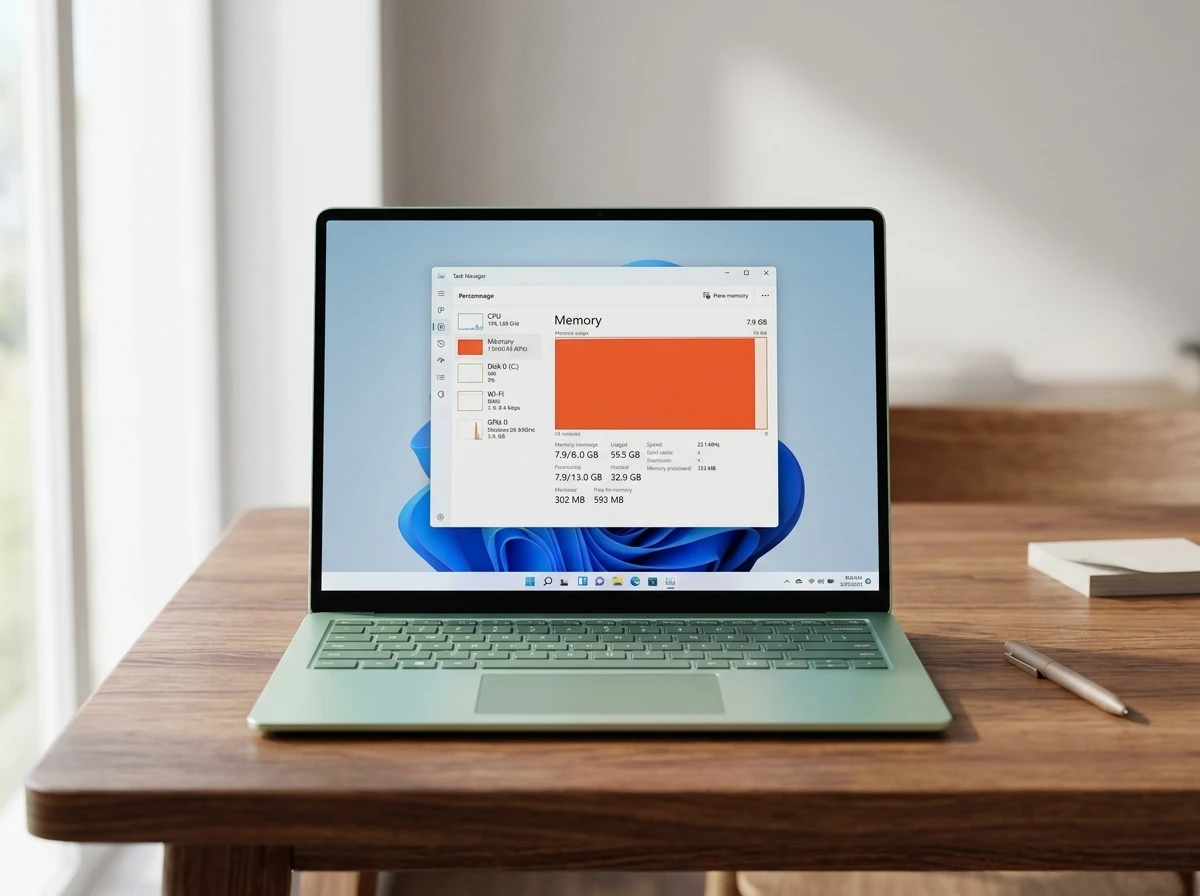
Windows 11 still carries an official 4 GB minimum RAM requirement. Copilot+ PCs, by contrast, demand 16 GB. In practice many budget and mid-range laptops continue to ship with 8 GB, and real-world idle usage often leaves little headroom.
Reporting has put clean idle consumption near 3.3 GB on some test systems and closer to 6 GB once background services, Widgets, WebView2 surfaces and first-party apps wake up. A 16 GB machine can idle above 10 GB under the same conditions. More than half the memory can be gone before a user opens a browser tab.
| Configuration | Typical idle claim | Practical note |
|---|---|---|
| Windows 11 official minimum | 4 GB | Boots; not usable for modern workloads |
| Common budget laptop | 8 GB | Often 50-75 % occupied at idle |
| Copilot+ baseline | 16 GB | Required for on-device AI features |
| Reported 8 GB real-world idle | ~6 GB used | Little left for multitasking |
WebView2, the Chromium-based engine embedded across Settings, Widgets, Search, Start elements and many inbox apps, is repeatedly cited as a major contributor. Each instance behaves like a mini browser. Electron-based third-party apps compound the load. Telemetry, preloading and background AI features add more.
What Has Already Shipped Since March
The July update is not a cold start. Davuluri’s post recapped concrete progress that Insiders have already seen and that begins broader rollout this fall.
- April 2026, reduced Windows Update disruption, longer pauses, ability to skip updates during OOBE, simpler Insider channels.
- May 2026, taskbar position options and Start personalization previews; quieter Widgets defaults; Driver Quality Initiative launch; File Explorer architecture and reliability fixes; Windows Hello improvements.
- June 2026, developer-focused Windows 11 experience, WSL containers public preview and other Build announcements.
- July 2026, cleaner Search Box with less promotional clutter; continued WinUI 3 expansion into shell surfaces; memory-allocator and WinUI latency work already landing.
File Explorer launch and navigation feel snappier. Boot and logon times improved. Application launches for Start, Search and Snipping Tool are more responsive. Memory-efficiency work is already under way via a more efficient allocator, WinUI 3 tuning and Chromium/WebView2 efficiencies.
The Hardware Reality Microsoft Helped Shape
For years the company pushed higher RAM as the answer. Copilot+ marketing made 16 GB the future baseline. Then Surface and other OEMs quietly shipped 8 GB configurations again, partly to match Apple’s cheaper MacBook options that feel usable on the same memory count because the OS is tighter.
RAM prices have climbed as manufacturers redirect supply toward AI data-center demand. That crunch makes “just buy more memory” a harder sell for consumers and OEMs. Optimizing the OS itself becomes the only lever that does not raise bill-of-materials cost.
Windows 11 now holds roughly 70 % of the desktop Windows version share after Windows 10 support ended. Millions of those machines still run on 8 GB. The memory diet is therefore both a quality fix and a market necessity.
WinUI Is the Quiet Path Out of Web Bloat
Microsoft has not published a detailed technical roadmap for the footprint cut. The most plausible route is already visible: move more of the shell off WebView2 and onto WinUI 3, the native UI framework that avoids spinning up a full browser engine for every dialog and surface.
Properties dialogs, Autoplay, Widgets and the new Run experience are already moving or have moved. Further File and Folder dialogs are coming to Insider Experimental builds. WinUI itself has received memory and latency fixes so larger surfaces such as Start can eventually follow without making the problem worse. Developers are being encouraged to build native WinUI apps rather than Electron or web wrappers.
If that migration continues, savings compound with every component that stops carrying its own Chromium instance. The same work also feeds battery life, because idle memory pressure and background processes are two of the largest drains on laptops.
Who Gains First and Who Still Waits
Budget laptop owners, students, and anyone stuck with soldered 8 GB modules stand to gain the most. Gaming handhelds and older hardware that still meet the Windows 11 bar also benefit when more RAM stays free for games and apps. Even 16 GB systems become more comfortable if the OS claims less at idle.
Families get faster parental-control setup. Voice users get a more natural multi-modal input path. New PC buyers get a shorter out-of-box experience. Enterprises that delayed upgrades over reliability complaints see the quality campaign continue.
Critics on X were quick to call the memory admission overdue. Windows Central editor Daniel Rubino wrote that “Microsoft finally admitting Windows 11 needs to run better on 8GB machines is long overdue,” noting the hardware and RAM crunch makes optimization essential. Windows Latest highlighted that the OS itself, not only the apps, has been the memory hog. Replies still push for optional Microsoft accounts and no forced network during setup, issues that fall under the new onboarding focus.
Microsoft finally admitting Windows 11 needs to run better on 8GB machines is long overdue, but at least they’re saying it out loud now.
Daniel Rubino posted that assessment the day the update landed, adding that the quality work already delivered is “not nothing.”
Related problems have not vanished. Some users still hit recent update breakage on Start and taskbar that require enterprise-style fixes. At the same time, the movable taskbar and Start changes already previewed show personalization requests from the original March list are landing.
No Numbers, No Dates, Still Real Pressure
Microsoft gave no target megabytes, no percentage reduction, and no Insider flight calendar for the memory work. The same is true for the other three focus areas. Improvements will arrive incrementally through Insider channels first, then broader Windows 11 releases, rather than one big bang update.
That absence of metrics is the remaining gap. Users who have watched earlier quality pledges will wait for Task Manager screenshots and side-by-side boot comparisons before celebrating. The technical pieces already in motion (allocator, WinUI tuning, WebView2 efficiencies) make delivery plausible. The open question is whether the cumulative drop is large enough that an 8 GB machine feels like a daily driver rather than a compromise by the time 2026 ends.
The March commitment to Windows quality set the tone. July’s expansion into memory, setup, family and voice shows the company is still treating the foundation as unfinished business. For the large installed base that never got 16 GB or an NPU, that is the only path that matters.


Capital Clusters and the Dual Tracks of European Tech Finance

Microsoft Shrinks Windows 11 Memory for 8GB PCs

XRP Ledger Brings Back Bugged Features Fixed for Institutions

The Shards Trailer Turns Ellis Nightmare Into Murphy Glamour

WhatsApp Folder Hides Business Messages After Hours

Mova LiDAX Ultra 3000 AWD Cracks the Robot Mower Moat

Urban Arrow FamilyNext Turns Costco Runs Into Bike Trips

Reddit Builds Spoken Video Layer to Reclaim Its Own Viral Stories

Nuggit £5m Fund Treats YouTube Channels as Real Businesses

Galaxy Z Fold 8 Makes Foldables Daily Drivers but Drops Flex Mode

CLARITY Act Final Text Expected This Weekend as 60-Vote Hurdle Looms

Kalshi Loses Major NY Prediction Markets Ruling to Judge Torres

Fed Minutes Cite AI Demand as Inflation Risk, Put a 2026 Hike Back on the Map

Marker AI Writing Startup Lands $13M Seed Led by Index Ventures

Dota 2 Esports World Cup 2026: Spirit Defends $2M Title In Paris

Meta’s Muse Spark 1.1 Beats Rivals on Price, Trails on Coding

CS2 Premier Season 5 Lands With Cache and a C4 Damage Rework

Finto Picks Munich Over Silicon Valley After YC, Raises $3.4M

Backrooms Returns to Theaters as the Everything Must Go Edition

ARC Intelligence Closes €4M Seed Round in Roughly a Week
-
 FINANCE2 months ago
Zcash Patched a Double-Spend Bug as ZEC Climbed 5%
-
 ENTERTAINMENT2 months ago
Steam Summer Sale 2026 Locks In June 25 to July 9 Dates
-
 NEWS3 months ago
Meta Adds AI Replies to Threads, But Users Can’t Block It
-
 FINANCE4 weeks ago
CLARITY Act Final Text Expected This Weekend as 60-Vote Hurdle Looms
-
 ENTERTAINMENT2 months ago
‘Widow’s Bay’ Review: Apple TV’s Sleeper Horror-Comedy Earns Its Fog
-
 NEWS5 months ago
U.S. Navy Deploys Solar-Powered Lightfish Drone to Patrol Oceans
-
 NEWS8 months ago
FolderFresh Review: This Free Tool Automates Windows File Organizing
-
 FINANCE3 weeks ago
Kalshi Loses Major NY Prediction Markets Ruling to Judge Torres