
FINANCE
Bitcoin Rebounds Above $64,000 After Trump Reopens Iran Talks
Trump says talks with Iran will continue even as he insists their ceasefire is dead, a reversal that sent Bitcoin back above $64,000 Friday.

Bitcoin climbed back above $64,000 on Friday, hours after President Donald Trump said the United States would keep talking to Iran even though he still calls their ceasefire dead. The bounce followed a brutal stretch that wiped out roughly $500 billion in US stock value, sent oil surging and dragged crypto into the red.
It is the second time in three days that one Trump social media post has swung hundreds of billions of dollars in market value. Traders now have to price in his mood almost as much as Tehran’s next move.
Trump Reopens Talks, Calls Ceasefire Dead
On Friday, Trump wrote on Truth Social that Iran had asked to keep negotiating and that Washington had agreed, a real shift in tone from two days earlier. He still drew a hard line.
The Islamic Republic of Iran has asked us to continue ‘talks.’ We have agreed to do so, but the United States has stated to them, in no uncertain terms, that the Cease Fire is OVER!
Trump wrote that on Truth Social, adding that the request came after three Qatari and Saudi tankers came under fire in the Strait of Hormuz this week.
Two days earlier, at a NATO summit in Ankara, his language was far rougher. He vowed to destroy Iran’s bridges and electric grid and raised the idea of moving on Kharg Island, the terminal that handles roughly 90 percent of Iran’s crude exports.
Tehran is not putting this week’s strikes on Washington’s ledger alone. Iran is pointing at Israel instead, and a top Iranian security official has warned that Israel “will not get away with it.”
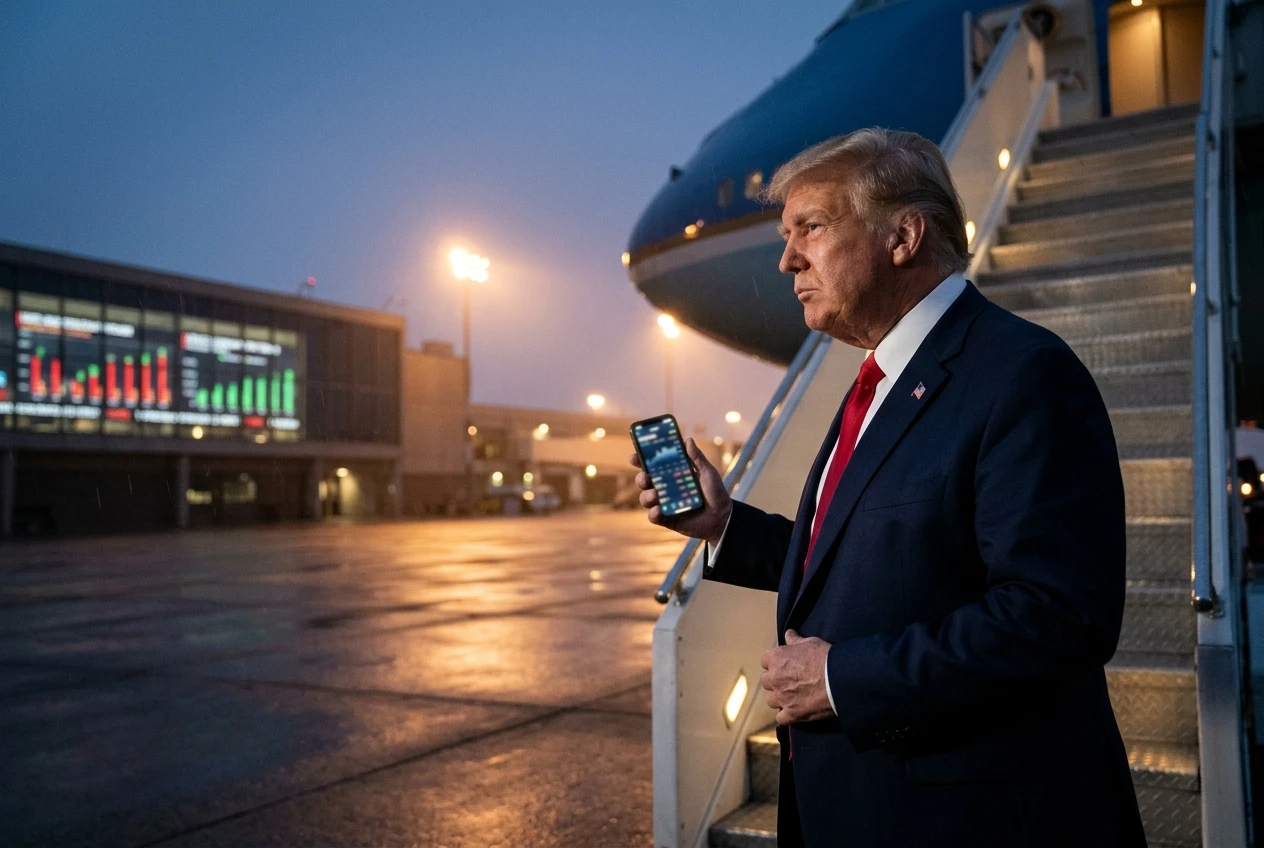
Why Did Bitcoin Crash, Then Bounce Back?
Bitcoin fell more than 3% on Wednesday after Iran-linked forces attacked commercial tankers in the Strait of Hormuz, triggering US airstrikes and reviving fears of a wider war. It recovered once Friday’s statement suggested diplomacy, however strained, was still alive.
Behind that swing sat a chain of specific, fast-moving events.
- Tanker attacks – forces linked to Iran fired on three Qatari and Saudi commercial vessels crossing the Strait of Hormuz.
- US retaliation – CENTCOM struck dozens of Iranian Revolutionary Guard Corps boats to keep the waterway open.
- Iran hit back – Tehran struck US military installations in Bahrain and Kuwait on Thursday.
- Sanctions snapped back – the Treasury Department pulled the waiver that let Iran sell oil and added a new designation on financial facilitator Ali Ansari.
The waterway matters because roughly one-fifth of globally traded oil passes through it every day, alongside a large share of the world’s liquefied natural gas. More than $400 million in leveraged crypto positions were liquidated as the news broke, according to CoinGlass data.
Bitcoin, Oil and Stocks Retrace a Wild Two Days
The numbers moved fast in both directions. Here is the round trip so far.
| Market | Wednesday’s Selloff | Where It Stands Now |
|---|---|---|
| Bitcoin (BTC) | fell more than 3% to about $61,691 | Back above $64,000, testing $64,200 to $64,800 |
| Ether (ETH) | Slipped below $1,740 | Rebounding with the broader altcoin market |
| WTI Crude Oil | Jumped more than 2% to $72.27 | Easing Friday, still up roughly 5% on the week |
| Total Crypto Market Cap | Dropped toward $2.10 trillion support | Testing resistance near $2.18 trillion to $2.20 trillion |
Altcoins moved with Bitcoin in both directions. Solana wiped out its entire July rally on Wednesday alongside Dogecoin, and both rallied back with XRP once Friday’s statement landed.
A Truce Built to Break
Friday’s whiplash was not the first wobble. The ceasefire has been fraying almost since the ink dried.
- February 28, 2026: The US and Israel launch major strikes on Iran, opening the war that would run for months.
- June 17, 2026: Washington and Tehran sign a memorandum of understanding, opening a 60-day ceasefire and negotiating window.
- June 21, 2026: Talks in Bürgenstock, Switzerland nearly collapse after Trump threatens to resume bombing, before mediators report encouraging progress.
- July 7 to 8, 2026: Vessels come under fire in the Strait of Hormuz, US strikes follow, and Trump tells NATO leaders in Ankara the ceasefire is over.
- July 9, 2026: Iran strikes US bases in Bahrain and Kuwait, and Treasury pulls its oil sanctions waiver.
- July 10, 2026: Trump posts that talks will continue, but repeats that the ceasefire is over.
Writing weeks before this collapse, one analyst called the pact a ceasefire with a built-in detonator. This week, that detonator went off.
Israel Is the Wild Card Neither Side Controls
Trump is trying to keep Israel out of the picture for now. He has objected to Israel launching its own strikes on Iran while the US-brokered track is still breathing.
Israeli intelligence has separately claimed Iran is plotting a fresh attempt on Trump’s life, an allegation Tehran has not addressed. If that holds up, it could poison the negotiating track before it even restarts.
Charts show the total crypto market testing resistance between $2.18 trillion and $2.20 trillion, with support near $2.10 trillion. Bitcoin itself is consolidating between $64,200 and $64,800, and which way it breaks may hinge on Tehran’s next move more than any chart pattern.
US and Iranian negotiators are due back at the table meet Iranian counterparts in Oman on Saturday, with a possible round in Switzerland next week.
Frequently Asked Questions
Is the US-Iran ceasefire officially over?
By Trump’s own account, yes, though negotiators are still talking. Iran’s chief negotiator has said Tehran is prepared for “all-out defense” if Washington abandons the agreement completely, a sign Tehran is not treating the talks as dead either.
Why does Bitcoin react so sharply to Iran headlines?
Bitcoin trades like a risk asset, so it drops when war fears spike oil prices, because pricier oil feeds inflation expectations and lowers the odds of Federal Reserve rate cuts that crypto investors are counting on. That mechanism drove Wednesday’s slide and Friday’s partial recovery alike.
What is the Strait of Hormuz, and why is it central to this fight?
It is the narrow passage between Iran and Oman where the two countries’ Exclusive Economic Zones meet in the middle, and it is the exact stretch of water Iran has contested and fired on ships in this week. That boundary dispute, not the wider war, is what mediators are trying to settle first.
What is Kharg Island and why did Trump mention it?
Kharg Island is Iran’s main oil export terminal in the Persian Gulf, with a loading capacity of roughly 7 million barrels a day. Trump floated the idea of controlling it on Wednesday, alongside threats to hit Iran’s bridges and power grid, a sign of how far he was willing to escalate before Friday’s softer tone.
Who is leading the US side of the negotiations?
The US team includes Vice President JD Vance, the president’s son-in-law Jared Kushner, special envoy Steve Witkoff and Secretary of State Marco Rubio. Trump has directed them to keep talking while warning that any further attacks on shipping will draw a military response.
Disclaimer: This article is for informational purposes only and does not constitute financial, investment or legal advice. Cryptocurrency and oil markets are highly volatile, and geopolitical developments can change within hours. Consult a licensed financial advisor before making investment decisions. Figures are accurate as of publication on July 11, 2026.


RAROG’s €162K Bet Turns Everyday Phones Into Rescue Beacons

HTG Medical Clears EU’s Toughest Device Rule, Raises €450,000

Anthropic Extends Free Claude Fable 5 Access Again Before Price Jump

Snapseed’s RAW Update Fixes Android, Leaves iPhone Waiting

Former Netflix Payments Leaders Raise €7.2M to Fix Europe’s Wallets

TensorX Is Betting Europe’s AI Race Comes Down to Who Owns the GPUs

FCC Hits Eight Alleged DJI Front Companies With $25,000 Fines

Apple’s iPhone 20 Glass Redesign Rumor Carries a Hidden Cost

Windows 11 Search Drops Its Ads After Years of User Complaints

Samsung Shrinks Galaxy Z Fold 8 Pre-Order Perks as Memory Prices Soar

CLARITY Act Final Text Expected This Weekend as 60-Vote Hurdle Looms

Fed Minutes Cite AI Demand as Inflation Risk, Put a 2026 Hike Back on the Map

Kalshi Loses Major NY Prediction Markets Ruling to Judge Torres

Marker AI Writing Startup Lands $13M Seed Led by Index Ventures

Dota 2 Esports World Cup 2026: Spirit Defends $2M Title In Paris

Meta’s Muse Spark 1.1 Beats Rivals on Price, Trails on Coding

CS2 Premier Season 5 Lands With Cache and a C4 Damage Rework

Trump Calls Iran ‘Islamic Republic of Japan’ as Ceasefire Ends

Backrooms Returns to Theaters as the Everything Must Go Edition

The Furious Stages Action Like Combat Choreographed by Ants
-
 FINANCE1 month ago
Zcash Patched a Double-Spend Bug as ZEC Climbed 5%
-
 ENTERTAINMENT1 month ago
Steam Summer Sale 2026 Locks In June 25 to July 9 Dates
-
 NEWS2 months ago
Meta Adds AI Replies to Threads, But Users Can’t Block It
-
 FINANCE2 weeks ago
CLARITY Act Final Text Expected This Weekend as 60-Vote Hurdle Looms
-
 ENTERTAINMENT2 months ago
‘Widow’s Bay’ Review: Apple TV’s Sleeper Horror-Comedy Earns Its Fog
-
 FINANCE6 days ago
Fed Minutes Cite AI Demand as Inflation Risk, Put a 2026 Hike Back on the Map
-
 ENTERTAINMENT1 month ago
Amazon Scraps Its Stargate Revival After a 20-Week Writers Room
-
 FINANCE1 month ago
Citigroup Says ETF Outflows Drove Bitcoin’s Crash, Not Strategy’s Sale