
BUSINESS
StratX Raises $1.19M to Turn Neglected Landfill Methane Into Revenue
StratX raised $1.19 million to deploy methane-eating biocovers at Global South landfills, led by investor Neglected Climate Opportunities.

StratX has raised $1.19 million to blanket landfills across the Global South in living soil covers that digest methane before it reaches the atmosphere. Neglected Climate Opportunities (NCO), the venture arm of the Grantham Environmental Trust, led the round. CarbonFix joined as an investor, and carbon credit buyer Terraset committed to an initial purchase.
The bet is small next to the problem it targets. Uncovered dumps across the Global South emit gas that investors compare to an entire continent’s power sector, and StratX wants to turn that liability into a revenue line for the municipalities stuck managing it.
The Money Behind StratX’s Biocovers
The round closed with four named backers, each playing a different role. NCO led the investment. CarbonFix, a climate-focused investor, joined alongside it. Terraset did not invest directly; instead it committed to buy carbon credits StratX has not yet generated. Deep Science Ventures, a London venture builder, supported the company’s development before the raise.
| Backer | Role in the Round | What They Bring |
|---|---|---|
| Neglected Climate Opportunities (NCO) | Lead investor | Grantham Environmental Trust’s venture capital vehicle |
| CarbonFix | Participating investor | Climate-focused venture capital |
| Terraset | Initial credit buyer | Advance commitment to purchase StratX’s future carbon credits |
| Deep Science Ventures | Venture-building support | Helped develop StratX ahead of the round |
NCO’s other bets give a sense of what the fund looks for. It is a Boston-based, early-stage vehicle whose portfolio also backs Ebb Carbon and Type One Energy, wagers on overlooked corners of the decarbonisation map rather than headline names.
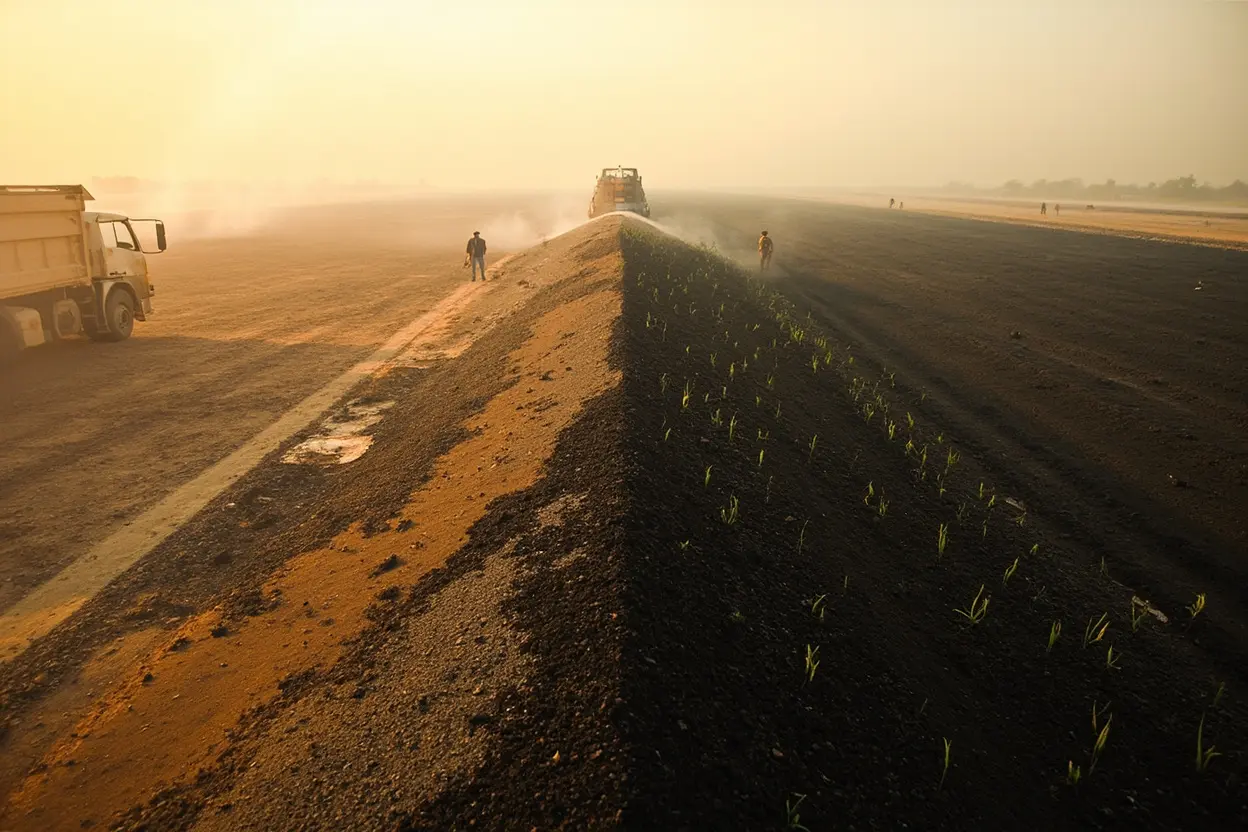
Landfill Methane Rivals the EU’s Entire Power Sector
Solid waste is not a footnote in the methane story. Decomposing trash accounts for roughly a tenth of all human-caused methane emissions worldwide, and landfills sit at the center of that number.
- 10% of global human-caused methane emissions come from decomposing solid waste.
- 68 million tonnes of methane escape from the world’s waste sites every year.
- 4.4 billion metric tons of CO2-equivalent warming came from municipal landfill methane in 2020 alone, measured over a 20-year horizon.
- Over 90% of waste in low-income countries is openly dumped or burned, with no gas capture at all.
A satellite survey published this year detected emissions at 151 waste sites across six continents, a reminder that most landfill gas escapes measurement entirely, let alone control. That blind spot is what pulled Grantham’s money toward StratX.
Landfill methane is one of the largest unmanaged sources of climate pollution on Earth (emissions on par with the entire EU power sector), yet it has been almost entirely neglected by both policy and capital. StratX is building the first scalable model for addressing these emissions, starting in the Global South, where traditional gas capture infrastructure has consistently failed. The biocover approach is a low-cost, fast-to-deploy methane-abatement solution that can reach the tens of thousands of sites that existing solutions simply cannot.
Elena Cavallero, a venture advisor at the Grantham Foundation, said that after the round closed.
How Soil, Gravel and Microbes Eat Methane
StratX builds its cover from what a landfill already has: local soil, local gravel and microbes native to that ground.
- Crews blend locally available soil and gravel into a layer spread across the landfill surface.
- Indigenous microbes, already adapted to the site, are seeded into that layer rather than shipped in.
- The microbes oxidise methane as it rises through the cover, breaking it down before it reaches open air.
- StratX’s own measurement system quantifies how much gas each cover destroyed, the step that turns a physical result into a sellable carbon credit.
The approach has research behind it. Established biocover systems cut methane by close to 50% at unmanaged landfills over their lifetime, according to the Climate and Clean Air Coalition, at a cost of $5 to $15 per tonne of carbon dioxide equivalent (CO2e). That is well below what pipe-and-flare gas collection systems typically cost to build.
StratX says the measurement piece is what makes its credits high-integrity and permanent, rather than the discounted, disputed offsets that have dogged older landfill projects.
Why Landfill Operators Pay Nothing
Engineered caps, gas wells and flare stacks demand capital most municipalities in the Global South do not have. StratX installs its covers at no cost to the landfill operator or local government, then splits the revenue from credit sales with the operator, the host government and surrounding communities.
That structure matters because the sites in question are not abstract. Uncovered dumps expose nearby residents to air pollution, contaminated water supplies and disease, on top of the methane they vent into the atmosphere.
Kevin Wheeler, StratX’s chief executive, said landfills in the Global South are often seen as an unsolvable burden for local leaders “caught between compounding environmental externalities and funding constraints.”
Treating covers as “living ecosystems” “neutralises environmental threats at the source,” he said, while removing the financial barrier that has kept municipalities from acting.
Does a Decades-Old Fix Finally Scale?
Not yet, on the evidence so far. Biocovers have worked in research settings for close to two decades, but real-world deployment has stayed rare, mostly limited to pilot projects rather than routine use across the world’s uncovered dumps.
Tom Frankiewicz, principal for climate-aligned industries at the Rocky Mountain Institute (RMI), put it plainly: the science has outpaced adoption. “Real world adoption and deployment have been slow,” he said, even though biocovers are “an effective solution that can be implemented today.”
- Grantham’s Elena Cavallero calls existing gas-capture infrastructure a repeated failure in the Global South, leaving biocovers as the fastest option left to try.
- RMI’s Tom Frankiewicz expects the missing piece to be financing, not more science, as “novel business models put financing within reach.”
- Peer-reviewed landfill research adds a caveat: methane oxidation inside a biocover does not stabilise for five to six years, and it needs sustained upkeep to keep performing.
RMI has spent years tracking efforts to manage methane across the waste sector and views novel business models, not new science, as the missing piece. StratX’s pitch is that its revenue-share structure is exactly that piece.
The Carbon Credit Math Behind the Bet
StratX’s entire model depends on carbon credits being worth something, and on buyers trusting the number attached to each one. That market is moving in its favor.
Waste methane management is expanding faster than 50% a year, among the fastest-growing segments in the voluntary carbon market. The Integrity Council for Voluntary Carbon Markets (ICVCM) has approved four landfill gas methodologies covering roughly 15 million approved carbon credits, a sign quality standards are catching up to demand.
A parallel shift is underway in how these projects get financed. The Clean Development Mechanism (CDM), the old United Nations offset system, is winding down in favor of the Paris Agreement’s Article 6 crediting mechanism, opening a financing window for methane oxidation projects that the CDM’s methodology never quite fit.
Tanzania, Colombia and Chile Go First
StratX is not deploying capital blind. The company is currently assessing sites in Tanzania, Colombia and Chile, designing covers for each one and engaging local governments, landfill operators and community representatives before construction starts.
The new funding will pay for covers on sites across Asia, Africa and South America, though StratX has not named the Asian locations yet. The company frames the pilots as proof that a landfill can be an environmental hazard and a paying municipal asset at the same time.
Against a global count of tens of thousands of unmanaged dumps, $1.19 million buys StratX three confirmed pilot countries and a case for the fourth.


Dolly Parton’s $450 Million Fortune Keeps Working After Her Death

SpaceX’s $60B Cursor Buy Immediately Costs It OpenAI Models

Rays Forever Home Wins County Vote as College and Taxpayers Carry the Load

Apple TV Hits $14.99 as Sports and Hits Bill Comes Due

Swift Telescopes Restart as Orbit Drop Accelerates

Oracle’s 2.8 GW Bloom Deal Exposes the AI Power Bypass

Galaxy S26 Beta 7 Ports Fold 8 AI as Stable Nears

Walmart Pays $50 Million to Close Federal Opioid Pharmacy Case

Space Mirror Demo Revives 1993 Russian Night-Light Test

Measles Death Dispute Deepens Distrust in Pennsylvania Outbreak

Trump Iran Threat Wiped $238M Crypto Longs Then Flipped

30-Year Yield Hits 5.32% Highest Since 2007 as Debt Supply Locks In Costs

Oil Crashes Below $80 as Iran Talks Restart and Markets Split

Strategy Parks $1.59B Cash While Bitcoin Stack Stays Flat

Astute’s $1.2M bet makes B2B creator deals feed AI discovery

SpaceX Stock Rebound Tests Real Demand Before Huge Unlock

BlackRock Turns Cash Empire Into Stablecoin Reserve Rails

The 20% Savings Ideal Meets a 2.7% Reality Check

Amber’s €7M locks Mittelstand knowledge inside Europe

Walter’s TWG Insists No Fraud as Insurer Probes Force Cleanup
-
 FINANCE3 months ago
Zcash Patched a Double-Spend Bug as ZEC Climbed 5%
-
 ENTERTAINMENT3 months ago
Steam Summer Sale 2026 Locks In June 25 to July 9 Dates
-

 FINANCE2 months ago
CLARITY Act Final Text Expected This Weekend as 60-Vote Hurdle Looms
-
 NEWS4 months ago
Meta Adds AI Replies to Threads, But Users Can’t Block It
-

 NEWS3 months ago
YouTube Shorts is testing a heart in place of the thumbs-up
-

 NEWS1 month ago
Senators Force Apple Off Chinese Memory as Big Three Cash In
-

 NEWS3 months ago
NEURA Robotics’ $1.4B Series C Redraws Europe’s Physical AI Bet
-
 ENTERTAINMENT5 months ago
Extraction 3 Is Officially Coming to Netflix in 2027