
FINANCE
Oil Crashes Below $80 as Iran Talks Restart and Markets Split
WTI plunged more than 6% below $80 after Trump canceled strikes and confirmed Monday talks, lifting stocks while Bitcoin lagged and Hormuz risks lingered.

WTI crude plunged more than 6% on August 3 to trade near $79 a barrel after President Donald Trump confirmed US-Iran talks would start Monday afternoon and canceled planned strikes. The move reversed a July surge of more than 20% driven by Middle East hostilities and Strait of Hormuz disruptions.
Stock futures jumped on de-escalation hopes. Bitcoin slipped below $63,000 anyway. The second-order split shows how fast markets can reprice a war premium while crypto follows its own pressures.
The Plunge Below $80
CME data showed the front-month WTI contract last at 79.39, down 5.28 or 6.24%. Intraday lows hit 78.83 against a prior close near 84.67. Brent traded softer too, off roughly 4.7% near 83.77.
| Contract | Last / Level | Change | Session Note |
|---|---|---|---|
| WTI (CLU6) | 79.39 | -5.28 (-6.24%) | Low 78.83 |
| Brent | ~83.77 | ~-4.7% | Still elevated vs pre-war |
| Prior WTI close | ~84.67 | – | July gain >20% |
Trading Economics recorded crude fell to 79.89 on August 3, down 5.65% on the day after the July climb. Volume spiked as the risk premium built during the 2026 conflict unwound. Tanker traffic through Hormuz had already begun to pick up on earlier diplomatic signals.
WTI futures last at 79.39 marked the sharpest single-session loss in weeks and the lowest print in three weeks.
Gulf Allies Forced the Pause
Trump said he canceled the weekend strikes after requests from Saudi Arabia, the United Arab Emirates, Qatar and Iran itself. “It begins tomorrow afternoon. We’ll see,” he told reporters of the talks.
He described parameters of a potential deal that would include immediate, complete and total reopening of the Strait of Hormuz plus an end to Iran’s nuclear threat. “Would I rather make a deal? I’m not looking to kill people… We don’t want that,” he added when asked about deadlines.
- Strikes paused at Gulf allies’ request to protect regional energy infrastructure
- Talks set for Monday afternoon on Hormuz access and denuclearization
- Trump kept the option open: ready to go anytime if no rapid deal
- Iranian officials separately advanced Oman route talks to final stages
Iran’s Foreign Minister Abbas Araghchi and Omani counterparts exchanged proposals on joint or Iranian-controlled transit lanes. Foreign Ministry spokesperson Esmaeil Baghaei said the aim was a mutual mechanism for managing the strait. Iranian media later pushed back on claims of a full US deal already locked.
What the Hormuz Numbers Still Show
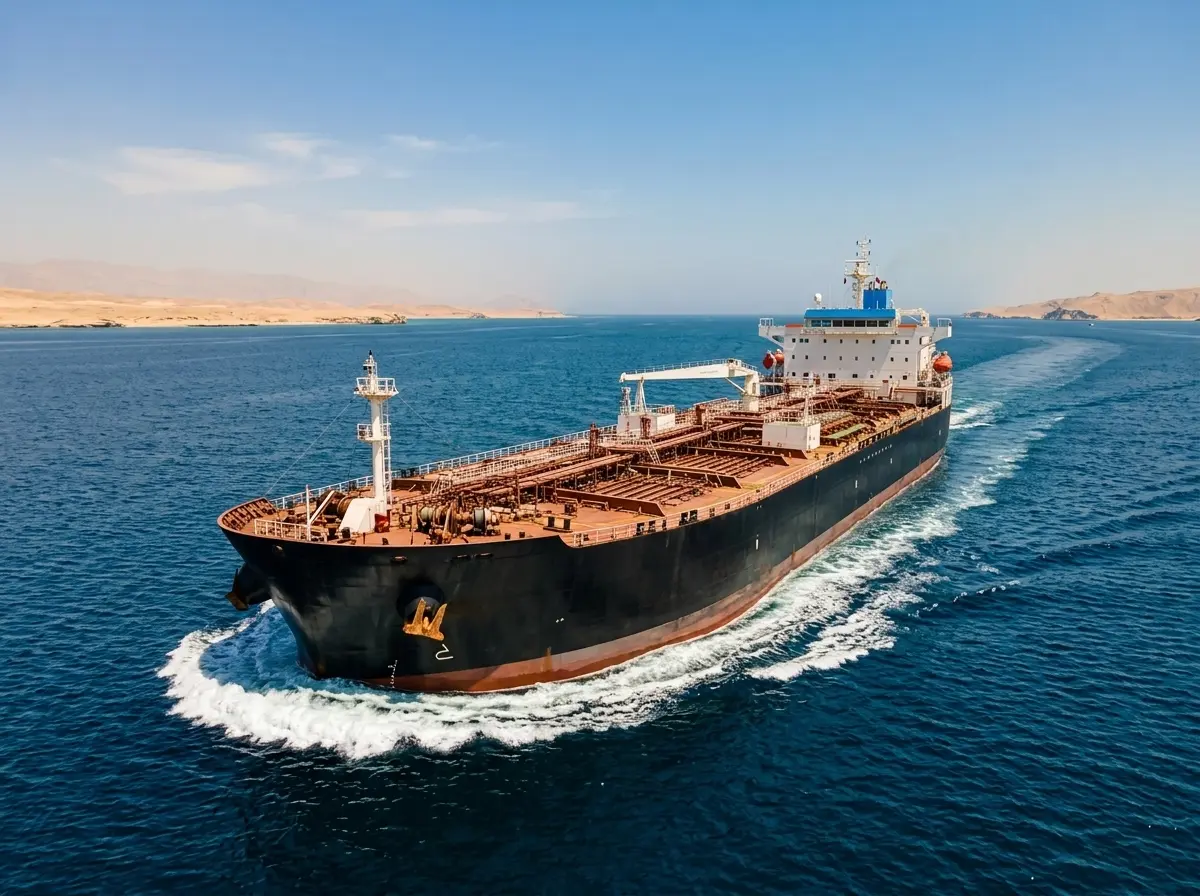
The strait remains the core supply artery. EIA data put average oil flows at 20.9 million barrels per day through Hormuz in the first half of 2025, equal to about 20% of global petroleum liquids consumption and one-quarter of maritime oil trade.
- 20.9 mb/d total oil flows 1H25
- ~20% of world liquids consumption
- 89% of Hormuz crude headed to Asia (China, India, Japan, South Korea dominant)
- 11.4 Bcf/d LNG, over 20% of global seaborne LNG, mostly Qatari
Bypass pipelines in Saudi Arabia and the UAE offer only about 4.7 million b/d of alternative capacity. That gap is why any credible reopening signal hits prices so hard. Traffic had slowed sharply after vessel attacks earlier in the conflict; even partial recovery adds barrels that markets must absorb.
OPEC+ had already approved another 188,000 b/d quota increase for August from seven members, continuing the unwind of 2023 voluntary cuts. More Hormuz throughput would compound that supply.
Stocks Climbed While Bitcoin Slipped
US equity futures rose on the headlines. The Kobeissi Letter tracked S&P 500 futures +0.5%, Nasdaq 100 +0.8% and Dow +0.4% as oil cratered. The 10-year Treasury yield slipped under 4.7%. The dollar index eased toward 99.50-99.80 amid separate yen intervention talk.
| Asset | Move | Context |
|---|---|---|
| S&P 500 futures | +0.5% | De-escalation bid |
| Nasdaq 100 futures | +0.8% | Risk-on |
| WTI crude | -6%+ | Premium unwind |
| Bitcoin | ~-1.5% to ~$62,500-62,800 | Own selling |
| 10Y yield | Under 4.7% | Softer |
Bitcoin’s drop stood out. It had already been pressured by prior land-blockade fears that took it under $64,000. On the oil crash day it traded near $62,760 with a 24-hour range of roughly $62,717-$63,714. Volume rose 7%. Long-term holders faced drawdowns even as macro conditions improved.
Crowd observation on X noted the divergence: lower oil and softer yields normally support crypto risk appetite, yet selling persisted from crypto-specific factors including hardware-wallet security issues, weak earnings from listed crypto firms and ETF flow rotation. That layer kept Bitcoin from joining the equity relief rally. An earlier oil crash that lifted Bitcoin to 65K had shown the opposite correlation when peace headlines hit cleaner.
July’s 20 Percent War Premium
Oil had climbed more than 20% in July, its strongest monthly gain in months, after hostilities shattered an interim ceasefire framework and tankers faced stoppages or diversions. Prices briefly tested multi-month highs near the conflict peak before the latest diplomatic window.
- Early-mid July: Renewed US-Iran exchanges and Hormuz vessel incidents push WTI toward and above $85
- Late July: Monthly gain locks in >20%; some reports of forced tanker turnarounds
- August 2 evening: Trump posts that perimeters of a deal exist and cancels the attack subject to rapid progress
- August 3: Asian trade opens with oil down 5-7%; talks confirmed for the afternoon
The premium reflected genuine scarcity pricing. Once the strike threat lifted and Hormuz traffic signs improved, that layer collapsed in a single session. Energy equities felt the reverse of the broader market bid.
Earlier episodes in the same conflict had already shown the pattern. Prior US strikes that pushed Bitcoin under 64K tightened the risk channel in both directions. The latest swing simply reversed it for oil and stocks first.
Iran’s Denials Keep the Risk Alive
Iran’s Fars News rejected reports that Tehran had already agreed a full Hormuz reopening deal with the US. Officials stressed the strait remains closed to ships that do not coordinate with the IRGC. Oman-focused route talks were described as near completion, yet the two sides still differed on lane control and whether any fees would apply.
Trump framed the US pause as conditional. Markets priced the optimistic branch hard on Monday. A failed Monday session or fresh Iranian rejection would reverse the oil drop just as quickly. Gulf states that pushed the pause have clear skin in the game: they want lower retaliation risk to their own export terminals more than they want $100 oil.
Consumers and rate-sensitive assets win if the lower oil path sticks. Producers and energy stocks absorb the hit. The oil surge that cracked crypto treasury bets earlier this cycle already showed how fast those positions can reverse when energy prices swing.
For now the tape shows one clean fact: the war premium is being dismantled in real time. Whether the talks convert that into durable free passage decides if Monday’s crash was the start of a new range or just another head-fake.


Howard the Duck at 40 Still Owns Marvel’s First Flop

Valve Skin Ban Hits BLAST and Forces CS2 Teams Toward Betting Cash

Oil Crashes Below $80 as Iran Talks Restart and Markets Split

Netflix Screening Erases Fortitude Exclusivity in $105M Cage Suit

Bitget BGBTC Upgrade Turns Idle Bitcoin Into Daily Yield

FFXIV Switch 2 Port Brings Portability With a Second Bill

MacBook Air Delays Reveal AI Memory Crunch Repricing Laptops

Bitcoin BIP-110 Soft Fork Dies on Tiny Miner Support

CXMT LPDDR6 Push Locks In Mobile DRAM Split

Snapchat Hands Spotlight Priority to Human Creators Over AI Farms

Kalshi Loses Major NY Prediction Markets Ruling to Judge Torres

Fed Minutes Cite AI Demand as Inflation Risk, Put a 2026 Hike Back on the Map

Marker AI Writing Startup Lands $13M Seed Led by Index Ventures

Dota 2 Esports World Cup 2026: Spirit Defends $2M Title In Paris

Meta’s Muse Spark 1.1 Beats Rivals on Price, Trails on Coding

ARC Intelligence Closes €4M Seed Round in Roughly a Week

CS2 Premier Season 5 Lands With Cache and a C4 Damage Rework

Finto Picks Munich Over Silicon Valley After YC, Raises $3.4M

Backrooms Returns to Theaters as the Everything Must Go Edition

Trump Calls Iran ‘Islamic Republic of Japan’ as Ceasefire Ends
-
 FINANCE2 months ago
Zcash Patched a Double-Spend Bug as ZEC Climbed 5%
-
 ENTERTAINMENT2 months ago
Steam Summer Sale 2026 Locks In June 25 to July 9 Dates
-

 FINANCE1 month ago
CLARITY Act Final Text Expected This Weekend as 60-Vote Hurdle Looms
-
 NEWS3 months ago
Meta Adds AI Replies to Threads, But Users Can’t Block It
-
 ENTERTAINMENT3 months ago
‘Widow’s Bay’ Review: Apple TV’s Sleeper Horror-Comedy Earns Its Fog
-
 NEWS5 months ago
U.S. Navy Deploys Solar-Powered Lightfish Drone to Patrol Oceans
-
 NEWS8 months ago
FolderFresh Review: This Free Tool Automates Windows File Organizing
-
 FINANCE4 weeks ago
Kalshi Loses Major NY Prediction Markets Ruling to Judge Torres