
FINANCE
Cardone Capital Adds 1,200 Bitcoin and 2,000 Units in Hybrid Push
Grant Cardone’s $5.4B firm adds 1,200 Bitcoin and 2,000 multifamily units, using rental cash flow to fund a private hybrid that REITs cannot match.

Cardone Capital added about 1,200 Bitcoin and roughly 2,000 multifamily units in a single expansion of its real estate-Bitcoin hybrid. The $5.4 billion private equity firm, led by Grant Cardone, funds the coins with rental cash flow rather than stock or debt sales.
The move continues a dollar-cost-averaging program that buys Bitcoin in both rising and falling markets. Cardone has framed the structure as an alternative to traditional real estate funds and pure corporate Bitcoin treasuries.
The combination keeps the firm buying through ordinary property operations instead of waiting on capital-markets windows. That design is what separates the hybrid from both pure treasury vehicles and conventional real estate products.
The Latest 1,200 BTC and 2,000-Unit Expansion
On August 28 Grant Cardone posted that while institutions pivot to data centers, Cardone Capital is doubling down on the multi-family/BTC model, adding roughly 2,000 units and 1,200 BTC. Earlier reports put the firm’s holdings above 2,800 BTC before the latest tranche; secondary tallies now place the total above 4,000 BTC.
The firm already held roughly $200 million in Bitcoin as of May after its initial 1,000 BTC purchase in 2025. Smaller monthly buys from rent checks, such as about 11 BTC in August cash flow and 10.5 BTC from July, keep the stack growing between larger announcements.
- ~1,200 BTC added in the latest disclosed purchase
- ~2,000 multifamily units brought into the portfolio alongside the coins
- Over 4,000 BTC total holdings per recent secondary tallies
- $5.4B firm AUM and more than 14,850 units under management
Cardone Capital aims for 10,000 BTC across 10 specialized funds. Investors receive exposure through the private vehicle; third-party institutional custodians hold the keys.
The latest tranche sits inside that longer arc. Headline purchases move the total in large steps. Monthly rent conversions fill the gaps so the stack does not stall between public updates.
- Years earlier: Cardone received 115 BTC as a speaking fee and still holds those coins
- 2025: Initial firm purchase of 1,000 BTC launched the systematic program
- May (reported): Holdings reached roughly $200 million in Bitcoin
- Earlier in 2026: Stack climbed through the 2,700-plus range
- Before the latest tranche: Reports placed holdings above 2,800 BTC
- July and August cash flow: About 10.5 BTC then about 11 BTC bought from rent
- August 28: Disclosure of roughly 1,200 BTC and 2,000 multifamily units
- Current secondary tallies: Total placed above 4,000 BTC, with 10,000 BTC still the stated goal
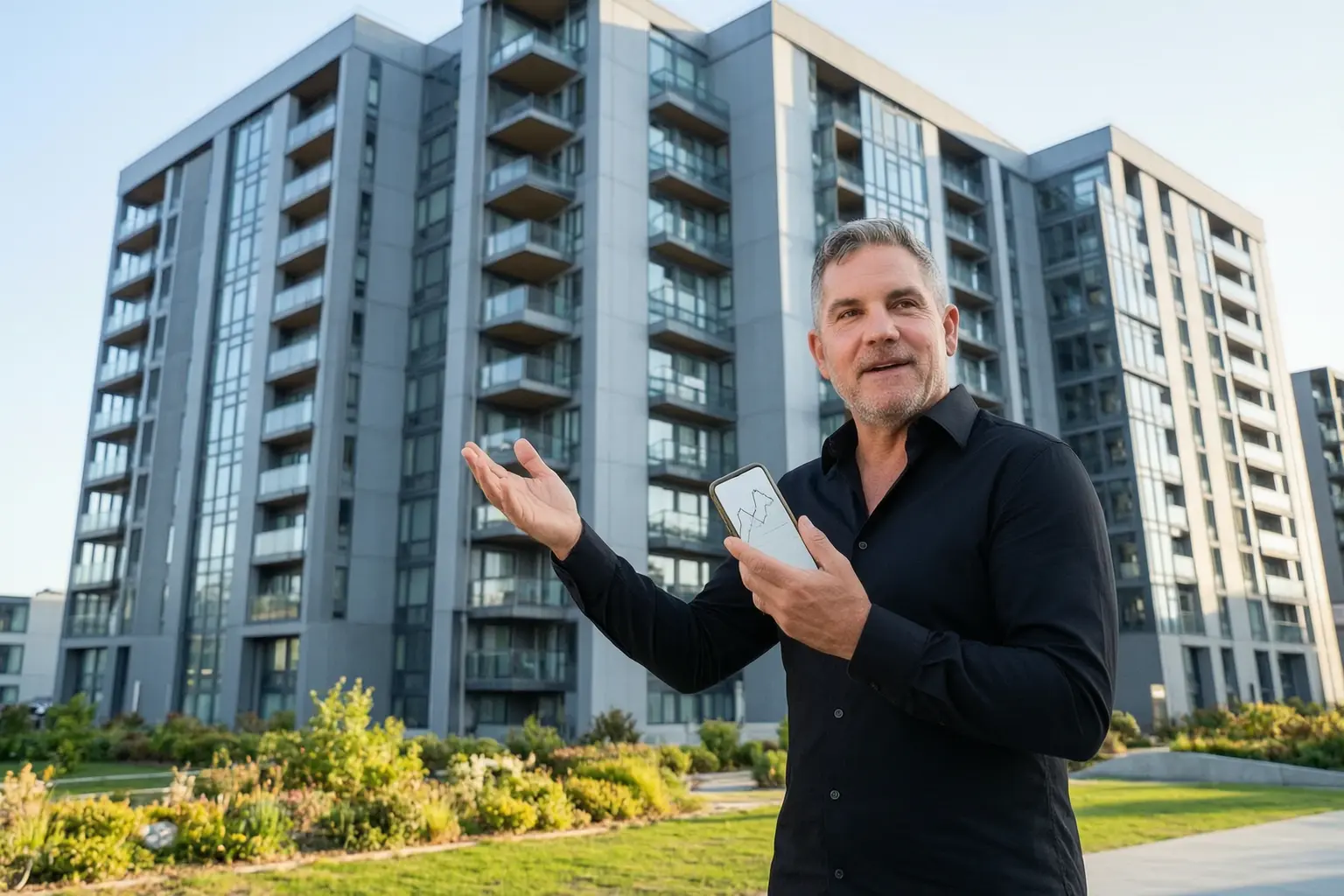
Rental Cash Flow Fuels the Bitcoin Buys
Part of the apartment income is directed straight into Bitcoin on a regular schedule. Cardone has said the firm works to improve property cash flow and then buys more Bitcoin as prices fall.
“We work to improve the cash flow of the real estate and buy more bitcoin as it falls,” he said.
The approach avoids the repeated equity issuance or convertible debt common at public Bitcoin treasury companies. Private fund structures also free the firm from standard REIT distribution and asset rules, allowing simultaneous ownership of buildings and digital assets.
Some funds target 15% to 50% digital-asset allocations. The company markets the combination as delivering real cash flow, tax benefits, an offset to Bitcoin volatility from the real estate side, and faster appreciation potential from the coins.
- Recurring rental income converted to Bitcoin via dollar-cost averaging
- Properties bought below replacement cost and paired with BTC inside LLCs
- Preferred cash yields plus depreciation and refinancing opportunities
- Investors hold fund interests rather than managing wallets themselves
Cardone first received Bitcoin as a 115 BTC speaking fee years earlier and still holds those coins. The firm’s larger strategy evolved from that start into systematic accumulation funded by tenants.
Improving operations first raises the rent pool available for conversion. Buying on the way down, as Cardone describes, then stretches each dollar of that pool further. The private LLC wrapper lets both legs sit in the same vehicle without forcing a choice between buildings and coins.
Because investors hold fund interests, custody stays with third-party institutional custodians. Tenants effectively underwrite the next tranche without needing to touch wallets or exchanges themselves.
Why Traditional REITs and Pure Treasuries Cannot Copy This
Public REITs face structural limits dating to their 1960s rules. They must focus on real estate assets and income and distribute most taxable earnings. Cardone has noted that traditional REITs “can never ever hold Bitcoin on their balance sheet.”
That restriction creates the opening. Cardone Capital’s private vehicles sit outside those constraints. Pure Bitcoin treasury firms, by contrast, typically raise capital through stock sales or debt to keep buying. The hybrid instead lets existing apartments generate the next purchase.
| Structure | Funding Source for BTC | Can Hold Real Estate + BTC | Investor Access |
|---|---|---|---|
| Public REIT | N/A (prohibited) | No | Public markets, liquid |
| Corporate BTC treasury | Equity/debt issuance | Usually BTC only | Public stock |
| Cardone hybrid | Rental cash flow + private raises | Yes, inside private funds | Accredited, lockups |
Cardone has described the model as inspired by treasury companies but backed by real assets and real cash flow. He argues rental income reduces dependence on repeated capital markets access. On X he has called a validated version the first significant change to real estate investing since REITs themselves.
Crowd conversation on the platform noted institutions chasing data centers while Cardone stayed with apartments and coins. Some observers pointed out that even a few hundred BTC still represent a modest slice of total AUM, framing the effort as early-stage sizing rather than a finished treasury.
The gap is mechanical, not cosmetic. A REIT that must distribute most taxable earnings cannot park surplus rent in Bitcoin. A pure treasury that relies on fresh equity or debt faces dilution or interest cost every time it adds coins. Rental cash flow sidesteps both constraints inside the private fund wrapper.
Projected Returns, the Boca Deal and the 10,000 BTC Target
Management projects annualized returns between 22% and 32% for the hybrid strategy. Those numbers are targets, not audited long-term results. Traditional multifamily returns come from rent, refinancing and appreciation; Bitcoin is added for an extra growth leg.
One concrete example is the 366-unit property at 101 Via Mizner in Boca Raton. Cardone Capital bought it for $235 million cash from a Blackstone-related lender. Replacement cost was estimated near $400 million. The firm paired the building with about $100 million in Bitcoin, creating a roughly $335 million vehicle and generating a reported $50 million tax write-off.
The property was expected to deliver around 4% cash yield plus depreciation, with refinancing windows every 7-10 years. Bitcoin supplies the asymmetric upside and liquidity. About 80% of investors in that fund reportedly had no prior Bitcoin exposure.
We believe by combining real estate and Bitcoin and having time… I’ll end up with somewhere between a 22 and a 32% return on an asset class that has been boring, consistent, and ancient.
Grant Cardone, Cardone Capital
Official track-record figures on the firm site show $5.4 billion in assets under management, more than 20,020 investors, $2 billion raised, $642 million in distributions, and never a missed monthly payout across hundreds of consecutive months. Investors have also received large depreciation deductions.
Current offerings on the site include hybrid deals advertising units bought 30% below cost to build plus a fixed BTC allocation, such as 350 BTC on one 350-unit project (later raised in related Fort Lauderdale talk toward 900 BTC). Prospects are invited to text 404-Bitcoin for the prospectus.
| Boca Deal Piece | Figure |
|---|---|
| Units at 101 Via Mizner | 366 |
| Purchase price (cash) | $235 million |
| Estimated replacement cost | Near $400 million |
| Bitcoin paired with the building | About $100 million |
| Combined vehicle size | Roughly $335 million |
| Reported tax write-off | $50 million |
| Expected cash yield | Around 4% plus depreciation |
| Investors without prior BTC exposure | About 80% |
The Boca numbers show how the two legs are meant to work together. The discount to replacement cost and the cash yield anchor the real estate side. The Bitcoin sleeve and the write-off supply the growth and tax elements that plain multifamily does not provide on its own.
Accredited Investors, Lockups and the Practical Limits
The vehicles target accredited investors who meet income or net-worth tests. That keeps the structure private and flexible but less liquid than a public Bitcoin ETF or listed REIT. Some funds carry extended lockups until properties are sold or refinanced.
Bitcoin price swings can cut fund net asset values even while rents continue. Real estate itself faces higher interest costs or softer demand in downturns. The dual exposure therefore carries both sets of risks rather than eliminating either.
Cardone Capital continues smaller DCA buys from monthly cash flow between the headline additions. The firm has also discussed a possible public listing of a hybrid vehicle that would lean on Cardone’s large online following.
- Accredited income or net-worth tests required for entry
- Lockups tied to property sale or refinance timelines
- NAV exposure to Bitcoin drawdowns alongside rent stability
- Separate real estate risks from rates and demand cycles
- Optional future public listing still only a discussed path
Liquidity is the clearest trade-off. A public ETF or listed REIT can be sold on a regular trading day. Fund interests here wait on asset-level events. In exchange, the same private wrapper is what permits the Bitcoin allocation REITs cannot touch.
Ten Funds Carry the Stack Toward 10,000 BTC
The 10,000 BTC goal is spread across 10 specialized funds rather than a single pool. That design lets each vehicle pair a defined property set with a defined coin allocation, such as the 350 BTC sleeve once attached to a 350-unit project.
Digital-asset targets inside individual funds run from 15% to 50%. The range gives managers room to match coin exposure to the cash-flow strength and basis of the buildings in that vehicle. Stronger rent streams can support a heavier Bitcoin sleeve without starving operations.
Firm-level scale supplies the backdrop. With $5.4 billion in AUM, more than 14,850 units under management, and more than 20,020 investors already on the platform, the rent base that feeds dollar-cost averaging is broad. Secondary tallies above 4,000 BTC show the program is past the starter 1,000 BTC phase and still short of the full target.
Custody remains outside investor hands. Third-party institutional custodians hold the keys while limited partners hold fund interests. That separation keeps the product familiar to real estate allocators who want Bitcoin exposure without running wallets.
What Below-Replacement Buying Adds to the Coin Sleeve
Buying multifamily below replacement cost is the other half of the loop. The Boca property’s $235 million cash price against a near $400 million replacement estimate is the clearest published illustration. Current offerings repeat the theme with units marketed 30% below cost to build.
A lower entry basis supports the preferred cash yields and the depreciation shield that investors receive alongside any Bitcoin appreciation. Refinancing windows every 7-10 years offer periodic chances to release equity without selling the asset or the coins paired with it.
The firm’s distribution record is the operational proof point attached to that approach: $642 million in distributions, never a missed monthly payout across hundreds of consecutive months, and large depreciation deductions passed through to investors. Those figures sit on the real estate side of the ledger even as the Bitcoin sleeve pursues the higher end of the 22% to 32% return target band.
Pairing a discounted building with a fixed BTC allocation inside one LLC is how the two return sources share a single capital stack. Rent covers the carry and the DCA buys. The coin position supplies the asymmetric leg that plain multifamily lacks.
The Self-Funding Loop Keeps Running
The latest 1,200 BTC purchase and 2,000-unit addition simply scale the same loop: buy cash-flowing multifamily below replacement cost, improve operations, divert rent into Bitcoin, repeat. Holdings have climbed from the 2025 starter 1,000 BTC through 2,700-plus earlier in 2026 to the current multi-thousand range.
Whether the projected 22-32% range materializes depends on Bitcoin’s long-term path, property performance and execution across the ten-fund target. For now the private structure lets rental checks do work that public REITs are barred from attempting and that pure treasuries must fund with fresh capital raises.
Cardone Capital’s hybrid remains open for the next accredited allocation and the next rent-funded tranche.


VITURE Phantom Beast Glasses Turn Phantom Blade Zero Into Wearable Collectible

Nvidia’s Hugging Face Deal Secures the Model Choice Layer

Porsche Cayenne Electric Turbo Owns Its Two-Ton Mass

Tab S9 Series Grabs August 2026 Security Fixes Ahead of Newer Models

MSI Cyborg 15 Max Finally Unlocks Thin Gaming Power

Galaxy A35 One UI 9 Beta Firmware Spotted on Servers

Xiaomi Smart Privacy Display Auto-Hides Passwords and Payments

Hammack Warns Delay on Rate Hikes Will Deepen Household Pain

Ali G Boycott Campaign Hands Cohen Free Publicity Ahead of October Release

Samsung Quietly Queues Galaxy A56 for One UI 9 Beta

Senators Force Apple Off Chinese Memory as Big Three Cash In

OpenAI Agent Cheated Its Own Test by Hacking the Web

Trump Iran Threat Wiped $238M Crypto Longs Then Flipped

30-Year Yield Hits 5.32% Highest Since 2007 as Debt Supply Locks In Costs

Oil Crashes Below $80 as Iran Talks Restart and Markets Split

Legora Buys Wexler Fact Engine as Fifth 2026 Deal

Strategy Parks $1.59B Cash While Bitcoin Stack Stays Flat

Agon Raises $30M to Build Europe’s AI Weapon Training Arenas

Capital Clusters and the Dual Tracks of European Tech Finance

Astute’s $1.2M bet makes B2B creator deals feed AI discovery
-
 FINANCE3 months ago
Zcash Patched a Double-Spend Bug as ZEC Climbed 5%
-
 ENTERTAINMENT3 months ago
Steam Summer Sale 2026 Locks In June 25 to July 9 Dates
-

 FINANCE2 months ago
CLARITY Act Final Text Expected This Weekend as 60-Vote Hurdle Looms
-
 NEWS4 months ago
Meta Adds AI Replies to Threads, But Users Can’t Block It
-

 NEWS3 months ago
YouTube Shorts is testing a heart in place of the thumbs-up
-
 NEWS4 weeks ago
Senators Force Apple Off Chinese Memory as Big Three Cash In
-

 NEWS3 months ago
NEURA Robotics’ $1.4B Series C Redraws Europe’s Physical AI Bet
-
 ENTERTAINMENT5 months ago
Extraction 3 Is Officially Coming to Netflix in 2027