
NEWS
MSI Cyborg 15 Max Finally Unlocks Thin Gaming Power
The 2026 MSI Cyborg 15 Max C2W pairs an RTX 5070 with redesigned dual-fan cooling so a 2 kg laptop sustains high settings without cooking the user.

The MSI Cyborg 15 Max C2W weighs 4.41 pounds, runs an RTX 5070 Laptop GPU at high settings in Cyberpunk 2077 for roughly 82 frames per second, and keeps the GPU near 167 degrees Fahrenheit under that load. Jonathan H. Kantor of SlashGear spent two weeks with the 15.6-inch machine and came away calling the thermal redesign the feature that makes the rest possible.
Earlier Cyborg models repeatedly capped GPU power near 45 W inside the same thin shell. This generation rewrites the cooling stack so the chassis can finally feed the silicon.
That shift is the story. The screen, ports, and upgrade bays were already serviceable. What changed is the wattage the thin shell can hold without turning loud or hot, and that single change repositions the whole line.
A 2 kg Chassis That No Longer Feels Like a Compromise
At 359 x 249 x 21-22.9 mm and 2 kg, the C2W sits in the portable end of the 15-inch gaming class. The lid carries a cyberpunk texture and the heart-shaped Cyborg icon formed from the letters C and Y. Palm rest diamond patterning adds grip without extra bulk.
The 15.6-inch IPS panel runs 1920×1080 at 144 Hz with 100 percent sRGB coverage. Kantor noted clean color for Photoshop work alongside games. Refresh matches the GPU well enough that motion stays smooth once settings settle.
- Display: 15.6-inch IPS, 1920×1080, 144 Hz, 100 percent sRGB
- Memory: 16 GB ship config, one of two slots filled, expandable to 96 GB
- Storage: 512 GB or 1 TB NVMe start, second M.2 slot left free
- Shell: 359 x 249 x 21-22.9 mm, 2 kg with the 60 Wh pack
RAM ships as 16 GB (DDR4-3200 or DDR5-5600 depending on SKU) in one of two slots, expandable to 96 GB. Storage starts at 512 GB or 1 TB NVMe with a second M.2 slot free. The open bay is the practical upgrade path most buyers will use first.
Carry weight stays close to non-gaming 15-inch machines, so the chassis no longer forces a hard choice between travel ease and discrete GPU headroom. Texture on the lid and palm rest also keeps the plastics from feeling bare in daily handling.
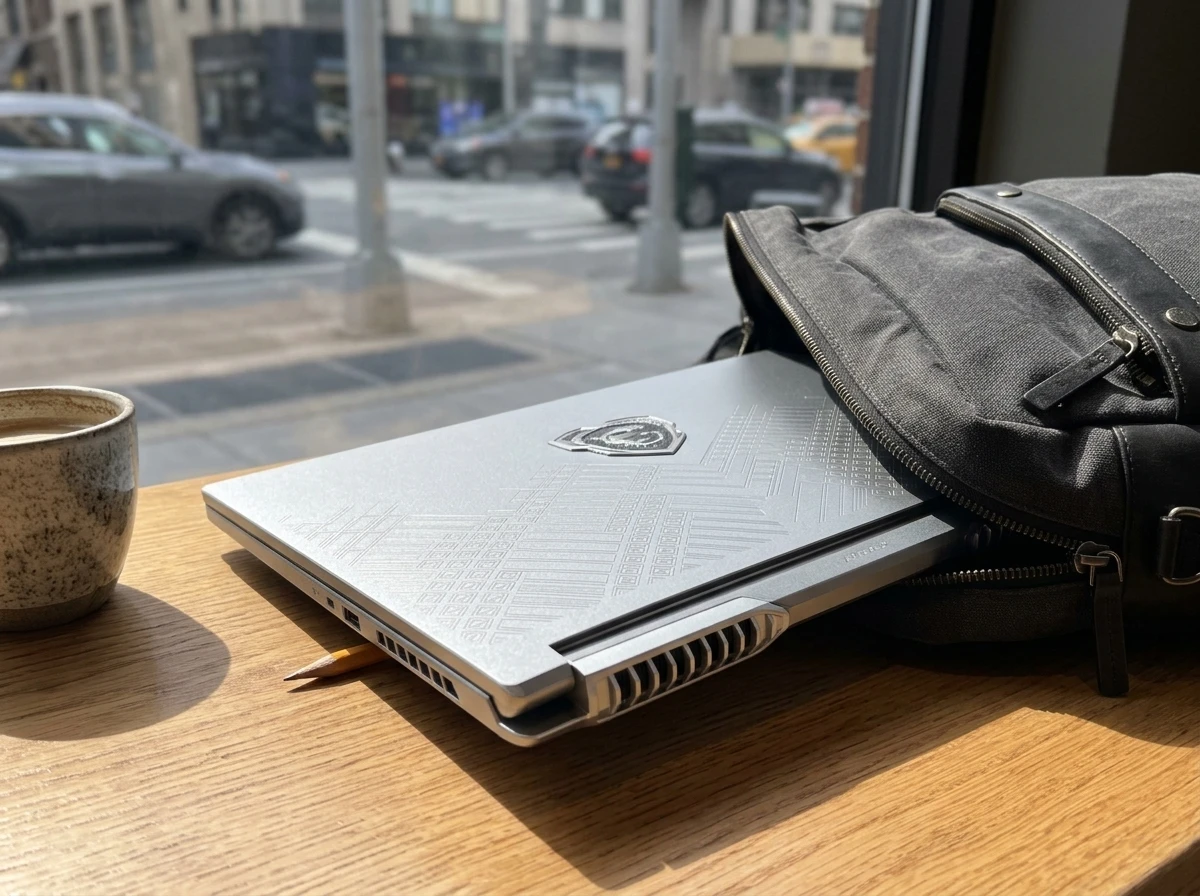
How Dual Fans Ended the Old Cyborg Power Ceiling
Previous Cyborg 15 units used a single fan and shared heat pipes that forced MSI to limit RTX 40-series cards to about 45 W. Reviewers at the time measured the shortfall against 75-115 W rivals and called the machine quiet but slow.
The Max redesign installs two fans MSI lists as up to 27% larger cooling fans than prior generations, three heat pipes, phase-change thermal material, and four exhaust vents. The result is a sustained budget of up to 140W combined CPU and GPU power under Apex mode, with the RTX 5070 able to draw up to 100 W TGP including Dynamic Boost.
- 2023-2024 Cyborg 15: single fan, ~45 W GPU limit, quiet but 13-22% slower than higher-TGP peers in PC Gamer tests.
- 2026 standard Cyborg 15: still single-fan, up to 105 W combined, RTX 5060 ceiling.
- 2026 Cyborg 15 Max: dual fans, three pipes, 140 W combined, RTX 5070 at 100 W TGP.
Kantor measured GPU temperatures around 167 F and CPU around 152 F while running Cyberpunk 2077 on High with ray tracing at 1080p. Those numbers sit well below the point where modern laptop silicon throttles hard. Fan noise stayed low enough that the machine felt usable on a lap for extended sessions.
Larger dual fans move more air across three pipes instead of a shared single-fan path. Phase-change material improves contact at the die, and four vents give heat a cleaner exit. Together they free the GPU to hold the higher TGP without the old quiet-but-slow trade.
The jump from roughly 45 W to 100 W TGP on the discrete GPU is the practical core of the Max badge. Combined 140 W under Apex mode then leaves room for the Intel Core 7 240H to stay active instead of starving beside a capped GPU.
What the Numbers Look Like in Actual Games
| Title / Setting | Average FPS | Notes |
|---|---|---|
| Cyberpunk 2077 High + RT 1080p | ~82 | dips low 70s in dense scenes, ~100 in open areas |
| Forza Horizon 5 Extreme | 72 | peaks to 165 average in lighter stretches |
| Other titles (Hades 2, Minecraft maxed) | stable high | no meaningful stutter reported |
Latency stayed minimal after settings tweaks. Kantor tested Game Pass and Steam libraries and found no current title the machine refused at playable 1080p highs. DLSS 4 and Max-Q technologies from the Blackwell RTX 5070 (8 GB GDDR7, up to 798 AI TOPS) supply the usual frame-generation headroom when native rates dip.
The Intel Core 7 240H (10 cores, 6P+4E, 5.2 GHz boost) pairs cleanly. MSI claims up to 15% performance lift versus the prior i7-13620H in some configs. Everyday multitasking and light creative work sit well inside the thermal envelope.
At roughly 82 fps in Cyberpunk with ray tracing on High, the panel’s 144 Hz ceiling still has headroom in open areas near 100 fps. Dense scenes in the low 70s remain above the stutter threshold most players notice at 1080p. Forza’s 72 fps Extreme average, with lighter stretches far higher, shows the same pattern: sustained playable floors rather than brief peaks.
Frame generation from DLSS 4 covers the dips without forcing a settings retreat. That keeps the 8 GB GDDR7 part useful across both demanding triple-A loads and lighter maxed titles such as Hades 2 and Minecraft, where Kantor reported stable highs and no meaningful stutter.
Ports, AI Tools and the Daily Driver Side
Connectivity covers the bases: HDMI 2.1 (4K@60 Hz), RJ45 Ethernet, USB-C with DisplayPort and PD 3.0 (up to 100 W), two USB-A 3.2 Gen2, one Gen1, audio combo, and Kensington lock. Wi-Fi 6E and Bluetooth round it out. The layout keeps cables to the right and rear so a mouse hand stays clear.
- MSI AI Engine auto-tunes fan curves, power limits and clocks to the detected workload.
- Copilot key and Windows 11 Home or Pro support modern AI assistants.
- DTS Audio Euphoria and dual 2 W speakers handle casual sound; serious players will still want external audio.
- Second M.2 and RAM slot leave room for a second drive and more memory without full teardown.
Kantor used the machine for image editing, video, browsing and general Windows work without friction. The same thermal headroom that holds game clocks also keeps local AI inference and multitasking stable. For privacy-conscious users, recent Windows 11 per-app privacy controls sit ready on the platform.
PD 3.0 on USB-C up to 100 W means a smaller brick can top up the pack when the 180 W adapter stays home. HDMI 2.1 and DisplayPort over USB-C both reach 4K at 60 Hz, so an external monitor does not require a dock for basic desk use. Ethernet remains available for venues where Wi-Fi 6E is weak or contested.
MSI AI Engine’s automatic fan, power, and clock tuning reduces manual profile switching between edit sessions and game launches. The Copilot key and Windows 11 AI hooks then sit on top of that hardware path without demanding extra thermal budget beyond what the dual-fan stack already provides.
Who Needs the Max Configuration
Street pricing sits near $1,900 in the United States, £1,499 in the UK, and as low as €1,349 on French promotions after discounts. Configurations with higher storage or Pro Windows cost more. That places the Max in mid-range gaming laptop territory rather than budget or ultra-premium.
SlashGear’s verdict is direct: worth the money for serious hardcore gamers who want high-performance portable play. Casual users who game lightly should look at cheaper or lighter machines. The cooling and power upgrades make the difference against the standard Cyborg 15, which keeps the chassis and screen but drops to single-fan cooling and a lower combined wattage ceiling.
| Feature | Cyborg 15 Max | Standard Cyborg 15 |
|---|---|---|
| GPU ceiling | RTX 5070 up to 100 W TGP | RTX 5060 |
| Combined power | 140 W | 105 W |
| Cooling | Dual fan, 3 pipes, 4 vents | Single fan, dual exhaust |
| Weight | 2 kg | ~1.98 kg |
| Adapter | 180 W | 150 W |
Students and professionals who also game get a machine that travels easily and still runs modern titles at high settings. Pure desktop replacements or 4K-native players will want thicker chassis with higher TGP options.
The price gap versus lighter or cheaper machines buys the dual-fan stack and the RTX 5070’s 100 W ceiling. Weight barely moves versus the standard Cyborg 15 at about 1.98 kg, so the Max premium is almost entirely cooling and silicon, not bulk.
Battery Reality and the Remaining Trade-Offs
The 3-cell 60 Wh battery and 180 W brick behave like every other mid-power gaming laptop. Heavy gaming drains it in a couple of hours. Mixed productivity stretches further but still falls short of ultrabook endurance. PD 3.0 charging helps when the brick stays home. Screen brightness drew mild criticism in some reviews as merely adequate rather than bright.
Build plastics feel functional rather than premium; the textured surfaces hide fingerprints and scratches better than glossy lids. Speakers are serviceable for the size. A dedicated gaming headset upgrade path remains the usual recommendation for competitive audio. For pure handheld play away from a desk, MSI’s own MSI Claw handheld gaming alternative covers a different use case.
The size, weight, and thermal management make the MSI Cyborg 15 Max an ideal laptop for gamers. If you’re looking for a laptop you can use regularly and play games on sparingly, you should look elsewhere.
Jonathan H. Kantor, SlashGear review
The historical pattern is clear. Thin Cyborgs once traded performance for silence and low heat. The 2026 Max keeps the silence and low heat while restoring the missing watts. That single change turns a previously compromised chassis into a credible daily carry for high-settings 1080p gaming.
Expect wall power for long game sessions and treat the 60 Wh pack as a bridge for travel and light work. Brightness that reads as adequate favors indoor desks over bright outdoor courtyards. None of those limits erase the thermal win; they simply mark where the thin 2 kg shell still draws a line.
The Power Budget Reaches Beyond Games
Combined 140 W under Apex mode and a GPU path up to 100 W TGP do more than raise frame rates. They keep clocks steady when editing, local AI inference, and background browser loads overlap with a game or a long export.
Kantor’s two-week mix of Photoshop, video, browsing, and Game Pass or Steam titles stayed inside that envelope. GPU near 167 F and CPU near 152 F under Cyberpunk High with ray tracing show the headroom is real, not a brief boost that collapses once the chassis warms.
MSI’s claimed lift of up to 15 percent versus the prior i7-13620H in some configs fits the same picture. The Core 7 240H’s 10 cores and 5.2 GHz boost can use the extra thermal room instead of yielding it all to the GPU. Daily driver work and high-settings 1080p play therefore share one cooling design rather than fighting over a 45 W legacy cap.
Where the Max Fits Against Thicker Rivals
Mid-range street pricing near $1,900, £1,499, or promotional figures as low as €1,349 puts the Max beside other portable 15-inch gaming machines, not beside thick desktop replacements. The 2 kg shell and 21-22.9 mm thickness stay the selling point.
Buyers who need native 4K panels or sustained power above the 140 W combined ceiling still look at heavier chassis. Buyers who want silence, lap-friendly heat, and high 1080p settings get the configuration SlashGear called worth the money for serious portable play.
- Thin legacy Cyborg: quiet, cool, GPU held near 45 W, lagged higher-TGP peers by 13-22% in older tests.
- Standard 2026 Cyborg 15: same thin idea, single fan, 105 W combined, RTX 5060 ceiling.
- Cyborg 15 Max: dual fans and 140 W combined unlock the RTX 5070 at up to 100 W TGP without giving up the 2 kg carry weight.
The remaining trade-offs stay honest: 60 Wh life measured in a couple of hours under heavy games, plastics that read functional, speakers that invite a headset, and brightness called merely adequate. Against that list, the cooling redesign is still the feature that makes the rest of the machine make sense.
Frequently Asked Questions
How much does the MSI Cyborg 15 Max C2W weigh?
Official weight is 2 kg (4.41 pounds) including the 60 Wh battery, placing it among the lighter 15.6-inch gaming laptops that still carry mid-range discrete GPUs.
What is the maximum power the Cyborg 15 Max can sustain?
MSI rates the system for up to 140 W combined CPU plus GPU under Apex mode, with the RTX 5070 Laptop GPU able to draw up to 100 W TGP including Dynamic Boost.
Can you upgrade RAM and storage on the Cyborg 15 Max?
Yes. Two SODIMM slots support up to 96 GB total, and two M.2 PCIe Gen4 slots leave one free for a second NVMe drive without removing the factory SSD.
How long does the battery last under gaming loads?
Like most 60 Wh gaming laptops, heavy 3D titles drain the pack in roughly two to three hours; mixed office and media use stretches further but still requires the 180 W adapter for full sessions.
Does the 144 Hz panel support higher external resolutions?
The internal panel is fixed at 1080p 144 Hz 100% sRGB, while the HDMI 2.1 port and USB-C DisplayPort output support 4K at 60 Hz on external monitors.


Dolly Parton’s $450 Million Fortune Keeps Working After Her Death

SpaceX’s $60B Cursor Buy Immediately Costs It OpenAI Models

Rays Forever Home Wins County Vote as College and Taxpayers Carry the Load

Apple TV Hits $14.99 as Sports and Hits Bill Comes Due

Swift Telescopes Restart as Orbit Drop Accelerates

Oracle’s 2.8 GW Bloom Deal Exposes the AI Power Bypass

Galaxy S26 Beta 7 Ports Fold 8 AI as Stable Nears

Walmart Pays $50 Million to Close Federal Opioid Pharmacy Case

Space Mirror Demo Revives 1993 Russian Night-Light Test

Measles Death Dispute Deepens Distrust in Pennsylvania Outbreak

Trump Iran Threat Wiped $238M Crypto Longs Then Flipped

30-Year Yield Hits 5.32% Highest Since 2007 as Debt Supply Locks In Costs

Oil Crashes Below $80 as Iran Talks Restart and Markets Split

Strategy Parks $1.59B Cash While Bitcoin Stack Stays Flat

Astute’s $1.2M bet makes B2B creator deals feed AI discovery

SpaceX Stock Rebound Tests Real Demand Before Huge Unlock

Capital Clusters and the Dual Tracks of European Tech Finance

BlackRock Turns Cash Empire Into Stablecoin Reserve Rails

The 20% Savings Ideal Meets a 2.7% Reality Check

Monzo chair Gary Hoffman exits after board revolt fallout
-
 FINANCE3 months ago
Zcash Patched a Double-Spend Bug as ZEC Climbed 5%
-
 ENTERTAINMENT3 months ago
Steam Summer Sale 2026 Locks In June 25 to July 9 Dates
-

 FINANCE2 months ago
CLARITY Act Final Text Expected This Weekend as 60-Vote Hurdle Looms
-
 NEWS4 months ago
Meta Adds AI Replies to Threads, But Users Can’t Block It
-

 NEWS3 months ago
YouTube Shorts is testing a heart in place of the thumbs-up
-

 NEWS1 month ago
Senators Force Apple Off Chinese Memory as Big Three Cash In
-

 NEWS3 months ago
NEURA Robotics’ $1.4B Series C Redraws Europe’s Physical AI Bet
-
 ENTERTAINMENT5 months ago
Extraction 3 Is Officially Coming to Netflix in 2027