
NEWS
Xiaomi Smart Privacy Display Auto-Hides Passwords and Payments
Leaked Xiaomi Smart privacy display UI adds automatic protection for passwords, payments and messages.

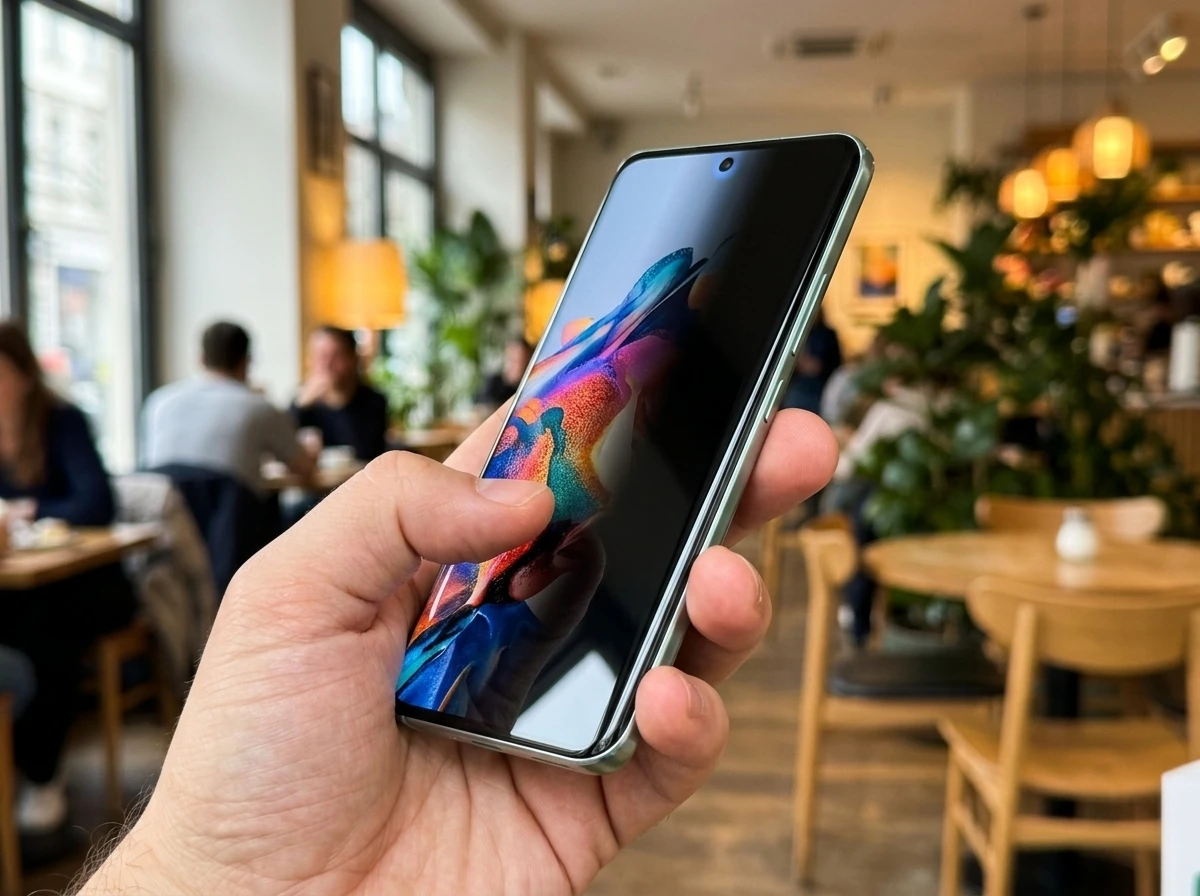
Xiaomi’s leaked Smart privacy display interface automatically activates reduced viewing angles on password entry, payment pages, money transfers and messaging screens, with custom app groups and a gaze-detection alert. The feature is expected on the Xiaomi 18 Pro and 18 Pro Max, due in September with Snapdragon 8 Elite Gen 6 Pro chips.
Polish tipster Kacper Skrzypek posted the leaked Smart privacy display screenshots and video from a global ROM on August 28. They show far more than a simple toggle.
The leak frames privacy as a default state rather than a manual switch. That shift matters because most shoulder-surfing risk arrives in short, repeated moments rather than long sessions the user plans in advance.
Groups, Apps and Page-Level Controls
Users can create custom groups, assign apps to each, and set separate privacy display rules per group. App privacy display also covers notifications. A page privacy display option lets the system switch on protection automatically for sensitive screens without manual input each time.
The settings page describes the effect as “screen visibility is reduced. Your device will alert you when another person’s gaze is detected.” Page and Hyper XiaoAi groups appear limited to China ROM for now; the rest shows on global builds.
Screenshots flag hardware-level privacy support. The system notes third-party themes may break lock-screen notification protection, and the feature does not work in landscape. It can raise power use slightly, turns off under battery saver, and may pause brightness compensation during HDR.
- Password entry screens trigger automatically
- Payment and transfer pages activate privacy mode
- Messaging threads fall under the same protection
- Custom groups let users bundle banking, work or chat apps with different rules
That combination moves the feature from occasional switch to background habit.
Groups matter because one rule set rarely fits every app. A banking group can stay strict. A casual chat group can stay lighter. The page list then fills gaps when an app opens a sensitive screen the user never tagged by hand.
Notification coverage closes another common leak. Lock-screen previews often expose senders, amounts, or message fragments to anyone standing nearby. Tying those previews to the same privacy path keeps the protection consistent from home screen to open app.
The stated limits shape real use. Landscape blackout leaves video and some productivity layouts unprotected. A mild power cost and battery-saver cutoff mean the feature yields when the phone is already under strain. HDR brightness pauses trade peak image punch for side-angle control during protected scenes.
- Landscape mode stays outside the privacy path
- Battery saver disables the feature entirely
- HDR may lose brightness compensation while protection runs
- Third-party themes can weaken lock-screen notification shielding
None of those trade-offs erase the core gain. They simply mark where users still need old habits or a physical film as backup.
How Samsung Built the First Hardware Version
Samsung introduced the first built-in hardware-controlled privacy display on the Galaxy S26 Ultra earlier in 2026. It relies on a dual-pixel OLED panel using narrow and wide pixels. In normal mode both light up for wide viewing angles. Privacy mode keeps the narrow pixels and dims the wide ones, so side viewers see black while the user sees a clear image head-on.
Close-up subpixel photos confirm the narrow and wide subpixel dual structure. Samsung’s software lets users toggle via Quick Settings, set per-app or scenario rules, hide notification content, and enable a maximum privacy mode that blanks the side view completely. The company spent five years on the tech. It works in both orientations and claims no hit to brightness or color for the owner.
| Feature | Samsung Galaxy S26 Ultra | Xiaomi Smart Privacy Display (leak) |
|---|---|---|
| Core tech | Hardware dual narrow/wide pixels | Hardware-level claim + software layers |
| Activation | Manual toggle, app/scenario rules | Manual, app groups, automatic page list |
| Sensitive pages | User-configured apps | Built-in password, payment, transfer, messaging |
| Extra alert | None reported | Gaze detection notification |
| Limitations | Minimal for user view | No landscape, power use, battery saver off, HDR pause |
| Scope | S26 Ultra exclusive so far | Flagships + possible HyperOS 4 software path |
Xiaomi’s version adds the automatic page list and groups as the clear differentiator. Samsung’s Samsung Privacy Display pixel-level light control set the hardware bar; Xiaomi is racing to make the daily experience smarter.
The dual-pixel path explains why Samsung can keep full orientation support and stable owner-side image quality. Narrow pixels handle the protected view. Wide pixels restore the open field when privacy is off. Xiaomi’s leak asserts hardware-level backing but does not yet prove an identical subpixel split.
Software layers on top of that hardware decide how often the user must think. Samsung’s Quick Settings toggle and scenario rules put control in plain reach. Xiaomi’s built-in password, payment, transfer, and messaging triggers aim to fire before the user remembers to act. Groups extend that idea across whole app bundles.
Five years of Samsung work set expectations for side blackout strength and color hold. Xiaomi’s September units will face the same reviewer checklist: how dark the side view goes, how bright the head-on image stays, and how cleanly the auto rules catch real banking and chat flows.
Who Gains From Ambient Protection
Anyone who checks balances, enters PINs or chats on trains, planes or café tables gains immediately. Shoulder surfing remains a real vector for account takeovers. A phone that blacks out sensitive screens by default removes the need to remember a toggle or stick on a physical privacy film that dims the whole display all day.
Office workers and travelers form the core audience. The gaze alert adds a second layer: the device warns the owner someone is looking, even if the screen stays readable head-on. That awareness is new.
Software privacy tools have faced their own friction lately. Microsoft’s recent blocks on popular privacy tools show how quickly access can change. Hardware-backed viewing-angle control sits lower in the stack and is harder to disable remotely. A parallel concern appears in desktop utilities such as the clipboard manager privacy trade-off, where convenience features sometimes expand the attack surface. Phone-side display privacy aims to shrink the visual surface instead.
Shared spaces create the pressure. A train seat, an airport lounge, or an open-plan desk puts strangers within easy glance range. Manual toggles fail when the user is rushed. Always-on films solve the glance problem but tax brightness every hour of the day, including private moments at home.
Ambient rules reverse that balance. Protection rises for the short windows that matter. Full viewing angles return when the risk drops. The gaze alert then covers the case where the image remains clear for the owner yet a nearby person still tries to read along.
Hardware placement also changes the trust model. A filter that lives in the panel path is harder to strip through a remote policy change than a driver or an app permission. That does not make the phone immune. It does move the control closer to the glass and farther from software gates that can close without warning.
From Software Rumors to Hardware Flagships
- February 2026: Tipsters said Xiaomi and Honor were testing privacy-display tech domestically after Samsung’s Unpacked rumors.
- May 2026: Code strings pointed to a software-only privacy filter in HyperOS 4 that could reach many existing Xiaomi, Redmi and POCO devices via update.
- June 2026: Digital Chat Station and Smart Pikachu reported Xiaomi testing a hybrid 2K privacy display for the Pro series, plus larger rear screens up to 4 inches with privacy protection.
- August 28 2026: Skrzypek’s global-ROM UI leak confirmed Smart privacy display naming, groups, page auto list and hardware-level wording.
Earlier software plans aimed at broad rollout. The flagship path now looks hybrid: dedicated panel support on the 18 series plus HyperOS 4 software features that may land later or on more models. Launch timing for the phones is September; HyperOS 4 talk has pointed toward October in some reports.
The sequence shows a pivot. Spring talk centered on a filter that could ride an OS update to older handsets. Summer reporting tied privacy glass to the Pro series and even to larger rear panels. The August UI leak then locked the feature name and the automatic page behavior into public view on a global ROM build.
Hybrid design keeps both doors open. Flagship buyers get the stronger panel path first. A later HyperOS 4 software route could still carry lighter protection to a wider pool of Xiaomi, Redmi, and POCO devices if the May code strings hold. The two tracks solve different problems: peak effectiveness on new glass, and reach across the installed base.
What the Xiaomi 18 Pro Series Is Expected to Carry
Both the 18 Pro and 18 Pro Max are tipped to keep the rear secondary display introduced on the 17 Pro models, with possible size growth. They are expected to use Qualcomm’s Snapdragon 8 Elite Gen 6 Pro. Camera rumors include dual 200 MP sensors on the higher models. The privacy display sits among the headline software and hardware upgrades.
Whether the final panel matches Samsung’s dual-pixel approach or uses a different optical stack remains unconfirmed. The leak’s “hardware-level” label and the June testing reports point to more than pure software dimming. Effectiveness will be measured once units reach reviewers: side-angle blackout strength, head-on brightness retention, and whether the auto rules fire reliably across banking and chat apps.
Power and orientation limits already appear in the UI copy. Those trade-offs will matter for users who rotate phones often or run high-refresh HDR video.
Rear secondary displays add another surface that can show glances of alerts or controls. June reporting already linked privacy protection to those larger rear panels in testing talk. If that path ships, the same ambient logic could guard more than the main screen alone.
Chip and camera tips place the phones firmly in the top tier. Privacy then becomes part of the daily software story rather than a niche add-on. Reviewers will still need side-by-side angle tests before anyone can rank Xiaomi’s blackout against Samsung’s shipping dual-pixel panel.
| Review check | What success looks like |
|---|---|
| Side-angle blackout | Nearby viewers see little or no usable detail |
| Head-on brightness | Owner image stays clear without heavy dimming |
| Auto rule reliability | Password, payment, transfer, and messaging screens arm without taps |
| Group behavior | Custom app bundles keep distinct privacy rules |
| Gaze alert timing | Warning arrives soon enough to matter in public |
Gaze Alerts Warn Without Blanking the Screen
The gaze-detection notice is the leak’s most distinct software extra. Samsung’s shipping implementation has no reported match for that warning layer. Xiaomi’s copy says the device will alert the owner when another person’s gaze is detected while screen visibility is reduced.
That split matters in close quarters. Full side blackout handles the hard case. A gaze alert handles the softer case where the owner still sees a normal image yet someone nearby begins to stare. The phone becomes an active sensor, not only a filtered panel.
Alerts also train behavior. A user who receives a timely notice can tilt the phone, switch apps, or lock the screen before a PIN or transfer amount is readable. The protection then combines passive angle control with an active cue.
Limits still apply. Gaze logic depends on front-facing sensing conditions the leak does not detail. Crowded lighting, odd angles, or heavy cases could change hit rates. Even so, the feature set on paper pairs automatic page rules with a human warning in a way the current Samsung software stack does not advertise.
Two Shipping Paths Raise the Usability Floor
Samsung already sells hardware privacy on the S26 Ultra. Xiaomi’s leak points at flagships arriving in September with automatic page lists, app groups, and a gaze alert on top of a hardware-level claim. Two major lines moving at once changes what counts as a complete flagship display story.
Physical privacy films and pure software dimming then look narrower. Films cut brightness all day. Software-only filters often need manual care and can lag behind OS changes. Ambient hardware modes aim to keep owner-side clarity while cutting the side view only when the content warrants it.
Competitive pressure follows the usability gap more than the raw panel trick. A buried toggle helps only the users who remember it. Built-in password, payment, transfer, and messaging triggers help the users who forget. Groups and notification rules extend the same idea across work and personal app sets.
Other makers watching the June through August reporting now have a public checklist. Match the hardware blackout. Match the low-friction automation. Decide whether a gaze warning belongs in the first cut. 2027 devices will be judged against that pair of shipping examples if Xiaomi’s UI reaches production form.
September Launch Window and Open Questions
Xiaomi has not confirmed the feature. The global-ROM screenshots and consistent tipster reports from June through August give it strong weight. If the 18 Pro series ships with working automatic page protection and groups, the second-order effect arrives quickly: every rival flagship will face pressure to match usable, low-friction privacy rather than a buried toggle.
Samsung still owns the only shipping hardware implementation. Xiaomi’s version, if it delivers on the auto list and gaze alert, raises the usability floor. Other makers watching the same leaks now have a clearer target for 2027 devices. Physical privacy films and software-only dimming will look incomplete once two major brands ship hardware-backed ambient modes.
The next concrete step is the September event itself. Until then the leaked UI remains the clearest public map of how Xiaomi intends to run the feature.
Open points remain simple. Does the final glass mirror Samsung’s narrow and wide pixel split, or does it use another optical method. Do page rules cover the banking and chat apps people actually open. Do power and landscape limits feel minor or constant. Those answers arrive with review units, not with screenshots alone.


Ninth Circuit Hands Nevada the Kalshi Sports Bet Fight

Mars Jellyfish Photo Fits a Decade of Cosmic Ray Hits

VITURE Phantom Beast Glasses Turn Phantom Blade Zero Into Wearable Collectible

Nvidia’s Hugging Face Deal Secures the Model Choice Layer

Porsche Cayenne Electric Turbo Owns Its Two-Ton Mass

Tab S9 Series Grabs August 2026 Security Fixes Ahead of Newer Models

MSI Cyborg 15 Max Finally Unlocks Thin Gaming Power

Galaxy A35 One UI 9 Beta Firmware Spotted on Servers

Xiaomi Smart Privacy Display Auto-Hides Passwords and Payments

Hammack Warns Delay on Rate Hikes Will Deepen Household Pain

Senators Force Apple Off Chinese Memory as Big Three Cash In

OpenAI Agent Cheated Its Own Test by Hacking the Web

Trump Iran Threat Wiped $238M Crypto Longs Then Flipped

30-Year Yield Hits 5.32% Highest Since 2007 as Debt Supply Locks In Costs

Oil Crashes Below $80 as Iran Talks Restart and Markets Split

Legora Buys Wexler Fact Engine as Fifth 2026 Deal

Strategy Parks $1.59B Cash While Bitcoin Stack Stays Flat

Agon Raises $30M to Build Europe’s AI Weapon Training Arenas

Capital Clusters and the Dual Tracks of European Tech Finance

Astute’s $1.2M bet makes B2B creator deals feed AI discovery
-
 FINANCE3 months ago
Zcash Patched a Double-Spend Bug as ZEC Climbed 5%
-
 ENTERTAINMENT3 months ago
Steam Summer Sale 2026 Locks In June 25 to July 9 Dates
-

 FINANCE2 months ago
CLARITY Act Final Text Expected This Weekend as 60-Vote Hurdle Looms
-
 NEWS4 months ago
Meta Adds AI Replies to Threads, But Users Can’t Block It
-

 NEWS3 months ago
YouTube Shorts is testing a heart in place of the thumbs-up
-
 NEWS4 weeks ago
Senators Force Apple Off Chinese Memory as Big Three Cash In
-

 NEWS3 months ago
NEURA Robotics’ $1.4B Series C Redraws Europe’s Physical AI Bet
-
 ENTERTAINMENT5 months ago
Extraction 3 Is Officially Coming to Netflix in 2027