
BUSINESS
Catalyxx Lands €20M EU Grant for Europe’s First Bio-Alcohols Plant
Catalyxx wins over €20M from the EU to build Europe’s first commercial bio-based chemicals plant, with Arkema and Evonik on the RenewChem consortium.

Spain-based Catalyxx has secured a grant of over €20 million from the European Union through RenewChem, a flagship project selected by the Circular Bio-based Europe Joint Undertaking (CBE JU), in what the company calls its defining step from technology demonstration to full commercial deployment.
The grant, confirmed in Catalyxx’s own announcement and listed among the CBE JU’s 2025 cohort of flagship bioeconomy projects, will fund construction of what Catalyxx and the EU both describe as Europe’s first industrial-scale facility for bio-based higher alcohols derived from ethanol. The project carries Arkema and Evonik, two of Europe’s largest specialty chemicals groups, as the lead industrial partners inside the consortium.
Europe’s First Industrial-Scale Bio-Alcohols Plant Takes Shape
RenewChem has been classified by the Circular Bio-based Europe Joint Undertaking as one of four Innovation Action Flagship projects selected under its 2025 call, alongside initiatives on bio-based mulching films and PHBV polymers. The classification puts Catalyxx-led RenewChem in a tier explicitly aimed at scaling demonstration-stage technology into first-of-a-kind commercial plants.
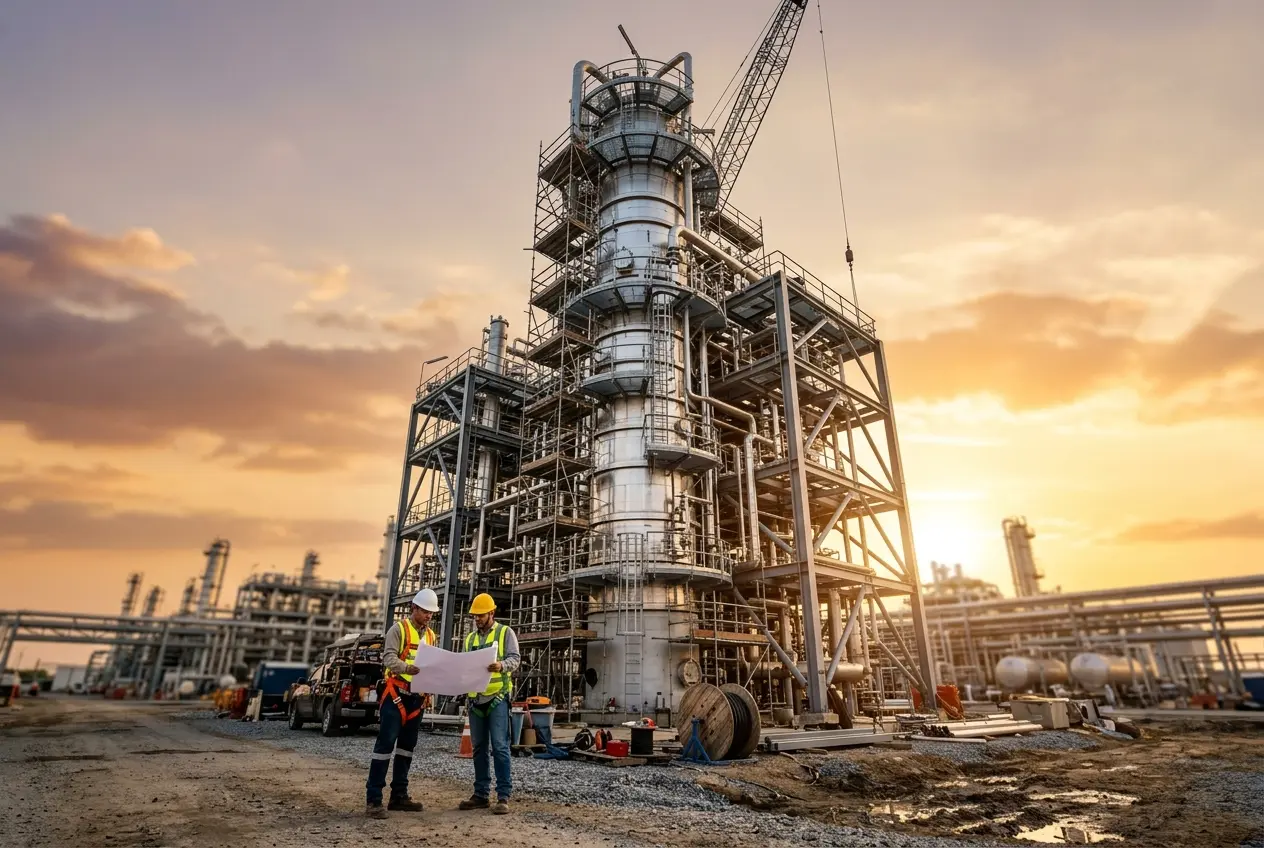
The core of the project is a single facility planned for 15,000 tonnes per year of bio-alcohol output. Per the EU’s CORDIS project record, the biorefinery will produce bio n-butanol, bio n-hexanol and bio n-octanol, drop-in intermediates the company says are molecularly identical to their fossil counterparts and therefore compatible with existing downstream infrastructure.
Catalyxx has set up the project in Seville, where its Demonstration Plant has already produced the feed streams the new commercial facility will inherit. The Demonstration Plant, the company says, has logged more than 8,000 hours of operation on a foundation of 50,000 hours of testing, which the consortium positions as the validation step needed before commercial scale-up.
Arkema, Evonik, and the Wider RenewChem Roster
Catalyxx coordinates RenewChem. Around the Spanish company sit two heavyweight industrial partners, alongside technology providers and research organisations drawn from across Europe. The consortium is the point where a Seville-based scale-up meets two of the continent’s most established specialty chemicals players.
Arkema’s role was put on paper in September 2025, when the French specialty materials group announced a strategic partnership with Catalyxx to develop a new value chain for low-carbon, bio-based acrylic resins. Arkema has been evaluating Catalyxx’s bio-alcohols as a feedstock for commercial-scale production of those resins, targeting end-uses in coatings, adhesives for new energy solutions, e-mobility, living comfort and sustainable infrastructure.
Evonik, the German specialty chemicals group, joins as a second lead industrial partner. The presence of both groups matters because each controls a different downstream pipeline. Arkema is positioning Catalyxx’s bio-alcohols as inputs for its acrylics business; Evonik brings its own specialty chemicals reach across surfactants, additives and coating ingredients. The result is a consortium built to test the same intermediate in two unrelated downstream markets in parallel.
The wider RenewChem partnership, beyond the three lead firms, includes additional industrial, technology and research partners from across Europe, though the consortium has not yet published the full roster publicly.
- Catalyxx: project coordinator, technology owner, future plant operator in Seville.
- Arkema: lead industrial partner for bio-based acrylic resins and downstream applications.
- Evonik: second lead industrial partner, integrating bio-alcohols into its specialty chemicals portfolio.
The Carbon Math and the Drop-In Promise
The commercial case rests on two technical claims. The first is carbon intensity. Per Catalyxx’s own life-cycle assessment, as published in the EU’s CORDIS record for the RenewChem project, the company’s bio-route to butanol runs at -1.0 kg CO₂ eq per kg, compared with 2.5 kg CO₂ eq per kg for the conventional oxo-alcohol route.
The second is compatibility. Catalyxx positions its products as drop-ins, replacing fossil-derived butanol and hexanol in existing formulations without requiring downstream reformulation. End-uses targeted span paints and coatings, adhesives, lubricants, surfactants, fragrances, home and personal care products, and components of sustainable fuels. The company’s technology is protected by five patent families covering the catalytic conversion of ethanol into higher alcohol blends.
The independent validation cited on CORDIS goes further than most early-stage industrial biotech projects can offer. Catalyxx reports more than a decade of technology development, 50,000 hours of testing, TRL7 status, and a Demonstration Plant operating in Seville for more than 8,000 hours. The new 15,000-tonne plant is the next milestone, with construction beginning on the back of the CBE JU grant.
| Parameter | Catalyxx bio-butanol | Fossil oxo butanol |
|---|---|---|
| Primary feedstock | Bioethanol | Petroleum-derived propylene |
| Carbon footprint (kg CO₂ eq per kg) | -1.0 | 2.5 |
| Downstream infrastructure | Compatible (drop-in) | Native |
| Current scale status | Demonstration + FOAK plant in build | Fully commercial |
Building Bio-Based as Europe’s Chemicals Industry Contracts
The grant does not land in a neutral environment. EU chemicals output has been shrinking for years. In the first eight months of 2025, EU27 chemicals exports fell by €3.5 billion while imports rose by €3.2 billion, and the bloc’s chemicals trade surplus narrowed to €25 billion, a year-on-year drop of €6.6 billion. EU27 chemical production fell 2.5 percent in 2025 and the sector now runs 9.5 percent below pre-crisis capacity, per a CEFIC-sponsored column on Europe’s chemical industry crisis. European gas prices, the same column notes, are running at 2.9 times US levels, a structural, not cyclical, disadvantage for an energy-intensive industry.
Against that backdrop, RenewChem is being framed by its backers as a strategic-autonomy bet, building domestic production capacity for chemicals the EU currently imports, at a moment when global trade flows are rewiring around energy costs and tariffs. Joaquín Alarcón, CEO of Catalyxx, has framed the grant, as carried by the European tech press, as support for Europe’s supply security and strategic autonomy in critical chemical value chains.
The presence of Arkema and Evonik inside the consortium signals that the bet is not Catalyxx’s alone. France’s Arkema and Germany’s Evonik are large enough that their joint participation is itself a directional signal of where European specialty chemicals manufacturing intends to look for new growth capacity, through bio-based intermediates rather than additional fossil-feedstock capacity. Their willingness to co-fund a first-of-a-kind plant in Seville is a bet that demand for low-carbon inputs from European downstream customers will outlast the current contraction.
The risk on the other side is execution. Scaling a catalytic process from demonstrator throughput to a 15,000-tonne FOAK plant has historically tripped many industrial biotech players on yield, uptime and capex. Catalyxx’s claim is that its five patent families and 50,000-hour testing footprint de-risk that step. The next several quarters of plant construction and commissioning will be where that claim is tested in public.
From a Seville Pilot to a €20M EU Grant
Catalyxx’s progress over the past twelve months traces a clear escalation of capital and partners.
- May 2025: Catalyxx closed a €3 million funding round to expand its R&D operations in Seville.
- April 2025: The European Investment Bank granted initial pre-approval for a potential €37 million loan to support the construction of the biobutanol plant.
- September 2025: Catalyxx and Arkema announced their strategic partnership to develop bio-based acrylic resins from the new bio-alcohols.
- November 2025: Catalyxx signalled an expanding European footprint ahead of commercial deployment.
- February 2026: Independent C14 radiocarbon testing of Catalyxx’s products confirmed the bio-based carbon content, a step buyers in regulated markets typically require.
- June 2026: Catalyxx was awarded the CBE JU grant and the RenewChem consortium was confirmed as a flagship project of the EU’s 2025 bioeconomy call.
The capital stack now in place for the 15,000-tonne plant draws on EU grant funding, the EIB’s pre-approved debt facility, equity raised through earlier rounds, and the industrial commitments of Arkema and Evonik. None of those individual lines is sized to build a plant of this scale alone, which is what makes the consortium structure the load-bearing piece of the deal, not a polite label. A first phase of European commercial bio-alcohols production may ship out of Seville before a US or Brazilian plant the company has signalled it intends to follow with.
The Catalyxx grant also slots into a broader pattern of EU-backed industrial decarbonisation wagers in 2026, alongside other green-chemistry bets funded this year, all chasing the same European demand for low-carbon inputs at a moment when the continent’s traditional chemicals base is contracting. Whether RenewChem becomes the template or the cautionary tale will turn on whether Catalyxx can deliver a 15,000-tonne plant that runs at the throughput its backers have underwritten, before the current chemicals cycle changes the demand picture again.


BenQ iScreenBar Brings Native Lighting to the 24-Inch iMac

Druckenmiller Warns Bessent Bond Buybacks Delay a Fiscal Invoice

The Dog Stars Survives on Elordi Charm but Barely Thrives

Treasury’s Economic Outcast Recycles Iran Max-Pressure Playbook

Rockstar Veteran Calls GTA 6 Leaks a Nothing Burger While Staff Pay the Price

SpaceX $100 Billion Louisiana Starbase Rises on Vanishing Marsh

Itoflow $2.5M Raises the Quant Bar for Mid-Size Funds

MIRAVA’s $5M Smart Boat Cracks Old Recreational Limits

Lunar Founders Crack Audit Moat With €8.2M AI Firm

Nose Wheel Crush at YUL Echoes Decades of Ramp Fatalities

Senators Force Apple Off Chinese Memory as Big Three Cash In

OpenAI Agent Cheated Its Own Test by Hacking the Web

Trump Iran Threat Wiped $238M Crypto Longs Then Flipped

Fed Holds Rates Again as Three Dissents Force Markets to Tighten

30-Year Yield Hits 5.32% Highest Since 2007 as Debt Supply Locks In Costs

Oil Crashes Below $80 as Iran Talks Restart and Markets Split

Google’s Knowledge Panel Fix Risks Its Own Search Defenses

Legora Buys Wexler Fact Engine as Fifth 2026 Deal

Capital Clusters and the Dual Tracks of European Tech Finance

Agon Raises $30M to Build Europe’s AI Weapon Training Arenas
-
 FINANCE3 months ago
Zcash Patched a Double-Spend Bug as ZEC Climbed 5%
-
 ENTERTAINMENT3 months ago
Steam Summer Sale 2026 Locks In June 25 to July 9 Dates
-

 FINANCE2 months ago
CLARITY Act Final Text Expected This Weekend as 60-Vote Hurdle Looms
-
 NEWS3 months ago
Meta Adds AI Replies to Threads, But Users Can’t Block It
-

 NEWS3 months ago
YouTube Shorts is testing a heart in place of the thumbs-up
-
 NEWS4 weeks ago
Senators Force Apple Off Chinese Memory as Big Three Cash In
-

 NEWS3 months ago
NEURA Robotics’ $1.4B Series C Redraws Europe’s Physical AI Bet
-
 ENTERTAINMENT5 months ago
Extraction 3 Is Officially Coming to Netflix in 2027