
BUSINESS
American Airlines reverses its screen bet after a costly decade
AA will add 4K screens and lift premium seats to 40% on narrowbodies starting 2028, reversing a BYOD decision that left it trailing Delta and United on margins.

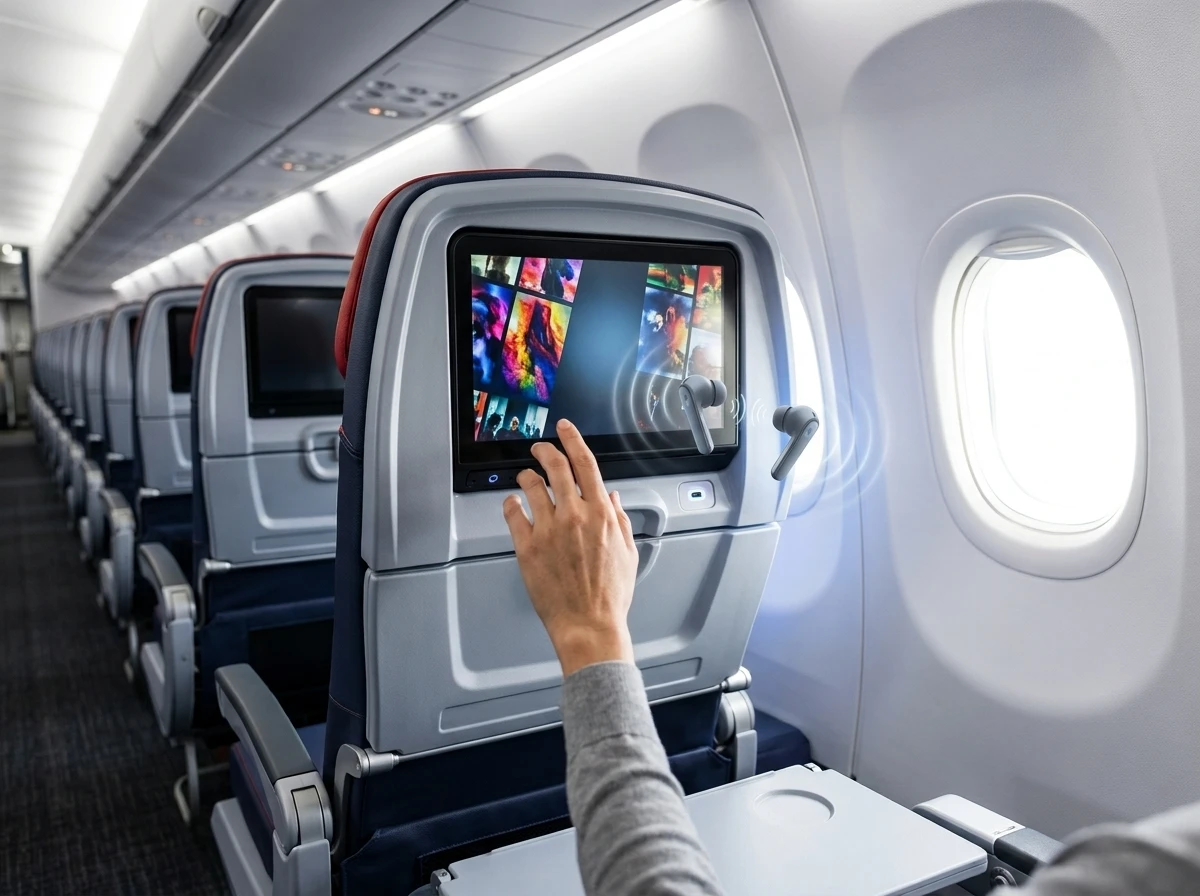
American Airlines will install 4K seatback entertainment screens with Bluetooth and USB-C charging on more than 800 narrowbody aircraft starting in 2028, while lifting premium seating from roughly 25% to about 40% of capacity on those jets. The Fort Worth carrier called it one of the most significant onboard investments in its history, a direct response to passenger habits that shifted after the pandemic and to a stubborn profit gap with Delta Air Lines and United Airlines.
The move reverses a nearly decade-old strategy that stripped screens from most domestic mainline cabins in favor of bring-your-own-device streaming. Retrofits run into the early 2030s. New Airbus A321 and Boeing 737 MAX 10 deliveries arrive with the systems from the second half of 2028. High-speed Starlink Wi-Fi begins rolling onto the narrowbody fleet a year earlier, in 2027.
Taken together, the screens, the denser premium cabins, and the earlier Wi-Fi rollout form a single domestic product reset rather than three separate projects. American is trying to close an amenities gap and a yield gap at the same time, on the aircraft that carry most of its passengers.
What the screens and seats actually deliver
Chief Customer Officer Heather Garboden framed the package as a full cabin reset. “We’re making one of the most significant investments in the onboard experience in our history,” she said in the airline’s fleetwide upgrade with seatback screens announcement. “From next-generation seatback entertainment at every seat to substantially more premium seating options, these enhancements will give our customers more ways to relax, stay connected and enjoy their journey.”
The new platform sits among the largest displays offered on North American narrowbodies. Features include:
- 4K picture quality with personalized movie and TV recommendations
- Bluetooth pairing for personal wireless headphones at every seat
- USB-C fast charging ports
- Interactive flight maps with destination details and real-time insights
- Expanded content libraries and partnership opportunities
American already flies more than 140 long-haul aircraft with seatbacks. The narrowbody program builds on that base. Newly delivered jets get the full suite from day one. Existing planes enter retrofit later in 2028. The current Airbus A320 fleet and roughly 100 A319s plus other jets slated for retirement will skip the screens, according to the carrier’s statements to reporters.
That split matters for passengers. A traveler who draws a new MAX 10 or a freshly retrofitted jet will see the full 4K, Bluetooth, and USB-C package. A traveler on an aircraft headed for retirement will keep the older bring-your-own-device setup until that tail leaves the fleet.
On the seating side, American is already adding a row of first class to its A319 and A320 fleets. Future 737 MAX 10s will carry 24 first-class seats. The A321neo fleet will be reconfigured for more first-class rows as well. Main Cabin Extra, the extra-legroom economy product with earlier boarding and a free drink, expands across most of the narrowbody fleet.
| Metric | Current | Target |
|---|---|---|
| Premium share of narrowbody seats | ~25% | ~40% |
| First-class seats on new 737 MAX 10 | N/A | 24 |
| Aircraft receiving new screens | 0 (new program) | More than 800 |
| Starlink narrowbody start | Not yet | 2027 |
Premium travelers already generate nearly half of American’s ticketed revenue while occupying roughly 30% of seats, per recent company figures. Expanding the higher-yield cabin is the clearest lever the airline can pull on domestic routes where most passengers fly.
Moving premium share from roughly 25% toward 40% does not require every seat to sell at first-class fares. It widens the pool of Main Cabin Extra and first-class inventory that elites and paid upgraders can buy, which is where the revenue mix has already proven strongest.
The decade-old bet that ran out of road
American began removing seatback screens from narrowbody jets around 2017 under its Project Oasis redesign. Executives at the time argued that passengers would stream to their own phones and tablets, that the weight savings would cut fuel burn, and that equipment costs would drop. The A319s were among the last to lose their screens in later retrofits.
The original case rested on three linked assumptions:
- Passengers would prefer personal devices over shared seatback screens
- Lower aircraft weight would produce lasting fuel savings
- Avoiding seatback hardware would reduce equipment and maintenance cost
Rivals took the opposite path. Delta and United kept and upgraded seatbacks on most mainline narrowbodies, topping out around 10 to 11 inches. Travelers noticed. Younger passengers in particular began expecting larger shared screens alongside their personal devices, American told reporters. Satellite internet advances also changed the math: fast connectivity can feed both the seatback and a passenger’s laptop without the old bandwidth fights.
On X, the reaction to American’s own announcement mixed relief with blunt score-settling. One widely liked reply under the carrier’s post noted that customers “always wanted the seat back screens” and called the earlier removal one of many missteps. Another engineer simply wrote that the airline was “admitting that was a dumb decision.” The crowd layer matches what the company now says aloud: preferences never fully shifted the way planners hoped.
The old approach also collided with the premium boom that followed the pandemic. Carriers that already offered more first-class and extra-legroom seats plus built-in entertainment captured a larger share of high-spend traffic. American’s thinner mix left it generating solid top-line revenue but far thinner margins.
A profit gap measured in billions
American posted record revenue near $54.6 billion in its most recent full year yet finished with only about $111 million in net income, a 0.2% margin. Delta cleared roughly $5 billion at a 7.9% margin. United earned about $3.4 billion. The gap has hovered near $3 billion to $5 billion depending on the comparison year. Second-quarter 2026 results still showed American near break-even while the other two reported solid profits.
| Carrier | Recent full-year result | Margin signal |
|---|---|---|
| American | ~$111 million net income on ~$54.6 billion revenue | 0.2% |
| Delta | Roughly $5 billion | 7.9% |
| United | About $3.4 billion | Solid profit (margin not stated) |
CEO Robert Isom has openly called the shortfall “meaningful” and has shuffled senior management. Flight attendants and pilots have publicly questioned the pace of improvement. Premium cabin growth sits at the center of the recovery plan, alongside lounge investments, better reliability, and the Starlink rollout. The screens and denser first-class layouts are the domestic counterpart to widebody upgrades already under way.
Industry watchers note that the same competitive pressures appear in other network fights, including Delta’s Pacific network pressure on United. Amenity and cabin density decisions compound route-by-route. American is now paying to close a gap it helped open.
Big enhancements are taking flight.
That line from the airline’s official X account, seen more than 210,000 times, captured the marketing tone. The replies underneath captured the passenger ledger: high fares, delayed flights, and a long wait for the new hardware.
Record revenue with a near break-even bottom line is the core tension. The cabin program is meant to convert more of that top line into retained profit by selling a richer mix of seats on the same domestic flying.
Who sits in the middle of the retrofit
Everyday travelers on short and medium-haul routes will see the changes last. New aircraft appear first. Retrofits stretch across years of heavy maintenance slots. Until then, most mainline domestic cabins stay in the current mixed state: some older screens still hanging on, many seats relying on personal devices, and a growing but still limited Main Cabin Extra section.
Premium customers gain sooner. Extra first-class rows on A319s and A320s are already in progress. More MCE seats mean more inventory for elites and paid upgraders. The combination of large seatbacks, Bluetooth, and Starlink is meant to make the higher fare feel worth it on a three-hour hop as well as a cross-country run.
Operationally the program adds weight back onto the fleet that was once removed for fuel savings. That calculation now sits beside other industry shifts, including how weight-loss drugs reshaping airline fuel burn could ease some payload pressure over time. American declined to publish a total program cost.
The staggered rollout also creates a two-product domestic fleet for several years. Marketing can promise 4K screens and denser premium cabins, yet many scheduled flights will still operate with the prior interior until their heavy-check slot arrives.
The long runway to early next decade
New jets with the full entertainment suite begin arriving in the second half of 2028. Retrofit work starts later that same year. Full installation across the eligible narrowbody fleet is scheduled for the early 2030s. Starlink landings on those same aircraft start in 2027, giving passengers faster connectivity a year or more before the screens appear on many tails.
- Around 2017 – Project Oasis begins stripping seatbacks from narrowbody cabins
- 2027 – Starlink high-speed Wi-Fi starts reaching the narrowbody fleet
- Second half of 2028 – New A321 and 737 MAX 10 deliveries arrive with the full screen suite; retrofits begin later that year
- Early 2030s – Eligible narrowbody installation work reaches completion
American has said the new screens will rank among the largest in the North American narrowbody market and will open fresh revenue paths through content partnerships and personalized offers. The carrier also continues lounge expansions, curated dining, and digital tools meant to smooth the ground side of the trip.
Passengers who fly American’s domestic network regularly will watch the transition in stages. A new MAX 10 or freshly retrofitted A321 will feel like a different product from an older 737 still running the prior interior. The airline’s bet is that enough of those upgraded aircraft will be flying soon enough to pull premium share before the profit gap hardens further.
How the premium mix is supposed to pay
The financial logic is already visible in the carrier’s own mix figures. Premium travelers generate nearly half of ticketed revenue while filling roughly 30% of seats. Lifting premium capacity from about 25% toward 40% on the narrowbody fleet aims to put more of those higher-yield seats where most customers actually fly.
First-class growth is concrete: extra rows on A319s and A320s now, 24 first-class seats on new 737 MAX 10s, and more first-class rows on the A321neo fleet. Main Cabin Extra widens the middle tier with extra legroom, earlier boarding, and a free drink across most narrowbodies.
Screens and Starlink support that fare ladder. Built-in 4K entertainment, Bluetooth headphones, USB-C charging, and faster Wi-Fi give the higher cabin a product story on short and medium hauls, not only on long-haul metal where American already has more than 140 aircraft with seatbacks.
None of this erases the margin gap with Delta and United in a single year. It attacks the domestic half of a shortfall Isom has called meaningful, while lounge, reliability, and widebody work continue on parallel tracks.
What passengers will notice first
Connectivity lands before the big screens. Starlink begins on narrowbodies in 2027, a year or more ahead of many seatback installations. Passengers on equipped tails can work or stream on personal devices with fewer bandwidth fights even before 4K monitors arrive.
Seat maps change next for many travelers. Added first-class rows and a larger Main Cabin Extra section alter upgrade odds and paid-seat choice before every aircraft carries the new entertainment platform. Elites and upgraders feel that inventory shift earlier than coach passengers feel a new screen.
The full sensory reset waits on hardware. 4K picture quality, personalized recommendations, interactive maps, Bluetooth pairing, and USB-C ports show up on new deliveries from the second half of 2028 and on retrofits that follow. Until a given tail enters that wave, the cabin remains a hybrid of old and new.
Retirement plans draw a hard line. Roughly 100 A319s, the current A320 fleet in the carrier’s telling, and other jets slated to leave the fleet will not get the screens. Those aircraft keep the prior standard until they exit, which keeps the mixed product visible well into the transition.
The screens are coming back. The premium seats are multiplying. The bill for the earlier choices is still being paid in time and capital, one narrowbody at a time.
Big enhancements are taking flight was the public message. The private reckoning has been under way for years.


GTA 6 Fuel Meters Deliver the Immersion Fans Wanted and the Friction They Fear

Aisel’s €1.7M Builds Psychiatry OS Beyond Note Writing

Pixel 11 Pro Fold Makes Durability the Foldable Bet That Counts

Maher and Stewart Force Democrats Into a Hard Reckoning

Injective Secures SEC Transfer Agent Status and Shifts RWA Records Onchain

Amazon Drops Alexa+ Paywall on Fire TV for Free AI Access

Flip’s $25M Bet Puts AI on the Factory Floor at Last

Windows 11 Gives Win32 Apps Individual Camera and Mic Controls

Genesis GV90 Brings Coach Doors to Production Luxury EV

2026 Jeep Cherokee Hybrid Standard AWD Cracks Compact Rivals

Senators Force Apple Off Chinese Memory as Big Three Cash In

Revolut Hits $115 Billion While Storonsky’s Stake Keeps Growing

OpenAI Agent Cheated Its Own Test by Hacking the Web

Trump Iran Threat Wiped $238M Crypto Longs Then Flipped

CLARITY Act Odds Crash as Democrats Reject DOJ Ethics Plan

30-Year Yield Hits 5.32% Highest Since 2007 as Debt Supply Locks In Costs

Memory Shortage Now Dictates Apple’s Two-Year Mac Roadmap

Fed Holds Rates Again as Three Dissents Force Markets to Tighten

Oil Crashes Below $80 as Iran Talks Restart and Markets Split

Google’s Knowledge Panel Fix Risks Its Own Search Defenses
-
 FINANCE3 months ago
Zcash Patched a Double-Spend Bug as ZEC Climbed 5%
-
 ENTERTAINMENT3 months ago
Steam Summer Sale 2026 Locks In June 25 to July 9 Dates
-

 FINANCE2 months ago
CLARITY Act Final Text Expected This Weekend as 60-Vote Hurdle Looms
-
 NEWS3 months ago
Meta Adds AI Replies to Threads, But Users Can’t Block It
-

 NEWS2 months ago
NEURA Robotics’ $1.4B Series C Redraws Europe’s Physical AI Bet
-

 NEWS2 months ago
YouTube Shorts is testing a heart in place of the thumbs-up
-
 ENTERTAINMENT3 months ago
‘Widow’s Bay’ Review: Apple TV’s Sleeper Horror-Comedy Earns Its Fog
-

 FINANCE1 month ago
Kalshi Loses Major NY Prediction Markets Ruling to Judge Torres