
NEWS
Lotus Emira V6 Manual Delivers Pure Thrills Before Hybrid Shift
The 2026 Lotus Emira V6 packs 400 hp, a six-speed manual and hydraulic steering that beat rivals, yet its analog purity faces an imminent hybrid replacement.

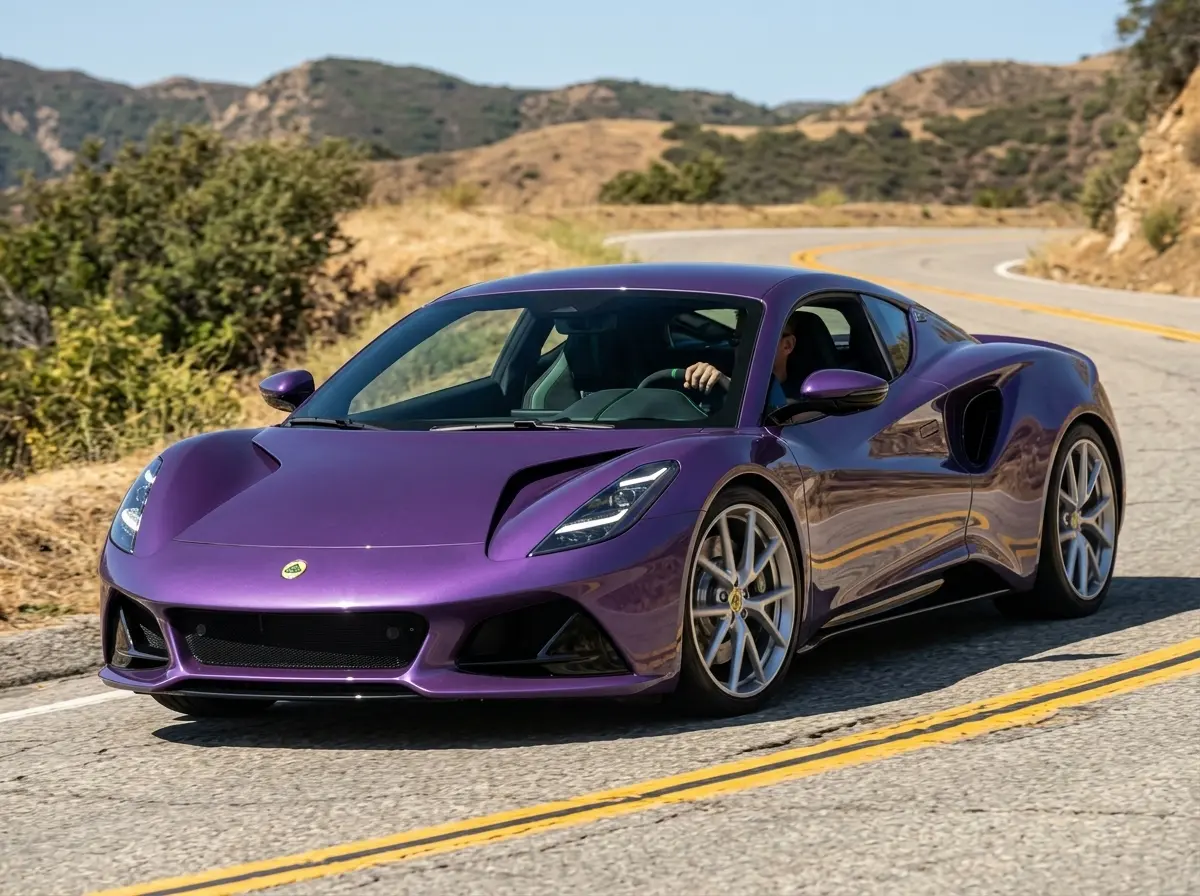
A Purple Haze 2026 Lotus Emira V6 SE Racing Line spent a full week running grocery errands, canyon blasts and car-meet loops around Los Angeles. The mid-engine two-seater drew constant stares and one memorable kid-to-dad exchange that confirmed Lotus still registers with the next generation.
Travis Langness of SlashGear lived with the car rather than just thrashing it on evaluation routes. The result is a clear verdict: the supercharged V6 and six-speed manual combination still delivers something rare.
The Purple Haze Week That Felt Endless
Langness parked the vivid purple coupe near a taco spot and overheard an 8-to-13-year-old ask his father if the sleek mid-engine shape was a Ferrari. The dad corrected him: “Nah, son. That’s a Lotus. It’s dope, though.” That small moment restored the reviewer’s faith that pure sports cars still cut through the noise of e-bikes and crossovers.
Lotus loaned the car with a mileage cap. Langness hit the limit exploring local mountain roads, loading the rear trunk for errands and showing it off at meets. He called the week the kind of experience he would extend indefinitely if he could.
Supercharged V6 Beats the Quicker Turbo Four
The tested car’s Toyota-sourced 3.5-liter supercharged V6 makes 400 horsepower and 310 lb-ft of torque. Lotus quotes 0-62 mph in 4.3 seconds and a 180 mph top speed. The supercharger whine arrives close to the driver’s ears on full throttle, and power stays usable across the rev range.
A Mercedes-AMG turbo 2.0-liter four-cylinder sits in the Turbo SE and 420 Sport. It matches or exceeds the V6 on paper: 400 hp and 354 lb-ft in the SE (0-62 in 4.0 seconds) or 416 hp and 369 lb-ft in the 420 Sport. Both four-cylinder cars use only an eight-speed dual-clutch automatic.
| Trim | Engine | Power / Torque | Transmission | 0-62 mph | Base MSRP (approx.) |
|---|---|---|---|---|---|
| Turbo SE | 2.0T I4 | 400 hp / 354 lb-ft | 8-spd DCT | 4.0 s | $109,400 |
| V6 SE | 3.5 SC V6 | 400 hp / 310 lb-ft | 6-spd man or auto | 4.3 s | $112,900-$115,400 |
| V6 SE Racing Line | 3.5 SC V6 | 400 hp / 310 lb-ft | 6-spd man or auto | 4.3 s | $115,900-$118,400 |
| 420 Sport | 2.0T I4 | 416 hp / 369 lb-ft | 8-spd DCT | ~3.9 s | ~$7k over V6 Racing |
Langness preferred the V6 anyway. The 400-hp 3.5-liter V-6 with six-speed manual is the only way to get three pedals. The clutch is light, low-speed drivability is easy, and the gear lever’s deliberate, rifle-action throw elevates every shift. Torque shortfall versus the four never felt like a penalty on the road.
You Will Struggle to Find Better Steering
After days of commuting and repeated mountain runs, Langness could not name a modern car with better steering. He checked notes on recent Porsches, the C8 Corvette and Italian exotics. None matched the Emira’s direct connection from rim to tire contact patch.
The wheel’s thickness and diameter feel right at rest and thrilling in motion. Weighting stays consistent. Feedback arrives with almost thought-level immediacy. Official Lotus materials describe the same trait: the car’s hydraulically assisted steering and trademark suspension deliver the pure, connected feel unique to the brand.
That hydraulic rack is deliberate. Most rivals switched to fully electric systems years ago. The Emira keeps the older architecture and the communication that comes with it.
Sport Mode Turns the Exhaust Alive
In Tour mode the V6 exhaust sounds ordinary at low revs, closer to a rock tumbler than a sports car. Switch to Sport and the note deepens. The exhaust valve opens, the supercharger becomes more present, and the whole car sharpens.
Throttle response quickens. Stability control loosens. The six-speed’s click-clack joins the soundtrack. On canyon straights the package becomes an intensely good weekend tool. Langness burned through the loaner mileage limit simply because every open road invited another run.
Ownership would demand a real budget for fuel, pads and tires. The joy justifies it for the right buyer.
Cabin Details and Daily Compromises
Bilstein Sport suspension on the V6 SE is firmer than the Turbo’s Touring setup yet never abusive over Los Angeles potholes. It transmits surface changes without violence. Heated 12-way seats balance bolstering for high-g corners with enough padding for longer trips. Alcantara trim feels premium.
Screens sit low: 12.3-inch driver display and 10.25-inch center touchscreen. The glass has a semi-gloss finish that resists fingerprints. Physical climate controls remain, and the tiny climate-diagram figure wears a racing helmet.
- Honeycomb console panels let you watch the manual’s shift mechanism move
- Flip-up cover over the start button adds a fighter-pilot ritual
- Cupholders and door bins accept real bottles
- Rear trunk and engine-bay storage total roughly 12 cubic feet, though heat from the powertrain limits what you can leave back there
Creaks and squeaks appear on rough pavement. They never ruin the drive but remind you this is still a low-volume sports car.
The $125,150 Reality Check
Base Turbo SE starts at MSRP ranges from $109,400 Turbo SE including destination. Racing Line adds aesthetic upgrades for about $3,000 more. V6 SE steps up another $3,000 for the sport suspension and limited-slip differential. The tested V6 SE Racing Line landed at $125,150 with Purple Haze paint ($2,950) and the optional KEF stereo ($1,250).
A base Porsche 911 sits roughly $13,000 higher. The Emira undercuts it while packing genuine mid-engine drama. Refinement seekers will still gravitate to Stuttgart. Enthusiasts who want the hydraulic rack and stick will look harder at Hethel.
Tech quirks nibble at the experience. Traffic-sign recognition must be disabled at every start or it misreads limits, sometimes flashing 105 mph in city traffic. The passenger seat belt chime treats a gym bag or water bottle like an occupant. The optional stereo runs out of power before the volume knob does.
Stats snapshot
- $125,150 as-tested V6 SE Racing Line
- 400 hp / 310 lb-ft supercharged V6
- 4.3 s 0-62 mph (Lotus claim)
- Best-in-class steering feel per the week-long test
Hybrid Future Already Closing In
Lotus introduced the 2026 Emira V6 SE and Turbo updates with refined dampers, cooling and alignment. The supercharged Toyota V6 itself stays the same for now. That engine already fails upcoming European emissions rules.
In May 2026 Lotus CEO Feng Qingfeng confirmed to Autocar that a new Horse Powertrains turbo 3.0-liter hybrid V6 will replace both the Toyota six and the AMG four. The package pairs with an automatic that integrates an e-motor. Combined output can reach 536 hp and 516 lb-ft before the electric boost. The six-speed manual disappears with the current V6.
American buyers kept the V6 alive as the U.S. best-seller. The same customers who prize the hydraulic rack and three pedals will lose both. Weight will rise. The pure analog character that made this review sing becomes the thing the car leaves behind.
On X, owners and watchers already call the current Emira V6 manual a “reliable, usable and manual mini Ferrari.” That framing matches the week Langness spent in the Purple Haze car. The thrills are real and available today. They simply will not stay this pure for long.
Get one while the supercharger still whines and the lever still snicks. Put miles on it. The Emira V6 is proof that automotive enthusiasm still has a home in a mid-engine chassis with a proper manual and hydraulic steering. The next chapter will be faster and cleaner. It will not feel the same.


BenQ iScreenBar Brings Native Lighting to the 24-Inch iMac

Druckenmiller Warns Bessent Bond Buybacks Delay a Fiscal Invoice

The Dog Stars Survives on Elordi Charm but Barely Thrives

Treasury’s Economic Outcast Recycles Iran Max-Pressure Playbook

Rockstar Veteran Calls GTA 6 Leaks a Nothing Burger While Staff Pay the Price

SpaceX $100 Billion Louisiana Starbase Rises on Vanishing Marsh

Itoflow $2.5M Raises the Quant Bar for Mid-Size Funds

MIRAVA’s $5M Smart Boat Cracks Old Recreational Limits

Lunar Founders Crack Audit Moat With €8.2M AI Firm

Nose Wheel Crush at YUL Echoes Decades of Ramp Fatalities

Senators Force Apple Off Chinese Memory as Big Three Cash In

OpenAI Agent Cheated Its Own Test by Hacking the Web

Trump Iran Threat Wiped $238M Crypto Longs Then Flipped

Fed Holds Rates Again as Three Dissents Force Markets to Tighten

30-Year Yield Hits 5.32% Highest Since 2007 as Debt Supply Locks In Costs

Oil Crashes Below $80 as Iran Talks Restart and Markets Split

Google’s Knowledge Panel Fix Risks Its Own Search Defenses

Legora Buys Wexler Fact Engine as Fifth 2026 Deal

Capital Clusters and the Dual Tracks of European Tech Finance

Agon Raises $30M to Build Europe’s AI Weapon Training Arenas
-
 FINANCE3 months ago
Zcash Patched a Double-Spend Bug as ZEC Climbed 5%
-
 ENTERTAINMENT3 months ago
Steam Summer Sale 2026 Locks In June 25 to July 9 Dates
-

 FINANCE2 months ago
CLARITY Act Final Text Expected This Weekend as 60-Vote Hurdle Looms
-
 NEWS3 months ago
Meta Adds AI Replies to Threads, But Users Can’t Block It
-

 NEWS3 months ago
YouTube Shorts is testing a heart in place of the thumbs-up
-
 NEWS4 weeks ago
Senators Force Apple Off Chinese Memory as Big Three Cash In
-

 NEWS3 months ago
NEURA Robotics’ $1.4B Series C Redraws Europe’s Physical AI Bet
-
 ENTERTAINMENT5 months ago
Extraction 3 Is Officially Coming to Netflix in 2027