
NEWS
Pimax Dream Air Cracks the Bulk Barrier for High-End PCVR
The Pimax Dream Air packs 3840×3552 micro-OLED panels, eye tracking and audio into a 170-gram frame at $1999, changing what flagship PCVR form can look like.

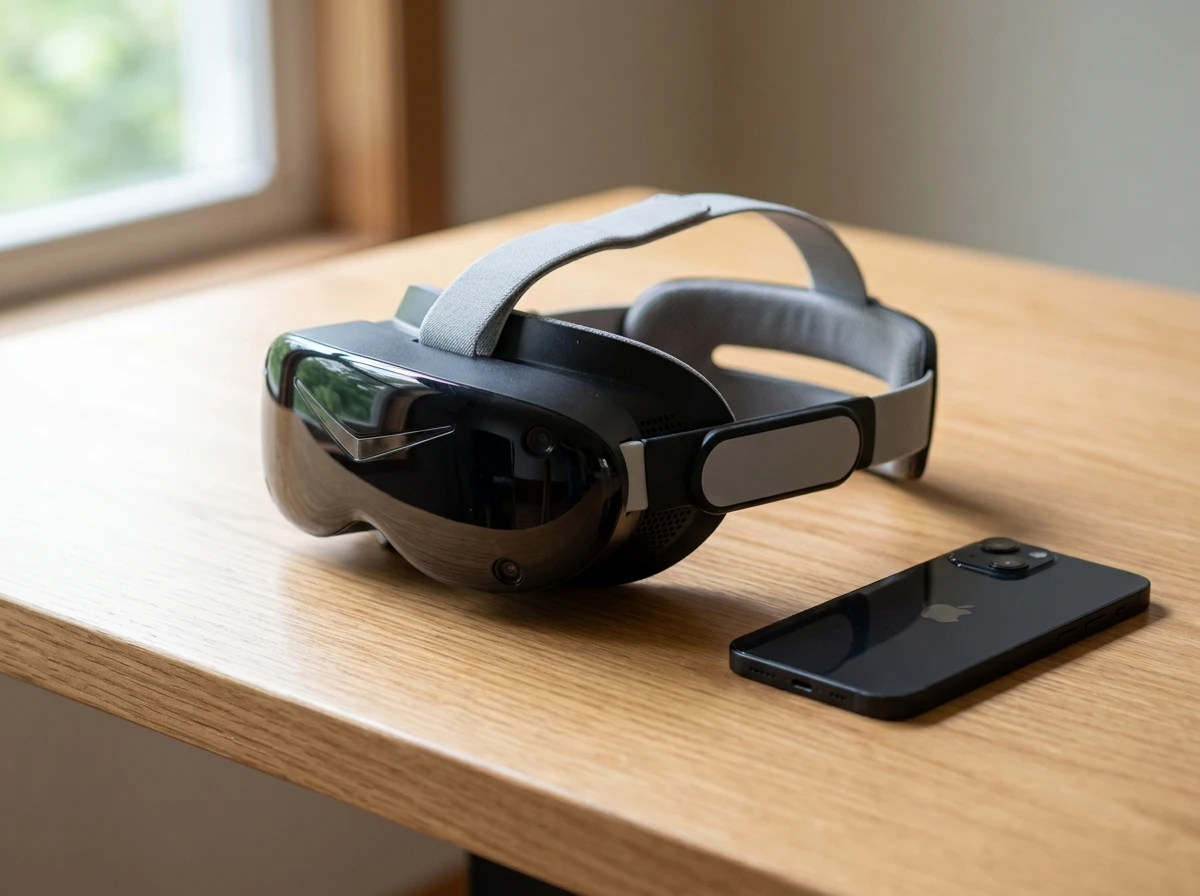
The Pimax Dream Air ships as a 170-gram full-feature 8K micro-OLED PC VR headset with 3840 × 3552 pixels per eye, integrated Tobii eye tracking, spatial audio and either SLAM or Lighthouse tracking, starting at $1,999. After more than a month of testing the SLAM version provided by Pimax, SlashGear reviewer Andy Zahn called it polished, easy to set up and immersive enough to make titles like Half-Life: Alyx and Star Wars: Squadrons feel fresh again.
That combination of retina-class panels inside a frame lighter than many phones breaks the long-standing bulk tax on high-end desktop VR. The result is not flawless, yet it shifts what buyers can demand from a flagship.
A Form Factor That Finally Feels Modern
Older Pimax headsets earned a reputation for wide fields of view paired with heavy, brick-like housings. The Dream Air discards that formula. Pimax lists the headset itself at under 170 grams. The magnetic face liner blocks most light and swaps easily. Controls for power and volume sit where fingers find them, though the glossy front plate collects fingerprints quickly and the exterior cameras invite accidental smudges.
Zahn noted the unit fit his XXXL head, but only as a squeeze. Putting it on took practice. Once seated, the integrated speakers in the headband delivered decent isolation without protruding cups that snap off. Setup ranked among the simplest he has used: plug in, put on, boot.
- Magnetic, replaceable facial interface for easy cleaning and light seal
- Built-in spatial audio stems that avoid external headphones for most sessions
- Dual-cable design that meets behind the head to balance pull
- Dual fans for cooling during long play
Independent tester Sebastian Ang at MRTV measured the same ~170 g and called the weight a revolution for the brand. After years of inertia-heavy Crystal models, head movement feels glued and free of wobble. Early facial cushions run firmer than ideal after half an hour, but magnetic mounts invite third-party pads. Pimax has already begun shipping revised masks and straps to early buyers.
Picture Quality That Sets the Current Ceiling
Sony micro-OLED panels deliver 3840 × 3552 per eye at 90 Hz, more than 27 million pixels combined. Pimax pairs them with proprietary ConcaveView three-element pancake lenses that claim the widest field of view among compact micro-OLED headsets. Official materials list 110° horizontal. Zahn wrote of a 102° FOV while praising edge clarity and vibrancy. Ang measured 110° horizontal and 89° vertical with 83 percent binocular overlap that felt natural for multi-hour sessions.
In practice the image density erases the screen-door effect in normal use. Blacks stay perfect, colors pop, and glare stays lower than on several rival pancake micro-OLED sets. Dynamic foveated rendering powered by 120 Hz Tobii eye tracking (listed at 90 Hz in some materials) lets a modern GPU keep full resolution only where the eyes look. Minimum recommended hardware sits at an RTX 2080; balanced play favors an RTX 3070 or better. Zahn saw latency on an older PCIe x8 motherboard that vanished on x16 hardware, confirming bandwidth matters for the uncompressed DisplayPort feed.
Games that reward detail shine. Star Wars: Squadrons cockpits looked razor sharp. Until You Fall turned crisp and vibrant. Half-Life: Alyx felt glorious. Flight sims and space titles benefit most from the combination of resolution and the moderate FOV boost over many compact rivals.
Controllers and Tracking Still Carry Trade-Offs
The SLAM version includes the same 6DoF controllers Pimax has shipped for years. They work, recharge, and carry a sensible layout, yet they look and feel dated next to the headset’s ambition. Zahn preferred Xbox, PlayStation, wheel or stick inputs for many titles and wished for an upgrade. The Lighthouse version drops the included pair and expects SteamVR base stations plus compatible controllers such as Valve Index knuckles or Pimax Sword units.
SLAM inside-out tracking proved consistent for Zahn in normal use. Hand tracking is supported on the SLAM model. Lighthouse owners keep precision and full ecosystem compatibility at the cost of room setup. Neither path is wireless; the Dream Air remains a tethered PCVR device.
How the Price Stacks Against Rivals
The Lighthouse model lists at $1,999. The SLAM version Zahn tested runs $2,299. Both sit well above entry kits. The Valve Index full kit once sold near $999 but controllers remain hard to find. The Bigscreen Beyond 2 starts near $1,019 for the shell and requires base stations; adding eye tracking and audio pushes the total closer to Dream Air territory while still trailing on resolution and built-in features.
| Headset | Weight | Res per eye | HFOV | Eye tracking | Built-in audio | Starting price |
|---|---|---|---|---|---|---|
| Pimax Dream Air | ~170 g | 3840×3552 | 110° (claimed) | Standard Tobii | Yes | $1,999 LH / $2,299 SLAM |
| Bigscreen Beyond 2 | ~107 g | 2560×2560 | ~100° | 2e model only | No | ~$1,019 |
| Pimax Dream Air SE | <140 g | 2560×2560 | ~105° | Standard | Yes | $899 LH / $1,199 SLAM |
| Meta Quest 3 | ~515 g | 2064×2208 | ~96° | No | Yes | $499 |
Pimax’s own full feature comparison against Beyond 2 highlights the resolution, standard eye tracking, audio and tracking flexibility advantages. The Beyond remains lighter and cheaper at the base level. The Dream Air SE starting at $899 drops resolution and trims FOV slightly while keeping micro-OLED panels, eye tracking and audio, giving budget-conscious buyers a direct counter to the Beyond 2e.
Who Benefits From the Upgrade
The Dream Air targets owners who already run strong PCs and want maximum visual fidelity without neck strain over multi-hour sessions. Sim racers and flight simmers gain the most from the clarity and weight drop. Social VR users get reliable eye contact via tracking. Anyone moving up from a Quest 3, PSVR2 or older bulky Pimax will notice the jump in density and comfort immediately.
- High-end GPU owners chasing native 4K-per-eye clarity with DFR headroom
- Users who refuse external headphones or audio straps
- Buyers who want SLAM simplicity or existing Lighthouse gear
- Enthusiasts willing to spend for a complete out-of-box package rather than piecemeal upgrades
It is not for standalone play, wireless freedom, or anyone whose PC sits below recommended specs. Extra-large heads may still fight the fit. Vertical FOV remains the clearest optical compromise compared with some wider-angle Pimax modules.
What the Compact Leap Changes for Desktop VR
Pimax announced the Dream Air in late 2024 as the world’s smallest full-feature 8K headset and targeted mid-2025 shipping. Multiple delays pushed meaningful deliveries into 2026. That history of slipped dates is familiar to the brand’s customers, yet the finished product lands more complete than many earlier launches. Software via Pimax Play supports SteamVR, OpenXR and extensive configuration. Early units shipped with interim straps and gaskets that the company is replacing at no charge.
The real market effect sits in the form factor itself. For years the choice looked binary: accept bulk for high resolution and features, or accept lower resolution and missing pieces for lightness. The Dream Air, weighing around 170 grams with Sony micro-OLED panels, collapses that trade-off. Rivals must now answer with higher resolution, standard eye tracking or built-in audio if they want to keep the pure-minimalist crown. Heavy flagships look suddenly dated for anyone who prioritizes long sessions.
Crowd conversation on X tracks the same shift. Users comparing the SE to the Beyond 2 treat the lighter Pimax options as direct hunters of that niche. One reviewer called a related unit “one cable away from the best VR headset I’ve ever used.” Controllers and vertical FOV remain the most common caveats, exactly as the hands-on reports found.
The headset is available starting at $1,999 on the Pimax store. It needs a modern high-end PC and a buyer comfortable with the premium. For that audience the Dream Air makes retina-class desktop VR practical in a way few previous headsets managed.
Frequently Asked Questions
What is the exact resolution and refresh rate of the Pimax Dream Air?
Each eye runs a Sony micro-OLED panel at 3840 × 3552 pixels for a combined total exceeding 27 million pixels, locked at 90 Hz. Dynamic foveated rendering via Tobii eye tracking reduces the GPU load by rendering full detail only in the foveal region.
How does the Dream Air SLAM version differ from the Lighthouse version?
The SLAM model includes inside-out tracking cameras, hand tracking and a pair of 6DoF controllers for $2,299. The Lighthouse model drops those inclusions, costs $1,999, and requires separate SteamVR base stations plus compatible controllers for outside-in tracking.
Is the Pimax Dream Air lighter than the Bigscreen Beyond 2?
No. The Dream Air headset weighs approximately 170 grams while the Beyond 2 shell is listed near 107 grams. The Dream Air counters with higher resolution, standard eye tracking, integrated audio and optional SLAM tracking that the base Beyond lacks.
What PC hardware does the Dream Air require?
Pimax lists an RTX 2080-class GPU as minimum and an RTX 3070 or higher as recommended, plus a DisplayPort 1.4a connection, USB 3.0, 16 GB RAM and Windows 10/11. Full-bandwidth PCIe x16 slots avoid the throttling Zahn observed on older x8 boards.
Does the Dream Air support wireless or standalone use?
No. It is a wired DisplayPort PCVR headset only. There is no onboard compute for standalone operation and no official wireless adapter path at launch.


BenQ iScreenBar Brings Native Lighting to the 24-Inch iMac

Druckenmiller Warns Bessent Bond Buybacks Delay a Fiscal Invoice

The Dog Stars Survives on Elordi Charm but Barely Thrives

Treasury’s Economic Outcast Recycles Iran Max-Pressure Playbook

Rockstar Veteran Calls GTA 6 Leaks a Nothing Burger While Staff Pay the Price

SpaceX $100 Billion Louisiana Starbase Rises on Vanishing Marsh

Itoflow $2.5M Raises the Quant Bar for Mid-Size Funds

MIRAVA’s $5M Smart Boat Cracks Old Recreational Limits

Lunar Founders Crack Audit Moat With €8.2M AI Firm

Nose Wheel Crush at YUL Echoes Decades of Ramp Fatalities

Senators Force Apple Off Chinese Memory as Big Three Cash In

OpenAI Agent Cheated Its Own Test by Hacking the Web

Trump Iran Threat Wiped $238M Crypto Longs Then Flipped

Fed Holds Rates Again as Three Dissents Force Markets to Tighten

30-Year Yield Hits 5.32% Highest Since 2007 as Debt Supply Locks In Costs

Oil Crashes Below $80 as Iran Talks Restart and Markets Split

Google’s Knowledge Panel Fix Risks Its Own Search Defenses

Legora Buys Wexler Fact Engine as Fifth 2026 Deal

Capital Clusters and the Dual Tracks of European Tech Finance

Strategy Parks $1.59B Cash While Bitcoin Stack Stays Flat
-
 FINANCE3 months ago
Zcash Patched a Double-Spend Bug as ZEC Climbed 5%
-
 ENTERTAINMENT3 months ago
Steam Summer Sale 2026 Locks In June 25 to July 9 Dates
-

 FINANCE2 months ago
CLARITY Act Final Text Expected This Weekend as 60-Vote Hurdle Looms
-
 NEWS4 months ago
Meta Adds AI Replies to Threads, But Users Can’t Block It
-

 NEWS3 months ago
YouTube Shorts is testing a heart in place of the thumbs-up
-
 NEWS4 weeks ago
Senators Force Apple Off Chinese Memory as Big Three Cash In
-

 NEWS3 months ago
NEURA Robotics’ $1.4B Series C Redraws Europe’s Physical AI Bet
-
 ENTERTAINMENT5 months ago
Extraction 3 Is Officially Coming to Netflix in 2027