
BUSINESS
Helsing Hits an $18 Billion Valuation as Drone Doubts Persist
Helsing raised $1.8 billion at an $18 billion valuation, Europe’s largest defense AI round yet, even as doubts persist over its HX-2 drone in Ukraine.

Helsing raised $1.8 billion on Monday in a Series E round that values the Munich based defense AI company at $18 billion. The new price makes it the most valuable defense startup in Europe. Investors still did not all get what they wanted.
Three of the biggest new checks came from JPMorgan Chase, Goldman Sachs Alternatives and a Canadian pension fund. None of them are European firms. And Helsing’s flagship strike drone is still fighting doubts about whether it hits what it aims at in Ukraine.
Helsing Closes Its Largest Funding Round Yet
The Financial Times first reported in May that Helsing was closing in on $1.2 billion at an $18 billion valuation. Two months later, the price had not moved, but the check had grown by half again, to $1.8 billion, as more investors showed up than Helsing had room for.
Investor demand significantly exceeded the available allocation, reflecting strong and growing confidence in AI-driven and software-defined defence technology.
Helsing said in the statement announcing the round.
The lineup mixed new money with familiar names. Dragoneer Investment Group and Lightspeed Venture Partners, the two firms that have led the deal since May, were joined by a wider group of backers:
- Iconiq and Disruptive, both new to Helsing’s cap table
- JPMorgan Chase, the growth equity arm of Goldman Sachs Alternatives, and the Canada Pension Plan Investment Board (CPP Investments), Canada’s national pension manager
- Returning investors General Catalyst, Plural and Stepstone, alongside earlier backers Prima Materia, Accel and Greenoaks
The board did not change. Co-Chairmen Daniel Ek, the Spotify founder, and Tom Enders keep their seats, alongside Jeannette zu Fürstenberg, managing director and head of Europe at General Catalyst, and General Denis Mercier, plus the company’s three founders.
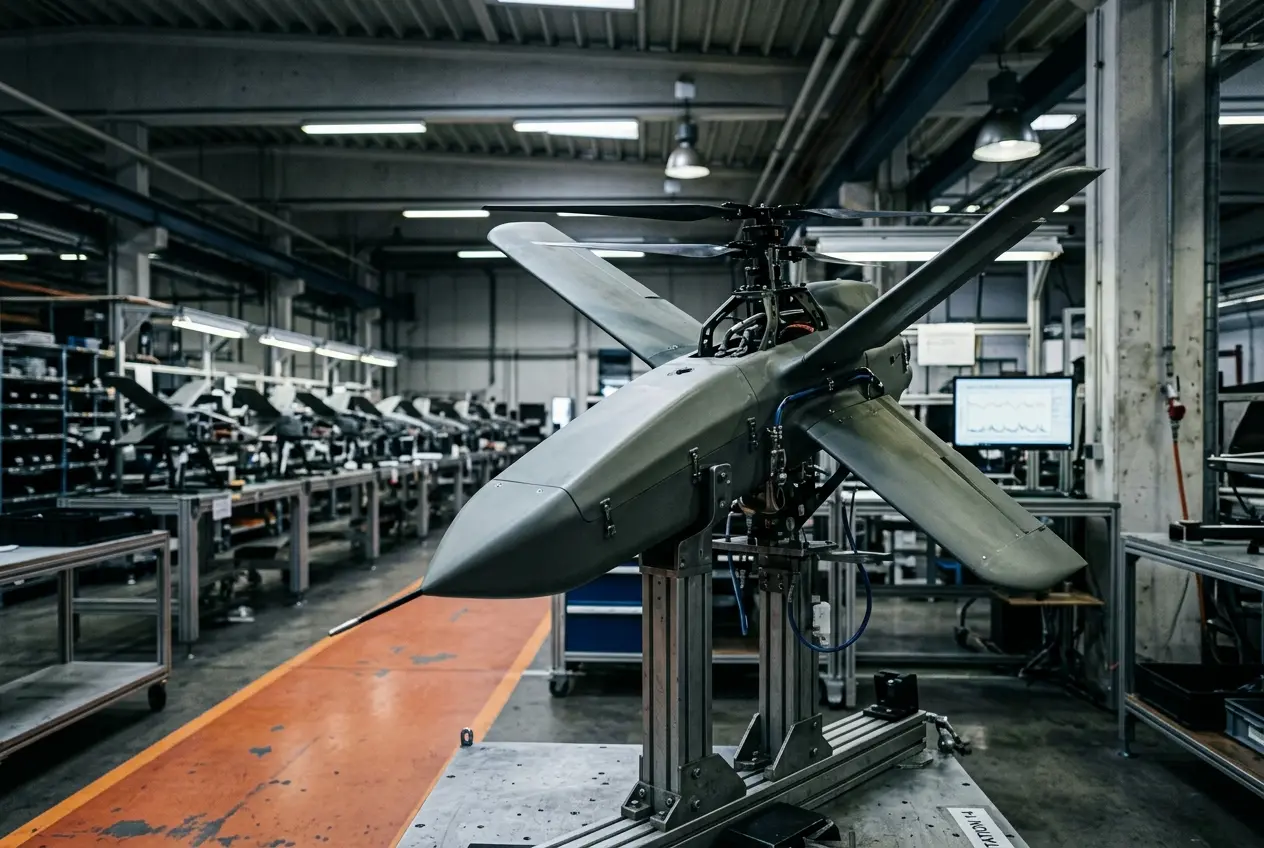
Those founders started the company in March 2021: Gundbert Scherf, who previously worked inside the German Ministry of Defence, Torsten Reil, a video game developer by training, and Niklas Köhler, a machine learning engineer. Since then Helsing has built the Altra battlefield decision platform, the HX-2 strike drone and the CA-1 Europa autonomous aircraft, and in January it added ground robots by acquiring Spanish firm Keybotic.
Europe’s Defense Money Is Chasing Fewer, Bigger Checks
Helsing’s raise lands inside a much bigger wave. European defense, security and resilience startups pulled in a record $8.7 billion in 2025, up 55% from the year before and nearly four times the total from five years ago, according to a Dealroom and NATO Innovation Fund analysis.
Late stage rounds alone tripled to $4.7 billion as investors concentrated capital into fewer, larger bets. The category now accounts for 43% of all European deeptech funding and 13% of total VC investment, a share that has tripled in three years.
The numbers behind the boom are stark:
- $61 billion – Anduril’s valuation after its own $5 billion raise in May, more than three times Helsing’s new price tag
- $41.6 billion – where Tech Funding News estimates the global military AI market will land by 2035, up from roughly $9.8 billion in 2025
- 330% – the jump in Munich’s AI native startup value to $6.2 billion since 2024, as Helsing’s hometown becomes a defense tech hub
NATO’s European members are also on pace to push defense spending past 2% of GDP this year, and alliance members have separately pledged to lift defense and security spending toward 5% of GDP over time.
Who Actually Owns Europe’s Priciest Defense Startup?
Helsing calls itself predominantly European owned, and co-CEO Torsten Reil put a rough figure on that in May: about 80%. The new money does not look especially European, though. JPMorgan Chase, Goldman Sachs Alternatives and a Canadian pension fund are among the largest new checks in this round, and none of them are European firms.
Dragoneer and Lightspeed, the two firms that have led the deal since May, are American growth investors as well. It fits a wider pattern. American investors now supply an estimated 40% to 50% of the capital flowing into European defense tech, even as Helsing insists it remains majority European.
Germany’s parliament is already alert to the optics. Lawmakers capped the combined contract framework for Helsing and Stark Defence, the Berlin drone maker backed by American investor Peter Thiel, at €2 billion, and attached extra reporting requirements to Helsing’s HX-2 order after questions about contract size and supplier ties to the United States.
From €5 Billion to $18 Billion in Two Years
Monday’s price tag is the third valuation jump Helsing has taken in under two years, and each one has arrived faster than the last.
| Round | Date | Amount Raised | Valuation | Lead Investor |
|---|---|---|---|---|
| Series C | July 2024 | $487 million | $5.4 billion (€4.95 billion) | General Catalyst |
| Series D | June 2025 | €600 million | $14 billion (€12 billion) | Prima Materia |
| Series E | July 2026 | $1.8 billion | $18 billion | Dragoneer, Lightspeed |
Helsing’s funding milestones have a habit of landing next to other big European tech headlines. Klarna filed for its own IPO the same week Helsing disclosed an earlier €450 million raise tied to its Baltic expansion into Estonia.
Company materials trace Helsing’s founding to Russia’s 2014 annexation of Crimea, and the firm says it sells its technology only to democratic governments.
Ukraine Still Isn’t Sure About the HX-2
Helsing’s most contested product is also its most important one. The HX-2 is a 12 kilogram loitering munition with a range of about 100 kilometers that navigates and strikes using onboard AI instead of GPS, which Russian jamming can block. Germany’s Bundestag approved an initial €269 million contract for the drone in February, with a framework that could grow to €1.46 billion over seven years.
How well the drone actually performs depends on who is asked.
- A German Ministry of Defense briefing, cited by Politico, found the HX-2 hit its target five times in 14 missions during deployments in the Donbas.
- Helsing disputes that account, pointing to heavy Russian electronic warfare and confirmed strikes on a tank, a logistics truck and two howitzers.
- Bloomberg’s reporting in January found Ukraine had held off ordering more HX-2s after takeoff failures surfaced in trials, with some 40% of an earlier drone shipment still sitting unused.
Helsing rejected the findings. “We are confident that HX-2’s test performance will translate well into high hit rates on the battlefield,” the company said, adding that this held true even under electronic warfare conditions.
Oleksandr Kamyshin, an adviser to Ukrainian President Volodymyr Zelensky on strategic industries, has separately praised Helsing’s work in the country, and German defense officials have shown no sign of halting the broader procurement plan despite the dispute.
Europe’s Other Defense Startups Fall Further Behind
Quantum Systems, a fellow Munich company, raised €180 million in November at a valuation above €3 billion, a fraction of Helsing’s new price tag. Quantum Systems’ own $1.2 billion round earlier this year showed just how wide that gap has grown between defense tech’s biggest winner and everyone chasing it.
Tekever, the Lisbon based drone maker, raised £400 million at a valuation above £1 billion a year ago. Stark Defence is smaller still. None of Helsing’s European rivals sit anywhere near its new price tag, even as EU governments alone spent more than 100 billion euros on defense equipment procurement in 2025, money every one of these companies is chasing.
Not everyone in the industry is cheering. Rheinmetall CEO Armin Papperger has warned publicly of a “bubble” forming from the billions flowing into drone developers. Torsten Reil made a similar point himself last October, warning that parts of Europe’s defense spending had taken on the shape of a bubble, even as his own company kept raising money at higher prices.
The CA-1 Europa Still Hasn’t Flown
Helsing’s next proof point is not financial. The CA-1 Europa, an unmanned wingman aircraft the company unveiled outside Munich in September 2025, is still targeting a first flight in 2027. The Bundestag kept its reporting requirements attached to the HX-2 contract when it approved the initial €269 million tranche in February, a paperwork trail that will track whether the drone’s combat record ever catches up to its price tag.


Dolly Parton’s $450 Million Fortune Keeps Working After Her Death

SpaceX’s $60B Cursor Buy Immediately Costs It OpenAI Models

Rays Forever Home Wins County Vote as College and Taxpayers Carry the Load

Apple TV Hits $14.99 as Sports and Hits Bill Comes Due

Swift Telescopes Restart as Orbit Drop Accelerates

Oracle’s 2.8 GW Bloom Deal Exposes the AI Power Bypass

Galaxy S26 Beta 7 Ports Fold 8 AI as Stable Nears

Walmart Pays $50 Million to Close Federal Opioid Pharmacy Case

Space Mirror Demo Revives 1993 Russian Night-Light Test

Measles Death Dispute Deepens Distrust in Pennsylvania Outbreak

Trump Iran Threat Wiped $238M Crypto Longs Then Flipped

30-Year Yield Hits 5.32% Highest Since 2007 as Debt Supply Locks In Costs

Oil Crashes Below $80 as Iran Talks Restart and Markets Split

Strategy Parks $1.59B Cash While Bitcoin Stack Stays Flat

Astute’s $1.2M bet makes B2B creator deals feed AI discovery

SpaceX Stock Rebound Tests Real Demand Before Huge Unlock

Capital Clusters and the Dual Tracks of European Tech Finance

BlackRock Turns Cash Empire Into Stablecoin Reserve Rails

The 20% Savings Ideal Meets a 2.7% Reality Check

Monzo chair Gary Hoffman exits after board revolt fallout
-
 FINANCE3 months ago
Zcash Patched a Double-Spend Bug as ZEC Climbed 5%
-
 ENTERTAINMENT3 months ago
Steam Summer Sale 2026 Locks In June 25 to July 9 Dates
-

 FINANCE2 months ago
CLARITY Act Final Text Expected This Weekend as 60-Vote Hurdle Looms
-
 NEWS4 months ago
Meta Adds AI Replies to Threads, But Users Can’t Block It
-

 NEWS3 months ago
YouTube Shorts is testing a heart in place of the thumbs-up
-

 NEWS1 month ago
Senators Force Apple Off Chinese Memory as Big Three Cash In
-

 NEWS3 months ago
NEURA Robotics’ $1.4B Series C Redraws Europe’s Physical AI Bet
-
 ENTERTAINMENT5 months ago
Extraction 3 Is Officially Coming to Netflix in 2027