
ENTERTAINMENT
AOC Laughs Off Woke 1 as Hollywood Counts the Losses
AOC calls Woke 1 crazy while studios absorb Snow White losses and 2026 hits; the commercial pivot creates a lasting split from political radicalism.

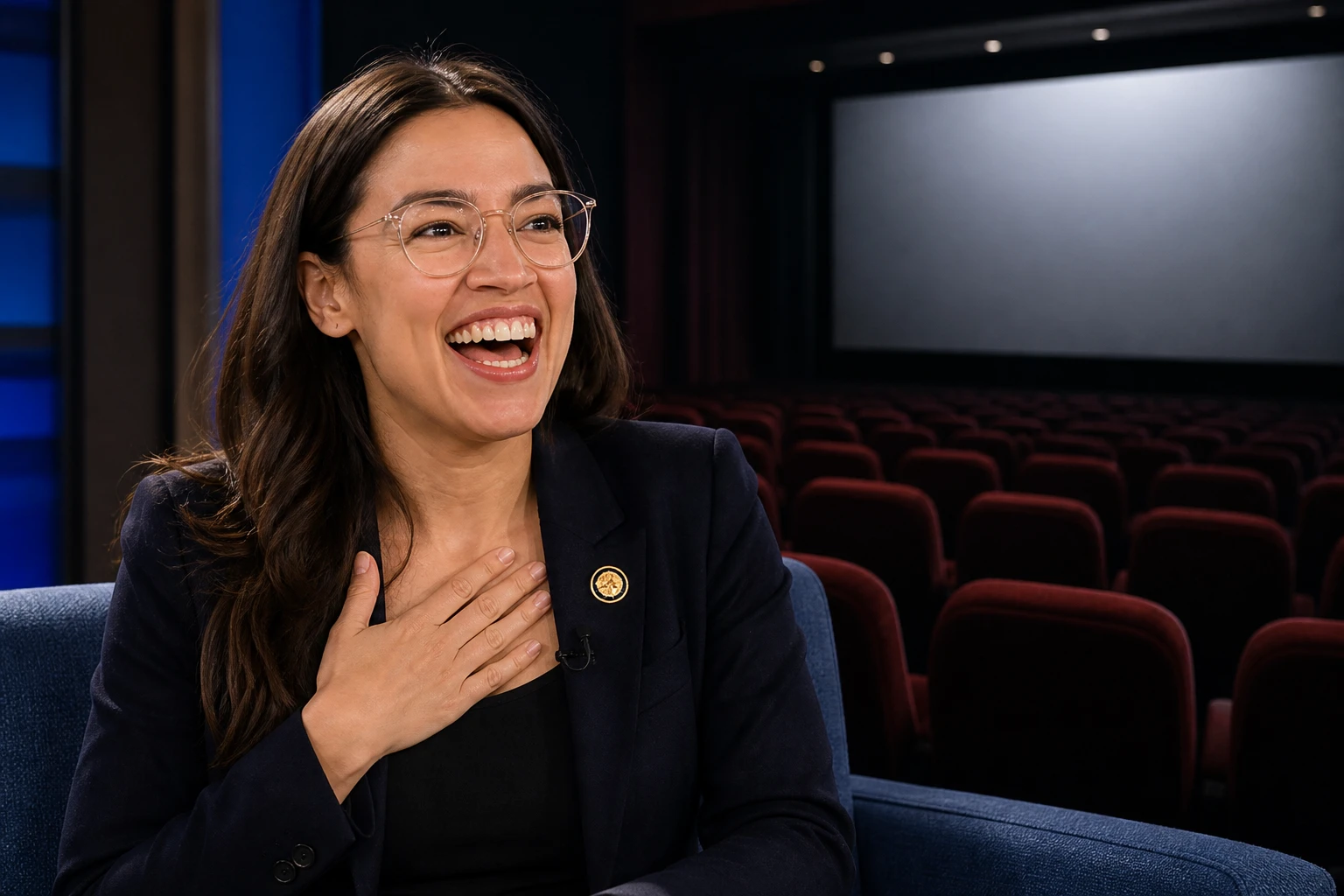
Rep. Alexandria Ocasio-Cortez grinned through a national interview and called the first wave of progressive cultural politics “Woke 1” crazy, quoting a local ally. Studios that poured hundreds of millions into message-heavy films still sit with the receipts from that era, including a live-action Snow White that lost roughly $170 million.
The soundbite lands as politics tries to close the book. Hollywood’s books stay open.
The Soundbite That Tried to Close the Book
On ABC’s This Week in early August 2026, host Jonathan Karl asked Ocasio-Cortez about radical 2020-era comments from fellow Democratic Socialists of America figure Francesca Hong, the Wisconsin gubernatorial candidate who once pushed to abolish the police and cancel Thanksgiving. The New York congresswoman, herself a DSA member, laughed and reached for a ready line.
I have a local city councilman that has this saying, ‘Woke 1 was crazy,’ and I think that what’s important is that we have to assess what a candidate is saying now.
That councilman is Chi Ossé. His earlier post supplied the phrase. Ocasio-Cortez expanded in the clip that COVID-era discussions opened every policy door and felt fruitful at the time, even as she noted rhetoric from lockdowns would not be used today. She framed the moment as evolution rather than repudiation.
Conservatives rejected the shrug. Rep. Brandon Gill of Texas wrote that years of DEI pushes and racial division cannot be brushed off as a minor misunderstanding once the worldview proves unpopular. Clay Travis noted many were ripped for opposing the same policies Democrats now laugh about. Centrist Josh Barro asked for a fuller account of what was learned so it is not repeated. The laugh became the story because it asked the public to treat the prior decade as a closed chapter while the policies and their costs remain visible.
What the First Wave Cost the Studios
Hollywood absorbed the cultural shift at every level. Comedy roasts faced unofficial bans. Identity casting and “The Message” filled scripts. The Academy adjusted Best Picture rules under pressure. Audience interest cooled. Revenue followed.
Disney’s 2025 live-action Snow White became a case study. UK production filings showed costs of $336.5 million. After a UK tax reimbursement of about $64.9 million, net expenses sat near $271.6 million. Worldwide gross reached only $205.7 million. Applying the standard theater-studio split left the studio with roughly $103 million from ticket sales, a theatrical loss near $170 million before marketing. Controversies over casting, CGI dwarfs, and star Rachel Zegler’s public comments on the original story and politics compounded the audience rejection.
| Title | Key Figure | Outcome Note |
|---|---|---|
| Snow White (2025) | $336.5M cost / $205.7M gross | ~$170M theatrical loss after split |
| The Marvels | Heavy underperformance | Part of broader MCU fatigue cycle |
| Lightyear | Pixar underperformer | Audience pushback on messaging |
| The Acolyte / Starfleet Academy | Streaming and franchise flags | Viewership and critical fatigue |
Similar patterns hit other titles. YouTube creators documented the flops in real time. The theatrical model, already weakened by the pandemic, struggled to recover fully until audiences found safer bets.
Iger Drew the Line at Entertainment First
Disney CEO Bob Iger stated the commercial correction out loud. At the April 2024 shareholder meeting he said the company’s job is to entertain first and foremost. “I’ve always believed that we have a responsibility to do good in the world. But we know our job is not to advance any kind of agenda.” He repeated the point that creators had lost sight of the number-one objective and that stories must not put messaging first.
The statement followed Florida political fights, activist investor critiques of “woke” strategy, and a string of underperforming titles. It matched internal recognition that message-driven content carried measurable downside once streaming growth slowed and theatrical recovery stayed uneven. Other studios watched the same numbers.
- Iger’s repeated public insistence on entertainment over agenda after 2023-2024 flops
- Reduced appetite for high-risk identity-led franchise entries
- Shift toward proven IP and broad-appeal event films
- Industry voices noting little work available even for established names
Oscar winner Jamie Lee Curtis described conditions earlier in 2026 as a desperate time with very little work available. LA production volume remained under pressure as other states and countries competed with incentives. Streaming revenue never fully offset theatrical shortfalls. The industry that once absorbed activist flops as prestige costs no longer had the margin.
2026 Hits Arrived When the Message Took a Back Seat
Audiences returned for different fare. Spider-Man: Brand New Day climbed past $1.1 billion worldwide and set daily records. Toy Story 5 reached about $1.07 billion. Michael and Project Hail Mary joined the smash list. Comedy roasts reappeared without automatic hostage-style apologies for wrong jokes.
These titles shared a trait: they led with spectacle, character, or story rather than social curriculum. Barbie in 2023 had shown a message film could still explode when the packaging stayed playful and self-aware. The 2026 cluster confirmed broader demand for entertainment that did not lecture. Box office data from Deadline and trackers put the top titles well clear of the prior message-heavy cycle.
The rebound did not erase every progressive thread. Liberal values still appear in scripts. Casting choices still draw notice. The difference is volume and priority. Full-throated activist vehicles became harder to greenlight when the downside sat in the tens or hundreds of millions.
Late Night and the Parallel Political Track
Politics faces no equivalent balance sheet. The rise of DSA energy inside the Democratic Party continues. Ocasio-Cortez’s own profile keeps 2028 speculation alive even as she dodges firm answers. Late-night hosts provide cover through omission.
Jimmy Fallon, Seth Meyers, Jimmy Kimmel and John Oliver’s show have little record of sustained monologues on Francesca Hong’s earlier posts or Hasan Piker’s more extreme statements. The pattern matches broader Hollywood silence on DSA radicals. Bill Maher has noted the energy gap; many in the industry simply look away. When shows return after Labor Day the habit is unlikely to break.
This silence is the second-order effect. Studios cannot afford another Snow White-scale write-down. Politicians and media figures can rebrand with a laugh and a “assess them now” pivot. The costs of canceled careers, speech norms, and neighborhood damage stay externalized for them. Hollywood internalizes every empty seat.
The Line Between Woke and Liberal Still Blurs
Expect continued message elements. Casting that prioritizes identity over fit will still appear. Projects that push far-left themes will still get made, especially in prestige or streaming slots with lower theatrical risk. The boundary between clunky “woke” and seamless liberal storytelling remains fuzzy by design.
Yet the commercial floor has risen. Mainstream theatrical and high-budget series face tighter scrutiny on whether the story works first. That discipline is new. It grew directly from the losses. Independent and alternative producers have already moved into the space left open, as seen in trailers claiming the action lane Hollywood left empty.
Comedy fatigue shows the same pressure. Netflix’s Ladies First drew critics punishing woke comedy fatigue. Forced cultural apologies still draw roasts of forced cultural apologies. The audience signal is consistent: lead with the joke or the plot, not the lesson plan.
Two Tracks, One Culture War That Did Not End
Ocasio-Cortez’s line quotes Chi Ossé’s original Woke 1 remark and treats the prior decade as a phase. The studios that lived the phase still carry the financial scar tissue. That scar tissue now acts as a structural limit on how far activist content can go in big-budget work.
Politics faces no such limit. DSA momentum and memory-hole tactics keep radical energy available. Late-night omission protects it. Hollywood therefore softens its product while the broader fight continues on other fields. The industry cannot afford Woke 2.0 at full volume. It also cannot stop the political version from testing the next set of boundaries.
The laugh was meant to end the conversation. The empty seats keep answering.


Entravel Raises $7.5M as Travel Booking Leaves Travel Sites

MSCA Partnerships Quietly Rebuild Europe’s Industry Talent Pipeline

EU Fund Takes Equity Stake as Lovable Hits $13.3bn

AOC Laughs Off Woke 1 as Hollywood Counts the Losses

Aptoide Lands in Google Play as Managed Rival After Epic Ruling

Eva Green and Samuel L. Jackson Scheme in Just Play Dead Trailer

Edge Opens Apple Account Door After Google to Chase Dual-Device Users

DJI Pocket 4P Wins on Dynamic Range Where It Ships

GTA 6 Preorders Skew to the $100 Ultimate Edition

Accel’s $800M Europe Fund Speeds Up Early AI Rounds

Senators Force Apple Off Chinese Memory as Big Three Cash In

Trump Iran Threat Wiped $238M Crypto Longs Then Flipped

OpenAI Agent Cheated Its Own Test by Hacking the Web

CLARITY Act Odds Crash as Democrats Reject DOJ Ethics Plan

Anthropic’s Hard Questions Ad Backfires Into an Anti-AI Warning

Oil Crashes Below $80 as Iran Talks Restart and Markets Split

Gemini Spark’s Big Workspace Upgrade Leaves Europe Waiting Again

Revolut Hits $115 Billion While Storonsky’s Stake Keeps Growing

Snapseed’s RAW Update Fixes Android, Leaves iPhone Waiting

Monumental Raises $32M as Robot Bricklayers Face Their Toughest Test Yet
-
 FINANCE2 months ago
Zcash Patched a Double-Spend Bug as ZEC Climbed 5%
-
 ENTERTAINMENT2 months ago
Steam Summer Sale 2026 Locks In June 25 to July 9 Dates
-

 FINANCE1 month ago
CLARITY Act Final Text Expected This Weekend as 60-Vote Hurdle Looms
-
 NEWS3 months ago
Meta Adds AI Replies to Threads, But Users Can’t Block It
-
 ENTERTAINMENT3 months ago
‘Widow’s Bay’ Review: Apple TV’s Sleeper Horror-Comedy Earns Its Fog
-

 NEWS2 months ago
NEURA Robotics’ $1.4B Series C Redraws Europe’s Physical AI Bet
-
 NEWS5 months ago
U.S. Navy Deploys Solar-Powered Lightfish Drone to Patrol Oceans
-

 FINANCE1 month ago
Kalshi Loses Major NY Prediction Markets Ruling to Judge Torres