
NEWS
FIFA Scraps World Cup Stake Plan After UEFA Boycott Vote
Infantino’s private investment bid for World Cup rights collapsed in days under Europe’s unanimous boycott threat.

FIFA president Gianni Infantino abandoned his FIFA Forward Enterprise private-stake proposal on 31 July 2026, days after UEFA’s 55 member associations voted unanimously to boycott every future World Cup and FIFA competition. The plan had promised more than $10 billion in fresh development money. It produced the sharpest public split between the sport’s two power centres in years.
What began as a consultation on commercial structure ended as a forced U-turn that damaged Infantino’s authority and left smaller associations without the cash they were offered.
How FIFA Pitched the Stake Sale
On 28 July FIFA announced it would create FIFA Forward Enterprise, or FFE, a new subsidiary to house commercial and event operations for the men’s and women’s World Cups and other tournaments. Third parties would buy minority, non-controlling stakes. The goal was an over USD 10 billion development funding goal for the 211 member associations.
Each association was to receive an extra $20 million in Forward funding for 2027-2030 regardless of support, plus a voluntary Fast Forward one-off of another $20 million financed by the external money. A JP Morgan document floated higher long-term payouts. Thrive Eternal, the firm founded by Joshua Kushner, was expected to lead the investor group. FIFA set a 19 September deadline for associations to back the idea if they wanted the first tranche.
- $20 million base extra Forward cash per association over four years
- $20 million optional Fast Forward top-up per association
- 21 per cent minority stake target reported in some briefings
- Majority of 211 associations needed for approval
FIFA insisted the parent body would keep permanent ownership and control. Critics saw a path to private influence over the sport’s biggest assets.
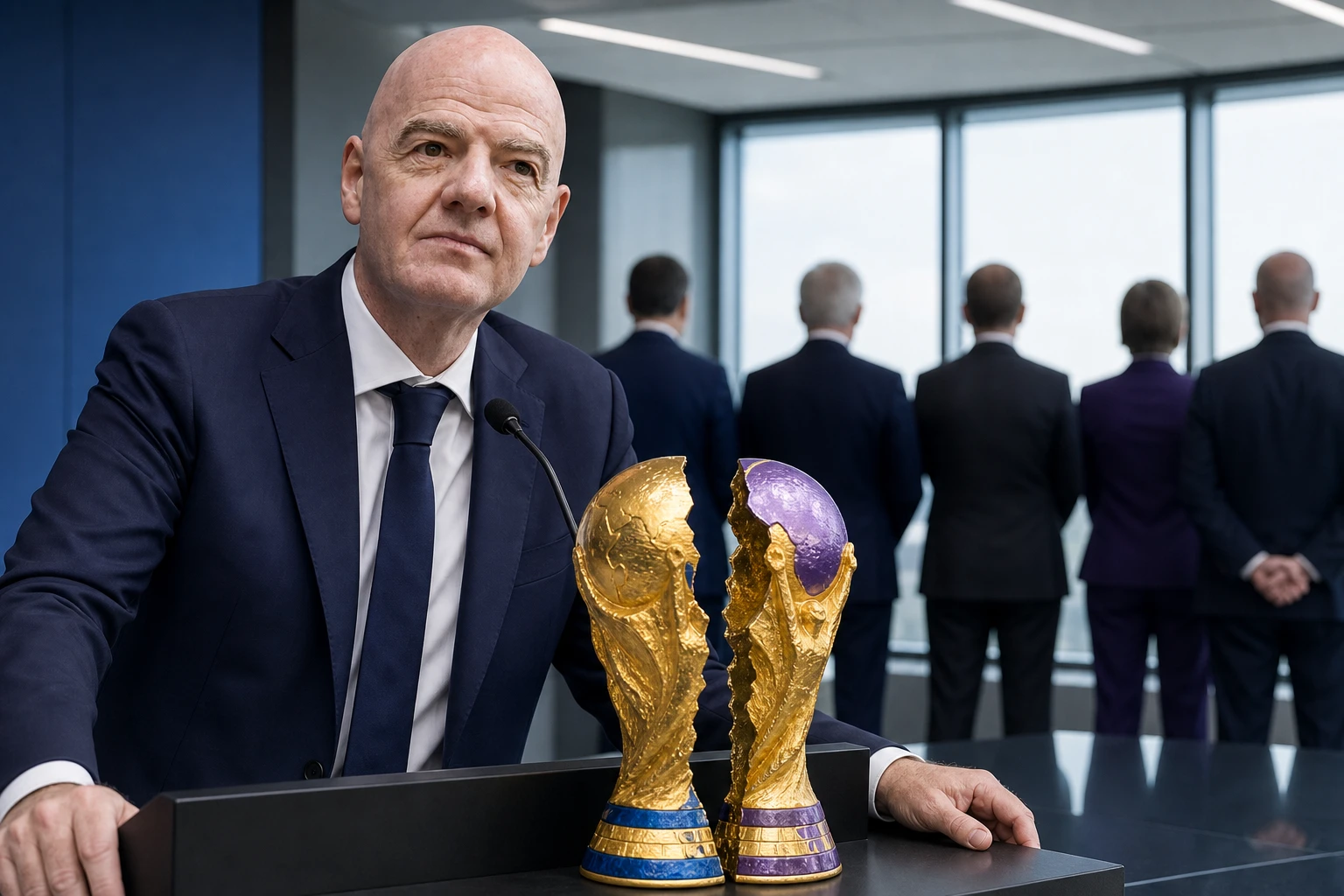
Europe Draws a Hard Line at 55-0
UEFA called an emergency virtual meeting of its 55 associations on 30 July. Sources said more than 50 took the floor. The result was unanimous rejection.
As a result of today’s discussion, no UEFA national teams will participate in any FIFA competition for so long as these proposals remain alive, unless this proposal has been abandoned in its entirety and binding assurances have been given that FIFA will never again open its governance or competitions to private ownership.
UEFA said that in a statement after the vote. The English FA stood “shoulder to shoulder” and declared the World Cup “belongs to football and always will.” Boycotts would have started with the 2027 Women’s World Cup and the Under-20 Women’s event in Poland in September. Six of the current top-10 ranked men’s sides are European. A walkout would have gutted competitive balance and commercial value overnight.
UEFA posted the core decision the next day: its associations “unanimously rejected FIFA’s proposal to transfer ownership interests in its competitions to private investors.” The post drew strong engagement as fans and officials amplified the red line.
Confederations and FIFA Insiders Pile On
Concacaf rejected the plan the same day. The AFC later stood in solidarity. Between them the three confederations controlled 136 votes, more than enough to kill any majority. CAF and OFC planned August talks. CONMEBOL asked for more detail.
| Confederation | Associations | Stance |
|---|---|---|
| UEFA | 55 | Unanimous boycott threat |
| Concacaf | 35-41 | Unanimous rejection |
| AFC | 46 | Solidarity with UEFA/Concacaf |
| CAF / OFC / CONMEBOL | Remaining | Discuss or seek clarification |
Inside FIFA the revolt was personal. Senior adviser Carlos Cordeiro resigned, calling the deal “a bad deal for football” that would “mortgage football’s future.” Chief operating officer Kevin Lamour said the administration had been “deceived” and that the project was “the project of one person.” He added he would rather lose his job than stay silent.
- Cordeiro quit the White House 2026 taskforce role and the advisory post
- Lamour publicly broke ranks on the deception claim
- UK Prime Minister Andy Burnham said football “does not belong to investors”
- Culture minister Lisa Nandy backed the European stand: “Football belongs to the fans, not billionaire investors”
The speed recalled the European Super League collapse. That project died in 48 hours of fan and club revolt. This one lasted only a couple of days longer.
The Climbdown and Its Immediate Price
FIFA first tried to hold the line. Its 30 July clarification insisted media reports had been wrong and that the consultation would continue. It stated a Nobody is selling football statement and that no single body spoke for all 211 associations. Each member should vote on facts, it said.
By late 31 July the numbers and the internal damage forced the end. Infantino’s statement was brief: “Having listened carefully to all the views, it has become clear that the project has created divisions of a nature that, regardless of the level of support, are no longer in the interest of the objective set out in the first place. Our purpose has always been, and will always be, to unite and improve. As a result, this proposal will not proceed.”
He promised to bring parties back together. The Qatar FA welcomed the withdrawal. Others did not soften their language. UEFA later spoke of lost confidence and legal steps to preserve documents.
Who Gained Ground and Who Lost Cash
UEFA and the traditional European power centres enforced a veto without a ball being kicked. They protected the idea that the World Cup sits outside private equity. Clubs and leagues that already face fixture congestion kept one more commercial variable off the table. Player unions watching workload gained breathing room if the threat of extra tournaments and travel had been real.
Smaller associations lost the clearest near-term cash injection on offer. Many outside Europe rely on FIFA Forward money for pitches, academies and administration. The $40 million combined package per association was real leverage. Its disappearance leaves those projects delayed or cancelled unless ordinary Forward cycles expand. Broadcasters and sponsors watching rights cycles saw the scarcity value of the World Cup reaffirmed, but also fresh proof that calendar and commercial certainty can vanish overnight.
Infantino’s path to a fourth term at the March 2027 Congress in Morocco is no longer unopposed by default. Candidates have until mid-November to declare. Associations that had already signalled support are now free to reconsider. His close public ties to the US administration, including the earlier FIFA Peace Prize presentation, became part of the criticism when Kushner-linked capital appeared in the mix.
- 28 July 2026, FIFA launches FFE consultation and funding pitch
- 30 July 2026, UEFA 55-0 boycott vote; Concacaf rejects
- 31 July 2026, Internal resignations and public statements of deception
- 31 July-1 August 2026, Infantino announces the proposal will not proceed
The episode also sits beside longer fights over the official international match calendar process. Congestion, rest windows and confederation tournaments remain unresolved. Europe’s willingness to walk away from FIFA events sets a precedent that will colour every future calendar and commercial talk.
What the Episode Leaves Behind
FIFA still controls the World Cup brand and the bulk of global development spending. That structural power did not disappear. But the speed of the reverse showed how little room Infantino has when Europe, North America and Asia align. Private capital remains interested in football’s growth. The next approach will need far more transparency and earlier buy-in from the confederations that can empty the stadiums.
Fans already face high ticket prices and dense schedules. The World Cup sponsorship and host city costs story continues regardless of who owns the commercial subsidiary. The boycott threat simply reminded everyone that the product only works when the best teams turn up.
For now the plan is dead. The divisions it created are not. Infantino must rebuild trust before the next Congress or watch a challenger turn the same European unity against him. The associations that needed the money most are left waiting for the next cycle of ordinary Forward funding. That is the lasting arithmetic of a three-day crisis.
Frequently Asked Questions
What exactly was the FIFA Forward Enterprise proposal?
FFE was a planned FIFA-owned subsidiary that would take commercial rights and event delivery for World Cups and other tournaments. External investors would buy a minority non-controlling stake, with proceeds meant to fund more than $10 billion in member-association development projects while FIFA retained permanent control.
How many UEFA associations backed the boycott threat?
All 55 UEFA member associations voted unanimously on 30 July 2026 to refuse participation in any FIFA competition, including World Cups, until the private-stake plan was fully abandoned and binding assurances given that governance would not be opened to private ownership again.
How much extra funding did FIFA offer each association?
Every one of the 211 member associations was promised an extra $20 million in Forward development funding for 2027-2030 irrespective of their vote, plus a voluntary one-off Fast Forward payment of another $20 million financed by the private investment if the plan proceeded.
Did other confederations support UEFA’s position?
Concacaf rejected the proposal the same day as UEFA’s vote. The Asian Football Confederation later expressed solidarity. Together those blocs held enough votes to block the majority Infantino needed, making passage impossible even before the full scrap.
What happens to Infantino’s position after the climbdown?
His re-election bid for a fourth term at the March 2027 FIFA Congress is no longer considered unopposed. Several confederations have stated lost confidence, internal senior figures resigned or criticised the process, and potential challengers now have clearer running room until the November declaration deadline.


Bandcamp Boots Boy George Over AI Song, Not Just the Lyrics

Olix Triples to $3.3bn on Optical Bet Against Nvidia

Four Teens Died After Platforms Vowed Fixes and Suits Began

Pixel 11 Pre-Orders Open Eight Hours Before the Event

Aflabox Seed Funds Field Mycotoxin Tests That Beat Lab Delays

2026 Lexus RZ Gains Power and Range Yet Still Falls Short

Ankr Nodes Clear Path for XRPL Institutional Features

Xbox Disc Licenses Turn Physical Games Into Portable Rights

BlackRock Turns Cash Empire Into Stablecoin Reserve Rails

Android 17 QPR2 Beta 2 Locks Out Pixel 6 as December Nears

Kalshi Loses Major NY Prediction Markets Ruling to Judge Torres

Fed Minutes Cite AI Demand as Inflation Risk, Put a 2026 Hike Back on the Map

Marker AI Writing Startup Lands $13M Seed Led by Index Ventures

Dota 2 Esports World Cup 2026: Spirit Defends $2M Title In Paris

Meta’s Muse Spark 1.1 Beats Rivals on Price, Trails on Coding

Finto Picks Munich Over Silicon Valley After YC, Raises $3.4M

ARC Intelligence Closes €4M Seed Round in Roughly a Week

CS2 Premier Season 5 Lands With Cache and a C4 Damage Rework

Backrooms Returns to Theaters as the Everything Must Go Edition

Magnificent Seven Shed $2 Trillion in June as the Rally Broadens
-
 FINANCE2 months ago
Zcash Patched a Double-Spend Bug as ZEC Climbed 5%
-
 ENTERTAINMENT2 months ago
Steam Summer Sale 2026 Locks In June 25 to July 9 Dates
-

 FINANCE1 month ago
CLARITY Act Final Text Expected This Weekend as 60-Vote Hurdle Looms
-
 NEWS3 months ago
Meta Adds AI Replies to Threads, But Users Can’t Block It
-
 ENTERTAINMENT3 months ago
‘Widow’s Bay’ Review: Apple TV’s Sleeper Horror-Comedy Earns Its Fog
-
 NEWS5 months ago
U.S. Navy Deploys Solar-Powered Lightfish Drone to Patrol Oceans
-
 FINANCE4 weeks ago
Kalshi Loses Major NY Prediction Markets Ruling to Judge Torres
-
 NEWS8 months ago
FolderFresh Review: This Free Tool Automates Windows File Organizing