
NEWS
Ankr Nodes Clear Path for XRPL Institutional Features
Ankr’s free global XRPL RPCs arrive just before five v3.3.0 amendments for privacy, batch settlement and sponsored fees.

Ankr switched on free, globally distributed public nodes for the XRP Ledger on August 3, 2026, giving developers mainnet and testnet JSON-RPC access without running their own hardware just days before the expected xrpld v3.3.0 software release.
The XRP Ledger Foundation framed the move as expanded public infrastructure. The practical effect runs deeper: the new endpoints land as five amendments aimed at privacy, atomic settlement and institutional cost-sharing head toward validators.
Four Cities Now Serve Free XRPL RPC
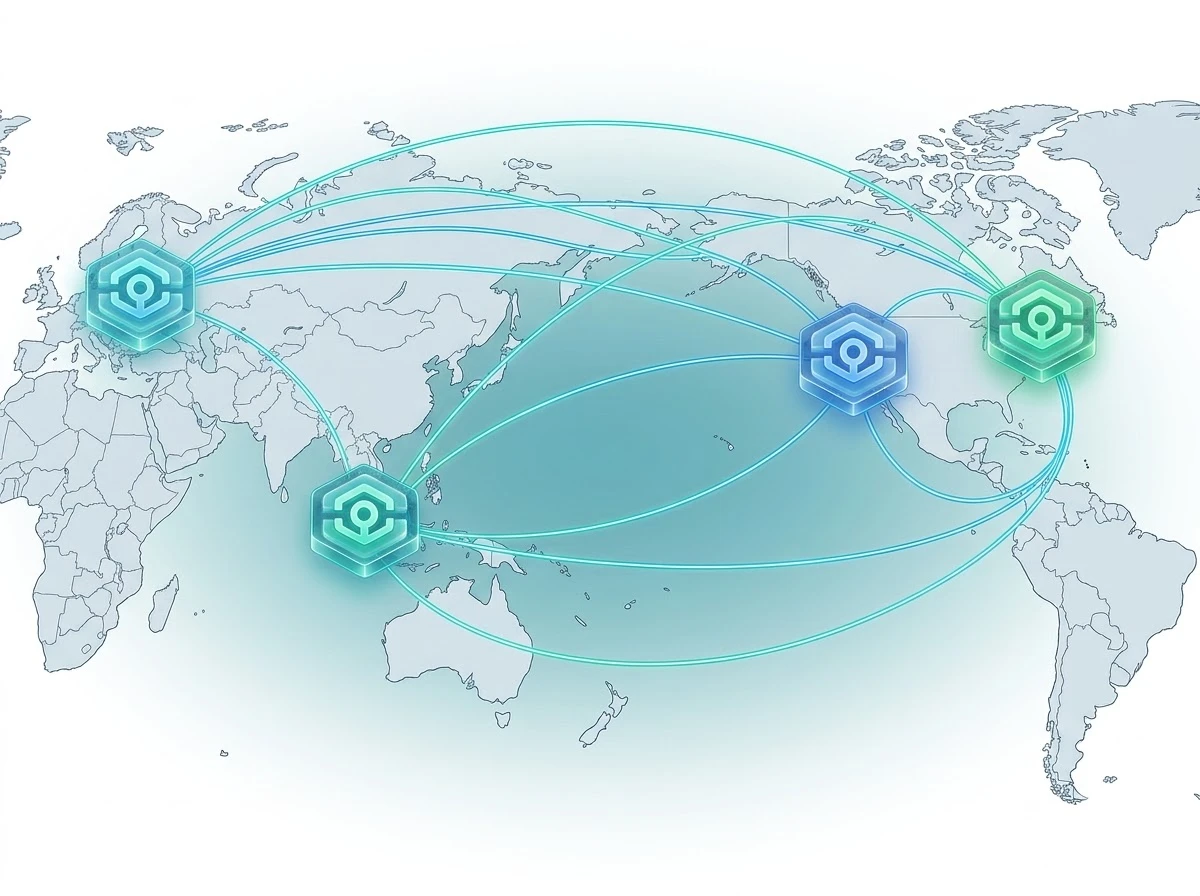
Ankr’s nodes sit in Singapore, New York, Amsterdam and San Francisco. Traffic routes automatically to the lowest-latency option. A public monitoring portal at xrpl-rpc.com shows live block height, median latency, request volume and the active node list.
Early portal readings put median latency near 9 ms and roughly 52,000 requests in the first 24 hours, still light traffic. Singapore carried the bulk of weight in the initial snapshot.
| Location | Operator | Role |
|---|---|---|
| Singapore | Ankr | Primary high-weight node |
| New York | Ankr | US East routing |
| Amsterdam | Ankr | Europe routing |
| San Francisco | Ankr | US West routing |
Automatic routing means a query from Southeast Asia lands on the Singapore node while a European wallet hits Amsterdam without any manual endpoint choice. That design keeps median latency low even when request patterns shift by region or time of day.
Developers get free mainnet and testnet endpoints with no API key on the public tier. Ankr states its full nodes support 43 methods covering accounts, ledgers, transactions, paths, order books, payment channels and server info.
History is limited for now. Nodes keep roughly the last two weeks of transactions. Archive depth sits on the roadmap. For many wallet and payment prototypes that window is enough to read recent state and submit fresh transactions. Teams that must replay older ledgers will still need a full-history provider until Ankr expands depth.
The light early volume is consistent with a brand-new free tier. Builders discover endpoints through docs, social posts and the monitoring portal itself, so traffic tends to climb after the first day rather than spike at launch.
What the Portal Hands Developers
The interface includes a Quickstart with cURL and JavaScript examples, real-time health metrics and a node panel. Ankr’s blog spells out the same enterprise-grade standard it runs across more than 100 chains.
- Account methods for balances, trust lines, NFTs, payment channels and offers
- Transaction methods including simulate before submit
- Path and AMM tools for payments and DeFi reads
- Server info for fees, amendments and validator state
Simulate-before-submit lets a developer test a transaction’s outcome against current ledger state without risking a failed on-ledger attempt. Path and AMM tools matter once tokenized assets start moving through automated market makers or multi-hop payments. Server-info calls expose the amendment status that validators are currently voting, so a client can detect when a feature becomes active.
The free tier carries community rate limits. Higher throughput, archive methods and SLAs move to paid Ankr plans. That split keeps casual builders unblocked while giving serious volume a commercial path.
| Tier | Access | History | Limits and extras |
|---|---|---|---|
| Free public | No API key, mainnet and testnet | Roughly two weeks | Community rate limits |
| Paid Ankr plans | Keyed, higher throughput | Archive methods on roadmap and paid path | SLAs and production volume |
Because Ankr already operates the same model on more than 100 chains, the XRPL endpoints inherit operational patterns that multichain teams already know. A developer who has used Ankr elsewhere can reuse monitoring habits and upgrade logic without learning a new vendor stack.
Adding more public XRP Ledger infrastructure for developers and users, without having them run their own nodes.
XRPL dUNL validator Vet wrote that line on X while pointing to the Ankr setup and monitoring site. He added that Vet noted full history comes later.
Five Amendments Ride With v3.3.0
RippleX Head of Product Jazzi Cooper said the xrpld 3.3.0 release, expected the following week subject to validator readiness, carries five proposed amendments. Software release alone does not activate them. Each needs sustained supermajority support, typically 80 percent of trusted validators for two weeks.
Cooper wrote that XRPL has already shown it can hold tokenized assets at scale. The next step is putting those assets to use in transfers, trading, collateral and settlement.
- Confidential MPT, native privacy for Multi-Purpose Tokens via zero-knowledge proofs and elliptic-curve encryption, hiding balances and amounts while allowing authorized audit views
- Batch, up to eight transactions across different accounts execute atomically in one ledger close, all succeed or all fail
- Permission Delegation, institutions grant narrowly scoped transaction rights without handing over master signing keys
- Sponsored Fees and Reserves, banks, issuers or platforms pay fees and reserves for end users
- Dynamic MPT, issuers can alter selected token properties after issuance
Batch and Permission Delegation return after earlier security issues forced their withdrawal; the new versions carry fixes. The package follows the fixCleanup3_2_0 amendment that activated the prior week with 85.71 percent support, making 3.2.0 the new floor.
Confidential MPT keeps balances and amounts hidden from public observers yet still permits an authorized auditor to inspect them. That combination suits regulated issuers who need privacy against the open ledger and compliance visibility for supervisors. Batch collapses multi-party settlement into a single ledger close, so a delivery-versus-payment flow either completes fully or leaves no partial state. Permission Delegation lets an institution hand a service provider the right to move a narrow set of tokens without exposing the master key that controls the whole account. Sponsored Fees and Reserves remove the need for every end user to hold XRP solely to pay network costs. Dynamic MPT gives issuers a way to adjust token parameters after launch instead of freezing an immutable configuration on day one.
Together the five amendments move the ledger from a place that can store tokenized value to a place that can move, collateralize and settle that value under institutional controls.
Why the Nodes Arrive First
Public RPC access cuts the cost of experimentation. Running a reliable xrpld instance still demands hardware, storage, monitoring and upgrade discipline. Shared endpoints let a wallet team, a small RWA platform or a student project read the ledger and submit transactions in minutes.
That matters because the five amendments are institutional in flavor yet useful far beyond banks. Sponsored fees lower the onboarding tax for retail users of a tokenized fund. Batch enables clean delivery-versus-payment flows for any marketplace. Confidential MPT gives privacy-sensitive issuers a native option instead of an external layer.
Without easy connectivity, those features risk staying theory for anyone outside well-funded operators. The Ankr rollout removes that friction at the exact moment the features enter the voting window.
Timing also reduces coordination risk. If the software release lands and validators begin voting while public endpoints are already live, any developer who wants to test the new transaction types can do so against mainnet or testnet without first standing up hardware. The infrastructure piece no longer gates the feature piece.
Who Gains the Most Immediate Lift
Indie developers and early-stage teams sit at the top of the list. They can prototype against mainnet without a node budget. Regional builders in Asia and Europe gain lower latency than a single US or single-region cluster previously offered.
Exchanges and custodians already run their own infrastructure for control and compliance; they gain a reliable fallback and a clean testnet path. Ankr itself adds another high-profile chain to its multichain RPC footprint and a path to premium upgrades once volume grows.
- Indie and early-stage teams: zero node budget, fast mainnet prototypes
- Asia and Europe builders: lower latency via Singapore and Amsterdam nodes
- Exchanges and custodians: fallback endpoints plus straightforward testnet access
- Ankr: another major chain on the same operational footprint used across 100-plus networks
Crowd reaction on X treated the news as solid groundwork rather than a price catalyst. One common note: putting nodes closer to users improves consistency. Another: the real test arrives when full history and higher paid tiers meet production traffic. Early request counts remain modest, which matches a brand-new free tier still finding its audience.
Consistency matters for client libraries and mobile wallets that retry on timeout. A median near 9 ms and automatic failover across four cities reduce the chance that a single regional blip stalls user actions. That operational detail rarely makes headlines, yet it shapes whether a free tier feels production-ready or merely experimental.
Public Servers Before Ankr
XRPL has long offered free public access. The official existing public XRPL server list includes Ripple’s s1 and s2 clusters, InFTF’s xrplcluster.com full-history set, Honeycluster, and commercial options such as QuickNode. Ripple’s own free servers carry an explicit warning against sustained business use.
Those options worked, yet geographic spread and capacity varied. Some clusters emphasize full history; others prioritize general queries. Ankr’s contribution is a multi-region free tier with automatic routing, live metrics and a clear upgrade path under one operator that already serves 100-plus chains.
The combination leaves builders more choice. Teams that need deep history still lean on dedicated full-history providers. Teams that need low-latency reads and submits across continents now have a free Ankr option that requires zero setup.
Choice also spreads load. When several free and commercial endpoints coexist, no single cluster becomes the only public door onto the ledger. Developers can switch providers if rate limits bind or if a region shows higher latency, which keeps the overall public surface more resilient.
- Prior week – fixCleanup3_2_0 activated with 85.71 percent support and set 3.2.0 as the new floor
- August 3, 2026 – Ankr switched on free multi-region public nodes and the xrpl-rpc.com monitoring portal
- Following week – xrpld 3.3.0 expected, carrying five amendments into the validator voting window
Validators Still Decide When Features Activate
Software release and amendment activation remain separate steps. The v3.3.0 binary can ship and run while the five new amendments stay disabled until trusted validators deliver a sustained supermajority, typically 80 percent for two weeks. That design keeps network rules under distributed control rather than under any single vendor’s release calendar.
The prior week’s fixCleanup3_2_0 result, at 85.71 percent, shows the voting machinery works and that the network can clear a cleanup amendment promptly. Batch and Permission Delegation return only after earlier security issues forced withdrawal, so validators will weigh the fixes as carefully as the features themselves.
Public RPC endpoints do not change that governance path. They simply ensure that once an amendment does activate, a wide set of developers can reach the ledger and exercise the new transaction types without first buying hardware. Infrastructure readiness and rule readiness can advance on parallel tracks.
Free Access Lowers the Cost of Testing Features
Each of the five amendments creates new transaction shapes or new ways to pay for them. Confidential MPT introduces privacy-preserving token operations. Batch requires clients to assemble multi-account packages. Permission Delegation and Sponsored Fees change who signs and who pays. Dynamic MPT adds post-issuance configuration calls.
Testing those flows against a live network is far cheaper when a free, globally routed endpoint already exists. A small team can submit simulated and real transactions, watch amendment flags via server-info methods, and measure latency from the same four cities that production users will hit. Paid plans remain available when volume or archive needs exceed the community tier.
The free tier therefore acts as a shared lab bench for the amendment set. It does not accelerate validator voting, yet it removes one common reason teams delay integration work until after activation day.
What Both Pieces Unlock Together
Ankr’s own post flags a lending and borrowing protocol moving toward XRPL mainnet. Native DeFi primitives on a ledger already used for institutional payments change the product surface. Tokenized assets that previously sat idle can become collateral, trade against each other, or settle inside atomic batches.
The chain of effects is straightforward. Free global RPCs lower the cost of building. The five amendments lower the cost and risk of using the assets once built. Validators still hold the activation keys, so nothing is guaranteed on day one of the software release. Yet the infrastructure piece no longer waits on the feature piece.
Lending and borrowing against tokenized collateral becomes more practical when Batch can lock legs atomically and when Sponsored Fees let a platform cover network costs for its users. Confidential MPT adds a privacy option for issuers who cannot place plain balances on a public ledger. Permission Delegation lets a lending protocol operate under narrowly scoped rights instead of full custody of master keys. Each amendment supplies a piece; the free endpoints supply the reach.
Developers who want the technical reference can pull the full XRPL API documentation and the Ankr public RPC live on XRP Ledger overview. The endpoints are live today. The amendments head to the next voting cycle. The gap between holding tokenized value and moving it just got narrower.


Bandcamp Boots Boy George Over AI Song, Not Just the Lyrics

Olix Triples to $3.3bn on Optical Bet Against Nvidia

Four Teens Died After Platforms Vowed Fixes and Suits Began

Google Health Now Writes Fitbit Data Into Apple Health

Pixel 11 Pre-Orders Open Eight Hours Before the Event

Aflabox Seed Funds Field Mycotoxin Tests That Beat Lab Delays

2026 Lexus RZ Gains Power and Range Yet Still Falls Short

Ankr Nodes Clear Path for XRPL Institutional Features

Xbox Disc Licenses Turn Physical Games Into Portable Rights

BlackRock Turns Cash Empire Into Stablecoin Reserve Rails

Kalshi Loses Major NY Prediction Markets Ruling to Judge Torres

Fed Minutes Cite AI Demand as Inflation Risk, Put a 2026 Hike Back on the Map

Marker AI Writing Startup Lands $13M Seed Led by Index Ventures

Dota 2 Esports World Cup 2026: Spirit Defends $2M Title In Paris

Meta’s Muse Spark 1.1 Beats Rivals on Price, Trails on Coding

Finto Picks Munich Over Silicon Valley After YC, Raises $3.4M

ARC Intelligence Closes €4M Seed Round in Roughly a Week

CS2 Premier Season 5 Lands With Cache and a C4 Damage Rework

Backrooms Returns to Theaters as the Everything Must Go Edition

Magnificent Seven Shed $2 Trillion in June as the Rally Broadens
-
 FINANCE2 months ago
Zcash Patched a Double-Spend Bug as ZEC Climbed 5%
-
 ENTERTAINMENT2 months ago
Steam Summer Sale 2026 Locks In June 25 to July 9 Dates
-

 FINANCE1 month ago
CLARITY Act Final Text Expected This Weekend as 60-Vote Hurdle Looms
-
 NEWS3 months ago
Meta Adds AI Replies to Threads, But Users Can’t Block It
-
 ENTERTAINMENT3 months ago
‘Widow’s Bay’ Review: Apple TV’s Sleeper Horror-Comedy Earns Its Fog
-
 NEWS5 months ago
U.S. Navy Deploys Solar-Powered Lightfish Drone to Patrol Oceans
-
 FINANCE4 weeks ago
Kalshi Loses Major NY Prediction Markets Ruling to Judge Torres
-
 NEWS8 months ago
FolderFresh Review: This Free Tool Automates Windows File Organizing