
NEWS
Google Health Now Writes Fitbit Data Into Apple Health
Version 5.05 lets iPhone users push Fitbit steps, sleep, vitals and workouts into Apple Health while HRV stays out and US users gain Smart Health Links for doctors.

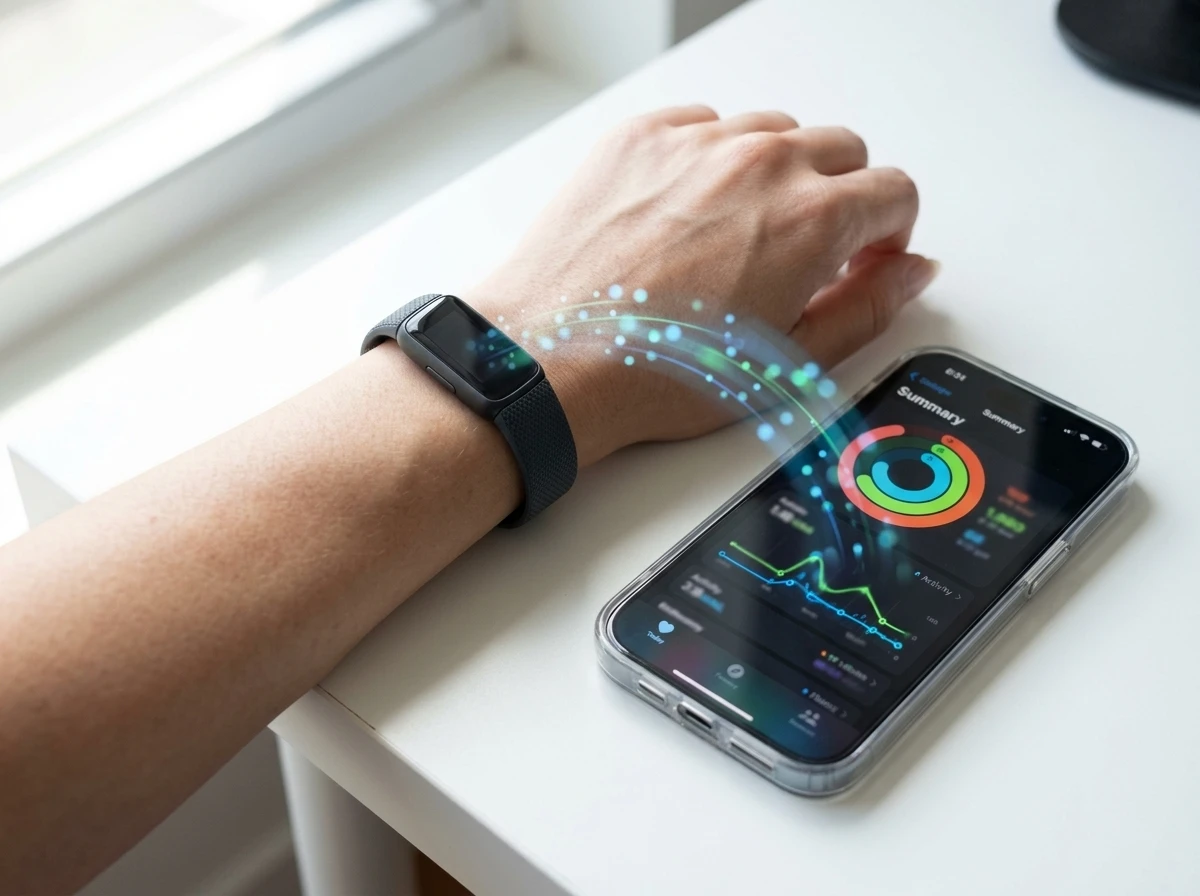
Google Health version 5.05 now writes Fitbit-tracked data straight into Apple Health on iOS. Exercise records, steps, vitals and sleep move across so iPhone owners can keep Apple Health as the main dashboard while wearing a Fitbit Air or other Google device.
The update, live on the App Store and Play Store, also adds US-only Smart Health Links for sharing medical summaries with doctors. Heart rate variability stays out, and that gap still matters to serious trackers.
What Crosses the Bridge
According to the Google Health 5.05 App Store notes, users can share exercise records, sleep, vitals, steps and more from Google Health into Apple Health. The same list appears in Google’s community release notes and coverage from 9to5Google.
Previously the connection ran only one way. Apple Health data could flow into Google Health; Fitbit numbers could not leave. That forced iPhone users either to live inside Google’s app or pay for third-party bridges.
| Metric | Syncs to Apple Health | Notes |
|---|---|---|
| Steps | Yes | Apple Health dedupes with phone data |
| Exercise / workouts | Yes | Records and maps where available |
| Sleep | Yes | Duration and stages reported |
| Vitals (HR, SpO2 etc.) | Yes | Core device readings |
| Heart rate variability (HRV) | No | Calculation mismatch |
Apple Fitness rings still need an Apple Watch or similar Apple hardware to fill fully. Importing a Fitbit workout alone does not close the rings for most users.
The HRV Gap That Still Stings
Reddit users testing the feature quickly spotted the missing piece. Heart rate variability does not write over. User MashV explained the technical reason: Google Health and most trackers calculate HRV with RMSSD while Apple Health’s standard metric is SDNN. The two are related but not interchangeable. Dumping raw RMSSD numbers under an SDNN label would produce misleading clinical-looking data.
because apple health uses a different calculation of hrv, sdnn vs rmssd, basically all the trackers out there use rmssd, apple uses sdnn, so when the trackers apps need to write into apple health, they should basically take the raw data, intepret it into sdnn and write it to apple health
MashV wrote that on the original r/fitbit thread. Converting properly takes real work Google has not prioritized yet. Power users who treat HRV as a recovery signal therefore keep opening Google Health or rely on converters.
That is where third-party Health Sync still handles HRV and other edge metrics. Several Redditors who had just paid for a year of a bridge app noted the timing with dark humor.
How the Connection Starts
Setup is straightforward once the 5.05 update lands. In Google Health, open the profile or battery icon, go to apps and services or partner apps, choose Apple Health, and grant the write permissions. On the Apple side, open Health, Sharing, Apps, Google Health and confirm the categories you want to accept.
Google’s official steps to connect Apple Health still list the older one-way language in places, but the new write path is live. Requirements include iOS 16.4 or higher and an adult Google Account. Some users saw an on-home-screen prompt; others had to hunt the menus and force-quit both apps before permissions appeared.
Early testers reported sleep and steps appearing within minutes after a fresh sync. A few saw delays or needed to toggle permissions twice. Double-counting of steps is handled inside Apple Health when both phone and Fitbit contribute.
Smart Health Links Reach the Doctor’s Desk
The same 5.05 drop adds Smart Health Links for users in the United States on both Android and iOS. From the Health tab’s Medical section, you create a shareable record, pick which data to include, then generate a URL or QR code.
Providers can accept the link at check-in as a supplement to history. The feature rests on the open SMART Health Links FHIR standard, which lets patients hand over verifiable or time-limited clinical packets without emailing PDFs or logging into portals.
- Create a link from shareable records in the Medical section
- Select specific data types to include
- Share via URL or QR code
- Provider or family member opens the link with optional PIN protection
- Supports ongoing or limited-time access patterns defined by the standard
This side of the update sits quieter than the Apple Health headline yet points further. Consumer wearables start acting as feeders into real clinical workflows rather than closed fitness silos.
Who Gains Ground and Who Loses a Niche
iPhone owners who already own or wanted a Fitbit Air win the most immediate convenience. They can treat Apple Health as source of truth for steps, sleep and workouts while still using Google’s coaching or device-specific metrics. Several Redditors said the feature removed the last reason they were eyeing an Apple Watch switch.
Google expands the practical market for its hardware. Fitbit no longer forces a full ecosystem commitment on the largest smartphone base. That pairs with other recent Google Health moves, including the earlier Google Health app listing for Pixel Watch 5 that signaled tighter hardware-app ties.
Third-party sync developers lose a core paid use case. Basic steps-sleep-workout bridging is now free and native. Their remaining value concentrates on HRV conversion, exotic metrics, and multi-app routing that Google and Apple still ignore.
Apple itself gains a richer data lake inside Health without selling more Watches. Apps that already sit on top of Apple Health (Athlytic, Bevel and others) suddenly receive Fitbit streams for free. Users who keep both an Apple Watch and a Fitbit can consolidate more cleanly, though rings stay gated.
Mixed-Device Reality Just Got Simpler
The practical effect shows up in daily habits. Someone can wear a Fitbit Air for battery life or comfort, glance at Apple Health rings and trends on the iPhone lock screen, and only open Google Health when they want the AI coach or the missing HRV number. Pokemon Go step credits, Strava imports and other AH-dependent apps work without extra bridges.
Crowd reaction on the Fitbit subreddit mixed relief with residual gripes. “That was faster than I anticipated” and “Good job from Google” sat beside “without HRV it’s useless for me” and complaints that the app still drains battery. A few noted that Bevel’s direct Fitbit link already covered much of the ground; the native path mainly helps pure Apple Health loyalists.
The same interoperability wave appears elsewhere. Open standards and AI health experiments keep pushing data out of single-vendor vaults. One parallel is the broader push of AI into health records that tries to make longitudinal data useful across apps rather than trapped inside them.
Stability fixes in 5.05 also touch VO2 max calculations, exercise maps and post-workout edits. Those matter less for headlines but reduce the daily friction that made earlier Google Health versions feel unfinished to some longtime Fitbit users.
What the Patch Quietly Changes Next
Native write support removes a classic lock-in objection. Price-sensitive or battery-focused buyers on iPhone now have one fewer reason to reject Fitbit hardware. Google can sell devices into Apple’s base without demanding they abandon Health.
At the same time Apple Health grows stronger as the default aggregator. Every new non-Apple source that writes cleanly makes the central dashboard harder to leave. Third-party analytics apps ride that wave. The remaining friction (HRV math, rings gating, occasional permission flakiness) keeps a niche for specialists and for Google’s own deeper coaching features.
Smart Health Links add a second vector. If enough clinics accept the QR or URL flow, the consumer tracker stops being purely a lifestyle gadget and starts feeding verified packets into actual care. That is a longer bet than step counts, but 5.05 puts the plumbing in place on both platforms at once.
For most people the update is simply less app-switching. For the market it is a small crack in the old silos that lets Fitbit data live where iPhone users already look, while giving Google a cleaner story for the next round of hardware.
Frequently Asked Questions
Which Google Health metrics sync to Apple Health in version 5.05?
Exercise records, steps, sleep data, vitals and additional supported categories write from Google Health into Apple Health. Heart rate variability is excluded because of incompatible calculation methods (RMSSD versus SDNN). Historic depth and exact sub-metrics can vary by device and permission grants.
Why does heart rate variability not transfer to Apple Health?
Fitbit and Google Health compute HRV primarily with the RMSSD method. Apple Health’s standard HRV type is SDNN. The statistics are related but not identical; writing one under the other’s label would create inaccurate records. Proper conversion requires raw-data reprocessing that Google has not shipped.
How do I turn on the new Apple Health write sync?
Update to Google Health 5.05, open the profile or apps section, select Apple Health, and enable the data types you want to share. Then confirm the same permissions inside the Apple Health app under Sharing then Apps. An iOS 16.4 or newer device and adult Google Account are required. Force-quitting both apps can surface the new options if they do not appear immediately.
What are Smart Health Links in Google Health 5.05?
In the US, users can generate a secure URL or QR code from the Medical section that packages selected health summaries for a doctor or family member. The feature follows the open SMART Health Links specification built on FHIR, supporting time-limited or ongoing access without traditional portal logins.
Do Apple Fitness rings update from Fitbit workouts?
Generally no. The rings in the Fitness app remain tied to Apple hardware contributions for full credit. Apple Health itself will store the imported workout and metrics, but ring progress usually needs an Apple Watch or equivalent Apple source.
Will third-party sync apps become unnecessary?
For basic steps, sleep, workouts and vitals the native path covers most needs. Apps that convert HRV correctly, route exotic sensors, or handle multi-source edge cases retain a role. Some users who recently subscribed to bridges reported they will keep them solely for the HRV gap.


Bandcamp Boots Boy George Over AI Song, Not Just the Lyrics

Olix Triples to $3.3bn on Optical Bet Against Nvidia

Four Teens Died After Platforms Vowed Fixes and Suits Began

Google Health Now Writes Fitbit Data Into Apple Health

Pixel 11 Pre-Orders Open Eight Hours Before the Event

Aflabox Seed Funds Field Mycotoxin Tests That Beat Lab Delays

2026 Lexus RZ Gains Power and Range Yet Still Falls Short

Ankr Nodes Clear Path for XRPL Institutional Features

Xbox Disc Licenses Turn Physical Games Into Portable Rights

BlackRock Turns Cash Empire Into Stablecoin Reserve Rails

Kalshi Loses Major NY Prediction Markets Ruling to Judge Torres

Fed Minutes Cite AI Demand as Inflation Risk, Put a 2026 Hike Back on the Map

Marker AI Writing Startup Lands $13M Seed Led by Index Ventures

Dota 2 Esports World Cup 2026: Spirit Defends $2M Title In Paris

Meta’s Muse Spark 1.1 Beats Rivals on Price, Trails on Coding

Finto Picks Munich Over Silicon Valley After YC, Raises $3.4M

ARC Intelligence Closes €4M Seed Round in Roughly a Week

CS2 Premier Season 5 Lands With Cache and a C4 Damage Rework

Backrooms Returns to Theaters as the Everything Must Go Edition

Magnificent Seven Shed $2 Trillion in June as the Rally Broadens
-
 FINANCE2 months ago
Zcash Patched a Double-Spend Bug as ZEC Climbed 5%
-
 ENTERTAINMENT2 months ago
Steam Summer Sale 2026 Locks In June 25 to July 9 Dates
-

 FINANCE1 month ago
CLARITY Act Final Text Expected This Weekend as 60-Vote Hurdle Looms
-
 NEWS3 months ago
Meta Adds AI Replies to Threads, But Users Can’t Block It
-
 ENTERTAINMENT3 months ago
‘Widow’s Bay’ Review: Apple TV’s Sleeper Horror-Comedy Earns Its Fog
-
 NEWS5 months ago
U.S. Navy Deploys Solar-Powered Lightfish Drone to Patrol Oceans
-
 FINANCE4 weeks ago
Kalshi Loses Major NY Prediction Markets Ruling to Judge Torres
-
 NEWS8 months ago
FolderFresh Review: This Free Tool Automates Windows File Organizing