
NEWS
Four Teens Died After Platforms Vowed Fixes and Suits Began
Lawsuit by families of four teens who died by suicide alleges Meta, TikTok, Snap and Google kept profiling minors and pushing harmful content long after.

Four teenagers who died by suicide between July 2024 and September 2025 are at the center of a new wrongful death lawsuit against Meta, TikTok, Snap and Google. Their families say the platforms’ algorithms drove anxiety, depression and self-harm long after the companies faced earlier suits and told lawmakers they had fixed the problems.
The Social Media Victims Law Center filed the Delaware complaint on July 31 on behalf of families in Texas, Minnesota, North Carolina and Tennessee. It draws on newly unsealed internal documents that, the suit claims, show the companies ignored their own researchers, hid evidence of harm and built systems that profiled minors at moments of vulnerability.
The Four Cases Shared One Pattern
Each teen started healthy and engaged. Parents described the same slide once Instagram, TikTok, Snapchat, Facebook or YouTube use intensified: withdrawal, sleep loss, appearance obsession, then suicidal thoughts. Devices stayed under parental controls that proved useless against the feeds.
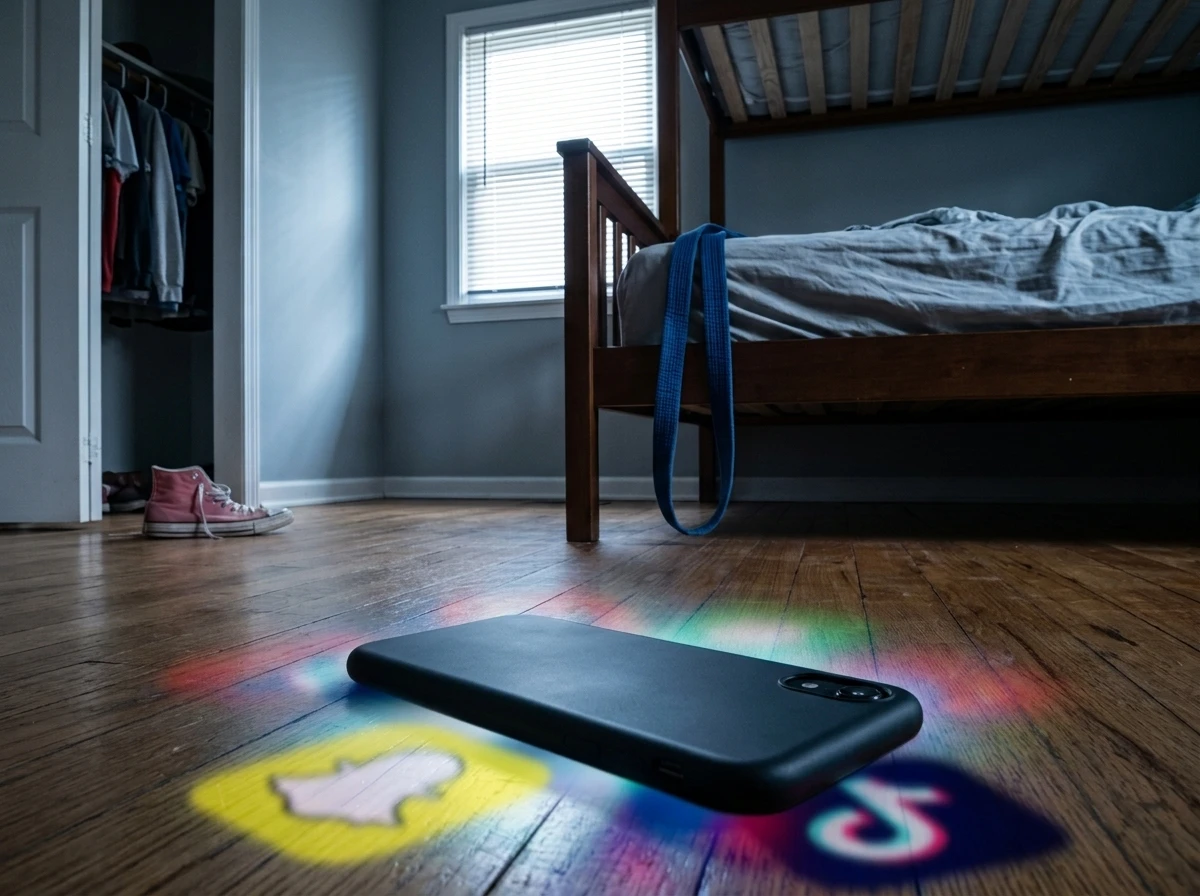
- July 30, 2024, Olivia “Livi” Castro, 13, Fort Bend County, Texas. Youngest of seven, loved dress-up and pink. Found hanging from her bunk bed with a karate belt; phone on the floor at her feet. Grandmother later died of what doctors called Broken Heart Syndrome.
- August 11, 2024, Nathaniel Chambers, 17, Hennepin County, Minnesota. Ballet dancer and library regular. Found hanging in woods after a bike ride. Parents said algorithms pushed social comparison and suicidal ideation despite limits on screen time.
- December 8, 2024, Dawson Holden, 18, Pasquotank County, North Carolina. Strong student and athlete. Died by gunshot wound of the head after years of diet ads, workout videos and body-image distortion he never had before the apps.
- September 12, 2025, Rivers “Riv” Kelleher, 14, Franklin County, Tennessee. Outgoing four-wheeler who dreamed of college. Found hanging in her closet. One of her last TikTok actions was reposting a video about a rope tightening around a neck; she had tried to loosen the rope.
The deaths spanned 14 months and four states. Parents say school clubs, PTA groups and Scholastic had encouraged the same apps the companies later called age-appropriate.
What the Complaint Says the Companies Knew
The suit alleges the platforms tracked children’s behaviors and emotions in real time, then served diet and beauty ads, appearance filters, social-comparison tools and content known to worsen anxiety, depression, self-harm and suicidal ideation. The goal, it claims, was engagement.
- Ignored repeated warnings from their own researchers about addiction and mental-health harm to minors.
- Concealed evidence and kept key documents sealed even after the first wave of suits began in 2022.
- Partnered with trusted groups such as the National PTA and Scholastic while continuing the same design choices.
- Funded messaging and influencers that reassured parents the products were safe for teens as young as 12 or 13.
Founding attorney Matthew P. Bergman said the timing makes the cases especially stark. The children died “long after” similar suits had been filed.
These platforms continue to kill kids, despite the platitudes of their executives. This is a clear and present danger to the health and safety of children, not just in the United States but around the world.
Bergman spoke in interviews after the filing. The complaint argues the companies buried what they knew while public assurances continued.
Google Speaks While Others Stay Quiet
Only Google, owner of YouTube, issued a public response. A spokesperson told Engadget: “Providing young people with a safer, healthier experience has always been core to our work. In collaboration with mental health and parenting experts, we’ve built services and policies to provide young people with age-appropriate experiences, and parents with robust controls. We send our deepest sympathies to the families and are reviewing the claims in this lawsuit.”
Meta, TikTok and Snap did not immediately comment to multiple outlets. The companies face dozens of related state and federal cases, some already in trial.
Legal Bills Are Already Hitting the Bottom Line
Private litigation has become the main U.S. pressure point while federal bills stall. Meta reported $2.4 billion in legal expenses in the second quarter of 2026, contributing to a 14 percent profit drop. Earlier this year four states sued Meta over alleged addictive design. Kentucky school districts settled with Meta, Snap and TikTok. A separate Meta trial is underway in Tennessee; another multi-state case heads to federal court in California.
| Company / Case type | Recent development | Notes |
|---|---|---|
| Meta | $2.4B Q2 2026 legal expenses | Profit decline cited; multiple AG suits and trials |
| Meta, Snap, TikTok | Kentucky school district settlement | Social media addiction claims |
| Meta | Tennessee AG trial ongoing | Addictive design, failure to warn |
| Meta + states | California federal trial set | Youth mental health, COPPA data claims |
| Various | Some individual cases dropped or settled | Outcomes mixed; costs cumulative |
Sacha Haworth of The Tech Oversight Project noted that parents and whistleblowers have briefed lawmakers for years while Congress delayed action on the Kids Online Safety Act. The House never voted on the Senate-passed version. Meanwhile the deaths continued.
Other Countries Chose Bans Instead of Waiting for Courts
Australia became the first nation to enforce a social media ban for under-16s on December 10, 2025. Platforms had to take reasonable steps to block accounts. By mid-December eSafety reported that age-restricted platforms had Australia removed 4.7 million under-16 accounts. Canada introduced Bill C-34, the Safe Social Media Act, in June 2026 to prohibit under-16 accounts with limited exceptions. France’s National Assembly approved a ban under 15. The UK, Spain and others are advancing similar rules.
The U.S. still relies on age gates that the suit says are routinely bypassed and on after-the-fact litigation. The four teens died under the old regime of voluntary controls and parental settings that parents say never stopped the algorithmic push.
How the Platforms Allegedly Profiled Vulnerability
The complaint focuses on design choices that turn ordinary teen insecurities into engagement loops. Real-time emotion and behavior tracking fed content about dieting, beauty filters, comparison and, in at least one case, asphyxiation challenges and rope imagery. Sleep disruption from late-night notifications compounded the spiral. Parents installed controls and talked about safety; the feeds kept serving the next video or streak.
Public health data supplies the backdrop. The Surgeon General advisory on youth mental health noted that up to 95 percent of 13- to 17-year-olds use social media, nearly two-thirds daily, and one-third almost constantly. More than three hours a day doubles the risk of depression and anxiety symptoms. Average teen use sits around 3.5 hours. Nearly half of adolescents said social media made them feel worse about their bodies.
A CDC analysis of high-school students found 77 percent reported frequent social media use (several times a day or more). That frequency was associated with higher rates of bullying victimization, persistent sadness, and some suicide-risk behaviors, including considering or planning an attempt. The CDC linked frequent social media use to suicide risk in its Youth Risk Behavior Survey data.
These population findings do not prove causation in any single death. The lawsuit argues the companies possessed internal research showing the same patterns and chose not to redesign the products that generated them.
Trust Erodes When Assurances Meet Unchanged Design
The second-order pressure is already visible. Companies spent years partnering with schools and parent groups while internal documents, now unsealed, allegedly described the harms. Early lawsuits produced settlements and some product tweaks, yet the four teens still encountered the same loops. Overseas, governments stopped waiting and simply cut under-16 access. In the United States the path runs through Delaware courtrooms and state attorney-general trials.
Product-liability theories are testing whether Section 230 shields design decisions that profile minors for maximum time-on-app. A breakthrough verdict or wave of costly judgments would force engineering changes no voluntary code has delivered. Until then families keep filing, legal tabs keep rising, and the same spiral described by parents in Texas, Minnesota, North Carolina and Tennessee remains possible for the next child who unlocks a phone.
The four deaths are individual tragedies. Together they show what happens when warnings, suits and public promises leave the core engagement machine intact.


Bandcamp Boots Boy George Over AI Song, Not Just the Lyrics

Olix Triples to $3.3bn on Optical Bet Against Nvidia

Four Teens Died After Platforms Vowed Fixes and Suits Began

Google Health Now Writes Fitbit Data Into Apple Health

Pixel 11 Pre-Orders Open Eight Hours Before the Event

Aflabox Seed Funds Field Mycotoxin Tests That Beat Lab Delays

2026 Lexus RZ Gains Power and Range Yet Still Falls Short

Ankr Nodes Clear Path for XRPL Institutional Features

Xbox Disc Licenses Turn Physical Games Into Portable Rights

BlackRock Turns Cash Empire Into Stablecoin Reserve Rails

Kalshi Loses Major NY Prediction Markets Ruling to Judge Torres

Fed Minutes Cite AI Demand as Inflation Risk, Put a 2026 Hike Back on the Map

Marker AI Writing Startup Lands $13M Seed Led by Index Ventures

Dota 2 Esports World Cup 2026: Spirit Defends $2M Title In Paris

Meta’s Muse Spark 1.1 Beats Rivals on Price, Trails on Coding

Finto Picks Munich Over Silicon Valley After YC, Raises $3.4M

ARC Intelligence Closes €4M Seed Round in Roughly a Week

CS2 Premier Season 5 Lands With Cache and a C4 Damage Rework

Backrooms Returns to Theaters as the Everything Must Go Edition

Magnificent Seven Shed $2 Trillion in June as the Rally Broadens
-
 FINANCE2 months ago
Zcash Patched a Double-Spend Bug as ZEC Climbed 5%
-
 ENTERTAINMENT2 months ago
Steam Summer Sale 2026 Locks In June 25 to July 9 Dates
-

 FINANCE1 month ago
CLARITY Act Final Text Expected This Weekend as 60-Vote Hurdle Looms
-
 NEWS3 months ago
Meta Adds AI Replies to Threads, But Users Can’t Block It
-
 ENTERTAINMENT3 months ago
‘Widow’s Bay’ Review: Apple TV’s Sleeper Horror-Comedy Earns Its Fog
-
 NEWS5 months ago
U.S. Navy Deploys Solar-Powered Lightfish Drone to Patrol Oceans
-
 FINANCE4 weeks ago
Kalshi Loses Major NY Prediction Markets Ruling to Judge Torres
-
 NEWS8 months ago
FolderFresh Review: This Free Tool Automates Windows File Organizing