
FINANCE
State AGs Hold the Quiet Lever on Trump’s CLARITY Ethics Stall
Tillis-Gallego proposal lets state AGs sue DOJ over crypto ethics enforcement; Trump has not responded as Senate hits August 7 recess with Polymarket at 27%.

President Donald Trump has not responded to the bipartisan ethics counterproposal from Senators Thom Tillis and Ruben Gallego, leaving the CLARITY Act short of the Democratic votes it needs as the Senate barrels toward its August 7 recess. Polymarket traders now give a Trump signature this year only a 27% chance on Polymarket.
The proposal would let state attorneys general sue the Department of Justice if it fails to enforce new conflict rules on federal officials’ crypto activity. That quiet shift in enforcement power is the lever almost no one outside the negotiation rooms is naming.
The Counteroffer Still Sitting at the White House
Crypto journalist Eleanor Terrett reported Monday that the White House has yet to answer the package Tillis and Gallego sent last Thursday. Her sources said a deal on the bill’s biggest outstanding issue has not materialized heading into the week of a potential vote.
The White House has not yet responded to the ethics counterproposal sent by Senators @SenThomTillis and @SenRubenGallego last Thursday, according to a source familiar with the matter.
Terrett’s update, seen hundreds of thousands of times, tracks the earlier report that the text includes a role for state attorneys general. Democrats had rejected the White House-backed version that left enforcement solely with the DOJ.
SkyBridge founder Anthony Scaramucci publicly predicted Trump would accept it. “If POTUS ultimately signs off, which I think he will, who will stand in the way of Clarity?” he wrote. Senate Majority Leader John Thune has still not filed a cloture motion. A final vote looks unlikely before Friday at the earliest.
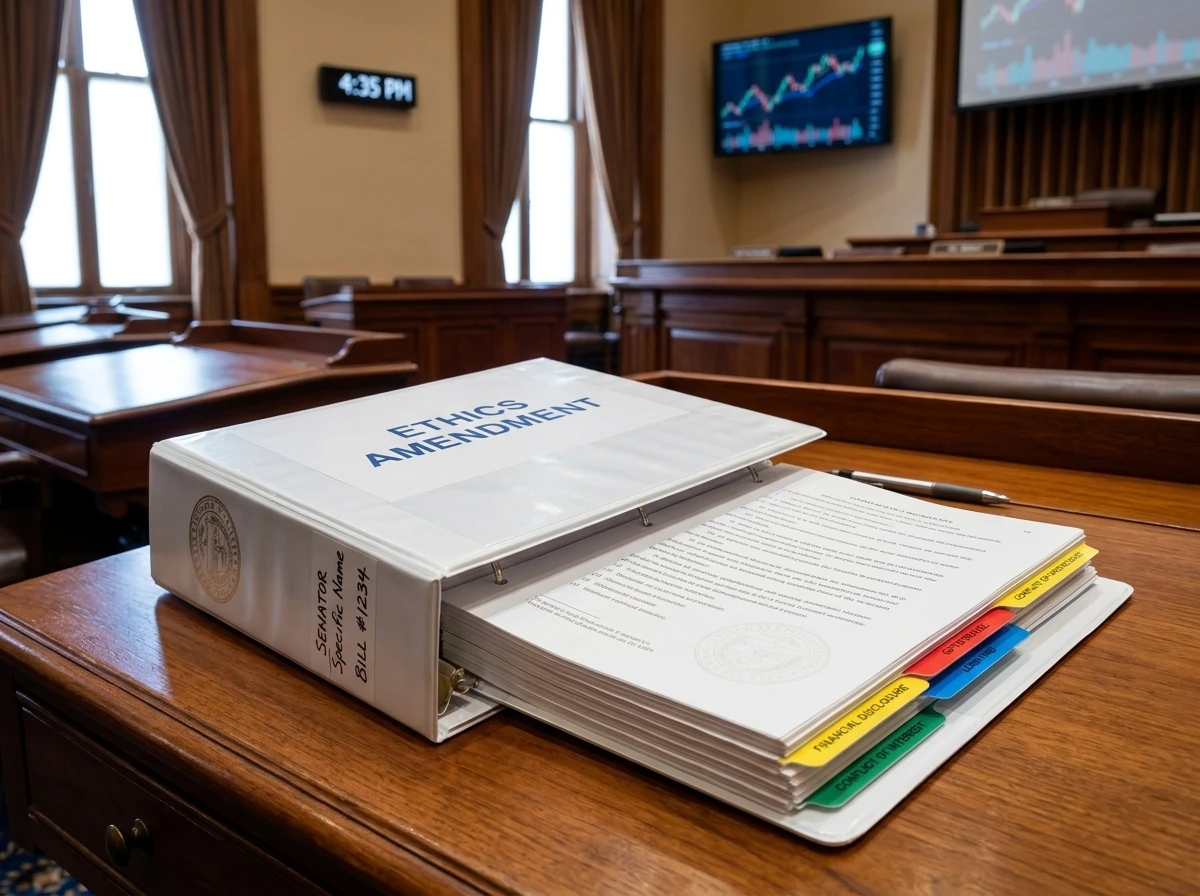
Why State Attorneys General Change the Math
The original ethics title barred covered federal officials and their spouses from issuing or sponsoring digital assets for consideration while in office. It sunsets in 2029 and limited enforcement actions to the Attorney General alone. Democrats called that insufficient.
Tillis, a Republican, and Gallego, a Democrat, produced the counter that gives state AGs standing to sue the DOJ over non-enforcement. The full text remains private, but the structure addresses the core Democratic demand for independent teeth.
- Empowers state AGs to compel DOJ action on ethics breaches
- Retains the core ban on officials sponsoring or issuing digital assets
- Aims to unlock the Democratic floor votes the bill still needs
- Creates a new federal-state check that the first White House draft lacked
That AG power is the hidden stakeholder. It turns ethics from a DOJ discretion item into something fifty state enforcers can police. For Democrats who feared a friendly Justice Department would soft-pedal, it is the missing piece. For the White House, it is a real concession of federal control.
The Tillis ethics package path is the last clear route to bipartisan cover before lawmakers leave town.
Law Enforcement’s Separate Wall on BRCA
Even if ethics clears, the Blockchain Regulatory Certainty Act language inside the bill draws fire from prosecutors and sheriffs. They argue it shields mixers, tumblers and non-custodial DeFi developers too broadly from Bank Secrecy Act registration and money-transmission rules.
The National Sheriffs’ Association letter opposing DeFi exemptions told Senate Banking that section 604 would impair tracing, freeze and recovery tools used against scammers who target the elderly. They backed amendments from Senator Catherine Cortez Masto that would narrow the carve-out by focusing on custody, control and compensation.
| Stakeholder | Core Concern | Preferred Fix |
|---|---|---|
| National Sheriffs’ Association | Mixers, tumblers, DeFi get blanket BSA exemptions | Cortez Masto amendments tying protection to actual control and custody |
| Prosecutors / NAAUSA | Shields conduct current law treats as money transmission | Keep criminal hooks for knowing facilitation of crime |
| Treasury / Bessent | Criticism overstates the change | Codifies long-standing policy that non-custodial builders are not money transmitters |
| Crypto industry | Regulatory fog kills U.S. builders | Clear safe harbor for pure software developers |
Treasury Secretary Scott Bessent has pushed back hard. He notes non-custodial builders and developers have never been subject to registration under the Bank Secrecy Act and says the bill simply writes that policy into statute. The law enforcement buy-in fight remains a second track that can still sink floor support even after ethics is settled.
Odds and the Calendar Squeeze
Prediction-market pricing has swung hard all year. Odds once topped 80 percent in February, jumped to 43 percent in July on unverified ethics rumors, then collapsed again.
- 27% current Polymarket probability of a 2026 signature
- 25% recent low after Senate delays
- August 7 target recess date that ends the realistic 2026 window for many watchers
- 294-134 House passage margin in July 2025, with 78 Democrats in favor
Thune has kept floor space reserved for weeks, according to Senator Cynthia Lummis. Competing items (nominations, funding, foreign sanctions) still crowd the calendar. No motion to proceed has been filed. The Senate’s August 7 deadline is now measured in days, not weeks.
- July 29, 2026, Tillis and Gallego send ethics counterproposal to White House
- July 30-31, Terrett reports AG enforcement role; Scaramucci predicts Trump yes
- August 1-3, White House still silent; odds dip below 30 percent
- August 4 onward, No cloture filed; Friday earliest possible final vote before recess
Industry groups including Digital Currency Group have written Senate leaders urging action, warning that regulatory fog is already pushing capital and jobs offshore.
Who Holds the Leverage
Trump can unlock the package with one signal. Without it, Democrats who need the AG enforcement language stay off the bill. A handful of Republicans facing bank-lobby pressure on stablecoin yield language also remain soft.
State attorneys general become unexpected winners if the counteroffer lands. They gain a novel statutory right to haul the federal government into court over crypto ethics non-enforcement. That is a structural change that outlasts any single administration.
Crypto developers win the BRCA safe harbor if the whole bill clears. Law enforcement groups lose some of the registration tools they want. Banks keep fighting the stablecoin yield compromise that survived earlier markups. The second-order effect of Trump’s silence is that every one of those camps stays frozen in place while the recess clock runs.
Crowd reaction on X tracks the same split. Terrett’s silence report drew heavy engagement. Scaramucci’s optimism sits uneasily beside the market’s 27 percent price. Some traders openly wonder whether the delay itself is the point for parties who prefer the status quo.
What the Bill Delivers if It Clears
The underlying Digital Asset Market Clarity Act framework still does the core work its sponsors intended. It draws jurisdictional lines between the SEC and CFTC, creates a path for digital commodities on mature blockchains, and sets registration and AML duties for intermediaries.
| Agency | Primary Role under CLARITY |
|---|---|
| CFTC | Digital commodity exchanges, brokers, dealers; spot and derivative markets for mature blockchain assets |
| SEC | Ancillary assets, primary offerings, certain ATS and exchange activity; insider-trading rules preserved for offerings |
| Treasury / FinCEN | BSA/AML on covered intermediaries; stablecoin and kiosk rules; illicit-finance studies |
Key protections include developer safe harbors for non-controlling software, disclosure regimes for ancillary asset originators, customer-property rules, and limits on treating pure protocol code as money transmission. The House already passed its version more than a year ago. Senate Banking and Agriculture have advanced their pieces. The remaining work is reconciliation and the ethics deal that lets 60 senators say yes.
If the White House stays quiet through the week, that reconciliation never reaches the floor. The market-structure gains stay theoretical. The AG enforcement lever stays on the table unused. And the 27 percent price becomes the year’s closing bet.
Trump’s decision, or non-decision, now decides whether state attorneys general become the unexpected enforcers of crypto ethics or whether the whole package waits for another Congress.


Bandcamp Boots Boy George Over AI Song, Not Just the Lyrics

Olix Triples to $3.3bn on Optical Bet Against Nvidia

Four Teens Died After Platforms Vowed Fixes and Suits Began

Pixel 11 Pre-Orders Open Eight Hours Before the Event

Aflabox Seed Funds Field Mycotoxin Tests That Beat Lab Delays

2026 Lexus RZ Gains Power and Range Yet Still Falls Short

Ankr Nodes Clear Path for XRPL Institutional Features

Xbox Disc Licenses Turn Physical Games Into Portable Rights

BlackRock Turns Cash Empire Into Stablecoin Reserve Rails

Android 17 QPR2 Beta 2 Locks Out Pixel 6 as December Nears

Kalshi Loses Major NY Prediction Markets Ruling to Judge Torres

Fed Minutes Cite AI Demand as Inflation Risk, Put a 2026 Hike Back on the Map

Marker AI Writing Startup Lands $13M Seed Led by Index Ventures

Dota 2 Esports World Cup 2026: Spirit Defends $2M Title In Paris

Meta’s Muse Spark 1.1 Beats Rivals on Price, Trails on Coding

Finto Picks Munich Over Silicon Valley After YC, Raises $3.4M

ARC Intelligence Closes €4M Seed Round in Roughly a Week

CS2 Premier Season 5 Lands With Cache and a C4 Damage Rework

Backrooms Returns to Theaters as the Everything Must Go Edition

Magnificent Seven Shed $2 Trillion in June as the Rally Broadens
-
 FINANCE2 months ago
Zcash Patched a Double-Spend Bug as ZEC Climbed 5%
-
 ENTERTAINMENT2 months ago
Steam Summer Sale 2026 Locks In June 25 to July 9 Dates
-

 FINANCE1 month ago
CLARITY Act Final Text Expected This Weekend as 60-Vote Hurdle Looms
-
 NEWS3 months ago
Meta Adds AI Replies to Threads, But Users Can’t Block It
-
 ENTERTAINMENT3 months ago
‘Widow’s Bay’ Review: Apple TV’s Sleeper Horror-Comedy Earns Its Fog
-
 NEWS5 months ago
U.S. Navy Deploys Solar-Powered Lightfish Drone to Patrol Oceans
-
 FINANCE4 weeks ago
Kalshi Loses Major NY Prediction Markets Ruling to Judge Torres
-
 NEWS8 months ago
FolderFresh Review: This Free Tool Automates Windows File Organizing