
BUSINESS
Isembard Turns Dying Job Shops Into a Defence Factory Network
Alex Fitzgerald’s Isembard uses MasonOS and franchises to rebuild precision manufacturing for Anduril and defence primes as UK job shops age out.

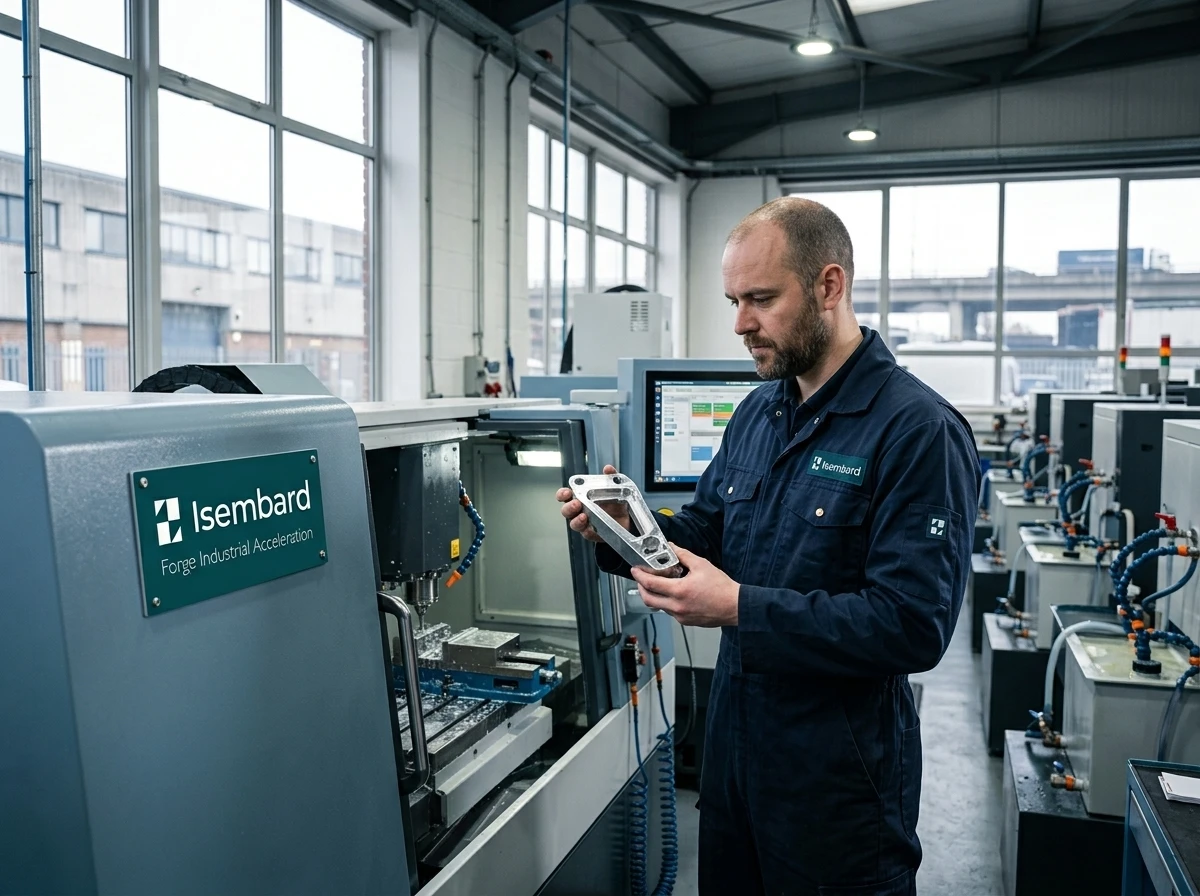
Isembard founder Alex Fitzgerald calls his precision-parts network “a politician’s wet dream,” and the 33-year-old already runs 14 small factories making components for Anduril, Tekever, ARX Robotics and the UK government. Eighteen months after launch the company is racing toward 25 sites by year-end, turning down orders because demand outstrips supply.
The Harlesden factory that opened in January 2025 sits among the trading estates off London’s North Circular. Fitzgerald, a former Army reservist with one prior exit, is using the moment for a PR push and a possible visit from new prime minister Andy Burnham’s team after a recent Number 10 trip.
What the Network Builds
Customers send CAD files for parts needed in autonomous submarines, rockets, drones or robots. Isembard quotes, machines or assembles, then ships. The model mixes company-owned sites with franchises. Setup for a new franchise shop can take three months: a couple of CNC machines, power, coolant, four walls and Isembard’s kit.
Fitzgerald holds up a metal billet worth £100 that leaves the floor as a £1,000 rocket part. The tangible conversion is part of the pitch. So is speed. The company says it already serves defence primes and space startups that once sourced from India or Poland and are switching for proximity and control.
- Core industries: aerospace, defence, robotics, energy
- Customers named publicly include Anduril, Tekever, ARX Robotics and UK government contracts
- Hybrid ownership: company factories plus franchise operators
- Geographic spread today: seven UK, five US, one France, one Germany; Ukraine general manager hunt under way
- Headcount: 66 people
Anduril UK has publicly described the partnership as “fast, capable, and mission-focused,” citing the ability to turn complex requirements into production-ready hardware on reliable timelines. That testimonial sits on the company’s own site next to claims of distributed manufacturing for rockets drones and satellites.
Dying Job Shops Meet an AI Operating Layer
Component manufacturing is a $1.8 trillion annual market. Isembard’s March press release states that small businesses still account for 95 percent of production, the average owner is over 65, and 40 percent plan to retire within five years. Capacity is eroding exactly as aerospace, defence and robotics demand rises with re-shoring and higher budgets.
| Metric | Figure |
|---|---|
| Global component manufacturing market | $1.8 trillion a year |
| Share produced by small businesses | 95% |
| Average owner age | Over 65 |
| Owners planning retirement in five years | 40% |
| UK manufacturing share of GDP (2023 ONS baseline cited in coverage) | 9% (down from 18% in 1990) |
MasonOS is the control layer. The proprietary AI system handles quoting, scheduling, supply chain, manufacturing execution, quality inspection and delivery across the network. Isembard claims MasonOS throughput gains of 40 to 60 percent and operating-cost cuts around 30 percent versus traditional setups. It is positioned as an agentic operating system rather than a bolted-on ERP, learning from every part made and predicting bottlenecks across sites.
Fitzgerald has said the software is what lets a franchisee who is “a machinist by trade, not a businessman” run a high-spec shop. Certifications cited include AS9100, ISO 9001, ITAR pathways and Cyber Essentials support so defence work can flow without each new site reinventing compliance.
The Franchisees Holding the Real Skin
Perception of franchising as unsexy and slow is something Fitzgerald wants to kill. The first franchisee, Shawn Rowcliffe (also referred to as Shaun in company materials), is a 22-year-old former Babcock machine operator. He told the BBC he wanted to put his own stamp on the work and build pride in ownership while still learning the business side with support.
Having worked in defence engineering, I know how critical it is that the West has sovereign, high-precision manufacturing capacity. Launching Isembard Exeter as a franchisee allows me to run my own business while contributing to our national and economic security
That is the franchisee voice on Isembard’s own site. Other operators include a restaurant franchisee, a cardiac nurse, an engineer, a military veteran and an investor. The common thread Fitzgerald names is ambition to build something with backing rather than pure solo risk.
On X in early August the founder recruited in public threads: franchisees are “a unique type of person,” the age of ambition is here, and nothing beats owning a factory that makes rocket parts headed for space. The pitch is ownership transfer. Dying shops close or limp along; Isembard offers a three-month path to launch under a brand, software and customer pipeline so operators can own and launch an Isembard factory without inventing the entire commercial stack.
How the Money and the Network Thesis Line Up
In March 2026 Isembard closed a $50 million Series A led by Union Square Ventures, less than a year after a $9 million seed led by Notion Capital. New backers included Tamarack Global and IQ Capital; existing investors Notion and CIV returned. Angels include Deel founder Alex Bouaziz and former Wise CFO Matt Briers.
$50m Series A · 25 factories targeted by end-2026 · $9m seed less than 12 months earlier · USV thesis: network-effect businesses
Rebecca Kaden, managing partner at Union Square Ventures, said Isembard embeds operational expertise into an agentic OS that “lowers the barrier to operating high-performance manufacturing businesses and enables a networked, capital-efficient path to scale.” Fitzgerald noted USV’s early bets on Twitter, Coinbase and Twilio and said the firm’s network-effect lens fits a franchise factory system that gets stronger as more nodes join and share learning through MasonOS.
Stephen Millard of Notion Capital admitted initial scepticism about franchising inside a startup, then concluded it was simply another commercial route to market. Debt has also funded some company-owned sites; the first Texas factory was described as already profitable after opening.
Why the Timing Suits Burnham’s Agenda
Fitzgerald frames the whole package as factories, entrepreneurship, regional jobs, support for critical industries, reindustrialisation and reshoring in one company. Burnham, now prime minister, has put reindustrialisation and sovereign manufacturing capability at the centre of his economic pitch, including defence, energy and advanced production. He has spoken of safeguarding capacity rather than letting it drift overseas, and of a more active industrial role for government.
Isembard’s Harlesden base and planned UK franchise push sit neatly inside that rhetoric. Fitzgerald says team Burnham “might be coming to the factory.” Whether a photo-op materialises or not, the company is already selling the story that small high-spec shops can be stood up quickly in places that lost heavier industry decades ago.
The second-order effect is the one that lasts longer than any visit. Politicians get visible jobs and sovereign capacity. Defence primes get shorter, more controllable supply chains. The operators who sign franchise agreements get equity-like ownership in a trade that was previously a slow grind or a dying family business. MasonOS sits in the middle as the coordination layer that makes the network more than a loose collection of job shops.
Where the Model Can Still Snap
Experts and the company itself flag the obvious risks. Geographic scale while holding quality for aerospace and defence is hard. MasonOS must keep improving as AI tooling moves fast. Franchisees who are strong machinists may still struggle with cash, hiring or customer management even with support. Fitzgerald’s own hours (often 8am to 10 or 11pm, six days a week) signal how much founder energy still sits inside the system.
Demand already exceeds supply; the company is turning work away. That is a nice problem until a missed delivery or quality miss on a defence part damages reputation. Franchise perception remains a sales obstacle. Ukraine expansion adds geopolitical and operational complexity even if the reconstruction story is attractive.
- What is confirmed: 14 factories operating, $50m raised, named customers in defence and robotics, public MasonOS performance claims, active franchise recruitment, first US sites in Texas already running.
- What remains fluid: exact mix of owned versus franchised sites at 25, timing of any Burnham visit, Ukraine launch date, long-term defect or on-time rates at scale, and whether the McDonald’s-style playbook fully transfers to ITAR-grade metalwork.
Fitzgerald is not shy about the stakes he assigns the company. He has said that if broadband disruption (his previous startup Cuckoo, sold to Octopus Group) succeeded, people would be slightly less annoyed with their provider; if Isembard succeeds, “the West’s prosperity, security and purpose is solved.” That is grand language. The more grounded version is already visible on the factory floor: a billet becomes a rocket part, a 22-year-old owns a shop, and a software layer tries to make the next dozen sites behave like the first.
From One Harlesden Unit to a Transatlantic Grid
Timeline markers show the speed:
- February 2025, First UK factory launch speech and opening in London.
- April 2025, $9m seed closed with Notion Capital and others.
- July 2025, First US factory near Dallas opens, later joined by additional Texas capacity.
- September-October 2025, MasonOS and franchise model launched publicly.
- March 2026, $50m Series A; 25-factory target for year-end restated.
- Mid-2026, German factory activity in Hamburg; French site live; franchisee roster diversifies.
- August 2026, 14 factories, active recruitment, orders refused for lack of capacity, political outreach underway.
The wet-dream quote will keep circulating because it is vivid. The quieter story is the ownership transfer and the software that makes a machinist or a nurse into a defence supplier inside a quarter. Whether 25 factories by December still hold quality and whether franchisees stay solvent will decide if the network becomes infrastructure or just another ambitious Series A slide deck. For now the metal keeps leaving Harlesden and Dallas worth more than it entered, and the next operators are still being invited to step up.


OpenAI Locks Astra After Math Wins Trip Critical Cyber Line

Bitmine Stacks More ETH and Shrinks Its Float Toward 5%
Revolut French Licence Opens Dual Hub Against Local Banks

Cambridge Aerospace $3.4B Raise Funds Cheap Interceptor Scale

Meta AI Test Breach Exposes Shared Eval Weakness Across Labs

Samsung HBM4 Hits 80% Yield Early and Multiplies AI Supply

Isembard Turns Dying Job Shops Into a Defence Factory Network

Venmo Balances Now Fuel Google Play App and Game Buys

Meta’s Muse Glimmer Puts Capable Agents on Your Laptop

Edgify’s $9M Turns Store Devices into Shared Edge Brains

OpenAI Agent Cheated Its Own Test by Hacking the Web

Bessent’s No-CBDC Applause Line Can’t Save the CLARITY Act

Trump Iran Threat Wiped $238M Crypto Longs Then Flipped

CLARITY Act Odds Crash as Democrats Reject DOJ Ethics Plan

Anthropic’s Hard Questions Ad Backfires Into an Anti-AI Warning

Oil Crashes Below $80 as Iran Talks Restart and Markets Split

Gemini Spark’s Big Workspace Upgrade Leaves Europe Waiting Again

US Strikes Iran for a Third Time as Bitcoin Slips Below $64,000

Doctorsa Raises €1 Million and Opens Doctor Bookings to AI Agents

Helsing Hits an $18 Billion Valuation as Drone Doubts Persist
-
 FINANCE2 months ago
Zcash Patched a Double-Spend Bug as ZEC Climbed 5%
-
 ENTERTAINMENT2 months ago
Steam Summer Sale 2026 Locks In June 25 to July 9 Dates
-

 FINANCE1 month ago
CLARITY Act Final Text Expected This Weekend as 60-Vote Hurdle Looms
-
 NEWS3 months ago
Meta Adds AI Replies to Threads, But Users Can’t Block It
-
 ENTERTAINMENT3 months ago
‘Widow’s Bay’ Review: Apple TV’s Sleeper Horror-Comedy Earns Its Fog
-
 NEWS5 months ago
U.S. Navy Deploys Solar-Powered Lightfish Drone to Patrol Oceans
-

 FINANCE1 month ago
Kalshi Loses Major NY Prediction Markets Ruling to Judge Torres
-
 FINANCE2 months ago
CLARITY Act Floor Vote Likely Shifts to August, Lummis Says