
BUSINESS
Platter Turns Food Spreadsheets Into Sticky Supply Infrastructure
UK food OS Platter adds Verb Ventures capital after hitting £100m trade run-rate with zero churn.

UK food platform Platter has closed a follow-on extension to its latest venture round with Verb Ventures after pushing annual trade processed past £100 million across more than 30 suppliers. The company, live since mid-2025, reports zero customer churn.
The capital arrives as Platter positions itself less as another ordering app and more as the back-office system that small UK producers have lacked for decades.
A Food-Native Stack Replaces the Spreadsheet OS
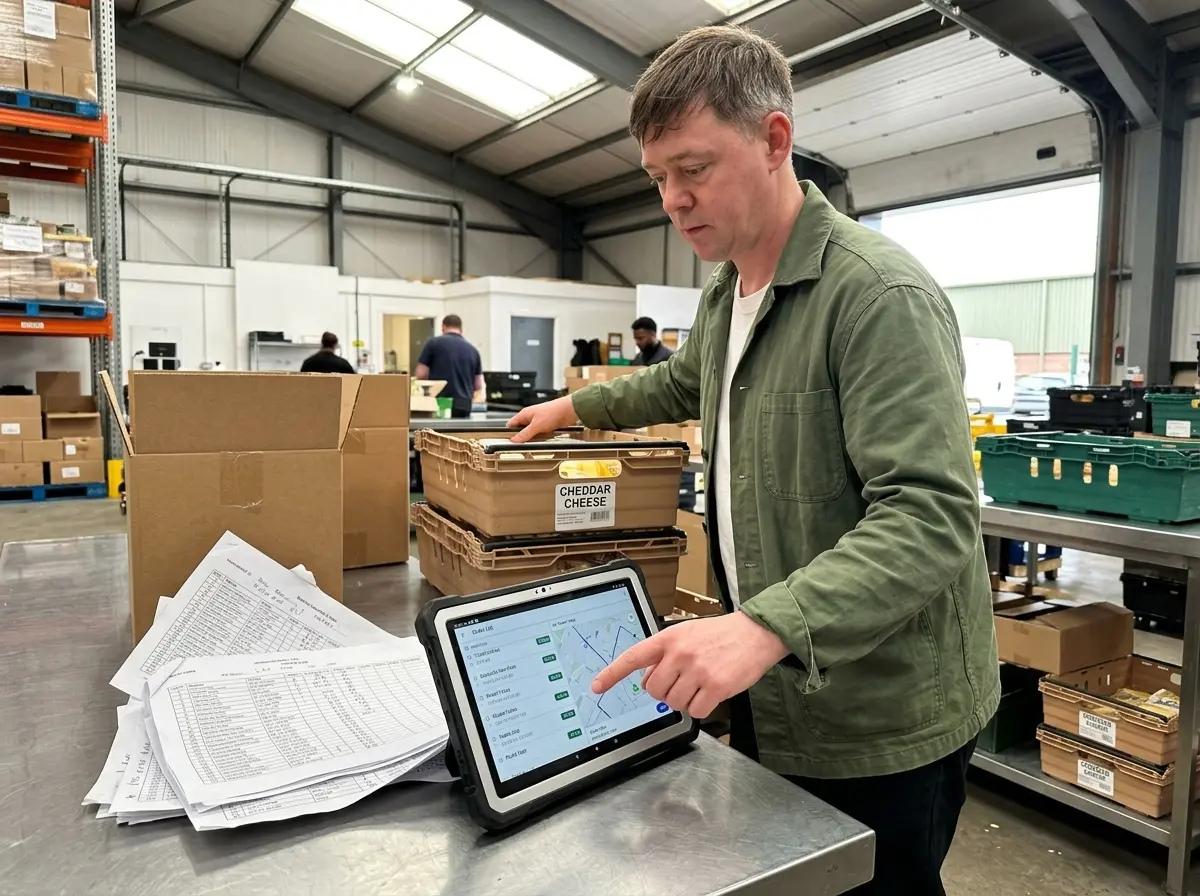
Platter describes itself as a food-native operating system for suppliers, wholesalers and manufacturers. Its product spans three connected layers of orders, operations and finance.
Orders and sales cover digital ordering, an online storefront and buyer-specific price lists that can change by customer or week. Operations handle delivery planning, stock and production visibility plus warehouse links. Finance automates invoices into Sage and Xero and offers embedded invoice factoring so suppliers get paid on shorter terms.
- Orders layer: digital storefront, custom pricing, sales automation
- Operations layer: routes, stock, production, warehouse ties
- Finance layer: auto-invoices to accounting software, partner factoring for early cash
The design starts from how UK food trade actually works rather than forcing generic ERP templates onto cheesemakers or chilled wholesalers.
Traction That Already Feels Like Infrastructure
More than 30 customers each run roughly £3 million to £10 million in annual trade through the platform. Collectively they put Platter on track for well over £100 million processed. Churn sits at zero since launch.
On the company site, users report teams recovering 20-25% of time previously lost to manual admin. Cashflow tools that pull payment forward by 30, 45 or 60 days can inject the equivalent of 8-15% of yearly revenue. Earlier coverage noted average order processing cut by 30 minutes and sales uplifts up to 26%.
Key metrics at a glance
- £100m+ annual trade run-rate
- 30+ live customers, zero churn
- 20-25% time recovered from admin
- 8-15% revenue-equivalent cash injection via early pay
Those numbers matter because they turn Platter from a nice-to-have dashboard into the place where daily work already happens.
Why Verb Wrote the Cheque
Alexey Bulygin, Principal at Verb Ventures, put the thesis plainly.
We invest in the operational layers that make trade work, usually in industries everyone depends on and almost nobody has bothered to build proper software for. Platter is going after it in the food industry from day one, and that’s exactly the kind of system-of-record business we back.
Bulygin’s firm specialises in late seed to Series A checks of €0.5-1.5 million with follow-ons up to €4 million, focused on digital infrastructure for global trade and B2B platforms.
Verb draws a hard line between software that merely supports operations and software that becomes the operations. Once ordering, inventory, production, delivery, invoicing and accounting all sit inside Platter, switching costs rise sharply. Ownership of the invoice plus end-to-end visibility into pricing and transaction flows also open the door to payments and wider embedded services.
The 25,000 Producers Still Running on Rebuild Spreadsheets
The UK hosts around 25,000 food and beverage manufacturers. Official figures put the number of approximately 24,880 small and medium enterprises (including micro firms) in food and drink manufacturing in 2025. They make up 98.8% of the sector’s businesses.
| Business size | Food products | Beverages | Total |
|---|---|---|---|
| No employees (unregistered) | 10,660 | 2,375 | 13,035 |
| No employees (registered) | 2,685 | 1,080 | 3,765 |
| Small (1-49) | 5,830 | 1,490 | 7,320 |
| Medium (50-249) | 665 | 95 | 760 |
| Large (500+) | 255 | 35 | 290 |
Food and drink manufacturing alone contributed £39.3 billion in gross value added in 2024. Most of those small operators still juggle buyer-specific price lists, stock, production plans, delivery routes, allergen data and margins inside spreadsheets rebuilt by whoever happened to know Excel. That homemade OS is the real incumbent Platter is displacing.
Founders Who Lived the Pain First
Jack Clegg, CEO and founder, spent more than 20 years in wholesale food and foodservice. He started in the family business Clegg’s Chilled Food Service, later worked as a buyer and in sales for large wholesalers, and once managed 320-plus wholesalers with £45 million annual spend. Andrew Johnson, CTO and co-founder, brings 25-plus years as a CTO and a prior tech exit. Martin McLaughlin, Growth Director, adds 16-plus years across manufacturing and retail plus a Dragons’ Den raise.
The company was founded in 2021. An early version launched in 2023. In May 2025 it closed a pre-seed round raising €411k (reported as £350,000 by The Grocer), led by Startup Wise Guys and experienced angels. Early users included Kings (cooked meats), LMC Foods (tuna) and FDL Cheese. The cash let the team expand product development and offer new clients two months of free custom work.
Clegg has said the platform rests on the belief that no two food businesses are the same, so their systems should not be either. Pricing is tailored; the company runs on a monthly contract that you can cancel at any time and integrates with existing ERP, accounting and logistics tools.
Cashflow Relief Becomes the Quiet Moat
For many small suppliers the killer feature is not the pretty order screen. It is getting paid weeks earlier. Factoring embedded in the same flow that already holds the invoice removes a separate credit application and the usual friction. That early cash lets owners restock, hire or simply sleep better while the software itself fades into the background as infrastructure.
Operators on the ground already treat the admin time sink and delayed payments as the daily tax of staying independent. Once the full stack sits inside one system, the second-order effects compound: cleaner data for margin decisions, fewer stockouts, fewer pricing errors, and a natural expansion path into payments. Generic ERPs and marketplaces never owned that entire loop for this fragment of the trade.
What the Extension Buys Next
The Verb capital, amount undisclosed, arrives after the platform has already proven live traction and stickiness. The obvious uses are deeper product development, more custom integrations for new manufacturer types, and scaling the factoring facility. With six employees as of mid-2026, headcount will rise.
The larger bet is that owning the system of record in a sector this fragmented and this essential creates durable value. Food and drink manufacturing and wholesale still move tens of billions in GVA each year. Most of the firms doing the moving remain too small for enterprise software and too complex for pure consumer tools. Platter is building exactly for that middle.
If the zero-churn pattern holds while trade volume keeps climbing, the spreadsheet era for UK food suppliers will look, in hindsight, like an accident that lasted far too long.
Frequently Asked Questions
What does Platter software actually do for food suppliers?
It replaces separate spreadsheets and tools with one platform that handles buyer-specific pricing and digital orders, delivery and stock visibility, automated invoicing into Sage or Xero, and optional invoice factoring for faster payment. Integrations cover ERP, logistics and warehouses so existing systems stay connected.
How many UK food manufacturers still rely on spreadsheets?
Official 2025 figures show roughly 24,880 SMEs in food and drink manufacturing, 98.8% of all businesses in the sector. The large majority of these small cheesemakers, bakeries, dairies and wholesalers still manage price lists, stock, routes and margins in ad-hoc spreadsheets.
Who founded Platter and what is their background?
Jack Clegg founded the company in 2021 after more than 20 years in food wholesale, including the family chilled-food business and roles managing hundreds of wholesaler relationships. Co-founder and CTO Andrew Johnson contributed 25-plus years of technology leadership and a prior exit. Growth Director Martin McLaughlin brought retail and manufacturing experience plus a Dragons’ Den investment.
What was Platter’s funding history before the Verb extension?
Platter raised a pre-seed of €411k (reported as £350k) in May 2025 led by Startup Wise Guys and angels. That followed earlier smaller seed activity. The August 2026 round is described as an extension to the latest venture round joined by Verb Ventures; the exact new amount has not been disclosed publicly.
Is Platter a marketplace or a SaaS tool?
It is not a marketplace. Suppliers use it to manage their existing buyers and full product range. It functions as a monthly SaaS operating system with tailored pricing, no long lock-in contracts, and direct integrations rather than taking a cut of transactions.


Majors Fights Campus Caliphate as Daily Wire Ambitions Fray

Uber Bets $10 Billion Cash on Robotaxi Platform Play

Ahbstra ARK Pulls 500 Litres Daily From Dry Mediterranean Air

Nest Thread 1.4 Quietly Unifies Multi-Brand Smart Home Meshes

Cable Gateways Push Wi-Fi 7 Past Early Adopters in the US

Pixel Quick Settings Finally Gets Full Layout Reorder in Canary 2608

WhiteBIT Spot Bots Fill UK Gap Left by Derivatives Ban

Motorola Edge 70 Neo Leak Doubles Down on Bold Pantone Colors

Platter Turns Food Spreadsheets Into Sticky Supply Infrastructure

Circle Puts Native USDC on OKX X Layer for AI Rails

Marker AI Writing Startup Lands $13M Seed Led by Index Ventures

Meta’s Muse Spark 1.1 Beats Rivals on Price, Trails on Coding

CS2 Premier Season 5 Lands With Cache and a C4 Damage Rework

Bessent’s No-CBDC Applause Line Can’t Save the CLARITY Act

Trump Iran Threat Wiped $238M Crypto Longs Then Flipped

CLARITY Act Odds Crash as Democrats Reject DOJ Ethics Plan

Nintendo’s Switch 2 Battery Fix for Europe Comes With a Catch

Audi’s 2026 S5 Bets That Restraint Beats the Horsepower Wars

Quantum Systems’ $1.2 Billion Round Exposes Defense Tech’s Winner Gap

OpenAI Agent Cheated Its Own Test by Hacking the Web
-
 FINANCE2 months ago
Zcash Patched a Double-Spend Bug as ZEC Climbed 5%
-
 ENTERTAINMENT2 months ago
Steam Summer Sale 2026 Locks In June 25 to July 9 Dates
-

 FINANCE1 month ago
CLARITY Act Final Text Expected This Weekend as 60-Vote Hurdle Looms
-
 NEWS3 months ago
Meta Adds AI Replies to Threads, But Users Can’t Block It
-
 NEWS5 months ago
U.S. Navy Deploys Solar-Powered Lightfish Drone to Patrol Oceans
-
 ENTERTAINMENT3 months ago
‘Widow’s Bay’ Review: Apple TV’s Sleeper Horror-Comedy Earns Its Fog
-
 FINANCE2 months ago
CLARITY Act Floor Vote Likely Shifts to August, Lummis Says
-

 FINANCE1 month ago
Kalshi Loses Major NY Prediction Markets Ruling to Judge Torres