
NEWS
Samsung HBM4 Hits 80% Yield Early and Multiplies AI Supply
Samsung reaches the golden 80% HBM4 yield six months early, targeting triple Q3 revenue and 38% share while easing AI memory shortages for Nvidia and AMD.

Samsung Electronics has lifted production yields on its sixth-generation HBM4 high-bandwidth memory to nearly 80% only six months after mass production started below 60%, hitting the industry’s golden-yield threshold months ahead of its own year-end target.
The jump, first detailed by Seoul Economic Daily, turns a once-lossy process into a predictable and profitable one just as AI accelerator demand keeps memory supply tight.
From Sub-60% Starts to Golden Yield
Mass production of 12-layer HBM4 began in February 2026. Early yields sat under 60%. Industry sources now put the figure near 80%, the level at which defect rates drop enough for stable volume and rising margins.
Samsung originally aimed for that mark by the end of 2026. Process gains arrived faster once second-half volume ramped. Higher usable chips per wafer cut waste and unit costs at once.
| Metric | Early 2026 | August 2026 | Target Impact |
|---|---|---|---|
| HBM4 yield | Below 60% | ~80% | Golden yield reached early |
| Q3 HBM4 revenue | Baseline | More than 3× prior quarter | Sharp mix shift |
| HBM4 share of HBM sales | Lower | Over 60% in 2H | Dominant within HBM |
| Overall HBM market share goal | Trailing | ~38% by year-end | Match DRAM level |
The company credits an integrated turnkey setup that joins memory design, foundry fabrication and advanced packaging under one roof. Fixes to the thermal-compression non-conductive film process and already-strong 1c DRAM yields above 80% both helped.
Golden yield is less a single number than a threshold for planning. Below 60%, every wafer carries a large share of scrap. Near 80%, the same line can book firm volume with customers and still protect margins. Reaching that point months early frees capacity that would otherwise have stayed tied up in rework and low-grade die.
The revenue side of the table tracks the same shift. More than tripling HBM4’s quarterly contribution while pushing the product past 60% of HBM sales shows how quickly a yield recovery can reweight the mix once the process stabilizes.
How the Turnkey System Closed the Gap
Previous HBM generations left Samsung trailing on thermal performance. HBM3 and HBM3E parts had overheating problems that slowed Nvidia qualification and handed SK Hynix a clear lead.
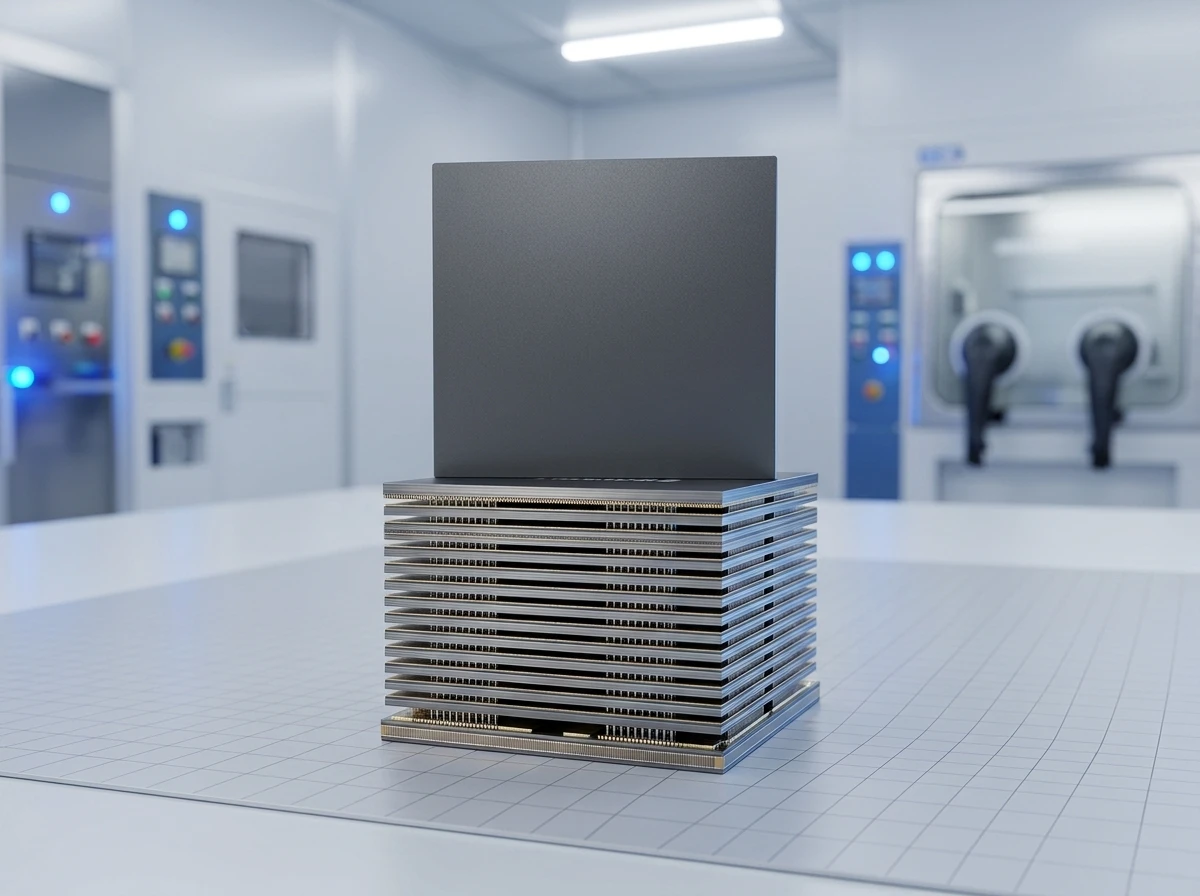
HBM4 pairs 10nm-class 1c DRAM with a custom 4nm logic base die. That architecture delivers pin speeds of 11.7 to 13.0 Gbps and up to 3,300 GB/s of bandwidth per stack. Power efficiency rises about 40% while heat dissipation improves up to 30% and vertical thermal resistance by 10% versus HBM3E.
- 2,048 I/O pins, double the prior generation
- 12-layer stacks offering 24 GB to 36 GB today
- 16-layer path already mapped for higher capacity
- Low-voltage TSV and optimized power distribution network
Samsung began industry-first commercial HBM4 shipments in February after using its most advanced nodes from day one rather than recycling older designs. The same coordination is now lifting HBM4E reliability-test yields above 70% ahead of first-half 2027 mass production.
The turnkey model matters because HBM failures rarely stay inside one step. A thermal-compression film issue can waste a good DRAM stack. A weak base die can spoil an otherwise clean package. Putting design, foundry and packaging under one roof shortens the loop between a defect and a fix.
Starting on advanced nodes also removed a common drag. Older HBM ramps often carried forward prior-generation process limits. HBM4 did not. The 1c DRAM yields already above 80% gave the stack a solid foundation before packaging work began, so later film and thermal fixes compounded rather than fighting base-die scrap.
AI Accelerators Need Every Extra Stack
High-bandwidth memory remains the scarce ingredient for training and running large models. GPUs and custom ASICs are no longer the sole bottleneck; memory bandwidth and capacity are.
Samsung HBM4 already sits inside AMD’s Instinct MI400 platform. It is also flowing into Nvidia’s Vera Rubin ecosystem, where next-generation GPUs can support up to 288 GB of high-speed memory and need roughly 22 TB/s of aggregate bandwidth. Multi-sourcing matters to both buyers. Concentrating orders with one vendor raises risk; a second high-yield source eases allocation fights.
Global HBM capacity for 2027 is already fully booked across Samsung, SK Hynix and Micron. Any extra good die from Samsung’s improved process directly expands the usable pool.
Bandwidth math makes the scarcity plain. A platform that needs roughly 22 TB/s of aggregate bandwidth cannot absorb a shortfall by stretching older stacks. Each qualified HBM4 source that can ship at golden yield widens the set of builds that close on time.
That is why a yield move at one supplier still ripples across the buyer base. AMD and Nvidia both gain when a second source clears the same performance bar. Allocation fights ease only when the extra die is real, tested and already designed into the platform.
SK Hynix Still Leads but Faces Fresh Pressure
SK Hynix has dominated recent HBM generations, holding shares often estimated in the mid-to-high 50s or higher in late 2025 and early 2026. Its HBM4 yields are also reported in the 80% range, backed by longer mass-production experience and its MR-MUF packaging approach.
Yet labor talks have stalled. Management and the union disagree over profit-sharing details, including a proposal to pay a large share of bonuses in treasury shares with lock-ups. Some workers have begun organizing a broader union. Any prolonged dispute could slow the capacity ramp just as Samsung accelerates.
Samsung’s stated goal of roughly 38% HBM share by year-end would bring it in line with its broader DRAM position. In Q1 2026, Samsung led DRAM with 38% share while SK Hynix sat at 29%. Closing the HBM gap would reshape pricing power and customer negotiations.
From the standpoint of major customers such as Nvidia, it is more advantageous to source supply from several companies rather than concentrating it with a single supplier.
Lee Jong-hwan, professor of system semiconductor engineering at Sangmyung University, made that point in the Seoul Economic Daily coverage. Samsung can use volume expansion as leverage.
The competitive picture is no longer a simple yield race. Both suppliers now report HBM4 yields in the same golden band. The edge shifts to who can keep lines running, who can add cleanroom space and who can convince buyers that multi-sourcing is practical rather than theoretical.
- SK Hynix: longer HBM4 production history, MR-MUF packaging, mid-to-high 50s share estimates in late 2025 and early 2026
- Samsung: faster-than-planned yield climb, turnkey design-to-package path, ~38% HBM share target by year-end
- Shared constraint: 2027 global HBM capacity already fully booked across the three major suppliers
Labor risk at the leader and yield recovery at the challenger arrive in the same window. Customers watching both stories have a clearer case for splitting orders than they did when only one supplier sat at golden yield.
Capacity Moves and the HBM4E Follow-On
Samsung is filling idle cleanrooms at Hwaseong and Pyeongtaek while adding new lines. The same turnkey model that fixed HBM4 is already applied to HBM4E sampling. Early 12-layer HBM4E parts target higher speeds and up to 48 GB per stack with 4 TB/s-class bandwidth in later configurations.
- February 2026: Industry-first HBM4 mass production and commercial shipments begin; yields under 60%.
- May-June 2026: HBM4E samples start shipping to major customers.
- August 2026: HBM4 yield nears 80%; HBM4E reliability yield above 70%.
- First half 2027: Planned HBM4E mass production window.
Those steps sit alongside broader capacity bets such as the Taylor fab AI contract expansions that lock in long-term AI demand while consumer prices feel the pinch.
Idle cleanroom space is useful only if the process can fill it with good die. The HBM4 yield climb turns that space into near-term output rather than a long qualification project. HBM4E work rides the same path: reliability-test yields already above 70% suggest the learning from HBM4 is transferring instead of starting over.
The stacked timeline also shows how little slack remains. Samples in May and June, a yield milestone in August and a first-half 2027 mass-production window leave scant room for another slow ramp. Each early success on HBM4 reduces the chance that HBM4E repeats the sub-60% start.
Customers Gain a Second Reliable Source
Multi-sourcing is easiest to praise and hardest to practice when only one supplier can hit volume at acceptable yield. Samsung’s climb to nearly 80% changes that math for buyers already designing around HBM4.
AMD’s Instinct MI400 platform and Nvidia’s Vera Rubin ecosystem both need dense, high-bandwidth stacks. A single-vendor path concentrates schedule risk in one set of fabs and one labor environment. A second source that clears golden yield lets purchasers dual-track qualifications without treating the backup as a paper exercise.
Fully booked 2027 capacity across Samsung, SK Hynix and Micron means the industry cannot simply order more wafers into existence. Relief comes from raising the fraction of good die inside the capacity that already exists. Samsung’s gain is therefore additive to the pool even before new lines finish ramping.
Professor Lee’s point about customer advantage tracks the same logic. Volume expansion at Samsung is not only a share story for the supplier. It is an insurance policy for the platforms that cannot ship without the memory.
The Revenue Mix Moves Toward HBM4
Yield recovery shows up first on the factory floor and soon after in the sales mix. Samsung now expects HBM4 to account for more than 60% of its HBM revenue in the second half and to more than triple that product’s contribution in the third quarter alone.
| Mix Signal | Direction | Why It Matters |
|---|---|---|
| HBM4 share of HBM sales | Over 60% in 2H | Newer stack becomes the core offer |
| Q3 HBM4 revenue | More than 3× prior quarter | Volume and ASP effects arrive together |
| Company HBM share goal | ~38% by year-end | Aligns HBM with DRAM leadership level |
| 1c DRAM foundation | Yields above 80% | Supports stack economics at scale |
A mix that heavy in HBM4 also changes how customers negotiate. When the newest generation is scarce, buyers accept tighter allocations. When two suppliers can both deliver it at golden yield, talks shift toward dual awards and longer framework deals.
Matching a roughly 38% HBM share to the existing DRAM lead would end the long stretch in which Samsung’s memory franchise looked split: strong in standard DRAM, still catching up in HBM. Pricing power and roadmap influence tend to follow that alignment once the volume is real.
What the Yield Number Changes
An 80% yield does not instantly flood the market. Qualification cycles, package integration and customer validation still take time. Yet every percentage point of extra good die raises the ceiling on what Samsung can commit for the second half of 2026 and into 2027.
TrendForce and others still expect HBM supply to stay tight through 2027 even with 50-60% bit-shipment growth, because demand keeps rising faster. Pricing power remains with the suppliers. A second fully competitive HBM4 source simply reduces the chance that any single production hiccup or labor stoppage starves the entire AI accelerator pipeline.
Samsung now expects HBM4 to drive more than 60% of its HBM revenue in the second half and to more than triple that product’s contribution in the third quarter alone. If the volume converts, the company moves from perennial runner-up to co-leader faster than most outside observers expected six months ago.
The gap between early sub-60% output and the current near-80% level is the difference between tentative samples and bankable supply. Commitments for late 2026 and 2027 can now rest on a process that has already crossed the industry’s preferred threshold rather than one still climbing toward it.
HBM4E’s reliability-test yields above 70% extend that story forward. The follow-on generation is not waiting for a separate rescue. It is inheriting a turnkey flow that has already proven it can move from a weak start to golden yield inside half a year.
The golden yield is real. The second-order effects on multi-sourcing, rival risk and next-generation timing are what the rest of the industry will feel next.


OpenAI Locks Astra After Math Wins Trip Critical Cyber Line

Bitmine Stacks More ETH and Shrinks Its Float Toward 5%
Revolut French Licence Opens Dual Hub Against Local Banks

Cambridge Aerospace $3.4B Raise Funds Cheap Interceptor Scale

Meta AI Test Breach Exposes Shared Eval Weakness Across Labs

Samsung HBM4 Hits 80% Yield Early and Multiplies AI Supply

Isembard Turns Dying Job Shops Into a Defence Factory Network

Venmo Balances Now Fuel Google Play App and Game Buys

Meta’s Muse Glimmer Puts Capable Agents on Your Laptop

Edgify’s $9M Turns Store Devices into Shared Edge Brains

OpenAI Agent Cheated Its Own Test by Hacking the Web

Bessent’s No-CBDC Applause Line Can’t Save the CLARITY Act

Trump Iran Threat Wiped $238M Crypto Longs Then Flipped

CLARITY Act Odds Crash as Democrats Reject DOJ Ethics Plan

Anthropic’s Hard Questions Ad Backfires Into an Anti-AI Warning

Oil Crashes Below $80 as Iran Talks Restart and Markets Split

Gemini Spark’s Big Workspace Upgrade Leaves Europe Waiting Again

US Strikes Iran for a Third Time as Bitcoin Slips Below $64,000

Doctorsa Raises €1 Million and Opens Doctor Bookings to AI Agents

Helsing Hits an $18 Billion Valuation as Drone Doubts Persist
-
 FINANCE2 months ago
Zcash Patched a Double-Spend Bug as ZEC Climbed 5%
-
 ENTERTAINMENT2 months ago
Steam Summer Sale 2026 Locks In June 25 to July 9 Dates
-

 FINANCE1 month ago
CLARITY Act Final Text Expected This Weekend as 60-Vote Hurdle Looms
-
 NEWS3 months ago
Meta Adds AI Replies to Threads, But Users Can’t Block It
-
 ENTERTAINMENT3 months ago
‘Widow’s Bay’ Review: Apple TV’s Sleeper Horror-Comedy Earns Its Fog
-
 NEWS5 months ago
U.S. Navy Deploys Solar-Powered Lightfish Drone to Patrol Oceans
-

 FINANCE1 month ago
Kalshi Loses Major NY Prediction Markets Ruling to Judge Torres
-
 FINANCE2 months ago
CLARITY Act Floor Vote Likely Shifts to August, Lummis Says