
NEWS
Samsung Taylor Fab Locks AI Deals While Shoppers Face Higher Chip Prices
Samsung will break ground on Taylor Fab 2 by year-end yet expects memory shortages through 2028 as AI contracts claim most supply and lift device prices.

Samsung Electronics will break ground on its second chip fabrication plant at the Taylor, Texas campus before 2026 ends, targeting mass production in 2030. The move comes as the company posts record semiconductor profits and warns that memory shortages will grow more severe in 2027 and linger through 2028.
AI data-center contracts are locking up the bulk of new supply. Phone makers, PC brands and ordinary shoppers keep paying higher component prices even as fresh capacity arrives.
Record Chip Margins Meet a Second Texas Plant
Samsung reported second-quarter results on July 30 showing consolidated revenue of KRW 171.5 trillion and a company-wide KRW 89.5 trillion operating profit. The Device Solutions division alone delivered KRW 127.5 trillion in revenue and KRW 89.2 trillion in operating profit.
Memory set all-time highs for both sales and profit. Server products and high-bandwidth memory drove the mix. Operating margin for the company reached 52.2 percent.
- DS operating profit: KRW 89.2 trillion
- Memory share of the surge: primary driver via HBM4 and server DRAM
- MX and Networks: KRW 33.2 trillion revenue, KRW 0.7 trillion operating loss
- Overall QoQ revenue jump: 28 percent
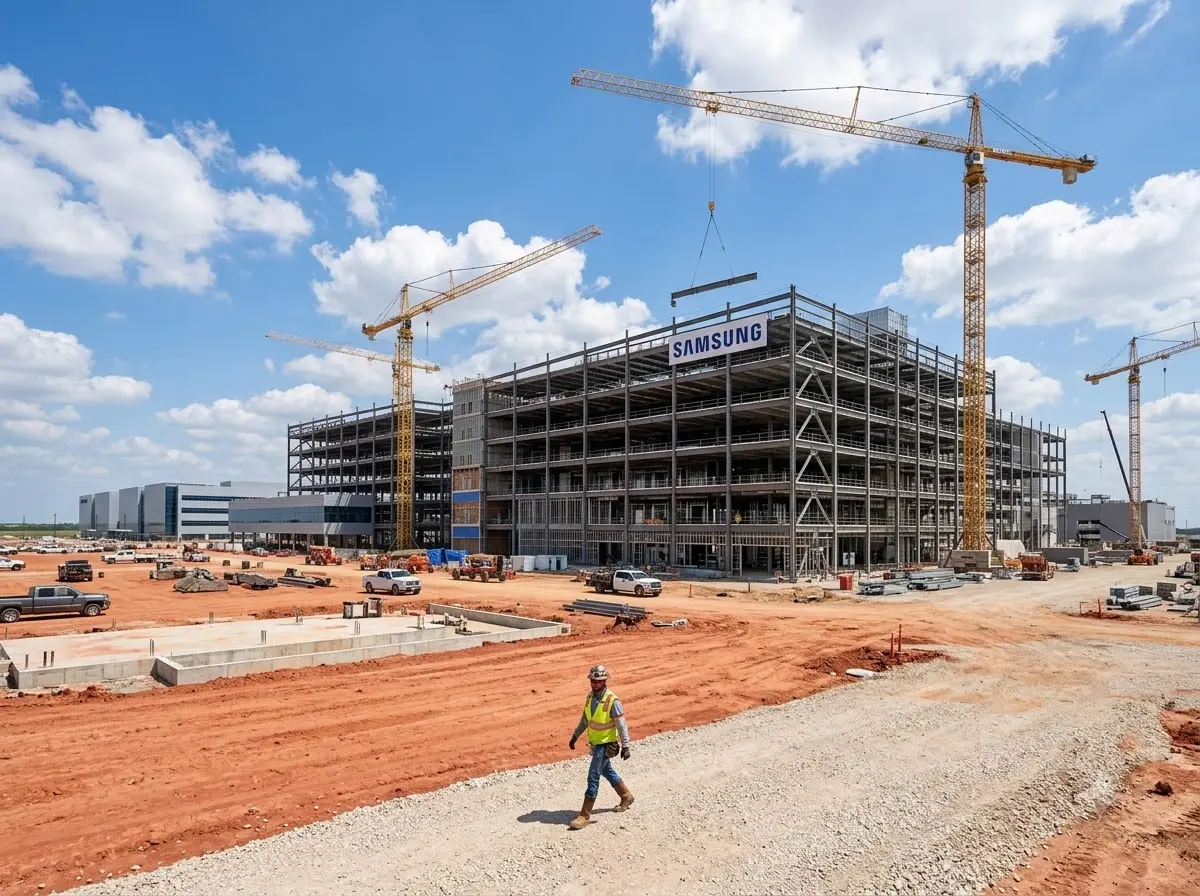
During the same earnings call Samsung said it will begin construction of Taylor Fab 2 within 2026. Mass production is scheduled for 2030. Fab 1 remains on track for operations in 2026 and will ramp 2-nanometer capacity.
Why New Capacity Still Leaves the Market Tight
AI infrastructure spending continues to outrun wafer starts. Agentic AI is lifting token consumption and pulling general-purpose server demand higher as well. Frontier model builders unable to get enough hyperscaler capacity are turning to neocloud providers, which then place large memory orders with OEMs.
Samsung told analysts that meaningful supply expansion from new fabs takes more than three and a half years from groundbreaking to wafers. Industry-wide capital spending will not close the gap before 2028. Unmet demand from this year rolls into 2027, making next year even tighter.
| Milestone | Timing | Focus |
|---|---|---|
| Taylor Fab 1 operations | 2026 | 2 nm logic ramp |
| Taylor Fab 2 groundbreaking | End of 2026 | Additional leading-edge capacity |
| Taylor Fab 2 mass production | 2030 | Logic and support for AI nodes |
| Memory shortage outlook | Through 2028 | More severe in 2027 |
SK Hynix CEO Kwak Noh-jung separately called 2027 the industry’s worst supply year on record and said demand would still exceed capacity beyond 2030. UBS has projected DRAM undersupply lasting at least into the second quarter of 2028.
Long-Term AI Deals Claim Most of the Output
Samsung is expanding multi-year supply agreements with major data-center and AI customers. One widely circulated earnings detail indicated the company is locking as much as 70 percent of output into five-year AI contracts. That leaves roughly one-third for smartphones, PCs, cars and other traditional markets.
The shift stabilizes Samsung’s own business model. Historical memory cycles become less violent when large customers commit years ahead. The same contracts reduce the free float available for consumer-device makers.
- Server DRAM, enterprise SSD and HBM demand keep accelerating
- Mobile and PC segments see only partial moderation, not relief
- Customers now share multi-year forecasts and request LTAs directly
- Samsung prioritizes firm, long-term commitments over spot volume
Device makers already feel the squeeze. Samsung’s own mobile division posted an operating loss despite solid Galaxy S26 and A-series volume. Elevated component costs across the industry erased the usual margins.
Phone Chips Rise Too
Qualcomm confirmed double-digit price increases on Snapdragon processors for shipments after September 1. The company told customers it had exhausted its ability to absorb higher supplier costs. Android handset makers face another round of bill-of-materials pressure just as memory ASPs continue climbing.
DRAM and NAND prices have risen sharply over the past year as AI absorbs wafer starts that once served commodity markets. Micron and peers report record margins. The pricing power has moved from handset brands back to the memory suppliers.
We expect the memory shortage in 2027 to be even more severe than it is this year, with tight supply conditions likely to persist into 2028.
That assessment came directly from Samsung’s earnings discussion and quickly circulated among analysts and investors on X.
How Taylor Became the U.S. Anchor
Samsung broke ground on the original Taylor project in 2022 with a minimum $17 billion commitment. The site sits less than 30 minutes from the company’s long-running Austin fab. Official Taylor facility investment details list 1,800 direct jobs in the first decade and thousands more construction and indirect roles.
- November 2021: Samsung announces $17 billion Taylor fab targeting 2024 production.
- 2022: Groundbreaking occurs; delays later push timelines.
- December 2024: Commerce awards Samsung up to $4.745 billion in CHIPS funding to support more than $37 billion of Texas investment, including two leading-edge logic fabs and R&D in Taylor plus Austin expansion.
- 2026: Fab 1 operations begin; Fab 2 construction starts by year-end.
- 2030: All CHIPS-supported facilities targeted for full operation; Fab 2 mass production.
The CHIPS money turns Central Texas into a fuller ecosystem spanning leading-edge, current-generation and mature-node logic. Local economic impact already runs into the billions annually from construction and early operations.
Consumer Devices Absorb the Cost
Higher memory and logic prices flow straight into smartphones, laptops, tablets and cars. Samsung raised device prices earlier as component costs climbed. Other brands have followed or will. Profit margins on finished goods compress even when unit sales hold up.
The irony sits in plain view. Samsung builds fresh U.S. capacity precisely because U.S. data-center customers demand multi-year security of supply. Those same contracts leave less room for the consumer electronics that once set memory prices. Shoppers fund the AI build-out through higher sticker prices on everyday gadgets.
Foundry demand from U.S. customers is also strong. Samsung plans double-digit foundry revenue growth in the second half while ramping second-generation 2 nm mobile products and 4 nm LPU and base-die work. Yet the memory side remains the larger profit engine and the tighter bottleneck.
Prices Stay Elevated While Fabs Rise
Even after Fab 1 starts and Fab 2 breaks ground, the three-and-a-half-year lag from construction to wafers means little new supply reaches the open market before 2028. Long-term AI agreements further limit spot availability. Industry forecasts from Samsung, SK Hynix and external banks converge on the same window.
Samsung will keep optimizing its portfolio toward high-value products: HBM4, HBM4E samples already shipping, DDR5, SOCAMM2 and advanced packaging. That strategy maximizes profit. It also keeps conventional DRAM and NAND under pressure for longer than a simple capacity chart would suggest.
For now the winners are clear: memory suppliers enjoying 50-plus percent margins and AI builders who locked supply early. The residual market of phone brands, PC makers and retail buyers continues to clear at higher prices. Taylor’s second fab will eventually add wafers. Until then the shortage sets the terms.


UK AI Mega-Rounds Capture Europe’s H1 2026 Funding Rebound

Highland Europe’s €1.1B Fund VI Draws Public Backing for Scaleups

TÖNNJES Backs Bikekey to Scale Digital Bike IDs Beyond Theft

Intropy’s $11M Seed Cracks Manual Spare Parts Moat

Inforcer’s $50M Series C Turns MSP Control Planes Into SMB AI Shields

Meta AI Lifts Instagram Scroll Time as Lawsuits Mount

Redmi Note 17 Leak Puts Giant Si-C Batteries in Midrange

Police Chiefs Back CLARITY Act as Passage Odds Sink Below 30%

Perceptron $6.5M Round Cracks AI Data Gatekeeping

HONOR MagicOS 11 Sets August 6 Date and Forces the Glass Race

CLARITY Act Final Text Expected This Weekend as 60-Vote Hurdle Looms

Kalshi Loses Major NY Prediction Markets Ruling to Judge Torres

Fed Minutes Cite AI Demand as Inflation Risk, Put a 2026 Hike Back on the Map

Marker AI Writing Startup Lands $13M Seed Led by Index Ventures

Dota 2 Esports World Cup 2026: Spirit Defends $2M Title In Paris

Meta’s Muse Spark 1.1 Beats Rivals on Price, Trails on Coding

CS2 Premier Season 5 Lands With Cache and a C4 Damage Rework

ARC Intelligence Closes €4M Seed Round in Roughly a Week

Finto Picks Munich Over Silicon Valley After YC, Raises $3.4M

Backrooms Returns to Theaters as the Everything Must Go Edition
-
 FINANCE2 months ago
Zcash Patched a Double-Spend Bug as ZEC Climbed 5%
-
 ENTERTAINMENT2 months ago
Steam Summer Sale 2026 Locks In June 25 to July 9 Dates
-
 FINANCE4 weeks ago
CLARITY Act Final Text Expected This Weekend as 60-Vote Hurdle Looms
-
 NEWS3 months ago
Meta Adds AI Replies to Threads, But Users Can’t Block It
-
 ENTERTAINMENT2 months ago
‘Widow’s Bay’ Review: Apple TV’s Sleeper Horror-Comedy Earns Its Fog
-
 NEWS5 months ago
U.S. Navy Deploys Solar-Powered Lightfish Drone to Patrol Oceans
-
 NEWS8 months ago
FolderFresh Review: This Free Tool Automates Windows File Organizing
-
 FINANCE3 weeks ago
Kalshi Loses Major NY Prediction Markets Ruling to Judge Torres