
NEWS
Intropy’s $11M Seed Cracks Manual Spare Parts Moat
London’s Intropy lands $11M seed led by Felix Capital to run autonomous inventory and pricing inside ERPs for the vast spare parts aftermarket.

London startup Intropy has raised $11 million in seed funding to put autonomous AI inside the ERP systems that still run most spare parts businesses on spreadsheets and manual reviews. Felix Capital led the round, with Quiet Capital plus existing backers General Catalyst and Firstminute Capital joining.
The company says its technology has already processed more than $10 billion in spare parts demand since the 2024 launch. Funds will accelerate product work, grow the engineering team and open a New York office.
That combination of early volume and a focused seed cheque sets up a simple test. Can an AI layer that already touches billions in demand turn fragmented parts operations into something that acts on its own, inside the software distributors already use?
Felix Capital Backs the London Team
Franziska Kirschner, co-founder and CEO, and YihKai Teh, co-founder and CTO, met at Tractable, the UK AI insurtech known for computer-vision claims. Kirschner left an Oxford physics PhD (superconductors, magnetic monopoles, Nature paper) to lead AI and product there. Teh, from Malaysia and a former UCL AI academic, worked as a researcher. Together they hold more than 10 patents on vehicle damage assessment.
Those patents matter for what came next. Damage assessment forces models to read messy, real-world signals and turn them into decisions with money attached. Spare parts demand the same discipline: incomplete data, tight margins, and actions that cannot wait for another weekly review.
They founded Intropy in 2024 to target distributors, manufacturers and recyclers. General Catalyst and Firstminute led the earlier pre-seed. Kirschner is one of the few women running an industrial deep-tech AI company.
- $11 million seed led by Felix Capital
- Participation from Quiet Capital, General Catalyst, Firstminute Capital
- More than $10 billion in parts demand processed to date
- Customer ROI claimed above 10x
Felix partner Fabian Burnett Small said every product is designed with components yet the systems managing those parts remain manual and fragmented. The firm sees Intropy as the intelligence layer that can make supply chains faster and more efficient.
The pre-seed to seed path also shows continuity. The same early backers returned, and a new lead stepped in once traction inside complex distributor inventories was visible. That sequence is the practical vote of confidence behind the headline figure.
Decisions Run Inside the Customer ERP
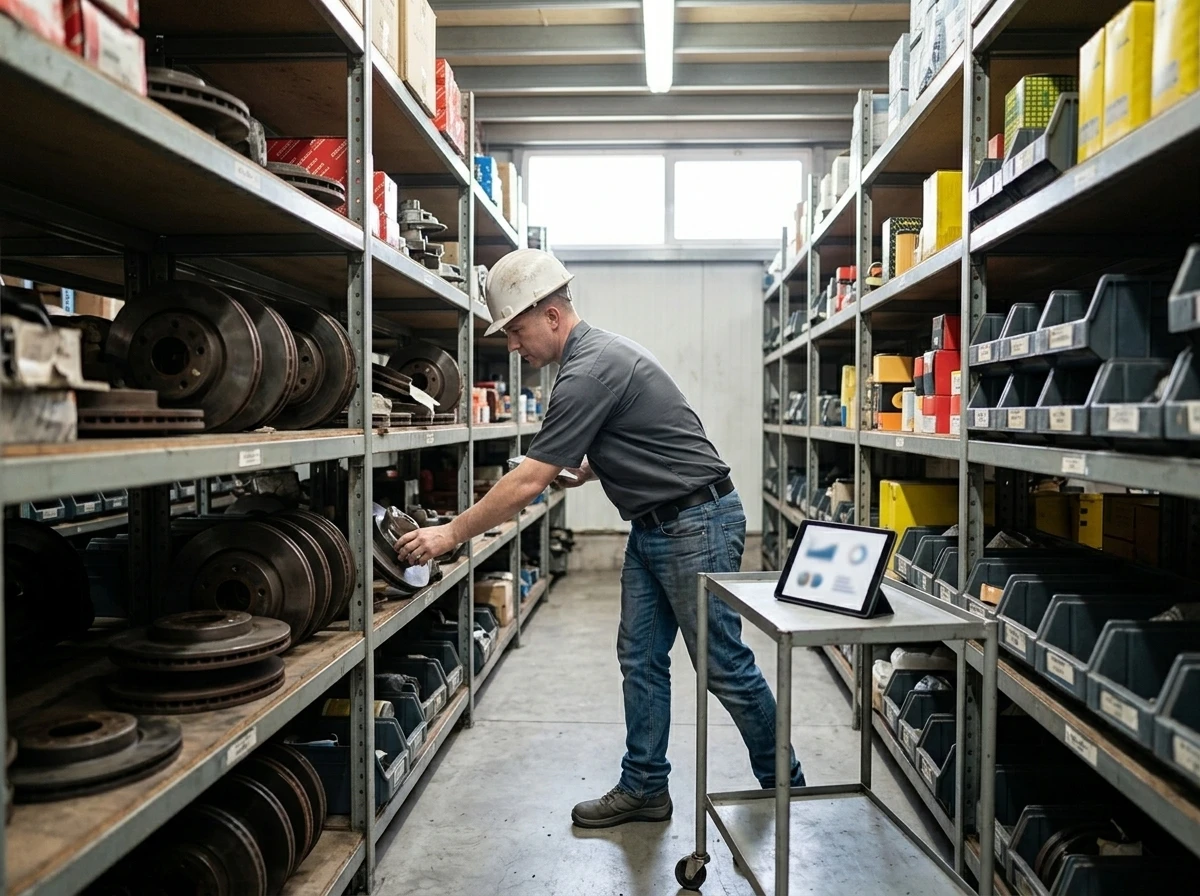
Most inventory tools stop at dashboards and recommendations. Intropy connects to existing ERPs, DMS platforms, databases, spreadsheets and supplier feeds, then moves from signal to executed action. Setup can take as little as 30 minutes with no heavy IT lift, according to the company.
Once configured with business guardrails, the system can reorder stock, update prices, clear obsolescence risk or bid on salvage lots automatically. It measures outcomes and improves itself. The four core offerings are:
- Demand forecasting that positions stock before spikes while controlling working capital
- Dynamic pricing that balances supply, demand, competition and cost in real time
- Obsolescence management that flags or acts before write-downs hit
- Salvage operations tools for smarter bidding and yard inventory
The modules are built to reinforce one another rather than sit as separate reports. A sharper demand signal feeds pricing. Pricing and stock position feed obsolescence risk. Salvage bidding draws on the same view of what still has value and what does not. Closed-loop measurement then tunes the next round of actions.
| Process | Traditional approach | Intropy approach |
|---|---|---|
| Inventory review | Periodic manual SKU sweeps across spreadsheets | Continuous AI updates that can auto-execute |
| Pricing | Batch or reactive changes | Real-time optimization per SKU |
| Obsolescence | Detected after dead stock builds | Early detection and preventative action |
| Data sources | Fragmented ERPs, emails, calls, images | Aggregated structured and unstructured signals |
Kirschner put the ambition plainly: the firm is not interested in another dashboard. It is building an AI-native operating system that can make and execute decisions at scale.
Speed of connection is part of that claim. If setup stays measured in minutes rather than integration programmes, the product can reach the long tail of distributors that will never fund a multi-year IT rebuild. Guardrails keep the autonomy inside rules the business already accepts, which is how automatic reorders and price changes become usable day to day.
Why Spreadsheets Still Rule a Trillion-Dollar Aftermarket
In automotive alone, more than $4 billion in spare parts are estimated to change hands every day. Felix Capital describes the broader aftermarket as a trillion-dollar global ecosystem. Yet the same part can sit under multiple SKUs, fit only certain configurations, and travel through disconnected ERPs, warehouses, emails and phone calls.
Distributors face rising SKU complexity, low margins, tariff noise, fuel costs and aging vehicle fleets. Manual reviews of hundreds of thousands of line items cannot keep pace. The result is excess stock in one location, stockouts in another, and capital trapped in inventory that will never move.
That trap is structural. When identity is messy and channels are fragmented, human teams fall back on spreadsheets because they are flexible enough to absorb exceptions. Flexibility at that scale becomes the bottleneck. Each exception handled by hand is a decision that cannot compound.
The same pressure shows up far beyond cars. When high-profile programs hit parts shortages, the scramble is immediate, as seen in the urgent search for aircraft spare parts that delayed Air Force One work. Industrial machines, HVAC, construction equipment and future autonomous fleets all depend on the same thin layer of parts logistics.
Every machine made from multiple components will eventually need spare parts, whether it is a car on the road today, an autonomous vehicle of tomorrow or a robot supporting humanity on Mars.
Teh, the CTO, added that the goal is to make that complexity invisible so the best user experience is when the user needs to do nothing at all.
Invisibility is the product thesis in one line. If forecasting, pricing and obsolescence actions run inside the ERP with outcomes measured automatically, the operator stops starring in every transaction. The spreadsheet ceases to be the system of record for judgement and becomes, at most, an export.
Who Gains When the Moat Cracks
Distributors stand to free working capital and lift fill rates. Manufacturers gain cleaner demand signals. Recyclers and salvage yards get sharper bidding and pricing. End customers see faster repairs and fewer “part on order” delays.
- Distributors unlock cash tied in slow stock and raise the odds the right part is on the shelf
- Manufacturers receive demand signals less distorted by panic orders and blind replenishment
- Recyclers and salvage yards bid and price with a clearer read on residual value
- End customers spend less time waiting on parts that should have been positioned earlier
Felix Capital models the upside for a typical distributor at up to $45m in incremental profit from better forecasting, pricing and cross-referencing, plus broader ecosystem cost savings measured in billions. The spare parts management market to $1.82 billion by 2030 (from about $1.02 billion in 2025 at 12.3% CAGR) reflects growing spend on exactly these tools.
| Market marker | Figure |
|---|---|
| Automotive parts changing hands daily | More than $4 billion |
| Broader aftermarket (Felix description) | Trillion-dollar global ecosystem |
| Spare parts management market, 2025 | About $1.02 billion |
| Spare parts management market, 2030 | $1.82 billion |
| Implied CAGR, 2025-2030 | 12.3% |
| Modelled incremental profit, typical distributor | Up to $45m |
Incumbent ERP and legacy planning vendors lose the assumption that human review must sit in the middle of every decision. The moat was complexity itself. Autonomous execution inside the systems companies already run removes that barrier.
When complexity stops protecting the old workflow, budget shifts toward tools that shrink working capital and raise fill rates. The market growth path from about $1.02 billion to $1.82 billion is one expression of that shift. The $45m distributor model is another, stated in profit rather than licence fees.
The Investor Case Rests on Compounding Data
Felix argues the largest AI opportunities sit in operationally complex industries that modern software largely skipped. Spare parts sit at that intersection: enormous scale, fragmented infrastructure and clear dollar value from better decisions.
As more customers and workflows join, Intropy expands its understanding of how parts, inventory and demand behave. That creates a compounding data advantage traditional point solutions cannot match. Trust is earned by reliability inside daily operations, not by marketing slides.
Volume already on the platform gives that loop something to learn from. More than $10 billion in demand processed since launch is not only a sales proof point. It is training signal across SKUs, locations, price moves and salvage outcomes that a single-tenant spreadsheet never accumulates.
The company already works with large distributors running highly complex inventories. Traction at this stage, before the new capital, is the signal Felix cited when leading the round.
Reliability compounds in the same direction as data. Each automatic action that lands inside agreed guardrails makes the next action easier to accept. Over time the product’s moat looks less like a feature list and more like an operating history competitors cannot replay.
New York Office and Faster Product Cycles
The $11 million (about €9.5 million) will speed product development, expand engineering and machine-learning hiring in London and New York, and establish the first US base. Europe expansion continues in parallel.
- 2024 – Intropy founded; pre-seed led by General Catalyst and Firstminute Capital; product launch begins processing parts demand
- Since launch – more than $10 billion in spare parts demand processed; work with large, complex distributor inventories
- Seed round – $11 million led by Felix Capital, with Quiet Capital and existing backers participating
- Use of funds – faster product cycles, engineering and ML hiring in London and New York, first US office, continued Europe expansion
Intropy’s public site already lists the full stack as an AI engine for parts distribution with dedicated modules. One core capability is the ability to predict demand for every SKU at every location across the year so stock moves before the spike rather than after the stockout.
Customers who have switched report measurable gains, including the greater-than-10x ROI figure the company publishes. The next test is whether more of the industry leaves the spreadsheet era for systems that act without waiting for the next manual review cycle.
A New York base puts product and go-to-market closer to large North American distributors while London remains the engineering centre. Parallel Europe work keeps the original market moving so the seed extends reach without pausing depth.
Guardrails Let the System Act Alone
Autonomy only ships if customers trust the boundaries around it. Intropy’s model starts with configuration of business guardrails, then allows the system to reorder stock, update prices, clear obsolescence risk or bid on salvage lots without a human click each time.
That order of operations is deliberate. Guardrails encode margin floors, stock policies and risk limits the distributor already lives by. Execution comes second. Measurement comes third, so the models improve against outcomes rather than against slideware targets.
Thirty-minute setup with no heavy IT lift lowers the cost of trying the loop. Teams connect ERPs, DMS platforms, databases, spreadsheets and supplier feeds, then watch whether automatic actions beat the old manual cycle. The greater-than-10x ROI claim is the company’s bid that they do.
Teh’s line about the best experience being the one where the user does nothing is the same idea from the interface side. When guardrails hold and actions land, attention moves to exceptions instead of every SKU sweep. Complexity does not disappear. It stops consuming the whole working day.
Parts Pressure Extends Past the Car Park
Automotive volumes dominate the daily figures, with more than $4 billion in spare parts estimated to move each day. The wider story is any machine built from components that fail on a schedule no planner fully controls.
Industrial machines, HVAC, construction equipment and future autonomous fleets share the same thin logistics layer. The Air Force One parts delay showed how quickly a high-profile programme becomes a search party when spares are late. The blockquote from the company stretches the point to robots on Mars, but the near-term version is already on roads, runways and job sites.
Distributors, manufacturers and recyclers are the first operators in that chain. Cleaner demand signals upstream and sharper salvage decisions downstream are how an intelligence layer turns a trillion-dollar aftermarket’s fragmentation into something closer to a managed system. End customers feel it as faster repairs and fewer parts on order.
For an industry that keeps every machine running, the intelligence layer is finally arriving with capital and a clear execution path.


UK AI Mega-Rounds Capture Europe’s H1 2026 Funding Rebound

Highland Europe’s €1.1B Fund VI Draws Public Backing for Scaleups

TÖNNJES Backs Bikekey to Scale Digital Bike IDs Beyond Theft

Intropy’s $11M Seed Cracks Manual Spare Parts Moat

Inforcer’s $50M Series C Turns MSP Control Planes Into SMB AI Shields

Meta AI Lifts Instagram Scroll Time as Lawsuits Mount

Redmi Note 17 Leak Puts Giant Si-C Batteries in Midrange

Police Chiefs Back CLARITY Act as Passage Odds Sink Below 30%

Perceptron $6.5M Round Cracks AI Data Gatekeeping

HONOR MagicOS 11 Sets August 6 Date and Forces the Glass Race

CLARITY Act Final Text Expected This Weekend as 60-Vote Hurdle Looms

Kalshi Loses Major NY Prediction Markets Ruling to Judge Torres

Fed Minutes Cite AI Demand as Inflation Risk, Put a 2026 Hike Back on the Map

Marker AI Writing Startup Lands $13M Seed Led by Index Ventures

Dota 2 Esports World Cup 2026: Spirit Defends $2M Title In Paris

Meta’s Muse Spark 1.1 Beats Rivals on Price, Trails on Coding

CS2 Premier Season 5 Lands With Cache and a C4 Damage Rework

ARC Intelligence Closes €4M Seed Round in Roughly a Week

Finto Picks Munich Over Silicon Valley After YC, Raises $3.4M

Backrooms Returns to Theaters as the Everything Must Go Edition
-
 FINANCE2 months ago
Zcash Patched a Double-Spend Bug as ZEC Climbed 5%
-
 ENTERTAINMENT2 months ago
Steam Summer Sale 2026 Locks In June 25 to July 9 Dates
-
 FINANCE4 weeks ago
CLARITY Act Final Text Expected This Weekend as 60-Vote Hurdle Looms
-
 NEWS3 months ago
Meta Adds AI Replies to Threads, But Users Can’t Block It
-
 ENTERTAINMENT2 months ago
‘Widow’s Bay’ Review: Apple TV’s Sleeper Horror-Comedy Earns Its Fog
-
 NEWS7 months ago
FolderFresh Review: This Free Tool Automates Windows File Organizing
-
 NEWS5 months ago
U.S. Navy Deploys Solar-Powered Lightfish Drone to Patrol Oceans
-
 FINANCE3 weeks ago
Kalshi Loses Major NY Prediction Markets Ruling to Judge Torres