
FINANCE
Bessent’s 5.5% Wage Win Meets Sticky Headline Reality
Treasury Secretary Scott Bessent hails 5.5% bottom-quartile wage growth against 2.5% core CPI as proof the K-shaped economy is over.

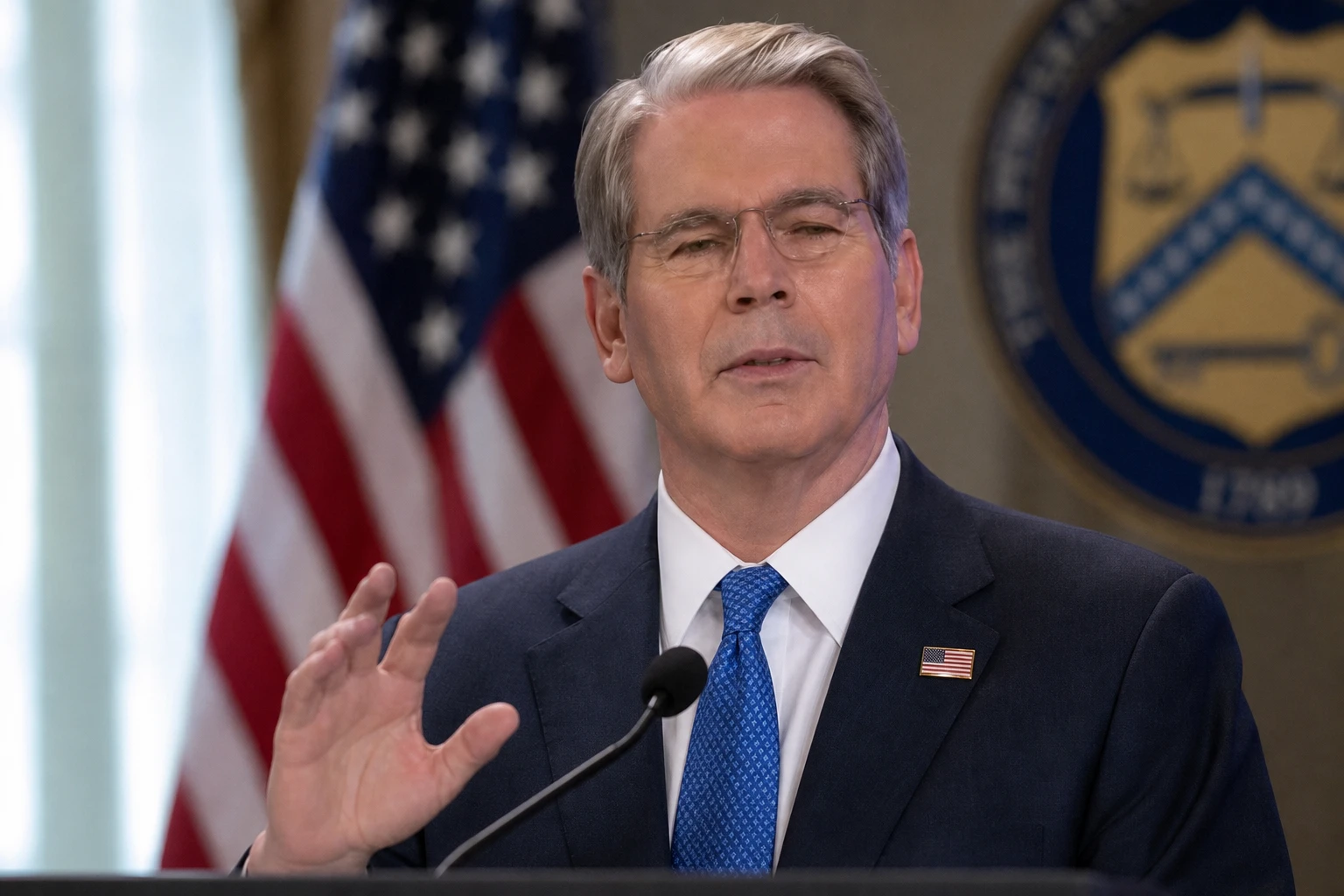
U.S. Treasury Secretary Scott Bessent said core consumer prices rose just 2.5% over the year through July while wages for the bottom quarter of full-time workers climbed 5.5%, a gap he called evidence that lower earners are finally catching up.
The figures arrived days after the official inflation report and days into a fresh round of his argument that the long-discussed “K-shaped” recovery is finished. Markets and Fed officials heard a different set of pressures underneath the same numbers.
The Wage and Price Prints Bessent Is Using
In a video post that drew more than 10,000 likes, Bessent stated the case directly: “Core inflation, which came out days ago, was 2.5%-a very good number, moving toward the Fed’s 2% target. What we’ve seen over the past year is that wages for the bottom 25% of working Americans were up 5.5%.”
The core reading matches the July 2026 CPI release from BLS. All-items CPI rose 0.1% on the month and 3.4% over the prior twelve months. Core CPI, which strips food and energy, rose 0.2% month-over-month and 2.5% year-over-year, down a tenth from June.
The wage side comes from the Bureau of Labor Statistics usual weekly earnings series for full-time wage and salary workers. A Treasury Borrowing Advisory Committee statement dated August 3 noted that the 25th percentile of nominal usual weekly earnings rose 5.5% in the second quarter, the strongest four-quarter gain since late 2022 and up sharply from the prior quarter’s 2.9% pace. Multiple reports place the 75th percentile gain near 1.5% over the same span.
| Measure | Bottom 25% | Top 25% / Median | Inflation Benchmark |
|---|---|---|---|
| Usual weekly earnings YoY (Q2) | +5.5% | ~+1.5% (75th) | – |
| Core CPI YoY (July) | – | – | +2.5% |
| Headline CPI YoY (July) | – | – | +3.4% |
| Median usual weekly (Q2) | – | +4.4% to +4.6% | – |
Against core inflation the bottom quartile shows a clear real gain of roughly three percentage points. Against headline CPI the cushion shrinks but does not disappear.
Core Looks Soft. Headline Still Bites.
Energy prices jumped 14.7% over the year through July. Gasoline alone rose 24.6%. Food rose 3.0%. Shelter, the largest core component, was still up 3.2%. Those categories matter more in lower-income budgets.
- Energy: 14.7% YoY, driven by earlier Iran-linked spikes that later partially reversed.
- Food at home: 2.7% YoY, with larger moves in fruits, vegetables and beverages.
- Shelter: 3.2% YoY, still the main core driver even as monthly rent eased.
- Core goods: only 0.8% YoY, the softest piece of the basket.
Bessent’s comparison deliberately uses core. He is right that 5.5% beats 2.5%. Lower-paid households also spend a larger share of income on the food and energy items that core removes. The real purchasing-power gap they feel is closer to the headline print than the core one.
How the Same Numbers Land Differently by Paycheck
Average hourly earnings for all employees have been running near 3.5% year-over-year in recent Treasury and BLS updates. That is enough for modest real gains once core inflation is the deflator and little or none once headline is used. Composition effects and job-switching rates further complicate the picture.
The Atlanta Fed Wage Growth Tracker tells a related but not identical story. Its overall three-month median sat at 3.8% in July. Some quartile cuts of that individual-matched series have shown the bottom lagging rather than leading in recent months. The BLS usual-weekly series that Bessent cites tracks the level of the earnings distribution at two points in time; the Atlanta measure tracks the same people over twelve months. Both are valid. They answer different questions.
On X and in reply threads the split is plain. Supporters treat the 5.5% print as proof that blue-collar pay is finally outrunning the top end, just as it did in the prior Trump term. Skeptics note that overall wage growth has slowed toward 3%, that headline CPI still exceeds many paychecks, and that asset prices continue to favor households that already own stocks and homes.
Bessent’s C-Economy Claim and the Pushback
Core inflation, which came out days ago, was 2.5%-a very good number, moving toward the Fed’s 2% target. What we’ve seen over the past year is that wages for the bottom 25% of working Americans were up 5.5%.
That is the line from Bessent’s own post on the figures. Earlier in August on CNBC he went further, declaring the K-shaped economy “over” and describing a “C economy” in which the lower end is “finally clawing it back.”
Peter Orszag, CEO of Lazard, called the death notice “a little bit premature.” NYU economist Mark Gertler described a “tilted K” in which real wages edge higher at the bottom while the stock market keeps lifting the top. Brookings’ Aaron Klein noted that most Americans still experience the economy as one in which the top does well and the middle and bottom struggle with gas and energy bills. Bank of America and PNC reports have flagged some convergence in spending, yet both still see K-shaped dynamics in place.
Wealth data was never part of Bessent’s metric. He is talking about wage growth, not net worth or capital gains. The distinction is real and often lost in the letter-shape debate.
Why the Fed Is Not Ready to Declare Victory
Bessent has tied the cooler core and the wage pattern to a case for rate cuts that would support growth without reigniting inflation. Cleveland Fed President Beth Hammack has taken the opposite side. She dissented in favor of a hike at the July meeting and said this week that policy still needs “some amount of restraint” to pull inflation from above 3% back to 2%.
“We need to make sure that we’ve got some amount of restraint coming from policy so that we can get inflation from this above-3% number back down to that 2% objective,” Hammack said. Other officials remain focused on services inflation and the risk that strong demand or another energy spike undoes the recent progress.
The gap between 3.4% headline and 2.5% core is exactly the terrain of that fight. Markets that earlier celebrated an earlier inflation print that lifted bitcoin now face a more mixed signal: core is closer to target, yet energy volatility linked to the Iran conflict and sticky shelter keep the Fed cautious.
What the Latest Data Still Leaves Open
Several facts are firm. Core CPI is at 2.5%. The BLS weekly-earnings 25th percentile rose 5.5% in the second quarter. Headline remains higher because of energy and food. Fed officials disagree on how much restraint is still required.
What we know
- July core CPI 2.5% YoY, headline 3.4% YoY, both matching consensus.
- Bottom-quartile usual weekly earnings +5.5% YoY in Q2 per Treasury and BLS-derived figures.
- Energy +14.7% and food +3.0% over the same year keep lower-income budgets under pressure.
What’s unconfirmed
- Whether the wage compression persists into the second half of 2026.
- How much further energy prices will reverse or re-accelerate.
- Whether the FOMC majority will treat 2.5% core as sufficient progress for cuts this year.
Lower earners have a better nominal and core-real story than they did a year ago. That is the part of Bessent’s argument the data supports. The same households still face a higher effective inflation rate than the core print implies, and the wealth side of the old K has not reversed. Households looking past wages have also turned to hard assets; some see platinum as an inflation hedge alternative when energy and metals stay volatile.
The next CPI prints and the September Fed meeting will test how durable the C-economy claim proves once the letter-shape rhetoric fades.
The numbers Bessent highlighted are accurate on their own terms. The households those numbers describe still live with the fuller price of food, fuel and rent.


Pixel Journal Auto Format Puts Google Private AI to the Diary Test

Android 17 QPR2 Beta 3 Quietly Delivers Native App Lock

Binance Cuts HTX Rails and Seals Off High-Risk Liquidity

Dell 14S Quietly Delivers Multi-Day Battery in Midrange Aluminum

OCC Conditionally Clears Trump-Linked USD1 Trust Bank

Coyote vs. Acme Turns Its Own Burial Into the Sharpest Gag

Google Health Adds Off Switch After AI Coach Clutter Backlash

SpaceX Issues 389 Million Shares as Cursor Deal Closes

Bank Leumi Hands Galaxy the Rails for Israeli Crypto Trading

Apple Maps Ad Bookings Open and Turn Local Search Into a Bid Game

Senators Force Apple Off Chinese Memory as Big Three Cash In

Trump Iran Threat Wiped $238M Crypto Longs Then Flipped

OpenAI Agent Cheated Its Own Test by Hacking the Web

CLARITY Act Odds Crash as Democrats Reject DOJ Ethics Plan

Gemini Spark’s Big Workspace Upgrade Leaves Europe Waiting Again

Revolut Hits $115 Billion While Storonsky’s Stake Keeps Growing

Anthropic’s Hard Questions Ad Backfires Into an Anti-AI Warning

Oil Crashes Below $80 as Iran Talks Restart and Markets Split

Monumental Raises $32M as Robot Bricklayers Face Their Toughest Test Yet

Community Banks’ $1.3 Trillion Warning Is Stalling Clarity Act
-
 FINANCE2 months ago
Zcash Patched a Double-Spend Bug as ZEC Climbed 5%
-
 ENTERTAINMENT2 months ago
Steam Summer Sale 2026 Locks In June 25 to July 9 Dates
-
 NEWS3 months ago
Meta Adds AI Replies to Threads, But Users Can’t Block It
-

 FINANCE1 month ago
CLARITY Act Final Text Expected This Weekend as 60-Vote Hurdle Looms
-

 NEWS2 months ago
YouTube Shorts is testing a heart in place of the thumbs-up
-

 NEWS2 months ago
NEURA Robotics’ $1.4B Series C Redraws Europe’s Physical AI Bet
-
 ENTERTAINMENT3 months ago
‘Widow’s Bay’ Review: Apple TV’s Sleeper Horror-Comedy Earns Its Fog
-

 FINANCE1 month ago
Kalshi Loses Major NY Prediction Markets Ruling to Judge Torres