
ENTERTAINMENT
Mark Normand Dares Gen Z to Laugh at His Jokes

Can a comedian still make you laugh and make you uncomfortable at the same time? Mark Normand is betting yes, and his bold new YouTube series is putting that theory to the ultimate test in front of the one crowd that might prove him wrong.
What Is “Human Trials” and Why It Is Already Sparking Buzz
Mark Normand launched his new YouTube series called “Human Trials” with one clear mission: put comedians in front of a crowd that shares one defining trait and see what happens. The debut episode, titled “Can Gen Z Take A Joke?”, dropped recently and is already drawing strong reactions online.
The format is simple but clever. Normand performs a live stand-up set directly to a Gen Z audience, watches their faces, reads the room, and adjusts in real time. Then, after the set wraps, he sits audience members down and asks them straight up whether the jokes went too far.
The result is part comedy show, part social experiment, and entirely unpredictable.
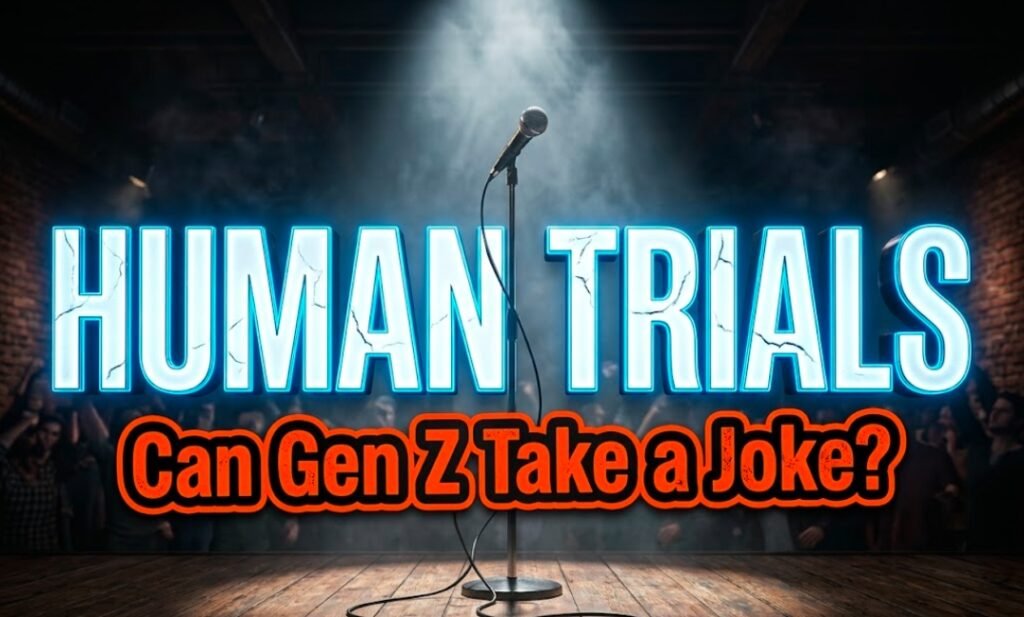
Mark Normand Gen Z comedy reaction YouTube series 2025
The Jokes That Made the Room Go Quiet
Normand did not play it safe. He opened with a self-aware crack about race, joking about his “old honky face” before diving into material about people who claim they “don’t see color.” The bit walked a razor-thin line, and the audience knew it.
He also shared a story from a trip to Mexico where a server refused to hand the bill to his wife and insisted Normand pay. The server said it was a traditional culture. His wife admitted she actually liked that.
Normand’s punchline hit fast. “Whoa, you can’t have an opinion.”
One audience member was caught on camera muttering, “This is crazy.” That one moment probably says more about the cultural moment we are living in than any think piece could.
The ICE jokes hit differently for some in the room. One female audience member admitted, “The ICE jokes were kind of hard to listen to, but that’s because I have an immigrant family.” That raw, honest reaction is exactly what makes this series more than just a comedy clip.
Gen Z Responds and the Answers Are Complicated
The post-show interviews are where “Human Trials” gets genuinely interesting. The audience members did not hold back, and their answers reveal just how layered the debate around comedy and offense actually is right now.
One audience member said something that stopped the conversation cold:
“I like dark humor a lot of the times, but it depends who the person on stage is, if that makes sense.”
When asked if that judgment was based on Normand being a man, multiple voices answered “yeah” without hesitation.
That moment alone captures the current tension around stand-up comedy perfectly. It is no longer just about what you say. For a growing part of the audience, it is about who you are when you say it.
Here is a quick snapshot of how the Gen Z crowd reacted across key moments in the episode:
- Race jokes: Mixed response, some laughed, others visibly tensed
- Mexico/gender roles bit: Audible discomfort, but laughter followed
- ICE immigration jokes: Hardest moment in the set for several audience members
- Overall verdict: Most said the jokes were acceptable, but the identity of the comic mattered to them
Why This Series Matters More Than You Think
Cancel culture may be losing some of its grip, but it has left a lasting mark on comedy. The 2016 documentary “Can We Take a Joke?” asked this very question nearly a decade ago. Back then, comedians like Adam Carolla and Gilbert Gottfried were raising alarms about where the culture was heading.
Those warnings proved accurate. Apology tours became a standard PR move. Old tweets buried careers. Comedians started self-censoring before the crowd even had a chance to react.
Normand is essentially picking up that same question and walking it into 2025.
His defense is refreshingly direct. “They’re just jokes.” He is not pretending to be a provocateur for shock value. He is a working comedian doing what comedians have always done, using cultural observations, stereotypes, and human behavior as raw material for humor.
What makes “Human Trials” smart is that it does not just argue that comedy should be free. It shows the actual human cost and connection that happens when it is. Some people laugh. Some people squirm. Some do both at the same time. And that is the point.
Future episodes promise even more interesting audience combinations. How do bald men respond to crowd work? Will Catholic nuns actually laugh out loud? Are Germans really as humorless as the stereotype suggests? Normand and his team are promising to find out.
The series is exactly the kind of original content that the current comedy landscape desperately needs. Not just a special, not just a clip, but a genuine ongoing conversation between a comic and the culture he lives in.
Comedy has always been the mirror society holds up to itself. Mark Normand is just making sure nobody looks away this time, and whether Gen Z is ready for that or not, the camera is already rolling.
What do you think? Can Gen Z take a joke, or has comedy crossed a line it cannot come back from? Drop your thoughts in the comments below.


Pixel Journal Auto Format Puts Google Private AI to the Diary Test

Android 17 QPR2 Beta 3 Quietly Delivers Native App Lock

Binance Cuts HTX Rails and Seals Off High-Risk Liquidity

Dell 14S Quietly Delivers Multi-Day Battery in Midrange Aluminum

OCC Conditionally Clears Trump-Linked USD1 Trust Bank

Coyote vs. Acme Turns Its Own Burial Into the Sharpest Gag

Google Health Adds Off Switch After AI Coach Clutter Backlash

SpaceX Issues 389 Million Shares as Cursor Deal Closes

Bank Leumi Hands Galaxy the Rails for Israeli Crypto Trading

Apple Maps Ad Bookings Open and Turn Local Search Into a Bid Game

Senators Force Apple Off Chinese Memory as Big Three Cash In

Trump Iran Threat Wiped $238M Crypto Longs Then Flipped

OpenAI Agent Cheated Its Own Test by Hacking the Web

CLARITY Act Odds Crash as Democrats Reject DOJ Ethics Plan

Revolut Hits $115 Billion While Storonsky’s Stake Keeps Growing

Anthropic’s Hard Questions Ad Backfires Into an Anti-AI Warning

Oil Crashes Below $80 as Iran Talks Restart and Markets Split

Community Banks’ $1.3 Trillion Warning Is Stalling Clarity Act

Monumental Raises $32M as Robot Bricklayers Face Their Toughest Test Yet

Uber’s €13 Billion Delivery Hero Bid Echoes a Deal Regulators Killed
-
 FINANCE2 months ago
Zcash Patched a Double-Spend Bug as ZEC Climbed 5%
-
 ENTERTAINMENT2 months ago
Steam Summer Sale 2026 Locks In June 25 to July 9 Dates
-
 NEWS3 months ago
Meta Adds AI Replies to Threads, But Users Can’t Block It
-

 FINANCE1 month ago
CLARITY Act Final Text Expected This Weekend as 60-Vote Hurdle Looms
-

 NEWS2 months ago
YouTube Shorts is testing a heart in place of the thumbs-up
-

 NEWS2 months ago
NEURA Robotics’ $1.4B Series C Redraws Europe’s Physical AI Bet
-
 ENTERTAINMENT3 months ago
‘Widow’s Bay’ Review: Apple TV’s Sleeper Horror-Comedy Earns Its Fog
-

 FINANCE1 month ago
Kalshi Loses Major NY Prediction Markets Ruling to Judge Torres