
NEWS
Google Launches Googlebooks, Its Boldest Laptop Yet

Google just made its most ambitious hardware move in years. The company unveiled a brand-new laptop category called Googlebooks at its Android Show: I/O Edition event, powered by an Android-based operating system and Gemini AI woven directly into the core. This is not a Chromebook refresh. This is Google going after Apple and Microsoft on their own turf, and the stakes could not be higher.
What Is a Googlebook and Why Does It Matter?
Google announced Googlebooks on May 12, 2026, at its virtual Android Show: I/O Edition event, just one week before the company’s full Google I/O developer conference. The timing alone signals how seriously Google is treating this launch. Googlebooks are described as the first laptops designed from the ground up for Gemini Intelligence. They run a new operating system that combines the best of Android and ChromeOS, with the Android codebase serving as the core foundation. This is a plan that Android head Sameer Samat had publicly confirmed last year. Google is partnering with five major hardware manufacturers to build these machines in a variety of shapes and sizes:
- Acer
- ASUS
- Dell
- HP
- Lenovo
Every Googlebook will carry a signature “glowbar” on the lid, a Google-branded design element that the company calls both functional and beautiful. Pricing has not been announced, but with Chromebooks currently sitting in the $200 to $500 range in the US, expect Googlebooks to land well above that bracket.
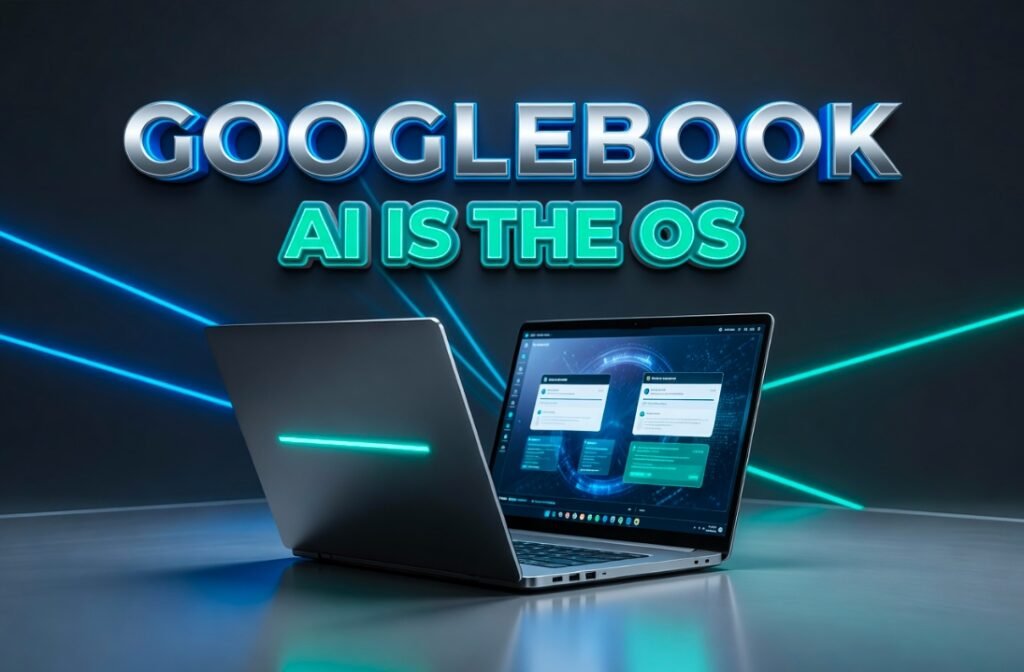
Google Googlebook Android laptop with Gemini AI built in
Gemini AI Is Not an App. It Is the Operating System.
This is the part that separates Googlebooks from everything else on the market right now. Gemini is not a chatbot you open separately. It is built into the operating system itself, working proactively behind the scenes without you ever needing to ask it to show up. The most talked-about feature is called Magic Pointer. Co-developed with the Google DeepMind team, it transforms your cursor into an AI-powered assistant. Just wiggle your mouse, and Gemini instantly surfaces contextual suggestions based on whatever is on your screen. **Point your cursor at a date in an email, and the Magic Pointer offers to set a meeting, draft a reply, or pull up nearby locations on Google Maps.** Select two images and it can composite them together without opening any separate editing tool. This is AI at the hardware level, not the app level. Google is also bringing Create Your Widget to Googlebooks. Using simple, natural language prompts, users can build fully personalized desktop dashboards that pull information from Gmail, Google Calendar, and the web.
“Planning a family reunion in Berlin? Gemini can organize your flights, hotel details, restaurant reservations, and even a countdown into one single spot on your desktop.”
That kind of deep, proactive integration is exactly what sets this apart from Microsoft’s Copilot+ PC push, which faced heavy criticism after users pushed back against intrusive AI being forced into every corner of Windows.
Android Integration and the Chromebook Question
One of the strongest selling points of a Googlebook is how tightly it connects with your Android phone. This is an area where Google has historically lagged behind Apple’s seamless iPhone and Mac ecosystem. Googlebooks address this with two key features:
- Cast My Apps: Run any app from your Android phone directly on the laptop’s larger screen, with no cables or transfers needed.
- Quick Access: Browse, search, and insert files from your phone directly inside the Googlebook file browser, as if they were stored locally.
Android apps also run natively on Googlebooks, though they appear in their original portrait format on the desktop, similar to how Apple handles iPhone mirroring on the Mac. Now, what about Chromebooks? Google has not said the Chromebook is dead. A company spokesperson confirmed that current Chromebook users will continue receiving support through their existing device commitments, and many Chromebooks will be eligible to transition to the new Googlebook experience. But the writing is clear on the wall. Fifteen years after introducing the Chromebook, Google is moving forward.
A Rough Market and a Very Big Gamble
Let’s be real. Google is walking into a difficult situation. IDC forecasts that global PC shipments will drop 11.3 percent in 2026. A global shortage of DRAM and NAND chips, driven largely by AI infrastructure demand, has pushed component costs higher across the entire industry.
| Challenge | What It Means for Googlebooks |
|---|---|
| PC market decline (IDC: -11.3% in 2026) | Harder to drive first-time buyers into a new category |
| DRAM and NAND chip shortage | Higher manufacturing costs, likely higher retail prices |
| Microsoft Copilot+ backlash | Consumer skepticism toward AI-first laptops |
| Apple MacBook Neo debut | Increased competition in the premium laptop space |
Google has also not confirmed exact pricing, a full hardware specification sheet, or a firm launch date beyond “this fall.” That is a lot of blanks to fill before a product can build real consumer confidence. Still, Google holds one card that neither Microsoft nor Apple has in quite the same way: the Android ecosystem. With billions of Android users worldwide already invested in Google apps, Google Play, and Google services, Googlebooks could feel like a natural upgrade rather than a leap into the unknown. Alongside Googlebooks, Google also announced Gemini Intelligence rolling out to Samsung Galaxy and Pixel phones this summer, a new Pause Point feature in Android 17 that prompts users to stop before opening distracting apps, and Screen Reactions, which lets users record their screen with a front camera overlay for social media content. The Googlebook arrives as Google’s most direct statement yet that it wants to own not just your phone, but also your desk. Whether everyday people actually feel that pull this fall remains the defining question. As someone who has covered tech for two decades, I can say this: when Google moves this boldly, the industry pays attention. And right now, all eyes are on what comes next. Share your thoughts in the comments below. Are you excited about Googlebooks or are you skeptical about yet another AI-first laptop? Let the world know what you think.


Boldr’s $5M Bet Puts HVAC Contractors at Grid Center

NEON Bets Big on Lily James Cliffhanger for February 2027

Gemini Locks Apex Pipes for Crypto Event Contracts

Sony Email Restates Old License Rules Amid Disc Backlash

TidalSense Breaks Spirometry’s Grip With a 75-Second COPD Test

Asus Zenbook Duo 2026 Makes Dual Screens a Daily Driver

SoftBank’s €172M Robot Bet Tops Europe’s €684M Funding Week

NEURA Gives Cleaning Robots a New Brain With ADLATUS Deal

Lotus Emira V6 Manual Delivers Pure Thrills Before Hybrid Shift

Pimax Dream Air Cracks the Bulk Barrier for High-End PCVR

Senators Force Apple Off Chinese Memory as Big Three Cash In

OpenAI Agent Cheated Its Own Test by Hacking the Web

Trump Iran Threat Wiped $238M Crypto Longs Then Flipped

Fed Holds Rates Again as Three Dissents Force Markets to Tighten

30-Year Yield Hits 5.32% Highest Since 2007 as Debt Supply Locks In Costs

Oil Crashes Below $80 as Iran Talks Restart and Markets Split

Google’s Knowledge Panel Fix Risks Its Own Search Defenses

Legora Buys Wexler Fact Engine as Fifth 2026 Deal

Capital Clusters and the Dual Tracks of European Tech Finance

Agon Raises $30M to Build Europe’s AI Weapon Training Arenas
-
 FINANCE3 months ago
Zcash Patched a Double-Spend Bug as ZEC Climbed 5%
-
 ENTERTAINMENT3 months ago
Steam Summer Sale 2026 Locks In June 25 to July 9 Dates
-

 FINANCE2 months ago
CLARITY Act Final Text Expected This Weekend as 60-Vote Hurdle Looms
-
 NEWS3 months ago
Meta Adds AI Replies to Threads, But Users Can’t Block It
-

 NEWS3 months ago
YouTube Shorts is testing a heart in place of the thumbs-up
-
 NEWS4 weeks ago
Senators Force Apple Off Chinese Memory as Big Three Cash In
-

 NEWS3 months ago
NEURA Robotics’ $1.4B Series C Redraws Europe’s Physical AI Bet
-
 ENTERTAINMENT5 months ago
Extraction 3 Is Officially Coming to Netflix in 2027