MediaTek unveiled the Dimensity 7500 on May 28, a 4nm mid-range smartphone chip that succeeds last year’s Dimensity 7400 and squares up against Qualcomm’s Snapdragon 7-series. The headline pitch is sharper on-device AI and a 144Hz display, yet the spec sheet tells a more layered story than the launch slides suggest.
Dig past the marketing and the genuine leap sits in two places most buyers will never see on a retail box: a rebuilt neural engine and Arm’s newest CPU cores. Together they mark the point where generative AI features begin shipping as standard kit in phones that cost roughly half a flagship, rather than staying locked to premium tiers.
The Dimensity 7500 Versus the 7400
On paper the two chips look like siblings, not strangers. Both ride a 4nm process, both top out at a 200MP camera sensor, and both keep the same eight-core split of four performance cores at 2.6GHz and four efficiency cores at 2.0GHz. The package, the clocks and the camera ceiling barely move.
What changes is the silicon underneath those numbers. The Dimensity 7500 is the first mobile chip to use Arm’s C1 CPU cores, swapping the older Cortex-A78 and A55 design inside the 7400 for the C1 Pro and C1 Nano cluster. MediaTek pairs them with the Arm Mali-G625 MC2 graphics block and claims gains worth up to 68% faster video transcoding and 40% quicker file transfers against the prior generation.
Here is how the headline specs line up, drawn from MediaTek’s official Dimensity 7500 product page and its published Dimensity 7400 specifications.
| Spec | Dimensity 7400 | Dimensity 7500 |
|---|---|---|
| Process | 4nm | 4nm |
| CPU | 4x Cortex-A78 @ 2.6GHz + 4x Cortex-A55 @ 2.0GHz | 4x Arm C1 Pro @ 2.6GHz + 4x Arm C1 Nano @ 2.0GHz |
| Neural engine | NPU 655 | NPU 850 (over 2x AI performance) |
| Peak display | FHD+ @ 144Hz / WFHD+ @ 120Hz | 1344 x 2800 @ 144Hz |
| Memory | LPDDR5 / LPDDR4x up to 6400Mbps | LPDDR5 up to 6400Mbps |
| Storage | UFS 3.1 / UFS 2.2 | UFS 3.1 (2-lane) |
| Max camera | 200MP | 200MP (Imagiq 1050 ISP) |
The NPU 850 Carries the Upgrade
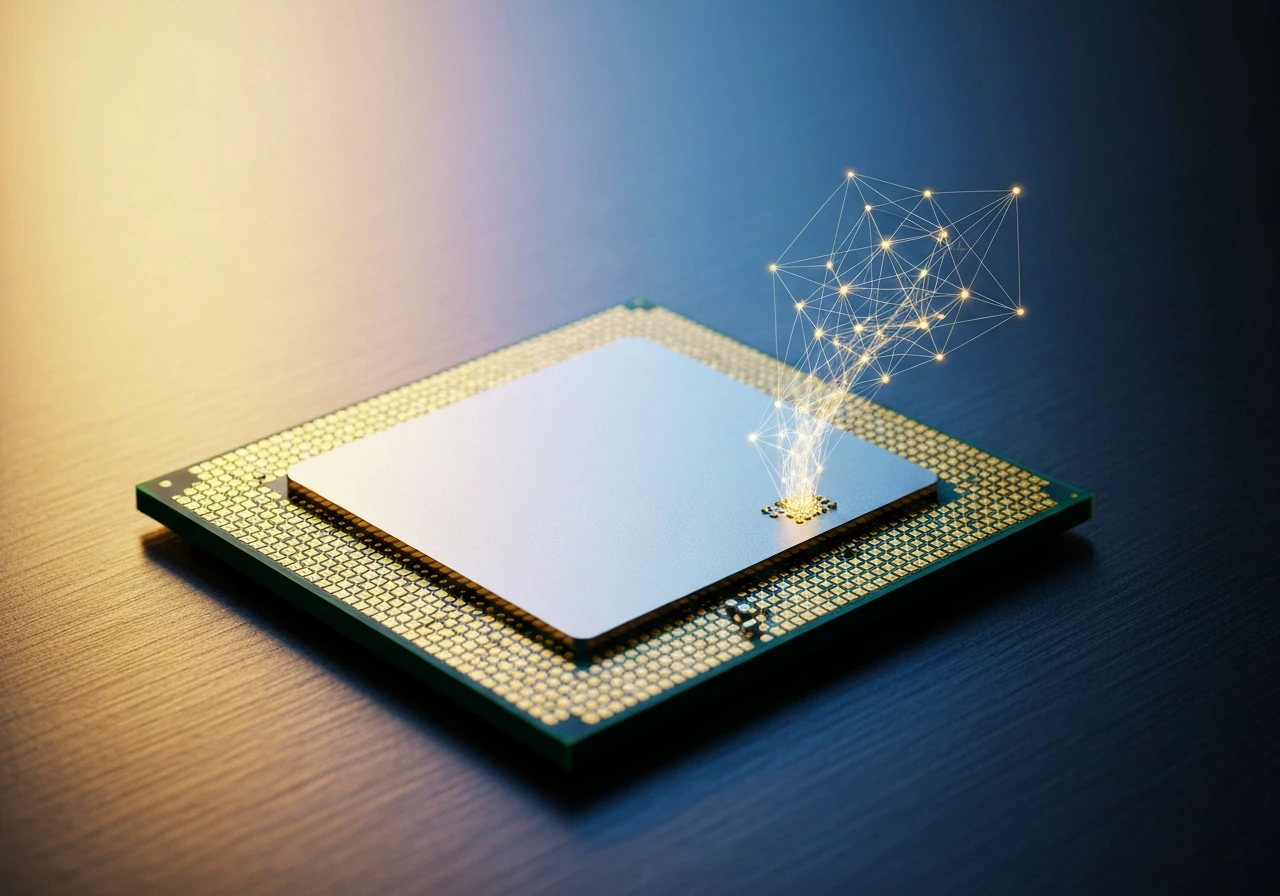
If one component justifies the new model number, it is the neural processor. MediaTek says the NPU 850 (neural processing unit, the block that runs AI workloads on the chip) delivers over twice the AI performance of the NPU 655 it replaces. That is the single largest generational jump anywhere on the spec sheet, and it is the one MediaTek leans on hardest.
The point of all that throughput is on-device generative AI, the kind that runs locally instead of round-tripping to a server. MediaTek lists the workloads it expects phone makers to wire up: speech recognition, speech-to-text and text-to-speech, contextual replies, and notification summarization. These are the same features that defined flagship launches two years ago.
Running them on the handset matters for reasons beyond speed. Local inference keeps a user’s messages and voice data off the cloud, cuts latency on tasks like live transcription, and works when the signal drops. For a mid-range phone that may sell in markets with patchy data coverage, that is a practical selling point rather than a spec-sheet flex.
The catch is that none of this is automatic. An NPU only enables features; the phone maker still has to ship the software, and a budget OEM may bundle far less of it than a Xiaomi or an OPPO would. The hardware ceiling rose. Whether buyers feel it depends on the brand sitting on top.
Why the 144Hz Headline Needs an Asterisk
Much of the launch coverage framed a 144Hz display as a fresh perk. It is not new to the line. MediaTek’s own documentation shows that the 7400 already drove 144Hz panels, supporting Full HD+ screens at that refresh rate a full generation ago.
The 7500’s real display gain is narrower and worth stating plainly: it pushes a higher resolution, up to 1344 x 2800, while holding 144Hz, where the 7400 had to drop to 120Hz at its sharpest WFHD+ setting. Several of the chip’s marquee lines repeat the previous model almost verbatim, which is why the upgrade reads thinner than the announcement implies.
- Process node stays at 4nm, with no shift to a denser manufacturing class.
- Peak CPU clocks hold at 2.6GHz and 2.0GHz across the two core groups.
- The camera ceiling remains a 200MP sensor with 4K HDR capture.
- 144Hz support carries over rather than arriving for the first time.
On-Device AI Drifts Down the Price Ladder
Step back from the part number and the 7500 fits a pattern that is reshaping the whole phone market. The features that sold premium handsets in 2024 are migrating into chips aimed at the middle of the range, and the neural engine is the vehicle carrying them.
The scale of that migration is the part most spec write-ups skip. Research house IDC has tracked generative AI smartphones moving from a niche to the mainstream within a handful of years, and the trajectory points one direction.
- 70% of the smartphone market is forecast to be generative AI capable by 2028, according to IDC.
- More than 360% growth in genAI smartphone shipments landed in a single year, IDC’s data shows, as the category took off.
- The mid-range tier is where analysts expect the next wave of adoption, driven by chips exactly like this one.
Consultancy Deloitte reached a similar read in its outlook on generative AI features arriving on smartphones, cautioning that the hardware is racing ahead of software people will pay for. A doubled NPU in a mid-range chip is the supply side of that story. The 7500 is one of the parts making 2026 the year on-device AI stops being a premium line item.
Where MediaTek Drew the Line
For all the AI ambition, the 7500 is hemmed in by some pointed omissions, and they are not accidents. MediaTek builds pricier Dimensity chips, and it protects them by withholding the connectivity and memory standards that buyers use to tell tiers apart.
The chip keeps LPDDR5 memory, UFS 3.1 storage, and Wi-Fi 6E rather than the faster LPDDR5X, UFS 4.0 and Wi-Fi 7 found higher up the stack. Bluetooth tops out at 5.4. The one connectivity bright spot is the 5G modem, a Release-17 design rated for 5.2 Gbps downlink speeds with improved power efficiency.
The held-back pieces tell you exactly where this chip is meant to sit.
- Memory: LPDDR5 only, no LPDDR5X, capping bandwidth for the heaviest multitasking.
- Storage: UFS 3.1 on a 2-lane interface, not the UFS 4.0 used in upper-tier phones.
- Wi-Fi: Wi-Fi 6E, stopping short of Wi-Fi 7 and its wider channels.
None of these will bother the target buyer much in daily use. They exist to keep a 7-series phone from feeling like an 8-series phone, and that segmentation is the quiet logic behind every line MediaTek chose not to cross.
Which Phones Will Carry It
MediaTek’s 7-series chips tend to surface inside affordable handsets from Chinese brands within months of launch, the same tier where the company previously placed parts like the budget-focused Dimensity 7100 chipset for entry phones. Counterpoint Research expects brands such as Xiaomi, OPPO, Vivo and Honor to push generative AI features into this price band through late 2026 and into 2027.
That timing makes the 7500 a useful tell for shoppers. A phone built on it should land in the broad middle of the market, where a chip choice often decides a launch, as it did for the spec-led Motorola Edge 70 Pro+ and its Dimensity bet. Buyers weighing one of these handsets should treat the AI claims as a ceiling the brand may or may not fully use.
The arrival of the 7500 close behind MediaTek’s Dimensity 8550 announcement shows how fast the company is refreshing the middle of its lineup. The number that matters is not the refresh rate on the box. It is the doubled neural engine deciding whether a sub-flagship phone can run the AI tricks its pricier cousins do.
Frequently Asked Questions
What Is the MediaTek Dimensity 7500?
The Dimensity 7500 is a 4nm mid-range smartphone processor MediaTek announced on May 28, 2026. It succeeds the Dimensity 7400 and competes with Qualcomm’s Snapdragon 7-series, pairing an eight-core Arm C1 CPU with the new NPU 850 for on-device AI.
How Is the Dimensity 7500 Different From the Dimensity 7400?
The biggest changes are the NPU 850, which MediaTek says more than doubles AI performance, and the switch to Arm’s new C1 Pro and C1 Nano cores in place of the 7400’s Cortex-A78 and A55 design. Process node, peak clocks and the 200MP camera ceiling stay the same.
Does the Dimensity 7500 Support 144Hz Displays?
Yes, up to a 1344 x 2800 resolution at 144Hz. The 144Hz capability itself is not new, since the Dimensity 7400 already drove 144Hz panels; the 7500 raises the resolution it can sustain at that refresh rate.
What AI Features Does the NPU 850 Enable?
MediaTek lists speech recognition, speech-to-text and text-to-speech, context-aware replies and notification summarization, all running on the device rather than the cloud. The features still depend on the phone maker shipping the supporting software.
Does the Dimensity 7500 Support Wi-Fi 7 or UFS 4.0?
No. The chip supports Wi-Fi 6E, Bluetooth 5.4, LPDDR5 memory and UFS 3.1 storage. Faster standards like Wi-Fi 7, LPDDR5X and UFS 4.0 are reserved for MediaTek’s higher-tier chips.
When Will Phones With the Dimensity 7500 Launch?
MediaTek has not named launch partners, but its 7-series chips typically appear in affordable handsets from Chinese brands within months of announcement. Counterpoint Research expects mid-range generative AI phones to expand through late 2026 and 2027.