Your iPhone might soon transform into a full powered satellite phone with just one accessory. Apple is secretly working on a specialized smart case designed to boost signal strength and data speeds in dead zones. A newly revealed patent highlights a removable cover that overcomes internal hardware limits to keep you connected off the grid.
This innovative case could allow users to do far more than just send emergency texts from the middle of nowhere. It represents a massive leap forward in how we stay connected during travel or disasters.
Why Internal Phone Antennas Struggle in Remote Areas
Modern smartphones are miracles of engineering, but they have physical limitations. Apple introduced Emergency SOS via Satellite with the iPhone 14 to save lives. It works well for short text bursts. However, the internal antenna inside your sleek phone is very small. It has limited power and surface area to catch signals from space.
Physical obstacles like thick forests, mountains, or even your own hand can easily block the connection.
Satellites orbit hundreds of miles above Earth at high speeds. Your phone must track them precisely to hold a link. The internal components often struggle to maintain this lock for long periods or heavy data tasks. Engineers call this a “link budget” problem. There simply is not enough signal gain to support things like voice calls or internet browsing without draining the battery instantly.
apple-smart-case-satellite-connectivity-patent
ALT TEXT FOR IMAGE: Apple iPhone satellite accessory case
Key Fact: Current satellite features on smartphones are mostly limited to low-bandwidth text messages because standard antennas cannot handle the power required for heavy data streams.
How the Proposed Smart Case Enhances Connectivity
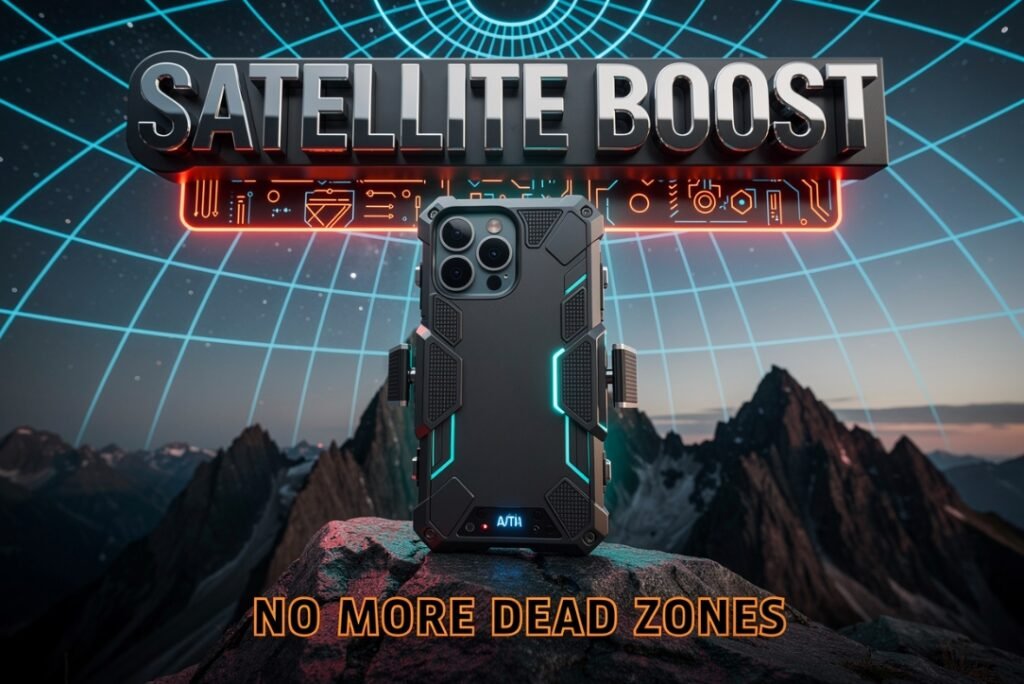
Apple aims to solve these physics problems with external hardware. The tech giant has filed a patent for an accessory case that acts as a “phased array antenna.” This is not just a plastic shell. It contains sophisticated electronics that work together with your iPhone.
The case uses multiple tiny antennas to steer signal beams electronically toward the satellite.
You do not need to physically wave your phone around to find a signal with this tech. The case does the heavy lifting. It creates a stronger, more focused beam that can lock onto satellites moving across the sky. The patent illustrations show a fold-out design. One part of the case might flip up to point skyward while you use the screen normally.
The case connects to the iPhone without messy cables. It likely uses:
- Near-Field Communication (NFC): To pair instantly and transfer low-speed data.
- Capacitive Coupling: To transfer radio signals physically through the case body.
- Dedicated Radios: To handle the high-power transmission that would otherwise overheat the phone.
This external boost means the signal acts much louder and clearer to the satellite above.
Moving Beyond Emergency SOS to Real Internet Data
The biggest implication of this technology is the potential for data speed. Right now, satellite usage is for emergencies only. You use it when you are in trouble. But a high-gain antenna case could open the door for standard communication.
A stronger signal means you could potentially send photos, voice notes, or browse the web from the middle of the ocean.
This aligns with the broader industry race. Companies like SpaceX and T-Mobile are working on “Direct to Cell” technology. Apple needs to stay ahead. If this case hits the market, it turns the iPhone into a global communication tool. It appeals to hikers, maritime workers, and journalists working in conflict zones.
Here is how the experience could change:
| Feature | Current iPhone (Internal Antenna) | With Smart Satellite Case |
|---|---|---|
| Connection Speed | Very Slow (Text only) | Faster (Potential for media) |
| Setup Time | Must point and hold phone | Auto-tracking beam |
| Battery Impact | High drain on phone | Case has its own battery |
| ** reliability** | Blocked by trees/hands | High gain cuts through interference |
The Cost of Staying Connected in Remote Areas
There is always a catch with new technology. This advanced capability will likely not be free or built into every phone. The patent suggests this is a separate purchase. Users will have to decide if carrying a potentially bulky case is worth the extra safety.
Travelers might need to buy this specific hardware before heading on trips where cellular service is weak.
This creates a new category of “Pro” accessories. It might not be for the average city dweller. But for anyone venturing into national parks or remote highways, it could be essential gear. There is also the question of service plans. Higher data speeds usually come with subscription costs. Apple currently offers satellite SOS for free for a limited time, but a high-speed data service via this case would likely carry a monthly fee.
Pros of the Satellite Case:
- Reliable signal in dead zones.
- Potential for real internet usage.
- Saves iPhone battery life.
Cons of the Satellite Case:
- Adds bulk and weight to the phone.
- Likely an expensive extra purchase.
- May require a paid subscription plan.
The patent shows Apple is serious about ruling the satellite space. They are not content with just basic SOS features. They want to own the entire ecosystem of off-grid communication.
Summary
Apple is developing a cutting-edge smart case to overcome the physical limitations of iPhone satellite connectivity. This accessory uses phased array technology to steer signal beams and boost data transmission speeds. While current phones only support basic emergency texts, this case could unlock voice calls and internet access in remote locations. It represents a shift toward specialized hardware for travelers, though it will likely require an extra purchase. This innovation proves Apple is betting big on a future where you are never truly out of touch.
We want to hear from you. Would you buy a bulky case if it guaranteed internet access in the mountains? Drop your thoughts in the comments below. If you love tech news, share this story on social media using #iPhoneSatellite.