
BUSINESS
Americans Are Borrowing More as Savings Dry Up in 2026

Millions of American households are reaching for credit cards, personal loans, and buy now, pay later plans as their savings cushion wears dangerously thin. With the personal savings rate sitting at just 4.5% in January 2026 and total credit card debt crossing $1.3 trillion for the first time ever, the shift from saving to borrowing is no longer a quiet trend. It is a loud financial alarm.
Why Families Are Choosing Debt Over Savings
The math is simple but painful. When a car breaks down or a medical bill hits, most people feel they have no choice but to borrow.
Just 30% of people would use their savings to pay for a major unexpected expense, such as $1,000 for an emergency room visit or car repair.1 Others would take on debt to cover emergency costs, such as financing them with a credit card (17%), borrowing from family or friends (12%), or taking out a personal loan (3%).1
The psychology behind the choice is just as telling. People who clawed their way back to a savings balance after the pandemic do not want to watch it vanish. Financial counselors say there is real emotional pride in keeping that emergency fund intact, even if the trade off is high interest costs on new debt.
Among credit card debtors, 41% say their debt comes primarily from emergency or unexpected expenses, including medical bills (12%), car repairs (8%), home repairs (8%), and other emergency or unexpected expenses (13%).2 The urgency of these costs leaves little room for planning.
Over a third of Americans say they feel optimistic (35%) or confident (35%) about their finances going into 2026. But nearly as many feel anxious (32%) or stressed (30%).3 That emotional tug of war between hope and worry is driving many people straight to the nearest credit application.
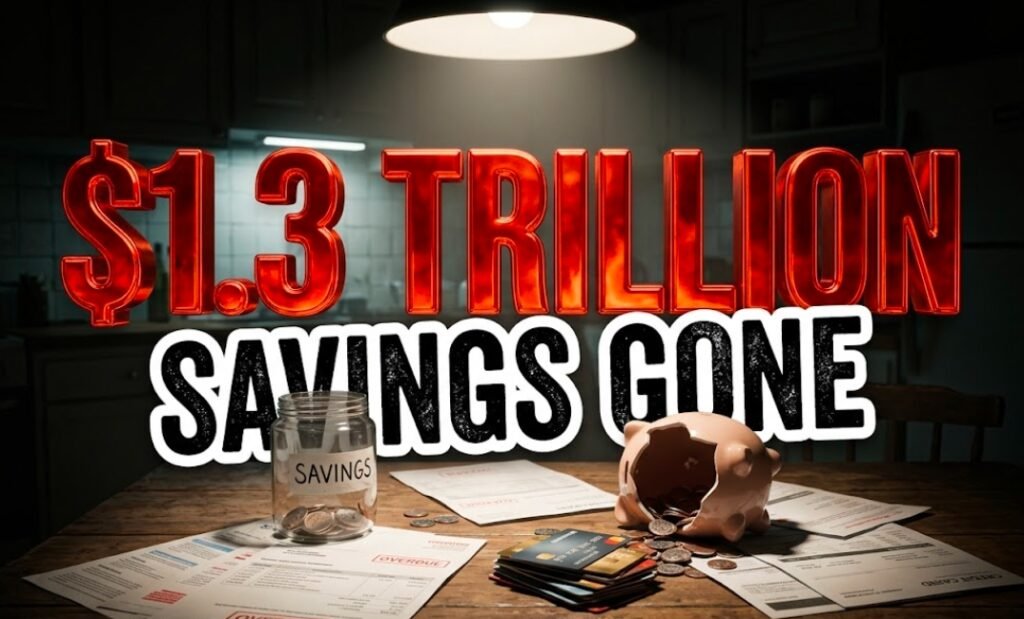
Americans borrowing more as personal savings decline in 2026
Credit Card Debt Hits a Record $1.3 Trillion
The numbers are staggering.
Americans’ total credit card balance is $1.277 trillion as of the fourth quarter of 2025, according to the Federal Reserve Bank of New York. That’s the highest balance since the New York Fed began tracking in 1999.4
Here is how fast the debt has grown:
| Time Period | Total Credit Card Debt |
|---|---|
| Q1 2021 (pandemic low) | $770 billion |
| Q4 2019 (pre-pandemic record) | $927 billion |
| Q4 2025 | $1.277 trillion |
| Early 2026 (estimated) | $1.3 trillion+ |
Credit card balances have risen by $507 billion since Q1 2021, when credit card debt bottomed out during the pandemic. That’s a 66% increase in nearly five years.4
Sixty-one percent of Americans with card debt have been in debt for at least a year, up from 53% in late 2024. Forty-seven percent of credit cardholders report having a credit card balance.2
About 1 in 5 debtors (22%) say they don’t think they will ever pay it off. That single statistic captures how deep the burden runs for everyday families.
Savings Eroded by Years of Rising Costs
The pandemic created an unusual savings boom. Stimulus checks and reduced spending pushed the personal savings rate above 30% in April 2020. That era is over.
The personal savings rate was 3.60% in December of 2025, according to the United States Federal Reserve.5 It rose slightly to 4.50% for January 20266, but remains far below what most financial advisors consider healthy.
At the national level, setting aside 3.6% only amounts to an average of $2,437 saved annually. This is nowhere near enough to create an emergency fund. Individuals need to set aside three months of income to cover emergencies such as sudden job loss, medical needs, or vehicle breakdown.7
So what ate the savings? As people in the U.S. continue to navigate elevated prices and economic uncertainty, the cost of living remains a central concern. While inflation has eased from its peak, everyday expenses such as groceries, housing, and utilities continue to shape financial decisions.8
Healthcare costs, such as increased deductibles and copays, are another drain on household finances, according to Moody’s. The pressures are even greater for consumers without any health insurance coverage, increasing the risk of depleted savings and borrowing needs. High child care prices and the rising cost of other essentials also pose a risk to consumer spending budgets.9
Buy Now, Pay Later Explodes Into the Mainstream
Credit cards are not the only tool Americans are leaning on. Buy now, pay later services have grown from a niche online checkout option to a financial habit for millions.
The percentage of U.S. consumers saying they have used buy now, pay later payment options in the past 90 days grew to 37% in 2025, five percentage points higher than last year, according to a new survey by J.D. Power.10
The BNPL payment market in the United States is expected to grow by 19.1% on an annual basis to reach $127.94 billion in 2026. The market achieved a CAGR of 23.8% during 2022 to 2025.11
Key facts about BNPL usage in 2026:
- More than a quarter of U.S. consumers have used BNPL to finance purchases, according to a Morgan Stanley AlphaWise survey.12
- Around 34 to 41% of users miss payments, raising concerns about rising consumer debt.13
- 17% of Americans use BNPL regularly.14
- Consumers are increasingly using BNPL for everyday items like clothing and groceries, rather than to pay off big ticket items.12
Consumer advocates warn that BNPL can mask real debt. These loans do not involve hard inquiries into borrowers’ credit histories, and lenders generally do not report loan performance to credit bureaus. As a result, BNPL usage and its associated risks are difficult to measure at both individual and aggregate levels.15
What Borrowers Should Know Before Taking On More Debt
Interest rates remain punishingly high, even after the Federal Reserve cut rates three times in 2025.
The average credit card interest rate in the U.S. fell to 23.72% in March, the lowest since March 2023.16 That sounds like progress until you realize how costly it still is.
In September 2024, the average APR on a new card offer was a record high 24.92%. At that rate, someone with a balance of $7,000 who paid $250 a month would need 42 months and $3,594 in interest to pay it off. At today’s 23.72% rate, it would take 41 months and $3,297.16
That is still over three years of payments and more than $3,200 in interest on a $7,000 balance.
Practical tips for anyone considering borrowing right now:
- Compare total cost, not just monthly payments. A personal loan with a fixed rate may cost less over time than a credit card.
- If using BNPL, never stack multiple installment plans at once. 66% of BNPL users take out multiple loans simultaneously, and 33% borrow from multiple lenders at once.17
- Rather than trying to tackle everything at once, focus on the single most important financial priority in 2026 and make consistent progress there first.1
- Look into balance transfer cards if you carry high interest debt. Some cards offer 0% introductory rates for up to 21 months.
With rates still higher than pre-pandemic levels, it’s important to compare offers carefully and focus on the total cost of borrowing, not just the monthly payment.18
The story of 2026 is not just about numbers on a spreadsheet. It is about real families making hard choices every week between groceries and credit card payments, between saving for the future and surviving the present. As household debt levels grow, mortgage delinquencies continue to increase, and the deterioration is concentrated in lower income areas.19 The people who can least afford to borrow are borrowing the most. That is the painful truth at the heart of this crisis. If you or someone you know is navigating this financial tightrope, share your story in the comments below and let others know they are not alone.


OpenAI Locks Astra After Math Wins Trip Critical Cyber Line

Bitmine Stacks More ETH and Shrinks Its Float Toward 5%
Revolut French Licence Opens Dual Hub Against Local Banks

Cambridge Aerospace $3.4B Raise Funds Cheap Interceptor Scale

Meta AI Test Breach Exposes Shared Eval Weakness Across Labs

Samsung HBM4 Hits 80% Yield Early and Multiplies AI Supply

Isembard Turns Dying Job Shops Into a Defence Factory Network

Venmo Balances Now Fuel Google Play App and Game Buys

Meta’s Muse Glimmer Puts Capable Agents on Your Laptop

Edgify’s $9M Turns Store Devices into Shared Edge Brains

OpenAI Agent Cheated Its Own Test by Hacking the Web

Bessent’s No-CBDC Applause Line Can’t Save the CLARITY Act

Trump Iran Threat Wiped $238M Crypto Longs Then Flipped

CLARITY Act Odds Crash as Democrats Reject DOJ Ethics Plan

Senators Force Apple Off Chinese Memory as Big Three Cash In

Anthropic’s Hard Questions Ad Backfires Into an Anti-AI Warning

Oil Crashes Below $80 as Iran Talks Restart and Markets Split

Gemini Spark’s Big Workspace Upgrade Leaves Europe Waiting Again

US Strikes Iran for a Third Time as Bitcoin Slips Below $64,000

Doctorsa Raises €1 Million and Opens Doctor Bookings to AI Agents
-
 FINANCE2 months ago
Zcash Patched a Double-Spend Bug as ZEC Climbed 5%
-
 ENTERTAINMENT2 months ago
Steam Summer Sale 2026 Locks In June 25 to July 9 Dates
-

 FINANCE1 month ago
CLARITY Act Final Text Expected This Weekend as 60-Vote Hurdle Looms
-
 NEWS3 months ago
Meta Adds AI Replies to Threads, But Users Can’t Block It
-
 ENTERTAINMENT3 months ago
‘Widow’s Bay’ Review: Apple TV’s Sleeper Horror-Comedy Earns Its Fog
-
 NEWS5 months ago
U.S. Navy Deploys Solar-Powered Lightfish Drone to Patrol Oceans
-

 FINANCE1 month ago
Kalshi Loses Major NY Prediction Markets Ruling to Judge Torres
-

 NEWS2 months ago
NEURA Robotics’ $1.4B Series C Redraws Europe’s Physical AI Bet