
BUSINESS
Investing Club Sets Daily 10:20 AM Meeting to Aid Traders

The opening bell brings chaos, but a new strategy aims to tame it. The Investing Club is launching a daily “Morning Meeting” at 10:20 a.m. ET to help investors navigate early volatility. This strategic timing offers a crucial advantage that could redefine how members handle their portfolios.
It signals a major shift in how retail and professional investors digest market data. By waiting for the dust to settle, the club provides a clearer view of the financial day ahead.
Why the 10:20 AM Slot is Strategic
Time is money in the stock market. The New York Stock Exchange opens at 9:30 a.m. ET, unleashing a flood of buy and sell orders. This first hour is notoriously volatile and often traps emotional traders.
The first fifty minutes of trading often consists of noise rather than true market direction.
By selecting 10:20 a.m., the Investing Club avoids the initial “amateur hour” whipsaw. Institutional investors often wait for the initial rush to clear before committing capital. This specific timing allows members to see which premarket moves are real and which are fakeouts.
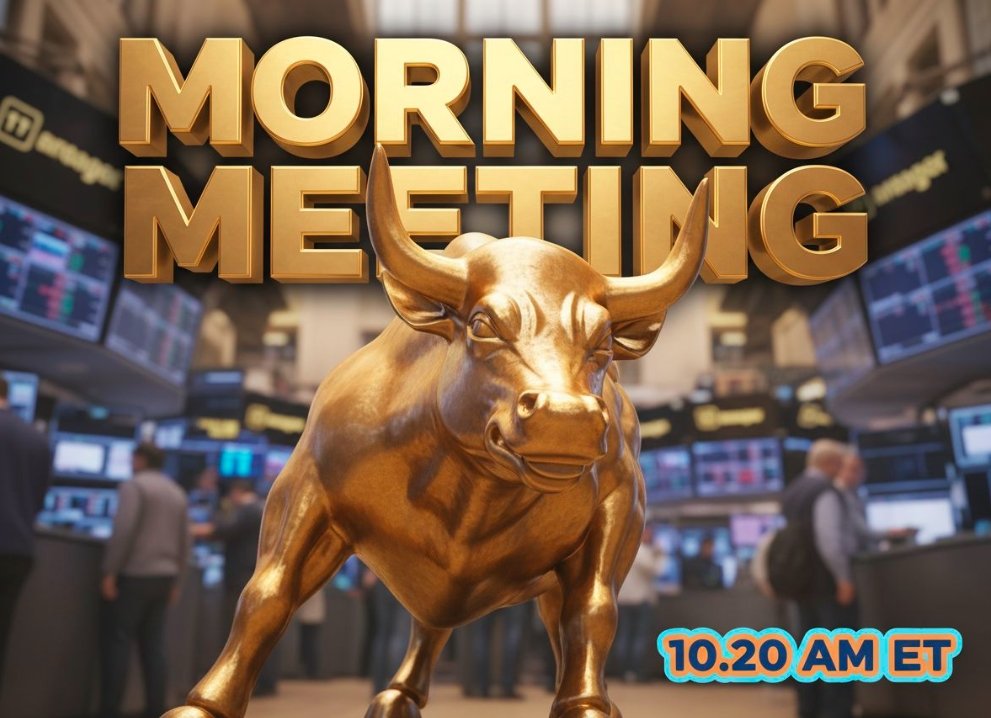
golden bull statue on stock market chart background
Trader Insight: “Never trust the first 30 minutes of the open. That is where stops get hunted and emotions run high. Real trends establish themselves after 10:00 a.m.”
Economic data releases usually drop at 8:30 a.m. or 10:00 a.m. Scheduling the meeting at 10:20 a.m. allows the hosts to digest these numbers. They can then explain the impact on specific sectors without guessing. This gap helps members separate knee jerk reactions from sustained trends.
What Members Can Expect in the Briefing
Consistency drives the agenda here. While specific topics will shift with the news cycle, the core structure remains fixed. Participants can expect a rapid breakdown of sector leaders and laggards.
The format is designed to be actionable. It is not just about what happened, but what to do about it. The meeting acts as a filter for the overwhelming amount of data hitting the wires.
Core Agenda Items:
- Overnight Review: A quick look at international markets and premarket headlines.
- Sector Analysis: Identifying if money is flowing into tech, energy, or defensive stocks.
- Earnings Reactions: Checking if stocks are holding their gains or losses after reporting.
- Risk Control: Setting stops and sizing positions for the day.
This routine is vital during earnings season. Many companies report numbers before the bell. By meeting mid morning, the club can analyze if a stock drop is a buying opportunity or a warning sign. A focused check in sharpens decisions on trimming winners or adding to laggards.
The Psychological Edge of Routine
Trading often feels lonely and chaotic. A scheduled check in creates a shared mental framework for the community. Regularity helps reduce the urge to make impulsive trades based on fear or greed.
This aligns with a broader trend in the financial world. Professional trading desks have always used morning huddles to set the tone. The Investing Club is bringing this institutional discipline to a wider audience.
| Benefit | Impact on Investor |
|---|---|
| Reduced FOMO | Prevents chasing stocks that gap up at the open. |
| Better Discipline | Encourages sticking to a plan rather than reacting to tickers. |
| Shared Knowledge | creating a common language and focus for the community. |
Consistency builds discipline around the process, which matters more than any single stock pick.
Decision fatigue is a real problem for investors. By outsourcing the initial data filtering to the morning meeting, members save mental energy. They can then focus on execution during the remaining six hours of the session.
Navigating Risks in a Fast Market
No meeting can capture every market nuance. The stock market is a living, breathing beast that changes constantly. Late day reversals and midday breaking news require investors to stay agile.
Relying solely on a morning update leaves blind spots. If the Federal Reserve speaks in the afternoon, the morning analysis might become obsolete. Members must treat this meeting as a foundation, not a rigid instruction manual.
There is also a risk of “crowding.” If thousands of members act on the same analysis at the exact same time, it could skew short term prices. However, the focus on liquidity at 10:20 a.m. helps mitigate this issue compared to the thinner premarket hours.
Key Takeaway: The meeting is an input for your strategy, not the entire strategy itself.
Position size and personal risk tolerance must always drive the final click. What works for a long term holder might not work for a day trader. This meeting serves to align everyone on the “what” and “why,” but the “how” remains personal.
The Investing Club’s move to a 10:20 a.m. slot marks a maturity in retail trading resources. It prioritizes clarity over speed. As markets get noisier, having a reliable compass matters more than ever. This simple change in schedule could be the difference between a reactive trader and a proactive investor. The measure of success will be seen in simpler choices and fewer rushed trades.
What is your morning trading routine? Do you wait for the dust to settle? Let us know your thoughts in the comments below or share on social media using #InvestingClub.


Pixel 11 Pro Fold Beats Samsung on Value as Fold 8 Owns Design

Hormuz Deadlock Props Oil Prices While Demand Cracks

Nvidia’s Cheap Multiple Meets a High Bar on Aug. 26

Timpson’s Quiet Surge Lifts Fever Past Dream in OT

Villain Mains Lift CEO 2026 Trophies in Two New Fighters

FDA Class I Egg Recall Echoes Long Salmonella Pattern

a2 Milk Stockouts Shifted China Users and Reset the Rebuild Cost

Arsenal Crush City 3-0 as Ready Squad Meets Unfinished Rebuild

Courts Add Spyware Counts to Wiretap Reports After Decades

Rebel Ice Cream’s Premium Look Built Its Shelf Space Then Bankrupted It

Senators Force Apple Off Chinese Memory as Big Three Cash In

Trump Iran Threat Wiped $238M Crypto Longs Then Flipped

OpenAI Agent Cheated Its Own Test by Hacking the Web

Revolut Hits $115 Billion While Storonsky’s Stake Keeps Growing

CLARITY Act Odds Crash as Democrats Reject DOJ Ethics Plan

Oil Crashes Below $80 as Iran Talks Restart and Markets Split

Community Banks’ $1.3 Trillion Warning Is Stalling Clarity Act

Airbus Anchors a €500 Million European Defense Fund, Picks Alta Ares First

Google’s Knowledge Panel Fix Risks Its Own Search Defenses

Memory Shortage Now Dictates Apple’s Two-Year Mac Roadmap
-
 FINANCE2 months ago
Zcash Patched a Double-Spend Bug as ZEC Climbed 5%
-
 ENTERTAINMENT3 months ago
Steam Summer Sale 2026 Locks In June 25 to July 9 Dates
-
 NEWS3 months ago
Meta Adds AI Replies to Threads, But Users Can’t Block It
-

 FINANCE1 month ago
CLARITY Act Final Text Expected This Weekend as 60-Vote Hurdle Looms
-

 NEWS2 months ago
YouTube Shorts is testing a heart in place of the thumbs-up
-

 NEWS2 months ago
NEURA Robotics’ $1.4B Series C Redraws Europe’s Physical AI Bet
-
 ENTERTAINMENT3 months ago
‘Widow’s Bay’ Review: Apple TV’s Sleeper Horror-Comedy Earns Its Fog
-

 FINANCE1 month ago
Kalshi Loses Major NY Prediction Markets Ruling to Judge Torres