
LIFESTYLE
Maryland Coastal Living: The Stark Reality Behind the Summer Sun

The neon lights flicker out and the crowds vanish from the boardwalk as soon as Labor Day passes. For millions of tourists, Maryland beach towns are summer paradises defined by throngs of people and endless entertainment. But for a growing number of new full time residents, the off season reveals a starkly different world that requires grit and careful planning.
This transition from resort hub to quiet community exposes the fragile infrastructure of coastal life. Newcomers attracted by lower winter rents or the romance of the ocean often face immediate shocks regarding healthcare access and isolation. The reality of year round living is a complex balance between the serenity of an empty beach and the struggle of a seasonal economy.
The Economic Impact of the Ghost Town Effect
The most immediate shock for new residents is the drastic reduction in population and services. Ocean City can swell to nearly 300,000 people during peak July weekends. Yet the permanent population hovers just under 7,000 residents during the winter months. This massive contraction forces local businesses to shut down or severely limit hours.
Residents often find themselves driving 30 minutes inland just to find a pharmacy or grocery store open past 6 PM.
The economic engine of these towns stalls significantly when the tourists leave. Service workers who thrived on tips in August often scramble to piece together employment in November. This creates a unique economic anxiety that permeates the town. Locals refer to this period as the “hustle season” where survival depends on savings accrued during the summer.
Recent data from the Maryland Department of Commerce indicates that tourism accounts for a massive portion of the local GDP in Worcester County. When that revenue stream freezes, the municipal services do not stop. This puts pressure on year rounders to support the few businesses that brave the winter months.
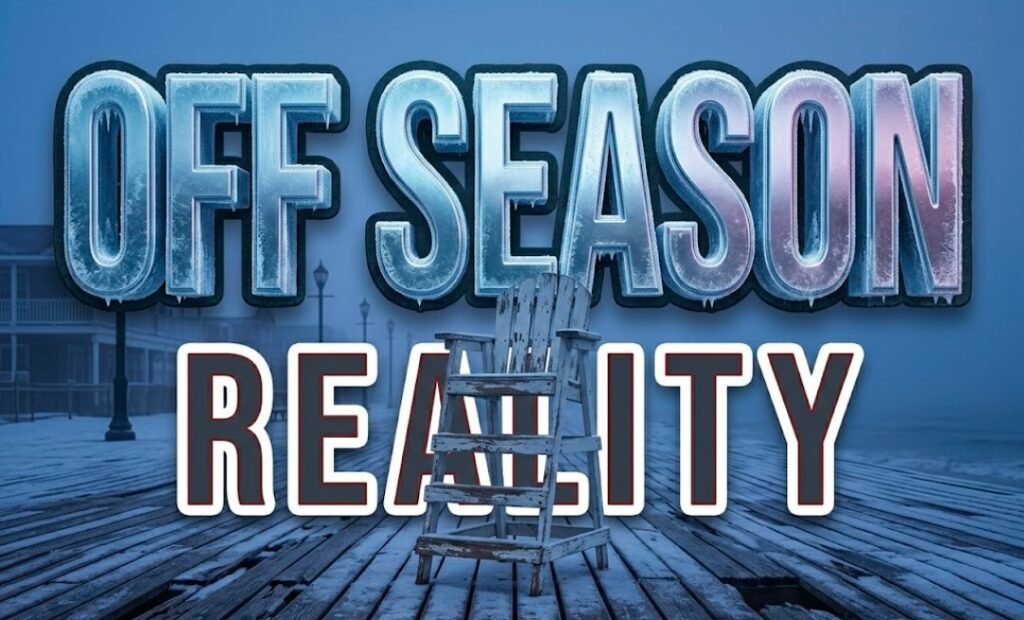
empty maryland ocean city boardwalk winter snow lifeguard chair
By The Numbers: The Seasonal Swing
- Summer Population: ~300,000 (Peak)
- Winter Population: ~7,000
- Business Operation: Approx. 60% of boardwalk businesses close fully.
- Unemployment: Often doubles in coastal counties during Q1.
Housing Scarcity and The Rental Rollercoaster
Housing presents a paradoxical challenge in Maryland beach communities. There appears to be an abundance of shelter with thousands of empty condos lining the coast. However finding a stable and affordable annual lease is incredibly difficult. Landlords prefer the lucrative weekly rental model for summer tourists.
Many workers are forced into “winter rentals” where they must vacate by May. This creates a nomadic class of residents who shuffle between properties or move inland during the high season. The lack of workforce housing threatens the very service economy that the town relies upon.
Year round inventory is shrinking as investors purchase single family homes to convert them into short term vacation rentals.
Local governments are attempting to address this. There are discussions about zoning changes to encourage mixed use developments. But for now the market remains volatile. Real estate experts note that while purchasing prices may dip slightly in winter the carrying costs like HOA fees and insurance remain high.
Navigating Weather and Infrastructure Gaps
The romantic image of a winter storm watching the waves crash clashes with the dangerous reality of coastal flooding. Rising sea levels and land subsidence are making “sunny day flooding” a common occurrence in towns like North Beach and Ocean City. This is not just about hurricanes. It is about high tides blocking the only road to the grocery store.
Residents must become amateur meteorologists to plan their daily commutes around tide charts and wind direction.
Infrastructure maintenance often occurs during the off season. This means road closures and construction noise replace the sound of tourists. It is necessary work but it disrupts daily life. The drainage systems in older parts of town struggle to keep up with intense rainfall events.
Full time living requires a specific preparedness kit that differs from the typical suburban home.
| Summer Preparedness | Winter Preparedness |
|---|---|
| Sunscreen and hydration | Waterproof boots and windbreakers |
| Traffic app for congestion | Tide chart app for road flooding |
| AC maintenance | Pipe insulation against freezing winds |
| Crowd avoidance strategies | Isolation coping strategies |
Community Resilience in Isolation
Social isolation is a significant mental health factor for those used to city living. The bustling streets become desolate. The silence can be deafening for some. However this isolation fosters an incredibly tight knit community among those who remain.
The “locals only” vibe shifts from territorial to supportive as neighbors rely on each other for safety and socialization.
Community centers and libraries become vital lifelines. They offer the only consistent gathering spaces when bars and restaurants close. Volunteerism spikes in the winter. Locals organize beach cleanups and food drives to support neighbors struggling with seasonal unemployment.
Healthcare remains a critical vulnerability. While urgent care centers abound for summer scrapes, access to specialists is limited. A trip to a cardiologist or pediatrician often involves a significant drive to Salisbury or Annapolis. Telehealth has bridged some gaps. But the physical distance from major medical centers remains a concern for retirees.
Key Survival Tips for New Residents:
- Audit your budget: Ensure you have six months of expenses saved for the slow season.
- Find your tribe: Join a local club or church immediately to combat winter loneliness.
- Check your zones: Verify your flood zone and evacuation route before moving in.
- Support local: Spend money at the businesses that stay open year round to keep them viable.
The Maryland coast offers a unique beauty in the winter. The sunsets are crisp and the wildlife returns to the dunes. But enjoying it requires respecting the environment and understanding the economic realities. It is a life of resilience. It is not for everyone. But for those who stay it offers a profound sense of place that summer visitors will never understand.


Nvidia Buys Hugging Face, the Platform That Turned It Down

OpenAI Names GPT-6 Astra AGI, Then Locks It Down

Relay Q Bets a $150 Puck Can Beat Dictation Apps

Accel Backs Atira to Automate Industrial Sales Engineering

Beyerdynamic Hides a Spare Battery in the Aventho Y

Lummis Pushes the CLARITY Act to Export Wyoming’s Crypto Banks

AI Exposure Turns a Cloud Beat Into a Selloff

Citadel’s XRP ETF Filing Looks Like Dealer Inventory

Revolut’s OCC Nod Starts an 18-Month US Bank Clock

British Business Bank’s Zinc Fund Will Mint 80 Startups

Walter’s TWG Insists No Fraud as Insurer Probes Force Cleanup

30-Year Yield Hits 5.32% Highest Since 2007 as Debt Supply Locks In Costs

PCE Stays at 3.7% as Gas and Tariffs Outrun Coming Revisions

Astute’s $1.2M bet makes B2B creator deals feed AI discovery

Strategy Parks $1.59B Cash While Bitcoin Stack Stays Flat

SpaceX Stock Rebound Tests Real Demand Before Huge Unlock

The 20% Savings Ideal Meets a 2.7% Reality Check

Amber’s €7M locks Mittelstand knowledge inside Europe

Monzo chair Gary Hoffman exits after board revolt fallout

AI data centers win as RAM kits jump nearly 500 percent
-
 FINANCE3 months ago
Zcash Patched a Double-Spend Bug as ZEC Climbed 5%
-
 ENTERTAINMENT3 months ago
Steam Summer Sale 2026 Locks In June 25 to July 9 Dates
-

 FINANCE2 months ago
CLARITY Act Final Text Expected This Weekend as 60-Vote Hurdle Looms
-
 NEWS4 months ago
Meta Adds AI Replies to Threads, But Users Can’t Block It
-

 NEWS3 months ago
YouTube Shorts is testing a heart in place of the thumbs-up
-

 NEWS1 month ago
Senators Force Apple Off Chinese Memory as Big Three Cash In
-

 NEWS3 months ago
NEURA Robotics’ $1.4B Series C Redraws Europe’s Physical AI Bet
-
 ENTERTAINMENT5 months ago
Extraction 3 Is Officially Coming to Netflix in 2027