
BUSINESS
Retail Investors Target High Short Interest Stocks Like Opendoor Again

Wall Street is witnessing a familiar surge in activity as retail traders once again flock to heavily shorted stocks. Individual investors are coordinating on social media platforms to identify companies with high betting pressure against them. Stocks like Opendoor Technologies and Kohl’s Corporation have emerged as prime targets in this renewed push. This movement signals that the energy of the 2021 meme stock era has not faded but evolved into a more calculated strategy.
The Return of the Retail Swarm
The market is seeing a distinct echo of the volatility that defined the trading landscape four years ago. Retail investors are using sophisticated screening tools to find companies where hedge funds have built large short positions. The goal remains the same as it was during the GameStop saga. They want to force a short squeeze by driving prices up and compelling institutional sellers to buy back shares at a loss.
Social media forums and discord servers are currently buzzing with due diligence reports on specific tickers. Traders are sharing data points regarding “days to cover” and “borrow fee rates” to validate their thesis.
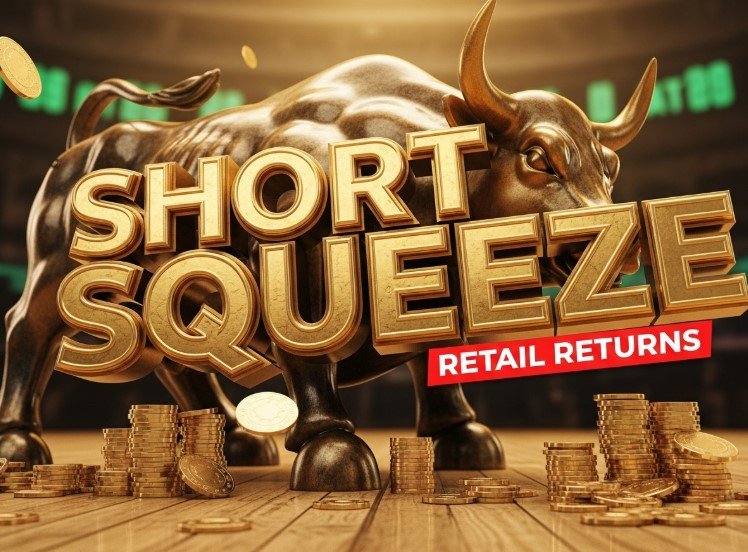
stock market short squeeze chart on smartphone screen
Key Factors Driving the Current Rally:
- High Short Interest: Traders are strictly filtering for stocks with over 20 percent of their float sold short.
- Social Sentiment: A coordinated buzz on platforms like X and Reddit creates a viral buying loop.
- Option Flow: Massive buying of call options forces market makers to hedge by buying the underlying stock.
This is not just random gambling anymore. It is a structural test of market mechanics. The retail crowd is proving they can still move the needle on billion-dollar valuations when they act in unison.
Why Opendoor and Kohl’s Are the New Targets
Opendoor and Kohl’s fit the perfect profile for a classic squeeze setup in the current economic environment. Both companies face significant fundamental challenges that attracted short sellers in the first place. Opendoor struggles with a volatile housing market and interest rate shifts. Kohl’s is fighting for relevance in a declining department store sector.
However, these bearish bets have created a coiled spring effect.
Opendoor (OPEN) has seen its short interest climb as doubters question its digital home-flipping model. Yet, any positive news regarding interest rate cuts sends the stock soaring as shorts rush to the exit.
Kohl’s (KSS) presents a value trap scenario that short sellers love but retail traders see as an opportunity. Rumors of buyouts or real estate asset sales often trigger sudden spikes. This leaves bearish funds trapped in their positions.
Comparison of Current Squeeze Targets
| Feature | Opendoor Technologies (OPEN) | Kohl’s Corporation (KSS) |
|---|---|---|
| Primary Sector | Real Estate Technology | Retail Department Store |
| Short Thesis | High interest rates hurt housing volume. | Declining foot traffic and sales. |
| Bull Case | Tech-driven housing recovery. | Real estate value and dividends. |
| Volatility Level | Extremely High | Moderate to High |
Short sellers are playing a dangerous game with these names. They are betting on bankruptcy or irrelevance. Retail traders are betting on survival and momentum.
How T+1 Settlement Changes the Game
The battlefield has changed significantly since the chaos of 2021 due to new market regulations. The United States moved to a T+1 settlement cycle in May 2024. This means trades now settle in one business day instead of two.
This change was designed to reduce risk for brokers and clearinghouses.
However, it has an unintended side effect for retail momentum traders. Capital now frees up faster. Traders can sell a position on Monday and have their cash ready to redeploy into a new target by Tuesday. This velocity of money allows trends to accelerate much quicker than before.
A squeeze that previously took a week to develop might now play out in just 48 hours.
This speed works both ways. It allows for rapid compounding of gains during a rally. It also means panic selling can drain liquidity from a stock faster than ever before.
The Risks of Chasing the Momentum
History teaches us that these parabolic moves often end in tears for latecomers. The fundamentals of a company eventually matter once the technical squeeze runs out of steam.
If Kohl’s fails to turn around its sales, or if the housing market freezes up for Opendoor, the stock price will revert to reality.
Brokers have also updated their risk management systems significantly. They are quicker to increase margin requirements on volatile stocks. This prevents traders from leveraging up too heavily on risky bets.
“The biggest risk in a short squeeze is not the stock price itself, but the timing of your exit.”
Investors must be wary of the “bag holder” phenomenon. This occurs when early traders cash out their profits while new buyers are still entering at elevated prices.
Watch out for these warning signs:
- Trading volume drops significantly while price remains high.
- Social media sentiment shifts from analysis to pure hype.
- Insiders or institutions start selling large blocks of shares into the rally.
Wall Street Strikes Back
Institutional investors are not sitting idle while retail traders attack their positions. Hedge funds have adapted their strategies to survive these volatility events. Many funds now use AI-driven algorithms to detect social sentiment spikes in real time.
When they see a ticker trending on social media, they may cover their shorts early to avoid a catastrophic loss.
Some institutions even join the long side of the trade temporarily. They ride the wave up alongside retail traders before shorting the stock again at the top. This makes the price action even more erratic and difficult to predict.
The narrative of “Retail vs. Wall Street” is compelling. But the reality is a complex ecosystem where both sides are constantly evolving their tactics.
Conclusion
The resurgence of interest in heavily shorted stocks like Opendoor and Kohl’s proves that the retail trading revolution was not a one-time event. Individual investors remain a powerful force capable of challenging institutional logic. While the rules of the game have changed with faster settlements and smarter algorithms, the core psychology remains the same. Market participants are always looking for the next big inefficiency to exploit. Whether this current wave ends in record gains or painful losses will depend on discipline and timing.
What do you think about the current rally in shorted stocks? Are you watching any specific tickers? Share your thoughts and join the conversation below using #StockMarketNews.


Conor Oberst’s Trump Writer’s Block Exposes a Bigger Crisis

Siemens Wires Its Chip Software Into NVIDIA’s Quantum Agents

Pixel 11 Price Hikes Reveal Memory Chipmakers’ Record Profits

Charles Schwab Backs the CLARITY Act as Odds Collapse

Nodes Upgrading to XRP Ledger’s xrpld 3.2.0 Fall Out of Sync

Trump Halts Iran Strikes as Bitcoin Stays Stuck Near $64K

ChatGPT’s Health Push Repeats a Bet That Killed Two Rivals

Crypto Rallies on Iran Truce While Fed Hike Odds Triple

Samsung’s New Lockout Rule Targets Thieves and Police Forensic Tools

Gemini Daily Brief Tests Custom Prompts, a Year Behind Samsung

CLARITY Act Final Text Expected This Weekend as 60-Vote Hurdle Looms

Kalshi Loses Major NY Prediction Markets Ruling to Judge Torres

Fed Minutes Cite AI Demand as Inflation Risk, Put a 2026 Hike Back on the Map

Marker AI Writing Startup Lands $13M Seed Led by Index Ventures

Dota 2 Esports World Cup 2026: Spirit Defends $2M Title In Paris

Meta’s Muse Spark 1.1 Beats Rivals on Price, Trails on Coding

CS2 Premier Season 5 Lands With Cache and a C4 Damage Rework

Trump Calls Iran ‘Islamic Republic of Japan’ as Ceasefire Ends

ARC Intelligence Closes €4M Seed Round in Roughly a Week

Finto Picks Munich Over Silicon Valley After YC, Raises $3.4M
-
 FINANCE2 months ago
Zcash Patched a Double-Spend Bug as ZEC Climbed 5%
-
 ENTERTAINMENT2 months ago
Steam Summer Sale 2026 Locks In June 25 to July 9 Dates
-
 NEWS3 months ago
Meta Adds AI Replies to Threads, But Users Can’t Block It
-
 FINANCE3 weeks ago
CLARITY Act Final Text Expected This Weekend as 60-Vote Hurdle Looms
-
 ENTERTAINMENT2 months ago
‘Widow’s Bay’ Review: Apple TV’s Sleeper Horror-Comedy Earns Its Fog
-
 NEWS7 months ago
FolderFresh Review: This Free Tool Automates Windows File Organizing
-
 NEWS4 months ago
U.S. Navy Deploys Solar-Powered Lightfish Drone to Patrol Oceans
-
 FINANCE3 weeks ago
Kalshi Loses Major NY Prediction Markets Ruling to Judge Torres