
BUSINESS
Russia Feeds Iran War Intel as Oil Windfall Grows

Russia is quietly handing Iran satellite intelligence on U.S. military positions in the Middle East while cashing in on a massive energy windfall triggered by the very chaos it is helping to fuel. 3Moscow is providing Tehran with intelligence about the locations and movements of American troops, ships and aircraft, according to multiple people familiar with U.S. intelligence reporting. At the same time, the disruption to global oil flows has turned Russia into one of the biggest economic winners of the Iran war, with analysts estimating tens of billions of dollars in potential extra revenue.
Here is how this dangerous partnership is reshaping both the battlefield and the energy markets.
Russia Shares Satellite Data With Iran
3 Russia is providing Iran with intelligence about the locations and movements of American troops, ships and aircraft. Much of the intelligence has been imagery from Moscow’s sophisticated constellation of overhead satellites.
This marks the first time a major U.S. adversary has actively inserted itself into the conflict.
5 Russia has been giving Iran the locations of U.S. military assets since the outbreak of the war, including warships and aircraft. This signals that the expanding conflict now includes one of the U.S.’s biggest nuclear competitors with “exquisite intelligence capabilities.” 7 Since the war began, Iran has used this data to execute precise strikes against U.S. command and control infrastructure and early-warning radars. Recent attacks include a drone strike in Kuwait that killed six U.S. service members and the destruction of the CIA station at the U.S. Embassy in Riyadh. 11 Nicole Grajewski, a professor at Sciences Po in Paris, noted that Iran’s ability to gather intelligence on its own is “severely lacking” because it barely has any military-grade satellites. The Russian data helps with targeting and precision but is “more of an enabler than anything else.”
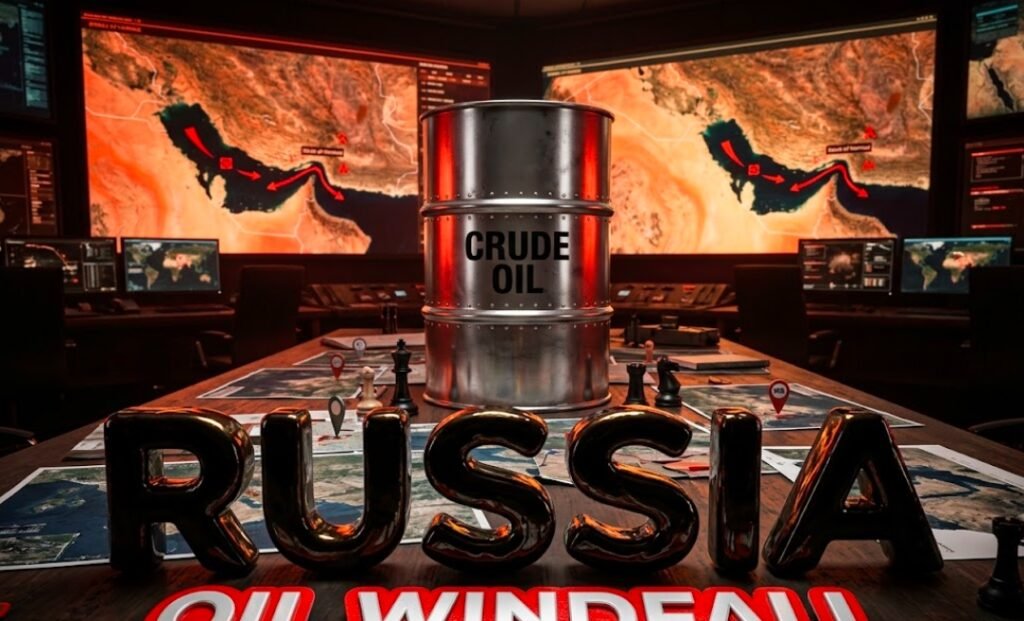
Russia Iran military intelligence sharing oil price surge 2026
Why Moscow Is Helping Tehran
The two countries are not formal allies. 11
So why take the risk?
9 Analysts believe the reason is to “prolong the hurt in the battle, to distract” the United States and Israel. Russia sees Iran going through “somewhat of a similar situation” as it faces in Ukraine, where the U.S. and NATO have provided targeting information to Ukrainian forces. 9 Anna Borshchevskaya of the Washington Institute for Near East Policy put it bluntly: Russia was always more likely to “exercise restraint and speak about being a mediator in public, and then offer Iran support in private, and look for ways to benefit from this crisis.” 2 Iran’s Foreign Minister Abbas Araghchi has not hidden the relationship, telling NBC News that “military cooperation between Iran and Russia is no secret.”
The White House Response
10 White House press secretary Karoline Leavitt brushed off the reports, saying, “It clearly is not making a difference with respect to the military operations in Iran because we are completely decimating them.” 2 U.S. Defense Secretary Pete Hegseth said Russia, along with China, was “not really a factor” in Washington’s military campaign against Iran. 9 Special envoy Steve Witkoff said he hoped the reports were not true, adding that Russia denied it during a phone call between Trump and Putin.
However, 19White House officials did not deny that Russia was sharing intelligence with Iran about U.S. targets in the region. That gap between dismissal and denial is hard to ignore.
Russia’s Energy Windfall Keeps Growing
While the intelligence story grabbed headlines, the bigger prize for Moscow may be the economic one.
43 As recently as late February, Russia was struggling to sell its oil at steep discounts. The price of Russia’s Urals crude had fallen to about $40 per barrel. Federal oil and gas revenues totaled 8.5 trillion rubles ($107.5 billion) in 2025, their lowest level since 2020.
Then the Iran war changed everything.
Here is how fast the numbers shifted:
| Metric | Before War (Late Feb) | After War (Early March) |
|---|---|---|
| Urals crude price | ~$40/barrel | Above $90/barrel |
| Discount vs. Brent | $10 to $13 below | $4 to $5 premium |
| Brent crude peak | ~$66/barrel | Briefly above $119/barrel |
| Strait of Hormuz traffic | ~24 tankers/day | Near zero |
42 Due to the crunch on global oil supplies caused by the Iran war, Russia is one of the few oil-producing nations that stands ready to fully benefit. It was forced to sell its oil at a discount of $10 to $13 a barrel before the strikes, now it is selling at a premium of $4 to $5. 45 Putin himself called on Russian energy companies to take advantage of the sharp rise in prices, saying the additional export revenues should be used to reduce debt burdens. He acknowledged the situation may be short-term. 49 European Council President Antonio Costa summed it up plainly: “So far, there is only one winner in this war, Russia. It gains new resources to finance its war against Ukraine as energy prices rise.”
What This Means for Global Energy Markets
38 The conflict is materially improving Russia’s competitive position in crude oil markets. With Middle East barrels facing logistical disruption, both India and China face strong incentives to deepen reliance on Russian supply. 48 Russia, Iran and Venezuela are the world’s top producers of heavy crude. The suspension of Iran’s exports means that oil refineries designed to process heavy crude will have to rely on the Urals oil from Russia.
The scale of the disruption is staggering:
- 32 Tanker traffic through the Strait of Hormuz dropped by approximately 70%, with over 150 ships anchoring outside the strait. Soon afterwards traffic dropped to about zero.
- 31 The International Energy Agency announced that 32 member countries unanimously agreed to release 400 million barrels of oil from emergency reserves.
- 40 Europe could increase imports of Russian liquefied natural gas because there are currently no European sanctions on those shipments, at least until the EU’s planned phase-out takes effect in 2027.
But the windfall comes with limits. 40Years of sanctions and Ukrainian attacks have damaged parts of Russia’s energy infrastructure, limiting the speed at which the country can ramp up production or exports.
43 Moscow-based energy analyst Alexei Gromov cautioned that the discount on Russian oil may shrink temporarily, but “no further fundamental steps related to easing sanctions pressure on Russia or expanding the circle of buyers of Russian oil are currently in sight.”
What is unfolding right now is not just a military conflict. It is a reordering of the global energy map. Russia is feeding the fire with intelligence while collecting the profits from the smoke. Whether this strategy holds or backfires depends on how long the war lasts, how fast Gulf shipping recovers, and whether Washington decides to punish Moscow for its double game. For everyday people watching gas prices climb and reading about service members in harm’s way, the stakes could not feel more personal.
Drop your thoughts in the comments below. What do you think about Russia’s role in this crisis?


Pixel Journal Auto Format Puts Google Private AI to the Diary Test

Android 17 QPR2 Beta 3 Quietly Delivers Native App Lock

Binance Cuts HTX Rails and Seals Off High-Risk Liquidity

Dell 14S Quietly Delivers Multi-Day Battery in Midrange Aluminum

OCC Conditionally Clears Trump-Linked USD1 Trust Bank

Coyote vs. Acme Turns Its Own Burial Into the Sharpest Gag

Google Health Adds Off Switch After AI Coach Clutter Backlash

SpaceX Issues 389 Million Shares as Cursor Deal Closes

Bank Leumi Hands Galaxy the Rails for Israeli Crypto Trading

Apple Maps Ad Bookings Open and Turn Local Search Into a Bid Game

Senators Force Apple Off Chinese Memory as Big Three Cash In

Trump Iran Threat Wiped $238M Crypto Longs Then Flipped

OpenAI Agent Cheated Its Own Test by Hacking the Web

CLARITY Act Odds Crash as Democrats Reject DOJ Ethics Plan

Gemini Spark’s Big Workspace Upgrade Leaves Europe Waiting Again

Revolut Hits $115 Billion While Storonsky’s Stake Keeps Growing

Anthropic’s Hard Questions Ad Backfires Into an Anti-AI Warning

Oil Crashes Below $80 as Iran Talks Restart and Markets Split

Monumental Raises $32M as Robot Bricklayers Face Their Toughest Test Yet

Community Banks’ $1.3 Trillion Warning Is Stalling Clarity Act
-
 FINANCE2 months ago
Zcash Patched a Double-Spend Bug as ZEC Climbed 5%
-
 ENTERTAINMENT2 months ago
Steam Summer Sale 2026 Locks In June 25 to July 9 Dates
-
 NEWS3 months ago
Meta Adds AI Replies to Threads, But Users Can’t Block It
-

 FINANCE1 month ago
CLARITY Act Final Text Expected This Weekend as 60-Vote Hurdle Looms
-

 NEWS2 months ago
YouTube Shorts is testing a heart in place of the thumbs-up
-

 NEWS2 months ago
NEURA Robotics’ $1.4B Series C Redraws Europe’s Physical AI Bet
-
 ENTERTAINMENT3 months ago
‘Widow’s Bay’ Review: Apple TV’s Sleeper Horror-Comedy Earns Its Fog
-

 FINANCE1 month ago
Kalshi Loses Major NY Prediction Markets Ruling to Judge Torres