
NEWS
Samsung Wide Foldable Claim Runs Into Thin Phone Math

Samsung’s wide foldable is the rumored Galaxy Z Fold 8 Wide, a shorter, broader book-style phone that mobile hardware tipster Ice Universe says will be unbeatable on weight and thickness. The claim matters because leaked computer-aided design (CAD, factory-style geometry used by accessory makers and renderers) dimensions point to a tougher argument: Samsung may be chasing pocket feel and screen shape more than a clean millimeter crown.
That leaves Samsung with an odd test before its rumored July Unpacked event in London. If the leaked numbers hold, the wide model may be lighter than the Galaxy Z Fold7, but its folded thickness would still face a hard comparison with OPPO’s latest foldable.
The Thinness Boast Arrives With Missing Numbers
Ice Universe, a mobile hardware tipster with a long record of Samsung display leaks, has put two words around the Galaxy Z Fold 8 Wide: weight and thickness. The problem is that the word doing the work, ‘unbeatable,’ arrived without the numbers that would settle the point.
Samsung Electronics, the Korean electronics group, has set a high internal bar already. The official Galaxy Z Fold7 design note from Samsung lists last year’s model at 4.2 mm open, 8.9 mm folded and 215 g, making it the thinnest and lightest Galaxy Z Fold released to date.
The wide phone therefore has to beat Samsung’s own baseline before it can taunt OPPO, Honor, Huawei or the coming Apple foldable. The leaked CAD set gives enough to make that fight interesting, but not enough to declare it over.
- 9.8 mm folded: the leaked closed thickness for the wide model before adding the camera bump.
- 4.9 mm open: the leaked open thickness, or 4.3 mm if protruding front bezels are excluded.
- 215 g: the official Galaxy Z Fold7 weight Samsung would need to undercut for the weight claim to land.
The CAD Math Cuts Both Ways
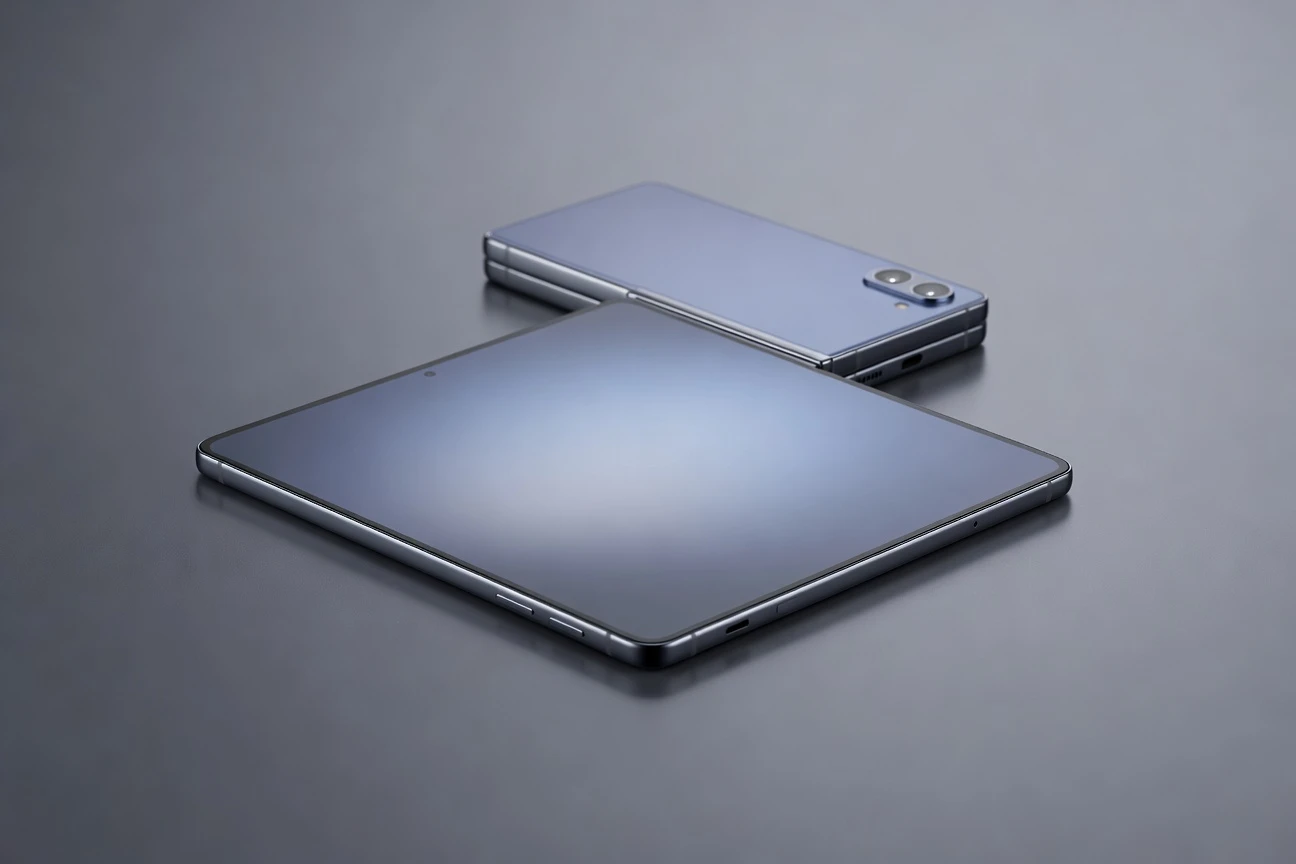
The leaked dimensions make the wide device look less like a direct successor to the tall Fold line and more like a separate body plan. Open, it is said to measure 123.9 x 161.4 x 4.9 mm. Closed, the same leak puts it at 123.9 x 82.2 x 9.8 mm, with a 14.6 mm camera-bump figure that matters every time the phone goes into a pocket.
Earlier Thunder Tiger Europe Media coverage of the SM-F971 global launch leak treated the model as a broader Samsung answer to Apple’s expected book-style foldable. That angle still fits. But the geometry also shows why the new claim needs care.
| Device | Status | Folded Thickness | Open Thickness | Weight | Design Read |
|---|---|---|---|---|---|
| Galaxy Z Fold 8 Wide | Rumored CAD leak | 9.8 mm, 14.6 mm with camera bump | 4.9 mm, or 4.3 mm excluding bezels | Not disclosed | Broader body, shorter height, pocket-first shape |
| Galaxy Z Fold7 | Official Samsung product | 8.9 mm | 4.2 mm | 215 g | Tall Fold baseline, already very thin |
| OPPO Find N6 | Official OPPO product | About 8.9 mm | About 4.2 mm | About 225 g | Thinness and crease benchmark |
| Galaxy Z TriFold | Official Samsung special format | 12.9 mm | 3.9 mm at its thinnest panel | 309 g | Engineering showcase, not a regular Fold substitute |
The table gives Samsung one clean win path and one messy one. Weight could be the easy argument if the wide model falls under Fold7’s 215 g. Thickness is harder because the camera bump problem turns a pretty CAD side profile into a much chunkier pocket object.
That distinction matters in stores. A phone can win a spec sheet at the thinnest point and still feel thick if the camera island catches on denim, a bag sleeve or a car mount.
A Wider Shape Answers the Fold Line’s Old Complaint
Samsung’s Fold phones have spent years moving away from the remote-control shape of early models. The Fold7’s wider 21:9 cover display already made typing, browsing and checking email feel closer to a normal slab phone, according to Samsung’s own launch material. The wide variant pushes the same idea further.
A shorter, broader Fold changes the first ten seconds of use. The cover screen should feel less cramped, while the inner screen should open closer to a small tablet page than a tall split phone. That is why the wide model can matter even if it fails to beat every thinness number.
Apple, the US device maker, is the ghost in this room. Most rumors around the first iPhone Fold point to a book-style shape with a broad inner display, not a tall Samsung-style slab. Samsung does not need to wait for that launch to learn whether buyers prefer a passport-style foldable over the familiar Fold silhouette.
Weight Gives Samsung the Cleaner Fight
Weight is where the boast has room to breathe. The OPPO Find N6 comes in at about 225 g on OPPO’s Japanese product page, while the Fold7 sits at 215 g. If the wide model lands below that Samsung figure, it can claim a practical win even with a thicker folded body.
That would also explain the leaker’s confidence. Thinness has too many definitions: open thickness, folded thickness, hinge-side measurement, camera-bump thickness and the excluded protective film. Weight is less forgiving. Put the phone on a scale and the argument ends.
- A lighter wide Fold would reduce hand fatigue during reading, video calls and split-screen work.
- A broader cover screen would make the device feel less like a compromise when used closed.
- A smaller inner diagonal than some rivals could save grams without making the phone feel cramped.
The likely tradeoff is battery. Big foldables now routinely push beyond 5,000 mAh, while thin bodies leave less room for cells, heat spreaders and hinge mass. Samsung has to keep the sub-215-gram target from becoming a battery-life complaint.
Galaxy Z Flip 8 and the standard Galaxy Z Fold 8 are expected to share the stage with the wide model if the July 22 rumor proves right. That lineup would let Samsung segment the pitch: compact style, familiar productivity phone and wider premium experiment.
For buyers, the decision will be less poetic. If the wide phone weighs less than a Fold7 and lasts a full day, the added folded millimeter may be forgiven. If the battery disappoints, the thinness claim will age fast.
Oppo Shows the Cost of a Thinness Crown
OPPO, the Chinese smartphone maker, has already shown how narrow the foldable race has become. The OPPO Find N6 product specifications list about 8.9 mm folded, about 225 g and a 6,000 mAh battery. That is a difficult combination for Samsung to dismiss.
The crease has remained one of the primary concerns for users.
Pete Lau, OPPO’s senior vice president and chief product officer, made that point in the company’s Find N6 launch release on March 17. His line cuts to the part of the market that spec tables miss: buyers notice the fold, the hand feel and the battery before they care who won by 0.3 mm.
That is the crease burden Samsung carries into the wide Fold. Its hinge work on Fold7 was a serious step, and the later Galaxy Z TriFold launch material from Samsung showed how far the company can push multi-panel hardware. Still, OPPO has made the crease itself a consumer promise, not just an engineering footnote.
Apple Turns the Wide Fold Into a Preemptive Bet
International Data Corporation (IDC, a technology market research firm) expects foldable smartphone shipments to grow 30 percent year-on-year after reaching a forecast 20.6 million units in 2025. The IDC foldable smartphone market forecast also projects Apple at more than 22 percent unit share and 34 percent value share in its first foldable year.
Nabila Popal, IDC’s senior research director for the Worldwide Quarterly Mobile Phone Tracker, tied that growth to Apple and Samsung’s tri-fold push. That makes the wide Fold less like a side model and more like a market probe before Apple defines what a premium foldable should look like for iPhone users.
The site’s foldable display shipment forecast coverage made the same larger point from the panel side: the category is shifting from novelty runs to a premium-screen fight. Samsung’s wide model sits right at that turn.
If Samsung announces the wide foldable with verified weight below Fold7 and a price that does not drift too far above the standard model, the ‘unbeatable’ line will look less like hype. If the final phone is merely wider and thicker with a camera hump doing the talking, OPPO keeps the thinness crown and Apple gets a clearer target.


Dolly Parton’s $450 Million Fortune Keeps Working After Her Death

SpaceX’s $60B Cursor Buy Immediately Costs It OpenAI Models

Rays Forever Home Wins County Vote as College and Taxpayers Carry the Load

Apple TV Hits $14.99 as Sports and Hits Bill Comes Due

Swift Telescopes Restart as Orbit Drop Accelerates

Oracle’s 2.8 GW Bloom Deal Exposes the AI Power Bypass

Galaxy S26 Beta 7 Ports Fold 8 AI as Stable Nears

Walmart Pays $50 Million to Close Federal Opioid Pharmacy Case

Space Mirror Demo Revives 1993 Russian Night-Light Test

Measles Death Dispute Deepens Distrust in Pennsylvania Outbreak

Trump Iran Threat Wiped $238M Crypto Longs Then Flipped

30-Year Yield Hits 5.32% Highest Since 2007 as Debt Supply Locks In Costs

Oil Crashes Below $80 as Iran Talks Restart and Markets Split

Strategy Parks $1.59B Cash While Bitcoin Stack Stays Flat

The 20% Savings Ideal Meets a 2.7% Reality Check

Astute’s $1.2M bet makes B2B creator deals feed AI discovery

SpaceX Stock Rebound Tests Real Demand Before Huge Unlock

BlackRock Turns Cash Empire Into Stablecoin Reserve Rails

Amber’s €7M locks Mittelstand knowledge inside Europe

Walter’s TWG Insists No Fraud as Insurer Probes Force Cleanup
-
 FINANCE3 months ago
Zcash Patched a Double-Spend Bug as ZEC Climbed 5%
-
 ENTERTAINMENT3 months ago
Steam Summer Sale 2026 Locks In June 25 to July 9 Dates
-

 FINANCE2 months ago
CLARITY Act Final Text Expected This Weekend as 60-Vote Hurdle Looms
-
 NEWS4 months ago
Meta Adds AI Replies to Threads, But Users Can’t Block It
-

 NEWS3 months ago
YouTube Shorts is testing a heart in place of the thumbs-up
-

 NEWS1 month ago
Senators Force Apple Off Chinese Memory as Big Three Cash In
-

 NEWS3 months ago
NEURA Robotics’ $1.4B Series C Redraws Europe’s Physical AI Bet
-
 ENTERTAINMENT5 months ago
Extraction 3 Is Officially Coming to Netflix in 2027