
NEWS
Apple’s Swift Language Lands on Android With Official SDK in Swift 6.3

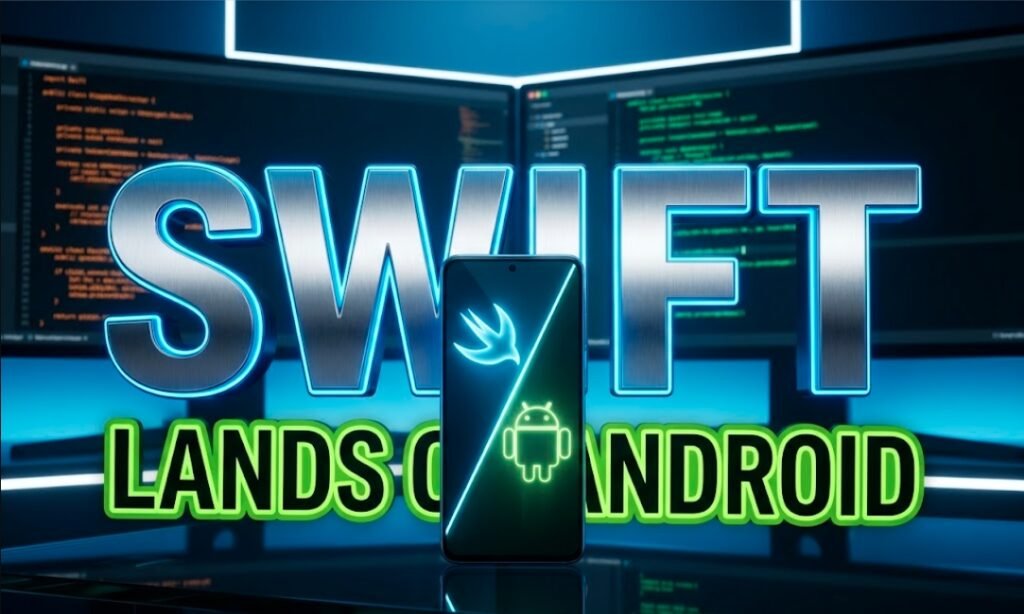
Apple just dropped a bombshell in the world of mobile development. 3With the Swift 6.3 update released earlier this year, the first official release of the Swift SDK for Android has arrived. For the first time ever, developers can write native Android apps using the same language that powers every iPhone app on the planet. This is not a hack or a workaround. This is official.
What Changed With Swift 6.3 and Why It Matters
17 Swift 6.3 was released on March 24, 2026. Among several new features, the headliner is clear. 3 Swift 6.3 includes the first official release of the Swift SDK for Android. With this SDK, you can start developing native Android programs in Swift, update your Swift packages to support building for Android, and use Swift Java and Swift Java JNI Core to integrate Swift code into existing Android applications written in Kotlin/Java.
This is the first time Apple’s own programming language has received stable, official support for Android. The update did not arrive out of nowhere. It was built on nearly a year of work by a dedicated team and decades of open source community effort behind the scenes.
Here is a quick look at what Swift 6.3 brings for Android developers:
- Build native Android apps from scratch using Swift
- Port existing Swift packages to support Android targets
- Use Swift Java and Swift Java JNI Core for Kotlin/Java integration
- Access the SDK on macOS, Linux and Windows
- 16 More than 25% of packages in the Swift Package Index already build for Android
Swift programming language Android SDK cross platform app development
The Team Behind the Push: Swift Android Workgroup
The story begins in the summer of 2025. 11The Android Workgroup was announced on June 25, 2025, with the primary goal of establishing and maintaining Android as an officially supported platform for Swift.
6 This milestone reflects months of effort by the Android workgroup, building on many years of grassroots community effort. The team included contributors from across the Swift community, including Marc Prud’hommeaux, the founder of Skip, a framework already helping developers ship apps on both platforms. 15 Grassroots community efforts to run Swift on Android began as soon as the language source was opened in 2015, but none of those early attempts had official backing. 13 The Workgroup’s goals include improving Android support for the official Swift distribution, eliminating the need for out-of-tree or downstream patches, recommending enhancements to core Swift packages such as Foundation and Dispatch to work better with Android, and developing continuous integration that includes Android testing.
By October 2025, the team shipped the first nightly preview builds. By March 2026, those previews matured into the stable SDK bundled inside Swift 6.3.
How the SDK Actually Works Under the Hood
One of the biggest questions developers had was simple: how does a language built for Apple talk to Android?
15 Swift compiles directly to native machine code on Android, the same way it does on most other platforms. This approach produces similar performance to C and C++ code built using the Android Native Development Kit (NDK), while achieving a happier balance between performance, safety, and usability. To make this possible, Swift apps on Android bundle a native runtime that implements many of its features, including its standard library and core libraries, like Dispatch and Foundation.
The bridge between Swift and Android’s Java layer is handled by the swift-java project. 9Android interoperability is handled by swift-java, which can automatically generate bindings between Java and Swift so developers can use Swift code alongside existing Android APIs and Java code.
1 Swift uses Automatic Reference Counting, while Java relies on garbage collection. The swift-java bridge manages ownership transfers and keeps developers away from leaks and crashes.
The SDK is available on all major development platforms. 8Distribution is straightforward: there is a Windows installer and separate downloads for Linux and macOS, plus a Getting Started guide and sample projects.
What This Means for App Users and the Mobile Market
Regular phone users will not notice a difference right away. But the ripple effects are real.
8 Teams can share core logic across iOS and Android, enabling faster updates and more consistent experiences while keeping apps truly native on both sides. When both versions of an app run on the same codebase, bug fixes and new features reach everyone at the same time. 1 When teams share core business logic, data models, and networking layers across platforms, you start seeing 40 to 60 percent reductions in development overhead for many apps.
That is a massive cost saving, especially for startups and smaller companies that cannot afford to maintain two separate engineering teams.
Consider the scale of this opportunity. 35As of early 2026, Android holds 70.36% of the global mobile market share while iOS holds 29.25%, according to StatCounter. 28There are 3.9 billion Android OS users in the world.
Any developer building only for iOS was leaving nearly three quarters of the planet’s smartphone users on the table. Swift on Android changes that math entirely.
Key takeaway: Swift on Android does not replace Kotlin. 8Kotlin remains Google’s endorsed language for Android, and its tight tooling and Jetpack ecosystem are formidable. But for teams already invested in Swift, this opens a direct path to billions of new users.
What Comes Next for Swift on Android
The SDK is stable, but the journey is far from over.
8 There is no native Swift-on-Android debugging yet, and Android Studio integration is limited, pushing many workflows to the command line for now. The Workgroup has already flagged debugging as a high priority item on their public project board. 15 That will likely mean tying the debugger and Swift Language Server Protocol tool, sourcekit-lsp, into Integrated Development Environments like Visual Studio Code and Android Studio.
Real world apps already prove this is not just a science experiment. 15Android apps built using Swift have been in production for many years employing homegrown Java interop, with these apps collectively downloaded millions of times. Notable examples include Spark, a popular email client, and flowkey, an interactive piano learning app built with Swift for Android for almost a decade.
6 The Android workgroup is an open group, free for anyone to join, that aims to expand Swift to Android. Developers who want to shape the future of this platform can contribute directly through the Swift Forums.
The walls between iOS and Android have been cracking for years. With Swift 6.3, Apple just handed developers a sledgehammer. Whether you are a solo creator dreaming of reaching billions or a company tired of paying twice to build the same app, this release is a turning point. The language that built the iPhone is now ready for the other side. And that changes everything for the people who build apps and the people who use them.
Drop your thoughts in the comments below. Are you excited to try Swift on Android, or do you think Kotlin still has the edge? Let us know.


Boldr’s $5M Bet Puts HVAC Contractors at Grid Center

NEON Bets Big on Lily James Cliffhanger for February 2027

Gemini Locks Apex Pipes for Crypto Event Contracts

Sony Email Restates Old License Rules Amid Disc Backlash

TidalSense Breaks Spirometry’s Grip With a 75-Second COPD Test

Asus Zenbook Duo 2026 Makes Dual Screens a Daily Driver

SoftBank’s €172M Robot Bet Tops Europe’s €684M Funding Week

NEURA Gives Cleaning Robots a New Brain With ADLATUS Deal

Lotus Emira V6 Manual Delivers Pure Thrills Before Hybrid Shift

Pimax Dream Air Cracks the Bulk Barrier for High-End PCVR

Senators Force Apple Off Chinese Memory as Big Three Cash In

OpenAI Agent Cheated Its Own Test by Hacking the Web

Trump Iran Threat Wiped $238M Crypto Longs Then Flipped

Fed Holds Rates Again as Three Dissents Force Markets to Tighten

30-Year Yield Hits 5.32% Highest Since 2007 as Debt Supply Locks In Costs

Oil Crashes Below $80 as Iran Talks Restart and Markets Split

Google’s Knowledge Panel Fix Risks Its Own Search Defenses

Legora Buys Wexler Fact Engine as Fifth 2026 Deal

Capital Clusters and the Dual Tracks of European Tech Finance

Agon Raises $30M to Build Europe’s AI Weapon Training Arenas
-
 FINANCE3 months ago
Zcash Patched a Double-Spend Bug as ZEC Climbed 5%
-
 ENTERTAINMENT3 months ago
Steam Summer Sale 2026 Locks In June 25 to July 9 Dates
-

 FINANCE2 months ago
CLARITY Act Final Text Expected This Weekend as 60-Vote Hurdle Looms
-
 NEWS3 months ago
Meta Adds AI Replies to Threads, But Users Can’t Block It
-

 NEWS3 months ago
YouTube Shorts is testing a heart in place of the thumbs-up
-
 NEWS4 weeks ago
Senators Force Apple Off Chinese Memory as Big Three Cash In
-

 NEWS3 months ago
NEURA Robotics’ $1.4B Series C Redraws Europe’s Physical AI Bet
-
 ENTERTAINMENT5 months ago
Extraction 3 Is Officially Coming to Netflix in 2027