
NEWS
Ask YouTube Puts AI Between Creators and Viewers

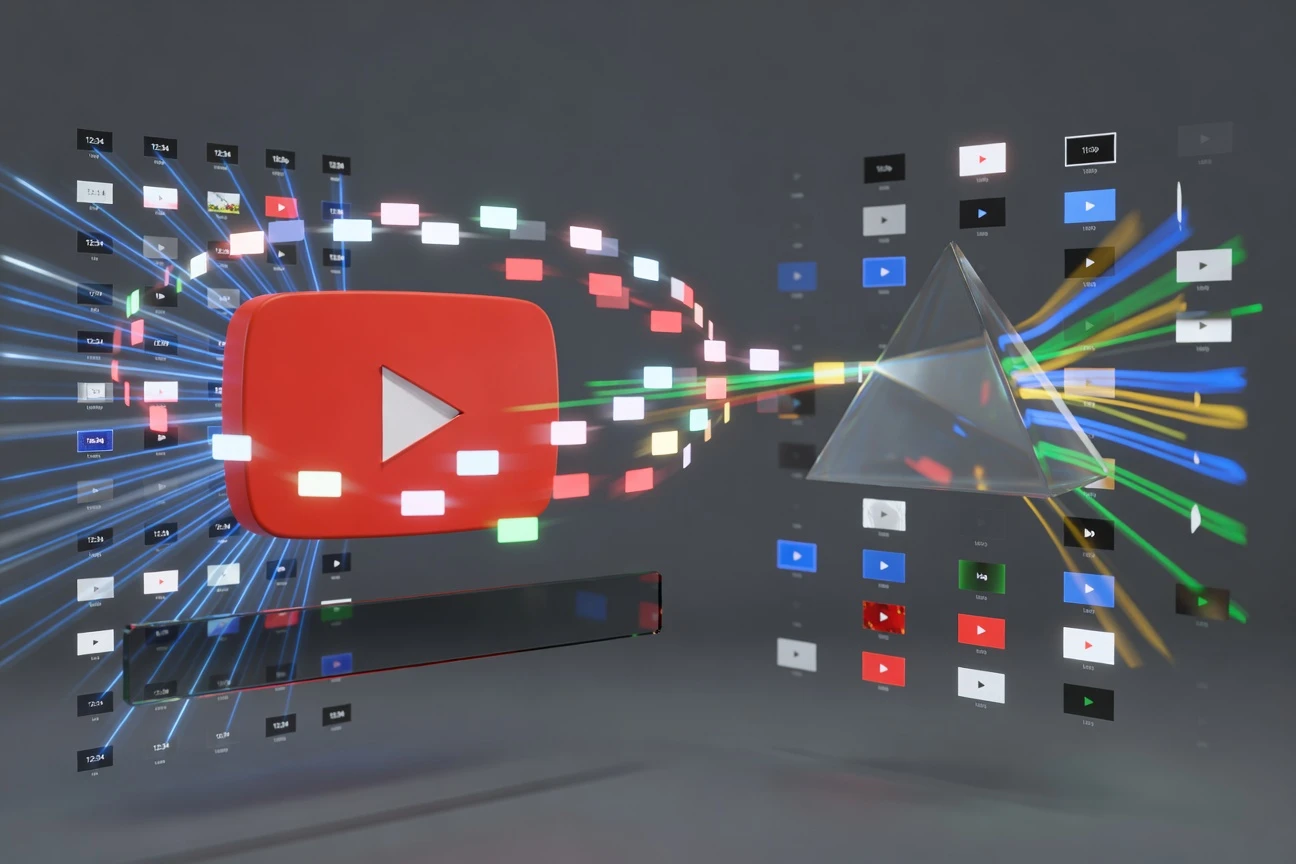
Ask YouTube is Google’s new AI search layer for video discovery, now starting with U.S. YouTube Premium members aged 18 and older, while Gemini Omni brings prompt-based remixing to Shorts and YouTube Create at no cost. Together, the tools shift YouTube from a search-and-scroll service toward an AI-mediated platform where answers, edits, credits and likeness controls sit between creators and viewers.
The useful part is obvious: better search, faster edits, fewer video skills required. The second-order effect is less tidy. YouTube is putting artificial intelligence in the two places that decide who gets seen and who gets reused, which makes attribution and control the harder story.
The Search Box Moves Up the Funnel
Google announced the YouTube updates at Google I/O on May 19, with YouTube’s Google I/O product announcement saying Ask YouTube can handle complex questions and follow-ups rather than simple keyword matching. Its examples are deliberately ordinary: teaching a child to ride a bike, or finding creator reviews of cozy games before bed.
That sounds like a convenience feature until you look at where it sits. Search has long been the moment when YouTube users choose among thumbnails, titles, channels and creators they already trust. Ask YouTube compiles videos across the full catalog, including long-form clips and Shorts, then presents an interactive structured response. The first interface a viewer sees may be YouTube’s answer layer, not a creator’s packaging.
Google’s broader event roundup adds one more access detail: Ask YouTube begins this month on desktop as an English-language experiment for a subset of U.S. users, while YouTube’s own blog says the feature is available through youtube.com/new for eligible Premium users and is planned for wider release. That split matters because Google can test the ranking, summarizing and referral behavior on a controlled audience before opening it to the whole site.
| Feature | Who Uses It First | Output | Creator Risk Point |
|---|---|---|---|
| Ask YouTube | U.S. Premium users aged 18 and older, starting through youtube.com/new | Structured answers built from long videos and Shorts | Search traffic may route through an AI answer before a channel page |
| Gemini Omni in Shorts Remix | Users aged 18 and older in Shorts Remix and YouTube Create | Prompt-based edited versions of eligible Shorts | Popular clips become raw material for AI variations |
| Likeness Detection | Creators aged over 18 who set it up in YouTube Studio | Potential matches for videos using a creator’s face | Identity protection depends on enrollment and review |
Gemini Omni Turns Remix Into a Native Format
The second launch is more explosive for creators. Google’s I/O announcement list describes Gemini Omni as a model that can create from image, text, video or audio references, beginning with video output. On YouTube, it lands inside Shorts Remix and the YouTube Create app, not as a separate studio tool for professional editors.
That placement is the point. Remix already made YouTube Shorts more porous than traditional uploads. Omni pushes that further by letting a user add prompts or images to an eligible Short, change a scene style, add themselves to a clip or create a new variation while preserving the context of the original video. In plain terms, the remix button becomes an AI editing prompt.
The timing shows how quickly YouTube is iterating. In March, YouTube’s Reimagine Shorts tool used Veo to turn a single frame from an eligible Short into an 8-second clip. Gemini Omni widens the idea from a single-frame transformation into a fuller video-and-audio editing workflow. The change is less about one new feature than about YouTube teaching users that remixing is part of watching.
That is why the phrase eligible Short carries so much weight. A creator may see their clip as finished work. YouTube is treating some Shorts as starting points, with metadata and credits attached. For large channels, that may drive reach. For smaller ones, it may feel like losing control of the edit after publication.
Creator Control Sits Behind the Creative Tool
YouTube is trying to answer that concern before it becomes a backlash. The company says Omni-remixed Shorts include digital watermarks, identifying metadata and links back to the original video. It also says creators can opt out of visual remixing in Shorts at any time. Those are not small additions. They are the safety rail that lets Google market AI remixing as participation rather than copying.
Creators are always in control of their content and have the flexibility to opt-out of visual remix in Shorts at any time.
The YouTube Team made that statement in its May 19 blog post. The sentence is doing heavy legal and reputational work because it places creator control at the center of a feature built to make derivative work easier.
Even so, opt-out systems change the burden. A creator who dislikes visual remixing has to know the setting exists, find it and disable it. A user who wants to remix gets the easier path, provided the Short is eligible. That design tension is familiar across platform history: defaults become policy long before a help page catches up.
- Watermarks help viewers identify AI-made or AI-edited media, but they do not decide whether a remix is tasteful, fair or harmful.
- Metadata can connect the remix back to the source, but it depends on platforms preserving that context when clips are shared elsewhere.
- Opt-outs give creators a switch, but the switch is useful only if creators understand its reach before their work circulates.
Thunder Tiger Europe previously covered YouTube likeness detection for adult creators, a related control layer that matters more now that remix tools are getting stronger. The same platform that encourages AI reuse is also building the system creators may need when reuse crosses into impersonation.
The Rights Layer Will Be Tested in Shorts
Shorts is the harshest possible test bed for these controls. Its culture is fast, derivative and trend-driven. Sound reuse, reaction formats, stitched clips and visual riffs already blur authorship for viewers. Gemini Omni adds a machine-editing layer to a format that was already built for copying with credit.
Google is leaning on SynthID for transparency. Google DeepMind’s SynthID documentation says the tool embeds digital watermarks directly into AI-generated images, audio, text or video, with signals designed to be imperceptible to people but detectable by its systems. Google’s I/O roundup says SynthID verification has been used 50 million times globally and is expanding to Search and Chrome.
For viewers, that may become the difference between a remix that feels like a joke and one that feels like fraud. For creators, the harder issue is consent. A watermark can label a clip after it exists. It cannot tell a creator whether the remix should have existed in the first place.
May 19: Google announced Ask YouTube and Gemini Omni’s YouTube rollout at I/O.
18 and older: Ask YouTube’s initial Premium access and Omni’s YouTube use both start with adult users.
No cost: Omni remixing is rolling out in Shorts Remix and YouTube Create without a separate charge.
8 seconds: YouTube’s earlier Reimagine tool created short AI clips from one eligible Shorts frame.
That last number is easy to miss. The earlier Reimagine launch was not a side project. It was a rehearsal for the new workflow. As Thunder Tiger Europe noted in its recent report on YouTube’s AI slop viewer survey, the platform is already asking users to judge the feel and quality of AI-heavy video. YouTube is not only shipping creation tools. It is also gathering signals about how viewers react to the output.
Premium Access Gives Google a Controlled Trial
Ask YouTube’s limited launch is not just about scarcity. It gives Google a cleaner test group for a sensitive change to discovery. Premium users are logged in, paying or bundled customers, and likely to spend more time inside YouTube. That makes them a useful early audience for measuring whether conversational search increases watch time, improves satisfaction or sends users away from creators they would otherwise have clicked.
The company has already moved similar AI features across Search. Its I/O roundup said AI Mode has passed more than 1 billion monthly users, with queries more than doubling every quarter since launch. Ask YouTube looks like the video version of that larger search strategy, but with a twist: the source material is not the open web. It is YouTube’s own supply of creator labor.
That changes the incentives. If an AI answer sends a viewer to the exact moment in a video, the user wins. If the creator loses the thumbnail click, the channel page visit or the chance to build a relationship with that viewer, the accounting gets murkier. YouTube can argue that better matching grows total consumption. Creators will watch whether it grows their audience or simply redistributes attention through Google’s summary layer.
The TV angle is also relevant. Thunder Tiger Europe has covered YouTube’s Gemini AI tests on smart TVs, where search and assistance move away from typing and toward prompts. Ask YouTube on desktop may be the first controlled version of a behavior Google wants across screens: ask, refine, play.
The European Read on Attribution and AI Labels
For European users and regulators, the most important part may not be whether Ask YouTube is handy. It will be how clearly YouTube labels AI-shaped discovery and AI-altered clips once the tools move beyond the United States. The platform is combining two sensitive functions: a search agent that chooses which videos answer a query, and a media tool that lets users remake creator work.
YouTube’s likeness detection help page says eligible users over 18 can set up detection, review videos that may contain their face and request removal under YouTube’s privacy process. It also says the setup data is not used to train Google’s generative AI models without consent, and that YouTube is working to extend detection to audio. That gives creators a defensive tool, but it is still separate from the moment a remix is made.
The practical questions now are plain. Will AI-remixed Shorts be clearly marked in every surface where Shorts travel? Will Ask YouTube send enough traffic to original videos for creators to feel the benefit? Will opt-out defaults be visible enough for small channels, not just professional creators with managers?
Google has answered the first round with watermarks, metadata, links and settings. The next answer comes from behavior: whether viewers treat AI remixes as discovery, and whether creators see them as reach or extraction. If Ask YouTube widens watch time while Gemini Omni sends credit back cleanly, YouTube gets a stronger platform. If the labels fade and the source links become background furniture, the complaints will start with the people whose clips trained the new habit.


Dolly Parton’s $450 Million Fortune Keeps Working After Her Death

SpaceX’s $60B Cursor Buy Immediately Costs It OpenAI Models

Rays Forever Home Wins County Vote as College and Taxpayers Carry the Load

Apple TV Hits $14.99 as Sports and Hits Bill Comes Due

Swift Telescopes Restart as Orbit Drop Accelerates

Oracle’s 2.8 GW Bloom Deal Exposes the AI Power Bypass

Galaxy S26 Beta 7 Ports Fold 8 AI as Stable Nears

Walmart Pays $50 Million to Close Federal Opioid Pharmacy Case

Space Mirror Demo Revives 1993 Russian Night-Light Test

Measles Death Dispute Deepens Distrust in Pennsylvania Outbreak

Trump Iran Threat Wiped $238M Crypto Longs Then Flipped

30-Year Yield Hits 5.32% Highest Since 2007 as Debt Supply Locks In Costs

Oil Crashes Below $80 as Iran Talks Restart and Markets Split

Strategy Parks $1.59B Cash While Bitcoin Stack Stays Flat

Astute’s $1.2M bet makes B2B creator deals feed AI discovery

SpaceX Stock Rebound Tests Real Demand Before Huge Unlock

BlackRock Turns Cash Empire Into Stablecoin Reserve Rails

The 20% Savings Ideal Meets a 2.7% Reality Check

Amber’s €7M locks Mittelstand knowledge inside Europe

Walter’s TWG Insists No Fraud as Insurer Probes Force Cleanup
-
 FINANCE3 months ago
Zcash Patched a Double-Spend Bug as ZEC Climbed 5%
-
 ENTERTAINMENT3 months ago
Steam Summer Sale 2026 Locks In June 25 to July 9 Dates
-

 FINANCE2 months ago
CLARITY Act Final Text Expected This Weekend as 60-Vote Hurdle Looms
-
 NEWS4 months ago
Meta Adds AI Replies to Threads, But Users Can’t Block It
-

 NEWS3 months ago
YouTube Shorts is testing a heart in place of the thumbs-up
-

 NEWS1 month ago
Senators Force Apple Off Chinese Memory as Big Three Cash In
-

 NEWS3 months ago
NEURA Robotics’ $1.4B Series C Redraws Europe’s Physical AI Bet
-
 ENTERTAINMENT5 months ago
Extraction 3 Is Officially Coming to Netflix in 2027