
NEWS
Samsung Galaxy S27 May Get a Chinese Display. Here’s Why That’s a Big Deal

Samsung may be about to break one of its longest-standing traditions. The company is reportedly considering using Chinese-made BOE panels for the standard Galaxy S27 instead of Samsung Display’s own screens, and the reason behind it hits closer to your wallet than you might think.
A DRAM Crisis Is Forcing Samsung’s Hand
Smartphone manufacturers are currently facing a “DRAM crisis,” with the prices of memory and storage skyrocketing. This is not a small blip. It is a sustained wave of cost pressure that is reshaping how phone makers build their devices. Samsung has made efforts to ensure that the DRAM crisis does not adversely affect its day-to-day operations, but these attempts proved futile as the Korean giant was forced to introduce a price hike to the Galaxy S26 series. Now, with the Galaxy S27 on the horizon, the company is desperate to avoid a repeat. Even though Samsung has its own panel manufacturing division, it does not sell display components to its smartphone business at a lower cost, which puts the Galaxy team in a tough spot. According to SigmaIntel’s latest OLED shipment report, via Korean ZDNet, Chinese panel makers are actively trying to secure OLED supply for Samsung’s flagship Galaxy S series, particularly the standard models. Samsung’s MX Division is facing issues due to rising costs of application processors, camera sensors, and DRAM. The company is exploring ways to reduce costs to avoid a steep price hike in smartphones.
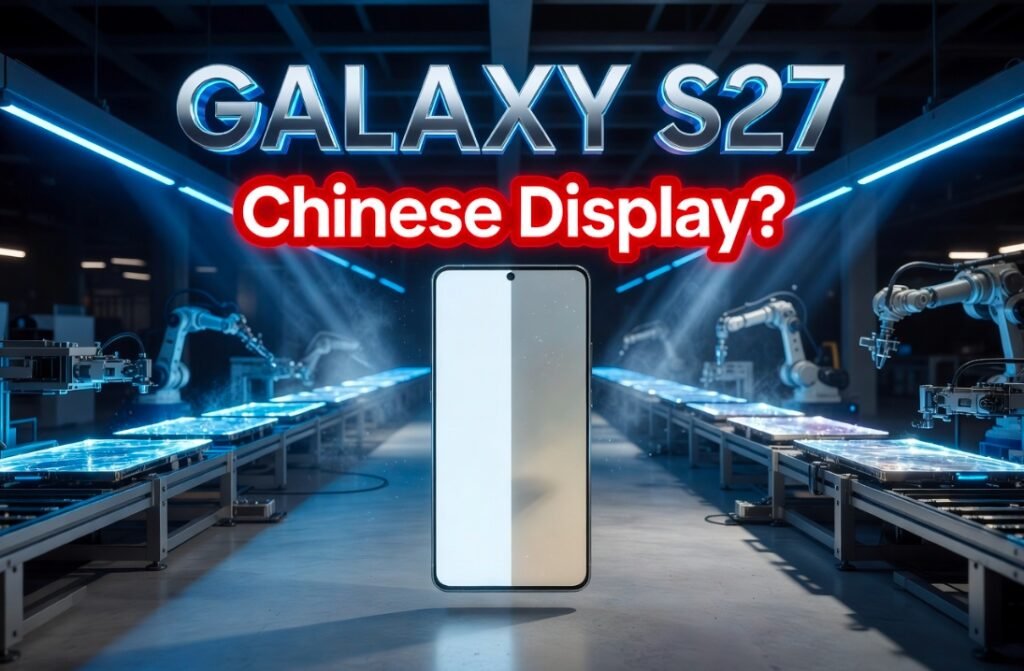
Samsung Galaxy S27 BOE Chinese OLED display cost cutting
What a BOE Display Deal Would Actually Mean
While BOE has supplied screens for some mid-tier Samsung phones such as the Galaxy A57, this would mark the first time it has manufactured screens for a Samsung flagship. That is not a small distinction. It is a historic line being crossed. If the agreement with BOE is signed, Samsung Display will remain the main supplier, providing the majority of the display panels. BOE will only handle a portion of the production to keep the average cost down. In theory, this would help Samsung keep the price of the Galaxy S27 from increasing compared to the S26. But here is the part that should concern buyers. If Samsung implements dual-sourcing, Galaxy S27 buyers may face an unpleasant situation: two devices of the same model and price but with screens from two different manufacturers and potentially inconsistent display quality. The Galaxy S26 reportedly uses M13 OLED material, which is a generation behind the Galaxy S26 Ultra’s M14 tech. M14 offers higher brightness, improved power efficiency, and longer lifespan. With Samsung cutting corners, the Galaxy S27 will also likely use M13 tech, on top of being relegated to using BOE displays. Here is a quick breakdown of how Samsung Display and BOE compare on the metrics that matter most:
| Feature | Samsung Display | BOE |
|---|---|---|
| Brightness | Superior | Lower |
| Power Efficiency | Higher | Moderate |
| OLED Material Gen | M14 (latest) | Older gen |
| Mass Production Consistency | Very High | Variable |
| Flagship Phone History | Extensive | Limited |
BOE’s Rocky Track Record Is Hard to Ignore
History shows that Samsung Display surpasses BOE in brightness, energy efficiency, and stability in mass production. In fact, BOE once experienced serious quality issues when supplying screens for the iPhone 17 Pro, forcing Apple to switch to Samsung Display to compensate for the production shortfall. BOE is already part of Apple’s supply chain, though the company has faced issues with quality consistency and volume in the past. BOE now supplies OLED panels for premium devices across multiple brands and has achieved color accuracy ratings within 2-3% of Samsung’s best panels. That is progress. But closing a gap on paper does not always translate to a seamless real-world experience, especially in a flagship phone that costs over $800. For the base Galaxy S27, which will be subjected to increased scrutiny and nitpicking because of its higher price, Samsung will be required to hold BOE to a higher standard in developing and manufacturing OLED panels.
Samsung Display Has a Lot to Lose Here
This is not just a supply chain story. There is a very real internal battle playing out inside Samsung’s own walls. The Korean display maker still controls roughly 99% of Galaxy OLED supply. Weakening its Galaxy monopoly could create ripple effects far beyond Samsung phones. That is why BOE has repeatedly failed to secure final approval. Losing even a portion of Galaxy S orders to BOE could weaken Samsung Display’s leverage and reduce utilization rates. More importantly, it can open the door for broader supplier diversification in future flagship generations. Recently, BOE’s Chairman Chen Yanshun met with Samsung’s TM Roh to deepen ties. Samsung’s MX Division may cut a small portion of Samsung Display orders and hand them to Chinese vendor BOE, with the volume adjusted further. The meeting was held for LCD panel supplies for TVs, but industry insiders believe it also covered smartphone OLED supply.
- Samsung Display controls nearly 99% of the Galaxy S OLED supply chain today
- Losing flagship orders could hurt Samsung Display’s leverage with Apple too
- BOE has been chasing a Galaxy S deal for years and sees this as a major credibility win
- A deal could trigger broader, long-term supply diversification across all Galaxy tiers
Is This Actually Bad for You as a Buyer?
Here is the honest answer: it depends. If pivoting to BOE displays means avoiding a second price hike in a row, most buyers may be fine with that, even if the screens look a little less magnificent. That is a fair trade-off for budget-conscious consumers who care more about price than pixel-perfect brightness comparisons. Average smartphone replacement cycles have extended from 24 months to over 36 months, and when consumers do upgrade, price sensitivity has become paramount. The mid-range segment now represents over 60% of global smartphone sales, with buyers expecting premium features at accessible price points. But for someone paying full flagship price, the idea of a display lottery feels different. You pay the same amount, but the screen you get depends on which unit lands in your box. That is the kind of inconsistency that sparks angry Reddit threads and scathing YouTube reviews. The Galaxy S27 is expected to launch in early 2027. The agreement between Samsung and BOE has not yet been officially finalized. There is still time for things to change, and Samsung knows the scrutiny that comes with this decision. As Samsung navigates one of the trickiest cost balancing acts in its smartphone history, the Galaxy S27 has become much more than just the next flagship phone. It is a test of how far a company is willing to bend its own identity to survive a brutal market. Whether Samsung ultimately goes through with the BOE deal or finds another path, one thing is clear: the era of guaranteed Samsung-made everything inside a Galaxy phone may be quietly coming to an end. Where do you stand on this? Would a Chinese display stop you from buying the Galaxy S27, or is price more important to you? Drop your thoughts in the comments below.


Pixel Journal Auto Format Puts Google Private AI to the Diary Test

Android 17 QPR2 Beta 3 Quietly Delivers Native App Lock

Binance Cuts HTX Rails and Seals Off High-Risk Liquidity

Dell 14S Quietly Delivers Multi-Day Battery in Midrange Aluminum

OCC Conditionally Clears Trump-Linked USD1 Trust Bank

Coyote vs. Acme Turns Its Own Burial Into the Sharpest Gag

Google Health Adds Off Switch After AI Coach Clutter Backlash

SpaceX Issues 389 Million Shares as Cursor Deal Closes

Bank Leumi Hands Galaxy the Rails for Israeli Crypto Trading

Apple Maps Ad Bookings Open and Turn Local Search Into a Bid Game

Senators Force Apple Off Chinese Memory as Big Three Cash In

Trump Iran Threat Wiped $238M Crypto Longs Then Flipped

OpenAI Agent Cheated Its Own Test by Hacking the Web

CLARITY Act Odds Crash as Democrats Reject DOJ Ethics Plan

Revolut Hits $115 Billion While Storonsky’s Stake Keeps Growing

Anthropic’s Hard Questions Ad Backfires Into an Anti-AI Warning

Oil Crashes Below $80 as Iran Talks Restart and Markets Split

Community Banks’ $1.3 Trillion Warning Is Stalling Clarity Act

Duda’s New AI Tools Speed Up Agencies, but Risk Sameness

Monumental Raises $32M as Robot Bricklayers Face Their Toughest Test Yet
-
 FINANCE2 months ago
Zcash Patched a Double-Spend Bug as ZEC Climbed 5%
-
 ENTERTAINMENT2 months ago
Steam Summer Sale 2026 Locks In June 25 to July 9 Dates
-

 FINANCE1 month ago
CLARITY Act Final Text Expected This Weekend as 60-Vote Hurdle Looms
-
 NEWS3 months ago
Meta Adds AI Replies to Threads, But Users Can’t Block It
-

 NEWS2 months ago
YouTube Shorts is testing a heart in place of the thumbs-up
-

 NEWS2 months ago
NEURA Robotics’ $1.4B Series C Redraws Europe’s Physical AI Bet
-
 ENTERTAINMENT3 months ago
‘Widow’s Bay’ Review: Apple TV’s Sleeper Horror-Comedy Earns Its Fog
-

 FINANCE1 month ago
Kalshi Loses Major NY Prediction Markets Ruling to Judge Torres