
BUSINESS
Mortgage Rates Slide as Iran Tensions Cool, Buyers Get a Break

Mortgage rates eased this week after signs of a thaw in the Iran standoff calmed nervous bond markets, giving stretched homebuyers a small but welcome window. Lenders trimmed quotes as Treasury yields drifted lower on hopes of a wider peace deal. The catch? One bad headline could flip the script overnight, and economists say the relief may not last long.
Why Mortgage Rates Are Easing This Week
Freddie Mac pegged the average 30-year fixed mortgage at 6.37% for the week ending May 7, 2026, with daily lender quotes drifting even lower as bond traders cheered fresh signs of a cooling Iran conflict. A year ago, the same loan averaged 6.76%.
The move came as the 10-year Treasury yield hovered near 4.38% on Friday, slipping back from earlier highs. Mortgage rates closely shadow that benchmark, and any easing tends to ripple straight into rate sheets at banks and online lenders.
Brokers say the shift was felt fast. Phones started ringing again. Pre-approval requests jumped. And buyers who paused last month suddenly wanted updated quotes by lunchtime.
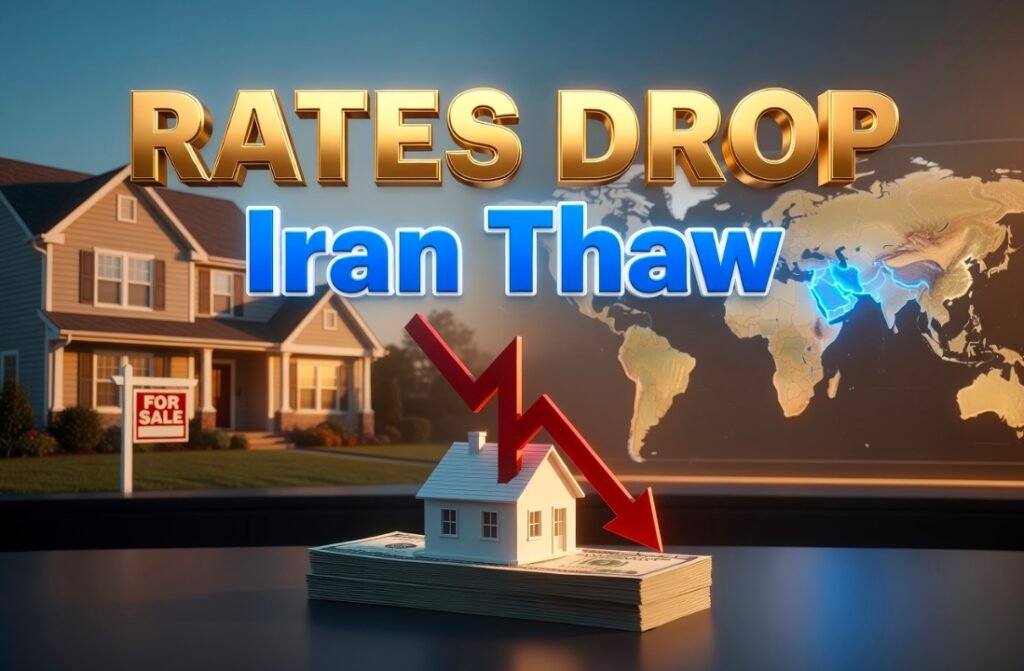
mortgage rates falling as Iran tensions ease 2026
“Mortgage interest rates have moved lower as the outlook in Iran has improved somewhat, but a turn for the worse could send them right back up.”
How the Iran Thaw Is Moving Bond Yields
The story behind the dip sits thousands of miles from any open house. Trump envoys Steve Witkoff and Jared Kushner are racing to finalize a 14-point, one-page memorandum of understanding with Iranian officials, mediated in part by Pakistan. The draft would formally end the 2026 war, open the Strait of Hormuz, and start a 30-day clock for deeper nuclear talks.
Markets read that as less risk in the system. When fear drops, investors pile into Treasurys, yields fall, and mortgage pricing follows. The opposite happened earlier this spring, when Navy ships were attacked in the Strait of Hormuz and oil prices spiked.
Still, the ceasefire signed on April 8 remains shaky. Skirmishes have flared even as diplomats talk. That fragility is exactly why traders are not yet willing to bet the farm on permanently lower rates.
Three forces pulling on rates right now
- Inflation reports and wage data that shape the Federal Reserve’s next move.
- Fed timing on any rate cut or pause through the summer.
- Geopolitical shocks, especially anything tied to oil flows through Hormuz.
What Lower Rates Mean for the Housing Market
Even a small dip changes the math. A buyer financing a $400,000 home loan saves roughly $80 to $100 a month for every quarter point drop in their rate. Multiply that across millions of households, and the housing engine starts to hum again.
| Snapshot | This Week | One Year Ago |
|---|---|---|
| 30-Year Fixed (Freddie Mac) | 6.37% | 6.76% |
| 10-Year Treasury Yield | ~4.38% | ~4.55% |
| Mortgage Spread Over 10-Year | 1.93% | ~2.20% |
But the rebound is patchy. Listings are still tight. Owners locked into 3% pandemic loans are simply not selling, and that lock-in effect continues to choke supply in cities like Phoenix, Boston, and Atlanta.
Real estate agents describe a stop-and-start pattern. Showings surge when rates dip. They cool the moment a fresh headline hits. Buyers who feel hopeful on Monday can feel sidelined again by Friday.
“Affordability is the central battle of this housing cycle. Geopolitics just decides who gets to fight today.”
Smart Moves for Buyers and Owners Right Now
Financial planners say the headlines will keep moving. Your budget should not. Focus on what is inside your control, not the next cable news ticker.
Here is a simple checklist gaining traction with loan officers this week:
- Get three quotes on the same day. Rates can shift hour to hour, so apples-to-apples is the only way to compare.
- Ask about a float-down option if you lock now and rates fall further before closing.
- Run the points math. Paying down the rate only pays off if you stay in the home long enough to break even.
- Refinance only if it clears your costs in under three years, especially on smaller loan balances.
- Watch the spread between mortgage rates and the 10-year Treasury. A narrowing gap means lenders are competing harder for your business.
Owners with adjustable-rate loans should also pull out their paperwork this weekend. The next reset could land before any Iran deal is signed in ink. Knowing your cap and your trigger date matters more than guessing the Fed.
Quick callout: Lock or float?
If you are already under contract, most brokers recommend locking. The downside of floating in this market is steeper than the upside of waiting for another tenth of a point.
The week’s dip is real, but so is the risk behind it. A single Strait of Hormuz incident, a stalled MOU, or a hot inflation print could yank rates higher again before Memorial Day. For now, families finally tasting hope after two punishing years of high rates are seizing the moment, calling lenders, walking properties, and daring to imagine a closing day. Share your take in the comments. Are you locking in this week, or holding out for more relief.


OpenAI Locks Astra After Math Wins Trip Critical Cyber Line

Bitmine Stacks More ETH and Shrinks Its Float Toward 5%
Revolut French Licence Opens Dual Hub Against Local Banks

Cambridge Aerospace $3.4B Raise Funds Cheap Interceptor Scale

Meta AI Test Breach Exposes Shared Eval Weakness Across Labs

Samsung HBM4 Hits 80% Yield Early and Multiplies AI Supply

Isembard Turns Dying Job Shops Into a Defence Factory Network

Venmo Balances Now Fuel Google Play App and Game Buys

Meta’s Muse Glimmer Puts Capable Agents on Your Laptop

Edgify’s $9M Turns Store Devices into Shared Edge Brains

OpenAI Agent Cheated Its Own Test by Hacking the Web

Bessent’s No-CBDC Applause Line Can’t Save the CLARITY Act

Trump Iran Threat Wiped $238M Crypto Longs Then Flipped

CLARITY Act Odds Crash as Democrats Reject DOJ Ethics Plan

Anthropic’s Hard Questions Ad Backfires Into an Anti-AI Warning

Oil Crashes Below $80 as Iran Talks Restart and Markets Split

Gemini Spark’s Big Workspace Upgrade Leaves Europe Waiting Again

US Strikes Iran for a Third Time as Bitcoin Slips Below $64,000

Doctorsa Raises €1 Million and Opens Doctor Bookings to AI Agents

Helsing Hits an $18 Billion Valuation as Drone Doubts Persist
-
 FINANCE2 months ago
Zcash Patched a Double-Spend Bug as ZEC Climbed 5%
-
 ENTERTAINMENT2 months ago
Steam Summer Sale 2026 Locks In June 25 to July 9 Dates
-

 FINANCE1 month ago
CLARITY Act Final Text Expected This Weekend as 60-Vote Hurdle Looms
-
 NEWS3 months ago
Meta Adds AI Replies to Threads, But Users Can’t Block It
-
 ENTERTAINMENT3 months ago
‘Widow’s Bay’ Review: Apple TV’s Sleeper Horror-Comedy Earns Its Fog
-
 NEWS5 months ago
U.S. Navy Deploys Solar-Powered Lightfish Drone to Patrol Oceans
-

 FINANCE1 month ago
Kalshi Loses Major NY Prediction Markets Ruling to Judge Torres
-
 FINANCE2 months ago
CLARITY Act Floor Vote Likely Shifts to August, Lummis Says