
NEWS
Quantum Motion Bags $160M to Power Silicon Quantum Leap

British quantum computing startup Quantum Motion has pulled in a massive $160 million Series C round, instantly becoming the UK’s best funded quantum company. The London based firm wants to build powerful quantum machines using the same silicon chips found inside everyday laptops and smartphones. Investors believe this could be the breakthrough moment the entire industry has been waiting for.
Inside the Series C Round That Shook UK Tech
The Series C raise was announced on May 7, 2026, and it has already turned heads across Silicon Valley and Europe. The round was co-led by US deeptech specialist DCVC and Spanish investor Kembara.
The British Business Bank stepped in with a £40 million anchor cheque, its largest single bet on a quantum company to date.
New backer Firgun also joined the table, alongside returning investors Oxford Science Enterprises, Inkef, Bosch Ventures, Porsche Automobil Holding SE and Parkwalk Advisors. The round pushes Quantum Motion’s total capital raised past the $200 million mark.
The company plans to use the cash to commercialise its products, deepen research and development, and stretch its footprint into more international markets.
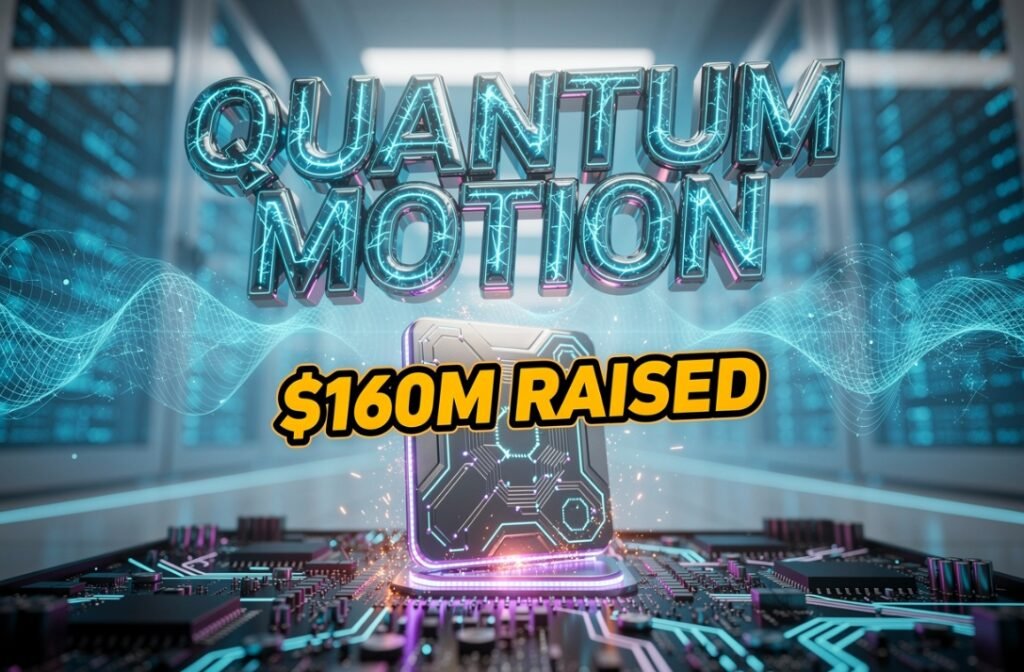
Quantum Motion silicon chip quantum computer funding round
Why Silicon Chips Are the Real Game Changer
Most quantum computing rivals use exotic materials, giant cooling rigs and huge labs. Quantum Motion is taking the opposite road. It builds qubits on the same CMOS silicon transistors used in every smartphone and laptop chip made today.
That choice unlocks staggering numbers, according to the company.
| Metric | Quantum Motion Claim vs Rivals |
|---|---|
| Cost and space | 100 times smaller and cheaper |
| Energy use | 1,000 times lower consumption |
| Deployment | Fits in standard data centre racks |
| Manufacturing | Uses existing global chip foundries |
The startup calls this the “transistor moment” for quantum, comparing it to how classical computers shrank from room sized monsters into pocket devices once silicon transistors took over.
Dr. Prineha Narang of DCVC summed up the bet in plain words. “Silicon is the foundation that scales, and this team is turning quantum from demonstration into commercial success,” she said.
From Oxford Lab to Global Quantum Player
Quantum Motion was founded back in 2017 by Professor John Morton of UCL’s London Centre for Nanotechnology and Professor Simon Benjamin of Oxford University. What started as an academic spinout has now grown into a global operation.
The company has its headquarters in London, with active offices and labs in Spain, Australia and the United States. It also runs a deepening manufacturing partnership with chipmaker GlobalFoundries, giving it access to industrial scale fabrication.
Last year was a defining one for the team. In 2025, Quantum Motion delivered what it calls the world’s first commercial full stack silicon CMOS quantum computer, installed at the UK National Quantum Computing Centre in Harwell.
“Quantum computing will only achieve its full potential if it can be built on a platform that scales, and we believe silicon is the strongest route to achieving that.” Dr. James Palles-Dimmock, CEO, Quantum Motion
The startup has also moved into Stage B of DARPA’s Quantum Benchmarking Initiative, a major signal of trust from the US defence research community.
What This Means for the Quantum Race
The funding lands at a critical moment. Governments and big tech firms are pouring billions into quantum, hoping the technology will crack problems that even today’s strongest supercomputers cannot touch.
Here is why this round matters for the wider industry:
- Cheaper hardware: Silicon manufacturing brings quantum closer to commodity pricing.
- Faster scaling: CMOS lines already produce billions of chips a year worldwide.
- Greener computing: Lower energy needs ease pressure on data centres.
- Sovereign tech: The UK keeps a leading role in a strategic field.
For founders Morton and Benjamin, the moment is also personal. They told reporters the new chips can finally turn qubits into something fast and ubiquitous, hinting at a future where quantum power lives quietly inside ordinary server rooms.
Rivals like IBM, Google, IonQ and PsiQuantum are still pushing other approaches such as superconducting circuits, trapped ions and photonics. Quantum Motion is betting that boring, proven silicon will simply outscale them all.
The Road Ahead for the British Quantum Champion
With $160 million in fresh capital, the company is gearing up for its next phase. Expect bigger qubit counts, deeper enterprise pilots and faster moves into the US and Asia Pacific markets.
The team has also hinted at hiring across engineering, software and commercial roles in London, Madrid and Sydney over the coming months.
For UK tech, the deal is a confidence boost during a tough fundraising climate. It shows that deeptech with patient backers can still pull in nine figure cheques when the science is real and the team has shipped products.
Quantum Motion’s story is more than a funding headline. It is a glimpse of a future where the most powerful machines on Earth could one day run on the same humble silicon that powers your phone, quietly reshaping medicine, finance, climate science and security for everyone. Share your thoughts in the comments below and tell us if you think silicon will win the quantum race.


OpenAI Locks Astra After Math Wins Trip Critical Cyber Line

Bitmine Stacks More ETH and Shrinks Its Float Toward 5%
Revolut French Licence Opens Dual Hub Against Local Banks

Cambridge Aerospace $3.4B Raise Funds Cheap Interceptor Scale

Meta AI Test Breach Exposes Shared Eval Weakness Across Labs

Samsung HBM4 Hits 80% Yield Early and Multiplies AI Supply

Isembard Turns Dying Job Shops Into a Defence Factory Network

Venmo Balances Now Fuel Google Play App and Game Buys

Meta’s Muse Glimmer Puts Capable Agents on Your Laptop

Edgify’s $9M Turns Store Devices into Shared Edge Brains

OpenAI Agent Cheated Its Own Test by Hacking the Web

Bessent’s No-CBDC Applause Line Can’t Save the CLARITY Act

Trump Iran Threat Wiped $238M Crypto Longs Then Flipped

CLARITY Act Odds Crash as Democrats Reject DOJ Ethics Plan

Anthropic’s Hard Questions Ad Backfires Into an Anti-AI Warning

Oil Crashes Below $80 as Iran Talks Restart and Markets Split

Gemini Spark’s Big Workspace Upgrade Leaves Europe Waiting Again

US Strikes Iran for a Third Time as Bitcoin Slips Below $64,000

Doctorsa Raises €1 Million and Opens Doctor Bookings to AI Agents

Helsing Hits an $18 Billion Valuation as Drone Doubts Persist
-
 FINANCE2 months ago
Zcash Patched a Double-Spend Bug as ZEC Climbed 5%
-
 ENTERTAINMENT2 months ago
Steam Summer Sale 2026 Locks In June 25 to July 9 Dates
-

 FINANCE1 month ago
CLARITY Act Final Text Expected This Weekend as 60-Vote Hurdle Looms
-
 NEWS3 months ago
Meta Adds AI Replies to Threads, But Users Can’t Block It
-
 ENTERTAINMENT3 months ago
‘Widow’s Bay’ Review: Apple TV’s Sleeper Horror-Comedy Earns Its Fog
-
 NEWS5 months ago
U.S. Navy Deploys Solar-Powered Lightfish Drone to Patrol Oceans
-

 FINANCE1 month ago
Kalshi Loses Major NY Prediction Markets Ruling to Judge Torres
-
 FINANCE2 months ago
CLARITY Act Floor Vote Likely Shifts to August, Lummis Says