
NEWS
ACRIOS Targets Hidden Cost Crippling IoT Product Launches

A connected device leaves the factory, hits the field, and quietly underperforms at 60 percent of its data target. The hardware vendor blames firmware. The firmware team blames the radio. The radio consultant blames the battery. Nobody owns the whole picture. That blind spot, industry insiders warn, is silently killing European IoT projects before they ever scale.
Why fragmented IoT development is bleeding budgets
Building a connected product is a tangled job. It pulls together circuit design, PCB layout, firmware, radio protocols, antenna tuning, power budgets, cloud backends, and cybersecurity into one working system.
When those layers are split across different vendors, integration becomes a finger pointing exercise. A 2026 industry review found enterprises lose months of rework and hundreds of thousands of euros in what engineers now call “integration debt.”
The cost of fragmentation is no longer a soft risk. It is a hard line on the balance sheet.
Common breakdowns reported across European projects include:
- Modem power draw clashing with battery discharge curves
- Packet retransmission spikes nobody modeled at the system level
- Antenna tuning failures discovered only after field rollout
- Cloud backends rejecting payload formats from updated firmware
- Late stage cybersecurity bolt ons that break certification timelines
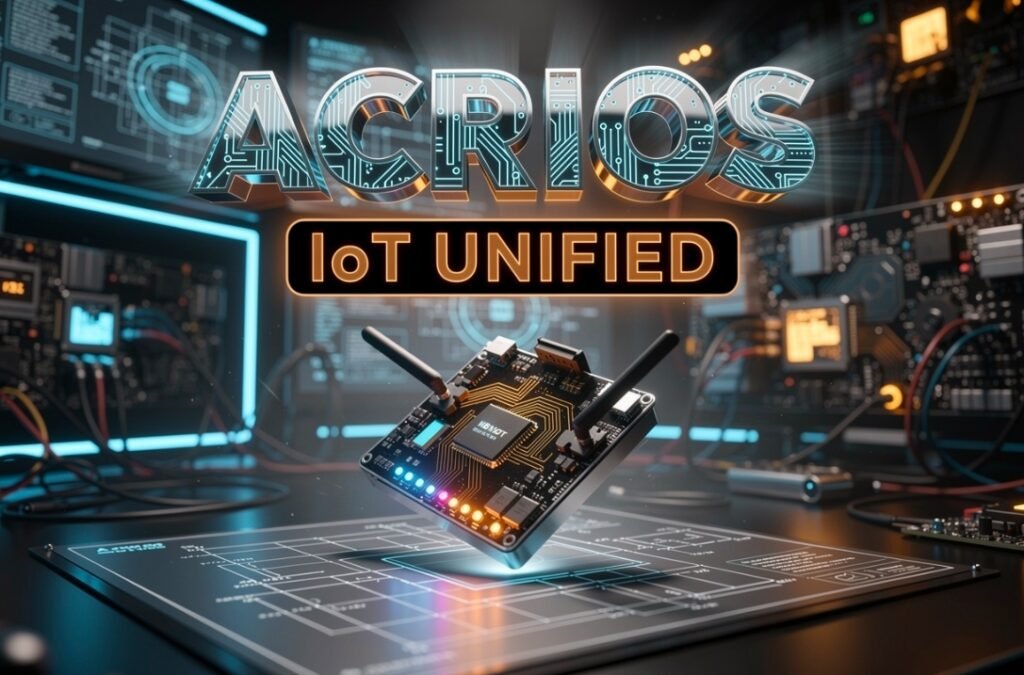
ACRIOS full stack IoT development Europe smart device
ACRIOS pushes full stack ownership as the fix
Czech technology company ACRIOS Systems, already known across Europe for its smart metering rollouts, has built a custom development practice designed to close the ownership gap. The 25 person team handles hardware, firmware, embedded software, protocols, applications, backend services, and OEM production in house, without outsourcing core engineering work.
That tight setup, the company says, cuts coordination overhead and produces working prototypes in two to three months.
Clients can hand over the full project or bring ACRIOS in for a single phase such as audit, optimisation, or certification. The model is flexible by design.
“A device that works in a lab is a prototype. After three years in the field, two firmware updates, and a radio regulation change, it is a product. That distinction shapes every architectural decision we make from day one,” said Marek Novák, Chief Technology Officer at ACRIOS Systems.
Communication stack and Quectel partnership give a real edge
IoT communication sits at the heart of the ACRIOS practice. The protocol stack includes bare metal implementations of CoAP, MQTT, LWM2M, and UDP, plus bidirectional wM-Bus and NB-IoT integration. A multi chipset standardisation layer lets clients swap hardware without rewriting their stack. FUOTA support keeps deployed fleets updatable at scale.
In January 2026, ACRIOS and Quectel announced a strategic partnership backing small and mid sized manufacturers adopting Linux and Android smart modules. ACRIOS now operates as an official Quectel design house for Central and Eastern Europe.
That status removes the slow back and forth most teams face when wrestling with module integration.
| Capability | What clients gain |
|---|---|
| Bare metal CoAP, MQTT, LWM2M | Lean firmware, longer battery life |
| wM-Bus and NB-IoT integration | Reliable utility grade connectivity |
| Multi chipset standardisation | Freedom to switch silicon vendors |
| FUOTA support | Safe over the air updates at scale |
| Quectel design house status | Faster module integration |
Cyber Resilience Act turns compliance into an architecture problem
Europe’s regulatory clock is ticking loudly. The Cyber Resilience Act came into force on 10 December 2024. Vulnerability reporting duties switch on from 11 September 2026, and the full set of obligations applies from 11 December 2027.
Non compliance is brutal. Manufacturers can face fines of up to 15 million euros or 2.5 percent of global turnover, plus potential removal from the EU market.
Retrofitting CRA features late is the most expensive mistake a connected product team can make.
ACRIOS bakes CRA and Radio Equipment Directive requirements into device architecture from the first sketch. The company also takes part in applied research backed by the Technology Agency of the Czech Republic, focused on practical CRA implementation. Clients get authentication, encryption key management, and vulnerability response baked in, not bolted on.
Field proof from Vilnius to ATEX zones
The single team approach has been tested in places where failure is not an option. In a five month window, ACRIOS deployed 10,000 wM-Bus to NB-IoT converters across Vilnius. Each unit serves up to 800 individual meters, automating consumption readings for more than 500,000 residents.
Every unit shipped pre configured with SIMs and installation materials, saving tens of thousands of minutes of field labour.
For demanding environments, ACRIOS has delivered hardware certified to ATEX Zone 2 for explosive atmospheres, where conservative power budgets, sealed enclosures, and field tested mechanical design are non negotiable.
The discipline travels well beyond utilities. For Lokni, a smart water vending operator, ACRIOS built control systems, a consumer mobile app, an admin web interface, and a secure backend. The device runs maintenance free with remote diagnostics handling the rest.
For European brands chasing a connected product launch under the weight of CRA deadlines and shrinking development windows, the message from this week is simple. Splitting the stack across vendors is not cheaper, it just hides the bill until launch day. Single partner ownership, built on years of field scars and certification wins, is becoming the safer bet for teams that want their devices to live, breathe, and update in the real world for the next decade. What do you think about the shift toward unified IoT development, would you trust one team with your entire product? Drop your thoughts in the comments and share this story with your network using #IoTUnified.


OpenAI Locks Astra After Math Wins Trip Critical Cyber Line

Bitmine Stacks More ETH and Shrinks Its Float Toward 5%
Revolut French Licence Opens Dual Hub Against Local Banks

Cambridge Aerospace $3.4B Raise Funds Cheap Interceptor Scale

Meta AI Test Breach Exposes Shared Eval Weakness Across Labs

Samsung HBM4 Hits 80% Yield Early and Multiplies AI Supply

Isembard Turns Dying Job Shops Into a Defence Factory Network

Venmo Balances Now Fuel Google Play App and Game Buys

Meta’s Muse Glimmer Puts Capable Agents on Your Laptop

Edgify’s $9M Turns Store Devices into Shared Edge Brains

OpenAI Agent Cheated Its Own Test by Hacking the Web

Bessent’s No-CBDC Applause Line Can’t Save the CLARITY Act

Trump Iran Threat Wiped $238M Crypto Longs Then Flipped

CLARITY Act Odds Crash as Democrats Reject DOJ Ethics Plan

Anthropic’s Hard Questions Ad Backfires Into an Anti-AI Warning

Oil Crashes Below $80 as Iran Talks Restart and Markets Split

Gemini Spark’s Big Workspace Upgrade Leaves Europe Waiting Again

US Strikes Iran for a Third Time as Bitcoin Slips Below $64,000

Doctorsa Raises €1 Million and Opens Doctor Bookings to AI Agents

Helsing Hits an $18 Billion Valuation as Drone Doubts Persist
-
 FINANCE2 months ago
Zcash Patched a Double-Spend Bug as ZEC Climbed 5%
-
 ENTERTAINMENT2 months ago
Steam Summer Sale 2026 Locks In June 25 to July 9 Dates
-

 FINANCE1 month ago
CLARITY Act Final Text Expected This Weekend as 60-Vote Hurdle Looms
-
 NEWS3 months ago
Meta Adds AI Replies to Threads, But Users Can’t Block It
-
 ENTERTAINMENT3 months ago
‘Widow’s Bay’ Review: Apple TV’s Sleeper Horror-Comedy Earns Its Fog
-
 NEWS5 months ago
U.S. Navy Deploys Solar-Powered Lightfish Drone to Patrol Oceans
-

 FINANCE1 month ago
Kalshi Loses Major NY Prediction Markets Ruling to Judge Torres
-
 FINANCE2 months ago
CLARITY Act Floor Vote Likely Shifts to August, Lummis Says