
Education
Top Students May Lack Grit, Says Ray Dalio. Employers Are Listening
Ray Dalio argues top students often lack grit because tests reward recall, not struggle. NACE and Cengage surveys show employers and schools reaching the same conclusion.

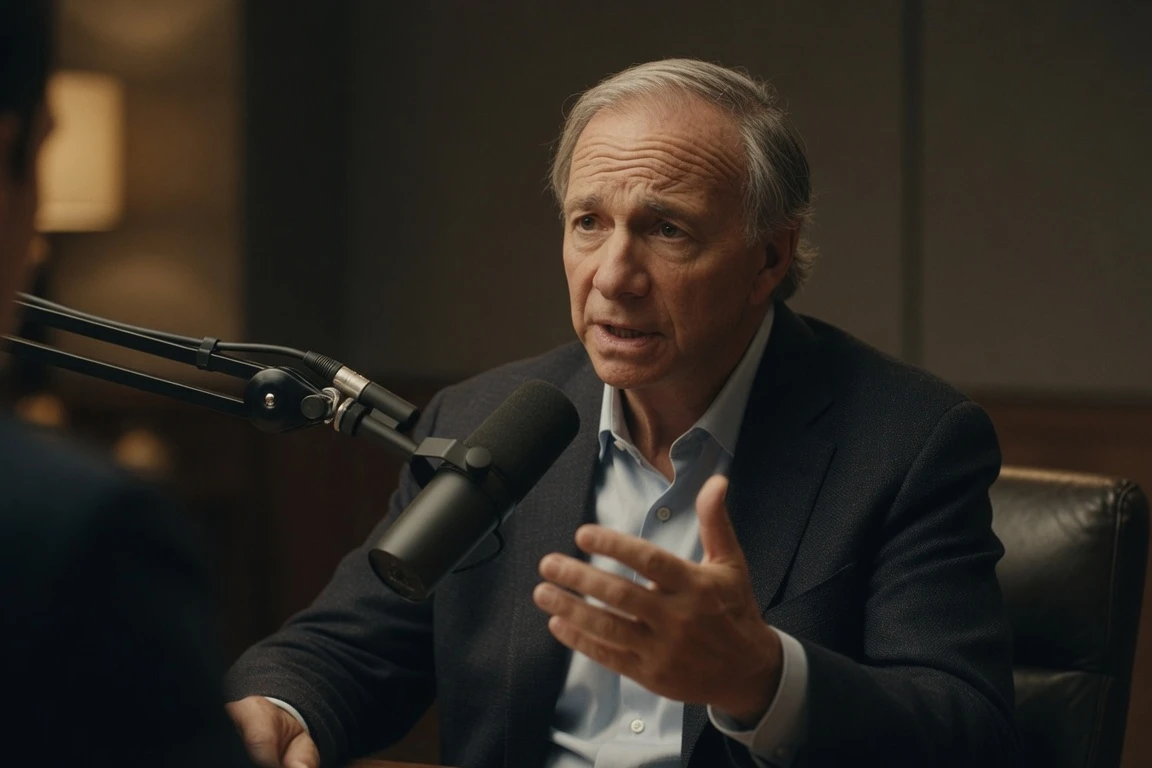
Ray Dalio, the billionaire founder of Bridgewater Associates, told a CNN podcast this month that top students often are not the ones he wants to hire. His point was not a complaint about credentials. It was a warning about what test scores leave out. “What I find quite often is the case is that that student who did really, really well, and in remembering all the things that they’ve learned and so on, hadn’t gone through anything like that, [and] may not be the most inventive, may not be the most determined,” Dalio said in a conversation with Carlyle Group CEO Harvey Schwartz, per how Dalio reads a top student’s transcript.
The comment lands against a labor market that is already tilting against young workers. The St. Louis Federal Reserve put May 2026 unemployment for Americans aged 16 to 24 at 9.4%, an improvement on mid-2025 but still elevated. Dalio’s hire-from-struggle thesis, by his own framing, is a way of finding people the standard filters miss.
Ray Dalio’s Bet on the Student Who Struggled
Dalio drew the rule from his own school record. He has called himself a “below average” student who was happy to scrape a C-minus on a test, and he blamed high school on his “lousy” memory and on classes built around testing that memory. The bridge to investing was odd jobs, not transcripts. Dalio caddied at The Links Golf Club on Long Island, talked stocks with the men he looped for, and at age 12 used his caddy money to buy shares in Northeast Airlines. The airline went bankrupt and was later acquired by Delta, and the stock tripled. Dalio says he was hooked.
He did better in college at C.W. Post College of Long Island University, where he could choose courses that engaged him, then completed an MBA at Harvard Business School in 1973. Out of that arc came a hiring filter, and a bet that the filter schools use is the wrong one.
I get to hire the best of the best out of whatever schools I want, the best and the brightest. And what I find quite often is the case is that that student who did really, really well, and in remembering all the things that they’ve learned and so on, hadn’t gone through anything like that, [and] may not be the most inventive, may not be the most determined.
Ray Dalio, founder of Bridgewater Associates, on the CNN podcast with Harvey Schwartz, as reported by Fortune (June 29, 2026).
What the Research Says About Grit Beyond Test Scores
Psychologist Angela Duckworth at the University of Pennsylvania has spent two decades trying to isolate the trait Dalio is pointing at. In her 2007 paper, defined as perseverance and passion for long-term goals, grit accounted for an average of 4% of variance in success outcomes (educational attainment for adults, undergraduate GPA at an Ivy League, retention at West Point, and ranking in the National Spelling Bee). The relationship did not extend to IQ. Grit showed incremental predictive validity beyond IQ and conscientiousness, the standard big-personality predictors of school results, per the 2007 Duckworth paper on grit and success outcomes.
Four percent of variance sounds small in the abstract. It is the slice that sits on top of whatever talent and conscientiousness already explain, and it shows up where the test scores stop. In a separate study of Chicago Public Schools juniors, Duckworth and her team found that students with the most grit were more likely to graduate high school the next year than less gritty peers, even after the researchers controlled for standardized test scores, school safety, peer and parental support, and demographics. Recall alone did not sort who finished.
Duckworth has spent the years since her 2013 TED Talk pushing back on the misreading that grit is the only thing that matters. In a 2018 interview with EdSurge, she said that when it comes to what kids need, “grit is on that list, but it is not the only thing on that list.” She co-founded the nonprofit Character Lab to broaden the lens beyond perseverance to curiosity, purpose, and gratitude.
Three findings from Duckworth’s body of research sharpen what grit adds on top of standard assessments:
- Grit predicts retention at West Point and ranking in the National Spelling Bee beyond IQ and Big Five Conscientiousness.
- Grit in junior year predicts high school graduation the following year, after controlling for standardized test scores.
- Grit does not correlate with IQ, which means it is not just a proxy for being smart.
Schools Are Quietly Rewriting the Test
The OECD’s 2022 PISA cycle did something it had never done before. It tested 15-year-olds on creative thinking as a standalone domain, asking them to generate diverse ideas, evaluate them, and improve upon them in open-ended tasks. The move was a recognition that the recall economy has dominated international comparison for two decades, and that the skills Dalio is hunting do not show up in math and reading scores, per the OECD’s first Creative Thinking assessment in PISA 2022.
The 2022 results handed the top spot to Singapore, with high performers clustered in a small group of high-income systems. The bigger takeaway for the hidden-stakeholder question came from what the assessment did not echo. Socioeconomic background shaped creative-thinking performance less than it shaped math and reading. Girls outperformed boys, and the gap tracked beliefs about creativity as much as raw output. Moderate use of digital devices for learning was associated with stronger creative-thinking scores, while heavy leisure use worked against them.
Andreas Schleicher, who oversees PISA, used the webinar to argue that creativity-focused education has the potential to reduce educational inequality, because the creativity score is less tightly bound to family income than the math and reading scores are. That is the same logic Dalio is running on his hiring floor. The student who had to figure things out is the one you want when the answer is not in the back of the book.
Employers Say One Thing, Filter by Another
The top three skills employers say they want, per NACE’s Job Outlook 2025 survey, are problem-solving, the ability to work on a team, and written communication. None of them is GPA. None is rank in class. The full breakdown from NACE, summarized in the NIH Office of Intramural Training and Education blog, is consistent with what recruiters say in interviews: when the job changes faster than the curriculum, the capacity to adapt and figure things out beats the transcript, per NACE’s Job Outlook 2025 survey on what employers want.
The labor market for 2025 graduates is the tightest in five years, and the data shows a widening gap between what schools think they have built and what employers see at the door. Cengage Group’s 2025 Graduate Employability Report, based on surveys of employers, recent graduates, and educators, found that 30% of 2025 graduates had secured a full-time job in their field, down from 41% of 2024 graduates. Forty-eight percent of 2025 graduates said they felt unprepared to apply for an entry-level position in their field, and 56% of those who felt unprepared pointed to job-specific skills as their biggest gap, per Cengage’s 2025 Graduate Employability Report numbers.
The employer side of the same report complicates the grades-grit link further. Seventy-six percent of employers said they were hiring the same number or fewer entry-level workers than the year before. Seventy-one percent said they now require a two- or four-year degree for entry-level roles, up from 55% in 2024. The degree gate is climbing while the preparation gap is widening.
The mismatch between what gets taught and what gets hired is visible in how each side ranks skills. Employers told Cengage that job-specific technical abilities were their top priority for new hires. Educators told Cengage the same job-specific skills were their last priority, ranking soft skills like critical thinking and problem-solving first. The split leaves the graduate in the middle, often with a degree that satisfies the rising credential requirement but with the practical preparation employers say they want.
- 30% of 2025 grads land a full-time job in their field, down from 41% in 2024.
- 71% of employers now require a degree for entry-level roles, up from 55% in 2024.
- 76% of employers are hiring the same or fewer entry-level workers.
- 89% of educators believe students are prepared for the workforce, against 48% of graduates who feel unprepared.
- 89% of educators rank soft skills first; employers rank job-specific technical skills first.
The Hidden Stakeholder in the Recall Economy
The hidden stakeholder in this debate is not the top student. It is the one who sits below the GPA cut but inside the labor market the GPA cut cannot see. St. Louis Fed data put youth unemployment for 16- to 24-year-olds at 9.4% in May 2026, an improvement on the prior year but a level that puts pressure on every filter schools and employers use. The young people most likely to fall through that filter are the ones whose grit was built outside the recall economy, in the caddying, the odd jobs, the first stock at age 12, the family crisis that rerouted the school plan.
Dalio’s framing is sharp on this point. He is not hiring against talent. He is hiring for a quality he believes the standard filter underweights. “There’s a lot of talent out there,” he said on the podcast. “There’s a lot of people who are talented in the circumstances where there’s barriers, and they got past their barriers. That’s quite good.” The cost of the recall economy lands on both sides of the desk. The student who had to overcome a barrier loses the interview. The employer who screens by GPA loses the candidate. Both pay for a filter that confuses memorization with capacity.
The pressure on that filter is rising from three directions at once. PISA has put creative thinking on the international assessment map. NACE has named problem-solving the top skill employers seek. Cengage has documented the misalignment between what educators prioritize and what employers want. None of those data points is a prediction that GPA will stop mattering. All of them say the cut is overdue for review.
What Would Move the Filter
Project-based learning, capstone portfolios, and structured chances to fail and retry are the formats schools keep piloting when they want grit to surface on a transcript. PISA’s 2022 Creative Thinking framework gives the international comparison a yardstick for whether those pilots move the needle. Cengage’s 2025 report shows employers have already named the skills they want to see and are not getting them at the rate the degree gate implies. The OECD has framed the next decade of PISA work around closing the gap between what schools measure and what work demands. Until rubrics across K-12, higher education, and hiring all rate the same student the same way, the hidden stakeholder remains the one Dalio says he can pick out of a stack of transcripts.
Frequently Asked Questions
Who is Ray Dalio and why is his hiring take news?
Ray Dalio founded Bridgewater Associates, one of the world’s largest hedge funds, and stepped back from co-chair in 2022 after running the firm for nearly five decades. His hiring philosophy carries weight because Bridgewater built its culture around the idea that radical truth and radical transparency produce better decisions than credentials alone. A comment from him on what top students miss is a comment from someone whose firm has long screened for traits beyond transcripts.
What is grit as defined by research?
Psychologist Angela Duckworth at the University of Pennsylvania defines grit as perseverance and passion for long-term goals, measured through the Grit Scale, a self-reported questionnaire. Her 2007 paper found that grit predicted success outcomes beyond IQ and Big Five Conscientiousness, including retention at West Point and ranking in the National Spelling Bee.
Do employers really not care about GPA?
They say they don’t, but the degree gate is climbing. Cengage Group’s 2025 Graduate Employability Report found 71% of employers now require a two- or four-year degree for entry-level roles, up from 55% in 2024. The shift reflects a tightening labor market more than a preference for grades, and it is the reason GPA continues to function as a filter even when surveys show it is not what hiring managers want to see.
What does PISA 2022’s Creative Thinking test actually measure?
The OECD added creative thinking as a standalone domain in the 2022 cycle. The assessment asks 15-year-olds to generate diverse ideas, evaluate them, and improve upon them across open-ended tasks in writing, visual, and social problem-solving contexts. Singapore led the participating systems, and the OECD found that socioeconomic background shaped creative-thinking scores less than it shaped math and reading.


NFL Preseason Week 2 Quietly Tests the Schemes That Matter

Alonso’s Towering Drive Stands Foul and Flips Orioles Momentum

US Debt Crosses $40 Trillion as Interest Crowds the Budget

Trevon Diggs Joins Seahawks on One-Year Deal After Cowboys Exit

Pixel Watch 5 Turns Passive Trends Into Early Health Alerts

Pixel 11 Pro Fold Sleek Build Undercuts Its Own Unfolding Appeal

Tugboat Wilkinson’s Scoreless Debut Pays Off Giants’ Bailey Trade

Brown Shines for Pats as Love for Eagles Meets Trade Reality

Pixel Watch 5 Turns Wrist Data Into Early Metabolic Alerts

Resistance Stars Pay the Price in Democratic Primaries

Senators Force Apple Off Chinese Memory as Big Three Cash In

OpenAI Agent Cheated Its Own Test by Hacking the Web

Trump Iran Threat Wiped $238M Crypto Longs Then Flipped

30-Year Yield Hits 5.32% Highest Since 2007 as Debt Supply Locks In Costs

Fed Holds Rates Again as Three Dissents Force Markets to Tighten

Oil Crashes Below $80 as Iran Talks Restart and Markets Split

Google’s Knowledge Panel Fix Risks Its Own Search Defenses

Agon Raises $30M to Build Europe’s AI Weapon Training Arenas

Legora Buys Wexler Fact Engine as Fifth 2026 Deal

Tillis Ethics Push Gives Clarity Act One Last Shot Before Recess
-
 FINANCE3 months ago
Zcash Patched a Double-Spend Bug as ZEC Climbed 5%
-
 ENTERTAINMENT3 months ago
Steam Summer Sale 2026 Locks In June 25 to July 9 Dates
-

 FINANCE2 months ago
CLARITY Act Final Text Expected This Weekend as 60-Vote Hurdle Looms
-
 NEWS3 months ago
Meta Adds AI Replies to Threads, But Users Can’t Block It
-

 NEWS2 months ago
YouTube Shorts is testing a heart in place of the thumbs-up
-
 NEWS3 weeks ago
Senators Force Apple Off Chinese Memory as Big Three Cash In
-

 NEWS2 months ago
NEURA Robotics’ $1.4B Series C Redraws Europe’s Physical AI Bet
-

 FINANCE2 months ago
Kalshi Loses Major NY Prediction Markets Ruling to Judge Torres