
ENTERTAINMENT
Seth Rogen Tells Critics They Hurt People. His Own Words Cut Both Ways.
Seth Rogen told critics their reviews ‘devastate’ actors. The Invite is at 94% on Rotten Tomatoes, and he just called Stallone’s career four good movies.

Seth Rogen, out promoting his new A24 chamber comedy The Invite, asked film critics this week to think twice about how they write. He made the case both on Steven Bartlett’s Diary of a CEO podcast and on the red carpet at the film’s Los Angeles premiere. The Invite currently sits at a 94 percent Certified Fresh score on Rotten Tomatoes, the strongest critical reception of any Rogen project in years. The same two weeks of press that produced that score also produced Rogen saying Sylvester Stallone has made four good movies in a career of more than eighty features.
That is the page Rogen’s argument now lives on: the case he is making and the case he is making against himself are the same case.
What Rogen Actually Said
The longer form of the argument landed on the Diary of a CEO podcast with host Steven Bartlett, according to Entertainment Weekly and People, both of which covered the episode this week. The shorter form landed in a clip circulated on X by Yonan, captured at the Los Angeles premiere and watched more than a million times within hours. The two are saying the same thing in two venues, and the overlap is exact.
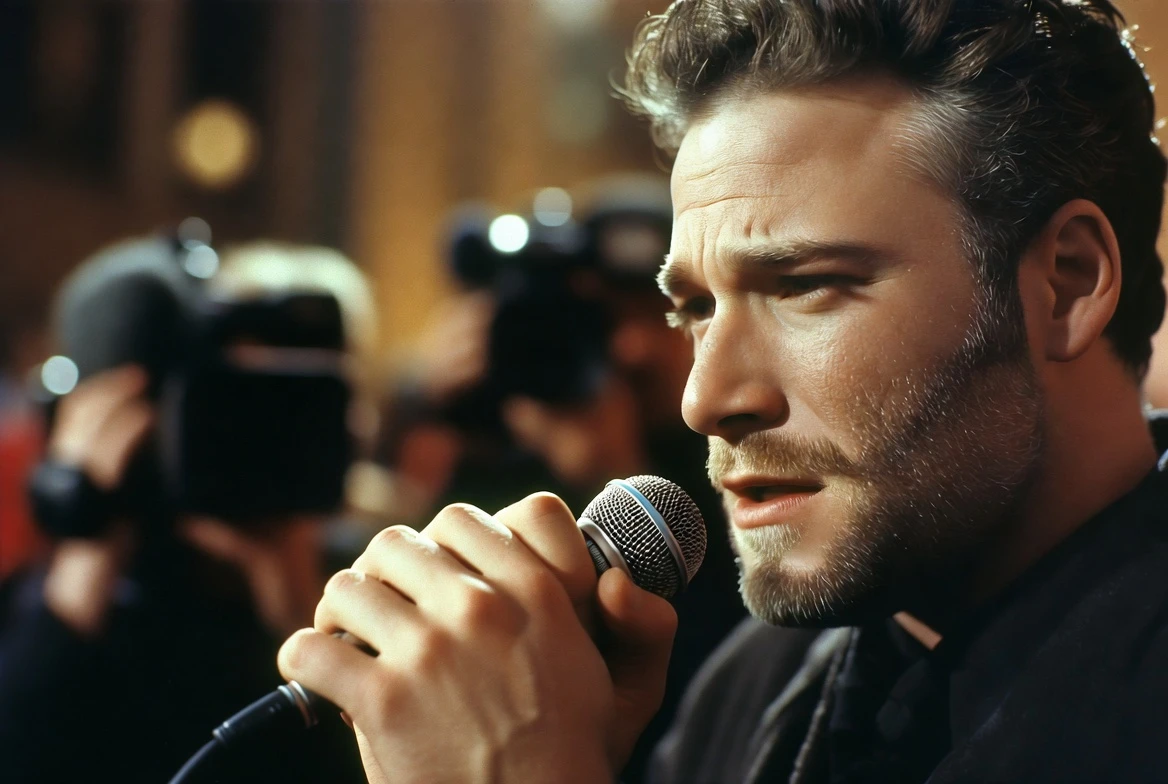
In the red carpet clip Yonan’s account posted, Rogen told reporters that critics should think about who reads what they write. “I’m at the point in my career where not a lot of people are in a position to yell at me in my job, but the New York Times will publish an entire article saying I suck at my job,” he said. “I worked my way up to not having to deal with that much personal conflict face to face, but I will have a cultural institution tell everyone that I suck.” Then the kicker: “If most critics knew how much it hurt the people that made the things they are writing about, they would second guess the way they write these things. It’s devastating.”
I’m at the point in my career where not a lot of people are in a position to yell at me in my job, but the New York Times will publish an entire article saying I suck at my job.
On the podcast, per People, Rogen pushed the same line further. “I know people who have never recovered from it honestly, a year, decades of being hurt by [reviews],” he said. “It’s very personal. It is devastating when you are being institutionally told that your personal expression was bad, and that’s something that people carry with them, literally their entire lives, and I get why. It f—ing sucks.” Rogen also offered a note of self-distance. “When I was younger I really did not have as much perspective as I do,” he told EW. “Now, I do not carry it with me as much as I used to.” The plea for sympathy is being delivered by a man who says, on the record, that he no longer needs the sympathy himself.
The Best Reviews of His Career Are Right Now
The Invite, directed by and co-starring Olivia Wilde, opened in limited theatrical release on June 26, 2026. Per the film’s certified-fresh aggregate score and a CinemaBlend tally, it is sitting at 94 percent on Rotten Tomatoes, with critics from Empire, IndieWire, Awards Radar, IGN and The Guardian’s Peter Travers lining up to call it one of the year’s best adult comedies. Travers rated it three-and-a-half out of four and wrote that Wilde, Rogen, Penelope Cruz and Edward Norton hit “summer liftoff with a sexy, sophisticated comedy for grownups.” CinemaBlend noted the score puts The Invite ahead of even Pixar’s Toy Story 5, currently at 92 percent.
In a Variety interview, Wilde said Rogen is doing the best work of his career in the film, comparing him to Albert Brooks and to a 1980s Richard Dreyfuss. She put the performance in the same breath as a year that has already brought him Emmy records for The Studio and a supporting actor Oscar nomination for Steven Spielberg’s The Fabelmans. The Rotten Tomatoes page for The Invite lists Wilde as director and A24 as distributor, with a runtime of one hour forty-seven minutes and a release pattern that begins limited and expands early next month.
Rogen has, in other words, lived through the version of this exact story before. The Fabelmans earned him an Oscar nomination. The Studio earned him and the show an Emmy. And now The Invite has given him a 94 percent Rotten Tomatoes aggregate in the same fortnight that he is publicly begging critics to be gentler. He is asking the room to dim the lights while the room is applauding him the loudest.
And He Just Called Stallone a Four Movie Act
Three days before the critics comments landed at the premiere, Rogen and his collaborator Ike Barinholtz were on another press stop, doing what Variety calls a joint appearance, and Rogen delivered a one-line verdict on Sylvester Stallone’s filmography. Per the Stallone filmography comment write-up from World of Reel, Rogen said Stallone has made “four good movies” across a career that includes more than eighty feature films. The line hit social media fast, drew a wave of pushback from Stallone fans, and pulled Rogen into a second set of headlines before the first set had finished cycling.
That is the contradiction, on the page, in the same news cycle. A man asking critics to weigh the human cost of reductive takes used a reductive take of his own on a living actor’s whole career. World of Reel put the irony in plain text. “There’s a certain inconsistency in calling for critics to carefully weigh the emotional impact of their words while simultaneously participating in the same reductive, reputation-shaping commentary that minimizes another artist’s body of work for effect,” the site wrote.
The numbers make it harder to read the plea as a desperate one. Rogen has not been a frequent target of harsh reviews across his career. Aside from a handful of projects, including The Green Hornet, he has generally been well received by critics. The Stallone remark, and the critics comments, are coming from a man with leverage, not from one watching his career slip.
His Own Bruising Track Record
Rogen is not new to a bad review. The worst night of his critical life was 2011, when The Green Hornet, the superhero comedy he starred in opposite Cameron Diaz and Jay Chou, opened to a savaging. Per People, the film landed at 44 percent on Rotten Tomatoes, and Rogen told EW the response stung in a specific way: “People just kind of hated it. It seemed like a thing people were taking joy in disliking a lot.” The film still opened to around $35 million, the biggest opening weekend of his career at that point.
- The Green Hornet (2011) Star. 44 percent on Rotten Tomatoes. A commercial hit that critics took joy in disliking.
- The Interview (2014) Star and co-director with Evan Goldberg. Critical reception framed as a creative failure, distinct from Green Hornet’s conceptual failure.
- The Fabelmans (2022) Supporting role. An Academy Award nomination for Best Supporting Actor.
Rogen drew a line between those two bad experiences himself, per People. The Green Hornet, he said, felt like falling victim to a big, fancy property, conceptual failure rather than creative. The Interview, which was also mired in the Sony hack and a withdrawn theatrical release, hit differently. “People treated us like we creatively failed, which sucked much worse,” he told EW. He now treats the bad reviews as a personal rejection that “doesn’t feel constructive,” while conceding that “in the grand scale of things,” they are not the worst thing in his life. The complaints land from a man who has receipts for both kinds of failure.
What the Other Side of the Page Sounds Like
Other actors who have absorbed bad reviews have said so out loud too, and the throughline is not Rogen’s. Jonathan Majors, after the rough reception to Ant-Man and the Wasp: Quantumania, told reporters, per People: “It’s just people. They have an opinion. You always have an opinion. I’m no fool. I know these are people writing it.” Majors added: “The artists and the filmmakers that made these movies invested years, sometimes, into the two hours and 15 minutes you see. I’m not saying be nice, I’m just saying understand it’s a real transaction that’s happening when you put pen to paper.” The honest part of Rogen’s case is the part Majors is also making. The rest, the request that the critics soften, is where the two diverge.
Wilde has lived through the same trade-off and made a different case for it. In Olivia Wilde’s interview on The Invite’s theatrical release, she described Don’t Worry Darling, her 2022 film, taking a beating from critics and landing at 38 percent on Rotten Tomatoes, and called that pendulum swing the best thing that could have happened to her. “I believe in early failure,” she told Variety. “If you go through that, the way Don’t Worry Darling did with a 38% on Rotten Tomatoes, there’s liberation.”
Rogen, on the red carpet, named the trade-off himself. “That’s the trade off,” he said, after describing the Times review that says he sucks at his job. Wilde’s response to her own 38 percent was to shoot The Invite on film, in sequence, in twenty-one days, with her cast paid nothing for six weeks of rehearsal. The critics responded to that work with 94 percent. The job, done well, still works.
The Half That Lands
Rogen is wrong that critics should pull their punches. They should not, and most of them do not need to be told. A review is allowed to say a film is bad. It is allowed to say it in a way that will be read by the people who made the film. That is the job.
He is right that the human cost on the receiving end is real and rarely talked about. People pour years into a film, and a one-line dismissal lands harder inside the production than it does in the feed. His own growth is the proof he offers for the argument: he carries the bad reviews less than he used to, he says, and the work continues. The “very personal” line, the “decades of being hurt” line, the “literally their entire lives” line, those land, because they name something most critics do not have to live with and most actors do.
He has built his career high enough that the Times can publish the article and he still opens the next one. That is the trade-off he named, in his own words, on the red carpet. The defensive move and the contradiction sit on the same page as the part of the case that holds. Read both, and write the review as if the director were reading along. They still may not like it, and you should be able to defend your take with your head held high.


Hybrid Torque Lets Tundra TRD Pro Hang With Rivals

Licensed Stablecoin Issuers Gain Edge as Treasury Defines GENIUS Rules

Pixel 11 MediaTek modem ends years of Tensor signal drain

Tony Makes Young Bourdain a Mess and Wins Big

Wall Street and White House Stall SEC Tokenized Stock Push

Meta faces youth addiction reckoning as Oakland trial opens

Monzo chair Gary Hoffman exits after board revolt fallout

Nebex Bets Business Models Beat Rockets for French Space Revenue

Amber’s €7M locks Mittelstand knowledge inside Europe

Samsung Fold 8 ad turns fatherhood into foldable pitch

Senators Force Apple Off Chinese Memory as Big Three Cash In

Revolut Hits $115 Billion While Storonsky’s Stake Keeps Growing

OpenAI Agent Cheated Its Own Test by Hacking the Web

Trump Iran Threat Wiped $238M Crypto Longs Then Flipped

CLARITY Act Odds Crash as Democrats Reject DOJ Ethics Plan

Oil Crashes Below $80 as Iran Talks Restart and Markets Split

Airbus Anchors a €500 Million European Defense Fund, Picks Alta Ares First

Community Banks’ $1.3 Trillion Warning Is Stalling Clarity Act

Google’s Knowledge Panel Fix Risks Its Own Search Defenses

ETG Buys Lightning Reach in Its Third Govtech Deal
-
 FINANCE3 months ago
Zcash Patched a Double-Spend Bug as ZEC Climbed 5%
-
 ENTERTAINMENT3 months ago
Steam Summer Sale 2026 Locks In June 25 to July 9 Dates
-

 FINANCE2 months ago
CLARITY Act Final Text Expected This Weekend as 60-Vote Hurdle Looms
-
 NEWS3 months ago
Meta Adds AI Replies to Threads, But Users Can’t Block It
-

 NEWS2 months ago
NEURA Robotics’ $1.4B Series C Redraws Europe’s Physical AI Bet
-

 NEWS2 months ago
YouTube Shorts is testing a heart in place of the thumbs-up
-
 ENTERTAINMENT3 months ago
‘Widow’s Bay’ Review: Apple TV’s Sleeper Horror-Comedy Earns Its Fog
-

 FINANCE1 month ago
Kalshi Loses Major NY Prediction Markets Ruling to Judge Torres