
BUSINESS
Four Minneapolis Restaurants Fined $105,784 for Labor Violations
The U.S. Department of Labor has ordered four Boludo restaurants in Minneapolis to pay $105,784 in back wages, liquidated damages, and civil penalties.

The U.S. Department of Labor has ordered four Minneapolis restaurants operating under the Boludo name to pay $105,784 in back wages, damages, and civil penalties after investigators found a pattern of overtime, tip-pool, and recordkeeping violations across the chain. The order covers Boludo El 38, Boludo Downtown, Boludo Uptown, and Boludo Como, all run by Boludo Holding Co. and its owners Jerad Rassmussen and Facundo Defraia. Of the total, $44,915 is unpaid overtime owed to 51 workers, an equal amount in liquidated damages pushes the worker-side recovery to $89,830, and the division added $15,954 in civil money penalties for child labor and tip retention violations.
The $105,784 figure is the most visible number in a December 18, 2024 release from the federal Wage and Hour Division. The release also names the specific practices investigators said the chain had been running, from a tip pool that included managers to a timeclock that let four workers clock in under other people’s names. Each of those practices is its own line in the case, and each carries its own consequence in the federal code.
The $105,784, Broken Down
The bill against Boludo Holding Co. splits into three cleanly defined pieces, each tied to a different federal finding. The Wage and Hour Division’s December 18, 2024 release breaks the $105,784 total into $44,915 in back overtime wages, an identical $44,915 in liquidated damages, and $15,954 in civil money penalties. The two equal halves reflect how federal law compensates workers for the time value of money they should already have received. The civil penalties, by contrast, are punitive; they do not flow to the workers themselves.
Of the 51 workers whose overtime was shorted, all were spread across the four named Boludo locations, with one employee at the Uptown restaurant fired after cooperating with investigators. The Wage and Hour Division, the Labor Department arm that runs the investigation, treats that termination as a separate retaliation finding layered on top of the wage counts. The four locations named in the order are Boludo El 38, Boludo Downtown, Boludo Uptown, and Boludo Como, in the Kingfield, Uptown, Downtown, and Como neighborhoods of Minneapolis.
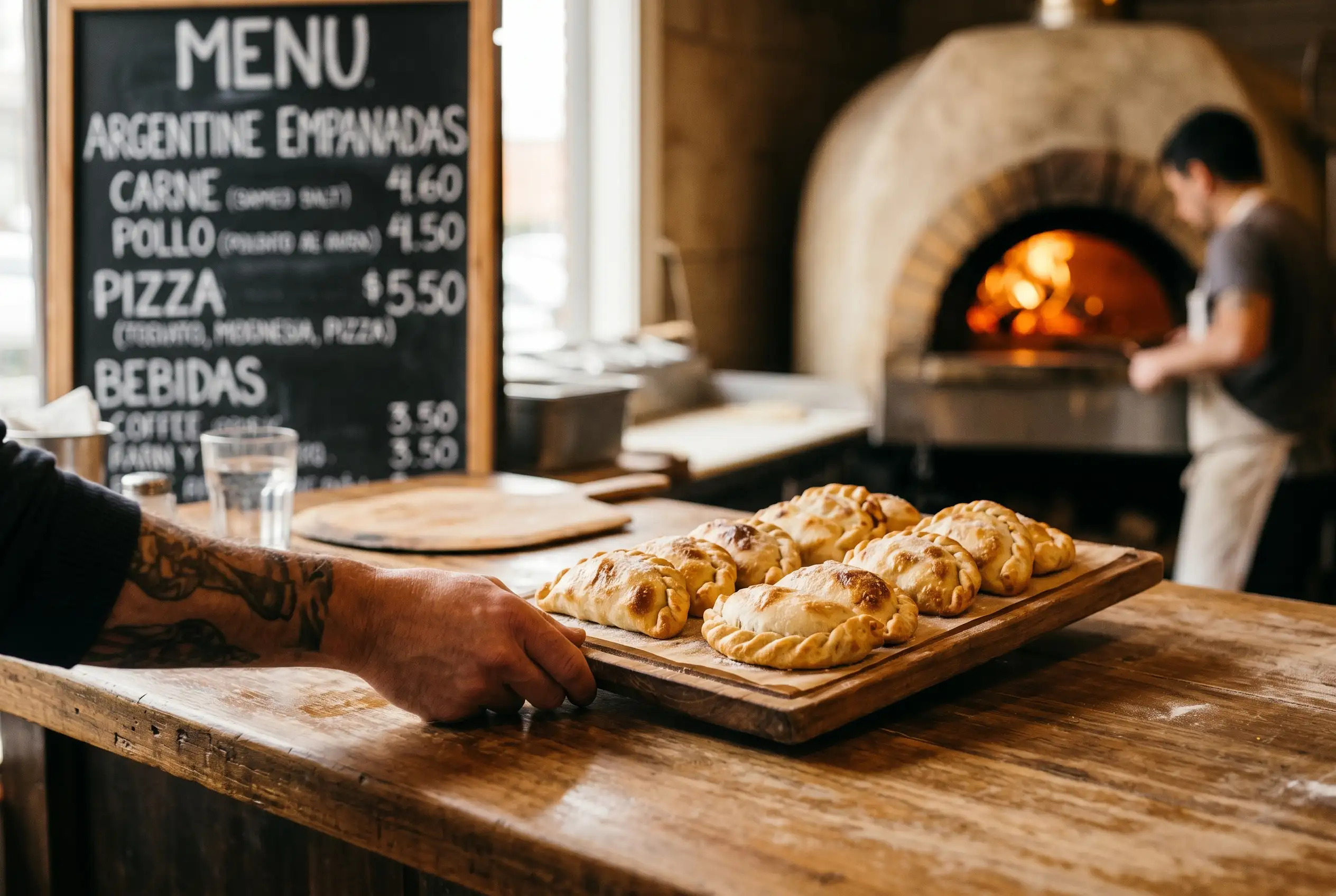
How the Overtime Shortfall Was Built
The federal investigation catalogued several distinct practices that, taken together, kept more than 40 hours of work a week from being paid at time-and-a-half. The Department of Labor’s findings, drawn from payroll records and worker interviews, listed each practice in the Wage and Hour Division’s case summary.
Investigators documented the chain’s habit of not combining hours that employees worked at more than one Boludo location. Under federal rules, hours at commonly owned worksites count toward the same 40-hour weekly threshold, and treating each location separately let Boludo push some workers past 40 hours without crossing into the overtime rate. A separate problem sat in the timeclock itself. Investigators found that at least four workers were allowed to use other employees’ names and identification numbers to clock in, a practice that on its face would erase any overtime trigger.
The release also documented two employees paid straight-time rates for overtime hours, and inaccurate employment records missing start and stop dates for individual workers. Beyond the wage and recordkeeping counts, investigators cited an invalid tip pool, with managers and shift supervisors included alongside servers. Investigators identified multiple overlapping practices, and each one operated as a separate pathway around the 40-hour trigger.
The relevant FLSA violations listed in the federal release:
- Including managers and shift supervisors in a tip pool for servers and others allowed to receive tips, which invalidated the tip pool.
- Not combining hours employees worked at more than one location, which denied employees overtime wages when they worked more than 40 hours in a workweek.
- Allowing at least four workers to routinely use other names and identification numbers to clock in to avoid paying overtime.
- Paying two employees straight-time rates for overtime hours, instead of time and one-half their regular rate of pay as required.
- Not maintaining accurate employment records with employee start and stop dates and contact information, and allowing individual workers to use others’ names to clock in.
- Failing to distribute tips to workers or provide records showing that tips were paid to workers properly.
The Tip Pool That Disqualified Itself
The tip-pool finding is its own line item in the case, separate from the overtime counts and the child labor violation. The federal rule known as the tip credit allows employers to pay tipped workers below the standard minimum wage, but only if the tips go to workers who customarily receive them. Putting managers and shift supervisors into a tip pool alongside servers, as the division found at Boludo, voids the tip credit entirely for the affected pay periods. The chain also failed to distribute tips to workers and did not provide records showing that tips were paid properly.
The civil money penalties the division assessed, $15,954, are tied to the tip-pool and child-labor findings specifically, not to the overtime shortfall. That separation matters because the Fair Labor Standards Act treats tip-pool mismanagement and child-labor violations as independent violations, each with its own penalty schedule. The two findings are bundled into one civil penalty number in the release.
The child-labor finding is narrow but concrete. Investigators determined that the chain allowed one 15-year-old to work outside permitted hours, a violation of the Department of Labor’s hour restrictions for workers under 16. The Boludo locations sit in four Minneapolis neighborhoods: Kingfield, where the first restaurant opened in 2018; Uptown; Downtown; and Como.
The chain earned national recognition in August 2024, when Yelp ranked Boludo No. 39 on its list of the 100 best pizzas in the country. The company’s website describes its mission as uniting community and people through food and music, bringing a taste of Buenos Aires to Minneapolis. The labor probe covers all four locations, all of which have continued to operate under Boludo Holding Co. since the December 2024 release.
How a Cooperating Worker Lost Their Job
The retaliation finding rests on a single worker’s termination at the Uptown location. According to the Wage and Hour Division, the employee was fired after speaking with investigators during the case.
Retaliating against workers who engage in protected activities, such as cooperating with a federal investigation, is a blatant violation of the law that we will not tolerate. The Department of Labor remains firmly committed to protecting workers against retaliation and ensuring they are paid fully for their hours worked.
That statement came from Kristin Tout, the Wage and Hour Division’s district director in Minneapolis, in the Department of Labor’s December 2024 release on the case. The release framed the firing as the only one of the findings that names a specific person as the target of a violation. The retaliation finding sits in the same release as the overtime counts, but is treated as its own category of violation under the FLSA.
Tout’s two statements in the release also cast the firing as part of a broader pattern in the food service industry, where workers are often “unaware of their rights or afraid to question whether their paychecks are accurate.” Both statements ran in the same December 18, 2024 release. The Boludo retaliation finding is the only piece of the case that names a specific individual as the target of a violation. The release’s structure separates the wage counts from the retaliation finding, treating the firing as its own category of consequence.
The Co-Owners’ Public Response
One of the two named co-owners, chef Facundo DeFraia, gave a public statement after the findings became public. He told the Star Tribune he was “deeply sorry for what happened” and said he took “full responsibility” for his actions. The statement, attributed to DeFraia, did not address any individual finding by name.
In the same statement, DeFraia described the period since the investigation began as a corrective process. “I have made many mistakes in the past, but the important thing is to learn from them, correct them and keep growing,” he said. “In recent years, together with my business partner Jerad Rasmussen and with the help of the DOL, we have worked hard to resolve the situation,” he added. A Department of Labor spokeswoman told the Star Tribune that the $105,784 had not been paid in full as of the December 2024 announcement.
Where This Case Fits in a Midwest Crackdown
The Boludo investigation was not a one-off. The Wage and Hour Division runs an ongoing initiative to examine food-service industry violations among Midwest employers, and the Boludo case was part of that sweep. Tout framed the effort as much about awareness as enforcement, telling reporters that workers in the food industry often do not know their rights or are afraid to question their paychecks. The Midwest focus, the release said, reflects the agency’s response to common food-service compliance problems.
The numbers in the release help size the broader pattern. In fiscal year 2024, the Wage and Hour Division recovered more than $35 million in back wages for more than 27,500 food service industry workers nationwide. Minnesota specifically has been a heavy contributor to those totals, with $2,459,002 in back wages found for 865 food service workers over the past five years through December 2024.
| Scope | Back wages | Workers covered | Period |
|---|---|---|---|
| Boludo Holding Co. (Minneapolis) | $44,915 | 51 | Investigation through Dec 2024 |
| Minnesota food service | $2,459,002 | 865 | Past five years through Dec 2024 |
| U.S. food service | $35,000,000+ | 27,500+ | Fiscal year 2024 |
Tout’s second statement in the release tied those Minnesota cases to a competitive problem, not just a worker-protection one. The chain’s violations, in her framing, give rule-following restaurants a hard time competing on price.
“This kind of exploitation hurts workers and their families’ ability to earn a living and harms law-abiding restaurant operators by giving violators an unfair and illegal competitive advantage,” she said. The same release noted that food service workers often “remain unaware of their rights or afraid to question whether their paychecks are accurate.” Those twin messages, that exploitation hurts workers and that it tilts the field against compliant competitors, frame the Boludo case as part of an industry-wide sweep, not a one-off dispute. The case is also a public test of the agency’s stated priority of protecting workers from retaliation in food service.
The Settlement’s Forward-Looking Terms
In agreeing to resolve the case, Boludo committed to a specific set of operational changes. The company agreed to create a payroll worksheet to process payroll that will run weekly and verify hours over 40 in a week. The worksheet then pays overtime after 40 hours per week and otherwise brings the chain’s payroll into line with the FLSA going forward.
Payroll verifications like the one Boludo is required to set up are the mechanism the division typically uses to confirm that the same kind of multi-location hour manipulation does not recur. The release did not say when the $105,784 was paid in full, a status the agency has flagged as outstanding as of the December 2024 announcement. The Department of Labor’s restaurant compliance toolkit, which the agency pointed to in the same release, explains the same wage and hour rules that the Boludo case ran into. The agency’s broader message, Tout said, is that workers in the food service industry should not have to choose between a paycheck and their rights.
The Boludo case sits in that broader pattern. The chain’s situation is one restaurant group’s reckoning with practices the federal government has been tracking across the Midwest for years.
Frequently Asked Questions
Which Boludo restaurants were fined?
The Department of Labor’s December 18, 2024 release names four: Boludo El 38, Boludo Downtown, Boludo Uptown, and Boludo Como, all operating in Minneapolis and held under Boludo Holding Co.
How much does Boludo owe in total?
Boludo Holding Co. owes a combined $105,784, with the federal government requiring $44,915 in back overtime wages, an equal amount in liquidated damages under the FLSA, and $15,954 in civil money penalties for child labor and tip retention findings.
What did Boludo do wrong, in plain terms?
Investigators found unpaid overtime across four locations, an invalid tip pool that included managers and shift supervisors, falsified timeclock entries used to avoid overtime, inaccurate employment records, and a 15-year-old working outside permitted hours.
How can a Minnesota restaurant worker check if they are owed back wages?
The Wage and Hour Division runs a back-wage search tool on its website and accepts online complaints. Workers can also call the agency’s toll-free helpline at 866-4US-WAGE (487-9243).
What is the Fair Labor Standards Act’s tip-pool rule?
The FLSA permits employers to use a tip credit and pay tipped workers below the standard minimum wage, but the credit is voided if the tip pool includes managers, shift supervisors, or others who do not customarily receive tips.


Beelzebub’s €3 Million Raise Rides a Wave of EU Cyber Deadlines

Multiverse Computing’s $570 Million Bet on Smaller AI

GTA 6 Japan Code Expiration Traces to a Six-Month Payment Law

Windows 11 Finally Reverses the Taskbar Cut It Made in 2021

Elon Musk’s X Money Bet Echoes the Fight That Fired Him

Claude Chats That Leaked to Google Still Live On GitHub

DFINITY Bets Its Crashed Crypto Project on Sovereign Cloud

Facebook Verified Brings Back the Facial Recognition Meta Deleted

A Chinese Open Model Just Saved Hugging Face From OpenAI

Samsung’s Galaxy Glasses Run on Meta’s Own Chip Too

CLARITY Act Final Text Expected This Weekend as 60-Vote Hurdle Looms

Kalshi Loses Major NY Prediction Markets Ruling to Judge Torres

Fed Minutes Cite AI Demand as Inflation Risk, Put a 2026 Hike Back on the Map

Marker AI Writing Startup Lands $13M Seed Led by Index Ventures

Dota 2 Esports World Cup 2026: Spirit Defends $2M Title In Paris

Meta’s Muse Spark 1.1 Beats Rivals on Price, Trails on Coding

ARC Intelligence Closes €4M Seed Round in Roughly a Week

CS2 Premier Season 5 Lands With Cache and a C4 Damage Rework

Trump Calls Iran ‘Islamic Republic of Japan’ as Ceasefire Ends

Finto Picks Munich Over Silicon Valley After YC, Raises $3.4M
-
 FINANCE2 months ago
Zcash Patched a Double-Spend Bug as ZEC Climbed 5%
-
 ENTERTAINMENT2 months ago
Steam Summer Sale 2026 Locks In June 25 to July 9 Dates
-
 FINANCE3 weeks ago
CLARITY Act Final Text Expected This Weekend as 60-Vote Hurdle Looms
-
 NEWS3 months ago
Meta Adds AI Replies to Threads, But Users Can’t Block It
-
 ENTERTAINMENT2 months ago
‘Widow’s Bay’ Review: Apple TV’s Sleeper Horror-Comedy Earns Its Fog
-
 NEWS7 months ago
FolderFresh Review: This Free Tool Automates Windows File Organizing
-
 NEWS4 months ago
U.S. Navy Deploys Solar-Powered Lightfish Drone to Patrol Oceans
-
 FINANCE3 weeks ago
Kalshi Loses Major NY Prediction Markets Ruling to Judge Torres