
ENTERTAINMENT
Mark Normand and Sam Morril Expose Late Night’s Costly Censorship Habit
Sam Morril and Mark Normand say network TV keeps cutting their biggest laughs, the same habit lining up with late night’s cash bleed and podcasts’ rise.

Sam Morril landed the biggest laugh of his set on The Daily Show. It earned an actual applause break, rare for a stand up bit on a late night stage. The show cut it anyway.
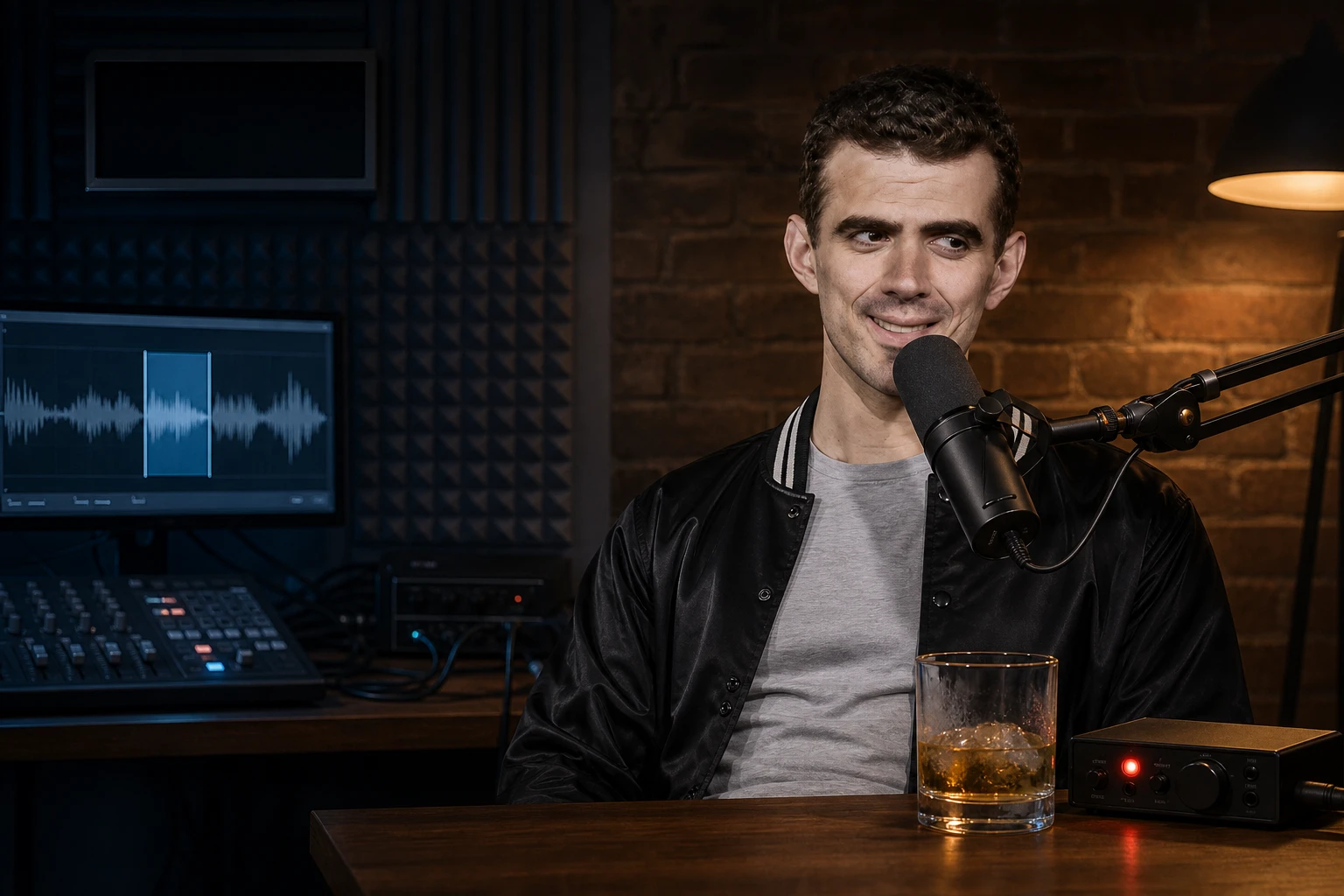
Morril and fellow New York comedian Mark Normand told that story, and a nearly identical one from Normand’s own appearance on Late Night with Seth Meyers, on a recent episode of their podcast, We Might Be Drunk. The two spent part of the episode walking through exactly which jokes got spiked, by which shows, and why, and the pattern lines up almost too neatly with the numbers behind late night’s well documented money troubles.
The Biggest Laugh of the Night, Cut Anyway
Morril described the moment plainly. “Once I did The Daily Show, and I got a huge laugh on a trans joke, and it got an applause break. It was a good bit, and they cut it. It was my biggest pop of the set,” he said on the podcast. He guessed the discomfort traced back to who was in the chair. “Maybe because Trevor laughed,” he said, referring to former Daily Show host Trevor Noah, adding that “it’s not good for him to laugh at this.”
Normand’s version played out on NBC. A line that killed with the studio audience during his Seth Meyers appearance never made it to air. “It does bug me when they cut a line,” Normand said. “I came here to give you me, I gave you me. It hit, that’s my whole thing is to do well. It went well, but it’s too spicy for you guys, so you cut it. I’ll just do it for the Internet now.”
Both comedians framed the goal of edgy stand up the same way: not just getting away with a risky joke, but getting a real laugh for it. “That’s why it’s annoying. I took the risk. I stuck my neck out, and it worked, and then they cut it,” Normand said.
The Kennedy Center Draws the Same Line
A louder version of the same dispute broke out this month around comedian Whitney Cummings. At the Kennedy Center’s Mark Twain Prize ceremony honoring Bill Maher on June 28, Cummings joked that President Donald Trump “couldn’t make it” to the event because “he got caught in sex traffic,” a jab at his past ties to Jeffrey Epstein. The line got laughs in the room. It did not survive to the Netflix broadcast.
Cummings said on her own podcast that Kennedy Center staff asked for the cut, not Netflix. Variety later confirmed the split: a Netflix spokesperson said “while it’s our preference not to cut jokes from anyone’s set, The Kennedy Center has the contractual right to do so.” Cummings called the irony obvious, telling her audience the Mark Twain Prize is supposed to be “the only time that you shouldn’t get censored, because it’s about comedians using humor to criticize our elected officials,” according to Deadline.
The two censorship stories share more than a theme. Cummings has sat across the same table before: she appeared on We Might Be Drunk with Normand and Morril last October, trading unfiltered takes with the exact hosts now describing their own runs through the same editing process.
Why Do Late Night Shows Keep Cutting the Best Jokes?
Networks cut hard material for a mix of legal caution, advertiser sensitivity, and contractual leverage held by whoever owns the venue or the broadcast rights, and the excuses rarely come from one source alone. The Morril and Cummings cases alone show three distinct mechanisms at work.
- Contractual override – The Kennedy Center holds the right to cut content before Netflix ever airs it, regardless of what the streamer prefers.
- Host discomfort – Morril speculated that Trevor Noah’s on camera laugh made keeping the trans joke politically awkward for the show, not the joke itself.
- Threat of a lawsuit – Cummings said Kennedy Center staff warned her that Trump “will sue you” over the Epstein reference, despite her own doubts that a suit would hold up.
A Hollywood Reporter account of the Cummings dispute noted a Kennedy Center spokesperson’s own explanation, that “edits to a show are always made in a collaborative way to produce the best product for broadcast.” That is a polite way of describing exactly the process Morril and Normand say strips the risk out of their best material before it ever reaches a home audience.
The Ledger Behind Late Night’s Panic
Normand connected the censorship complaint directly to money. “This is all a waste of money. No wonder the Internet is winning,” he said of Late Night with Seth Meyers, contrasting its larger crew with the small team behind his own podcast.
The math backs him up. CBS’s Late Show with Stephen Colbert was losing more than $40 million a year on a season budget north of $100 million, according to Puck reporting that the Wall Street Journal later corroborated. CBS cited that gap when it canceled the show in 2025, ending Colbert’s run in May 2026. Collectively, late night’s ad haul has roughly halved since 2018, when the format brought in $439 million a year, according to New York Times figures cited by IMDb.
The decline predates any one show’s cancellation. Forbes analysis of a decade of network data found steep, uneven erosion across the field.
| Show | 2015-16 Season Viewers | 2025 Season Viewers | Change |
|---|---|---|---|
| The Tonight Show (Fallon, NBC) | 3.6 million | 1.3 million | down 64% |
| Jimmy Kimmel Live! (ABC) | 2.3 million | 2.0 million | down 13% |
| The Late Show (Colbert, CBS) | 2.75 million | 2.5 million | down 9% |
Even Colbert’s send off underlined the scale of the collapse. His series finale pulled 6.74 million viewers, a strong number by the show’s recent standards but a fraction of the 55 million who watched Johnny Carson’s Tonight Show farewell back in 1992, according to Cord Cutters News.
Where the Cut Bits Actually Land
Every joke a network cuts still exists somewhere. Increasingly, it exists on a podcast feed. “Then you leave and do one of these, and it gets more views,” Normand said of trading a late night slot for his own show. “It’s not a good sign for the show biz part.”
The audience math supports him. One widely cited industry analysis, drawing on data from Edison Research, Spotify, and PwC, put global monthly podcast listenership at 672 million in 2026, up from 546 million just two years earlier.
- 672 million people now listen to podcasts monthly worldwide, a 23% jump from 2024.
- $28.6 billion is the estimated size of the global podcast industry this year.
- YouTube Podcasts is the fastest growing platform in the category, particularly among Gen Z listeners.
Normand has leaned into that shift beyond the podcast mic too, testing new stand up material on his Gen Z-focused stand-up experiment built for exactly the kind of unfiltered audience network standards departments are built to avoid. Between sets, both comedians still tour under their own names, with his own stand-up tour listings and his own tour and specials page doing the booking work a late night appearance used to handle for free.
CBS Already Found Its Own Fix
CBS’s answer to the math problem was not tightening the show’s belt. It was leaving the format altogether. The network leased its 11:35 p.m. slot to independent producer Byron Allen’s Comics Unleashed, and the numbers flipped fast: a reported $40 million annual loss turned into roughly $15 million in annual profit for CBS, a swing of about $55 million, according to Cord Cutters News.
That is the leaner model Normand was describing all along, just running through a different pipe than a podcast feed. Fewer people, lower overhead, and, notably, a lot less standards and practices friction over which lines survive to air.
I took the risk. I stuck my neck out, and it worked, and then they cut it. I did my part.
Normand said that on his own show, uncut, to an audience that keeps growing while the format he was describing keeps shrinking.
Frequently Asked Questions
What Is We Might Be Drunk?
We Might Be Drunk is a weekly comedy podcast hosted by New York stand-up comedians Mark Normand and Sam Morril, produced by Gotham Production Studios. New episodes post every Sunday across YouTube, Spotify, and Apple Podcasts, mixing industry talk, guest interviews, and unfiltered banter that would rarely clear a network’s standards review.
Why Was Stephen Colbert’s Late Show Canceled?
CBS said the cancellation was “purely a financial decision against a challenging backdrop in late night” and “not related in any way to the show’s performance, content or other matters.” Colbert publicly doubted that explanation days later, joking on air that Paramount’s separate settlement with Trump amounted to a “big fat bribe,” a line that drew its own wave of coverage.
Did Netflix or the Kennedy Center Cut Whitney Cummings’ Trump Joke?
According to Netflix’s own statement, the Kennedy Center made the call. “While it’s our preference not to cut jokes from anyone’s set, The Kennedy Center has the contractual right to do so,” a Netflix spokesperson said, placing the decision with the venue rather than the streamer that broadcast the special.
What Happened to CBS’s Old Late-Night Time Slot?
CBS handed the 11:35 p.m. hour to independent producer Byron Allen’s Comics Unleashed rather than replace Colbert with another traditional talk show. The shift turned a $40 million annual loss into an estimated $15 million annual profit, a swing of roughly $55 million for the network.


Replit Opens Its London Office Inside an AI Crowd

Straight Circle Trailer Lands Without a U.S. Date

Anemo Labs Bets £700,000 on an AI Sense of Smell

Nintendo Prices the Zelda 40th Switch 2 at $519

Copilot Capital Buys the Autopilot Already Running 90 GW

Ground A Raises €9.1 Million for a Pallet Laser

Gibney’s Musk Film Opens in Venice Without Its Subject

Torvalds Blames AI for a Full-Fat Linux 7.3-rc2

Dexter Returns Sharper, Older, and Stuck Between Killers

Meta’s Muse Agent Can Spend Before the Privacy Lock

Walter’s TWG Insists No Fraud as Insurer Probes Force Cleanup

30-Year Yield Hits 5.32% Highest Since 2007 as Debt Supply Locks In Costs

PCE Stays at 3.7% as Gas and Tariffs Outrun Coming Revisions

Evernorth S-4 Clears Path for Active XRP Treasury on Nasdaq

Astute’s $1.2M bet makes B2B creator deals feed AI discovery

Strategy Parks $1.59B Cash While Bitcoin Stack Stays Flat

Instinct Hits $2.5 Billion as AI Agent Access Sparks Trust Fights

CLARITY Act Cloture Opens a Door Ethics Still Blocks

Oracle’s 2.8 GW Bloom Deal Exposes the AI Power Bypass

Space Mirror Demo Revives 1993 Russian Night-Light Test
-
 FINANCE3 months ago
Zcash Patched a Double-Spend Bug as ZEC Climbed 5%
-
 ENTERTAINMENT3 months ago
Steam Summer Sale 2026 Locks In June 25 to July 9 Dates
-

 FINANCE2 months ago
CLARITY Act Final Text Expected This Weekend as 60-Vote Hurdle Looms
-
 NEWS4 months ago
Meta Adds AI Replies to Threads, But Users Can’t Block It
-
 ENTERTAINMENT5 months ago
Extraction 3 Is Officially Coming to Netflix in 2027
-

 NEWS3 months ago
YouTube Shorts is testing a heart in place of the thumbs-up
-

 NEWS1 month ago
Senators Force Apple Off Chinese Memory as Big Three Cash In
-

 NEWS3 months ago
NEURA Robotics’ $1.4B Series C Redraws Europe’s Physical AI Bet