
HEALTH
Holifya Raises €2 Million to Wrap Italy’s GLP-1 Care
Holifya raised €2 million to wrap GLP-1 care in Italy, where obesity is now a legal disease and Wegovy still sits in Class C.

Holifya raised €2 million this week to scale an AI clinic around GLP-1 obesity drugs that Italy’s health service still will not pay for. The Milan company closed €1.6 million in equity and €0.4 million in debt and grants, led by Next Age, the silver-economy programme inside CDP Venture Capital’s accelerator network.
The round is small next to the bill patients already face at the farmacia. Italy has named obesity a disease. The pens for that disease remain a private purchase.
A €2 Million Round for a Care Gap
Holifya calls itself Italy’s first digital clinic built around drug treatment of obesity, using an AI system that pulls in up to 3,000 genetic, blood, and history markers per patient and feeds a mixed team of specialists, nutritionists, nurses, and coaches. Co-founder and CEO Alessandra Cestaro, who studied at Columbia Business School, started the firm in 2021 with Marco Brustia and scientific director Elvira Pistolesi as a DNA nutrition service. The obesity clinic itself launched in 2023.
Growth Engine and Exor Ventures led a €500,000 pre-seed in February 2023. Growth Engine is back. Doorway, 20Fund (with Serra Elizabeth Falk), Zooga VC, and AC75 joined Next Age on this round, with angels including Micol Fornaroli, Pier Francesco Rimbotti, Tommaso Gamaleri, Duccio Vitali, and Matteo Mainetti. Lifetime funding is now over €2.5 million.
In May 2025, Cestaro said the company had raised half of a €3 million seed and still needed a €1 million to €1.5 million lead. This equity cheque is in that range. The use of proceeds is prosaic: more engineers and data staff, B2C growth plus distribution deals across Italy, and a larger in-house clinical team. Headcount is supposed to pass 60 by the end of 2026.
Cestaro put the geographic bet in one line.
We start from Italy, which today is one of the European markets with the greatest untapped potential in the treatment of obesity and metabolic syndrome with the new pharmacologic therapies, with the ambition of building a clinically scalable model at an international level, thanks to the fundamental role of AI in supporting physicians.
Alessandra Cestaro, co-founder and CEO, Holifya
The company says it has already treated over 3,000 patients and can complete eligibility screening in 48 hours, against months-long waits in the Servizio Sanitario Nazionale. The AI flags dropout risk and side effects, suggests a dose only to the doctor, and automates follow-up. The doctor still signs.
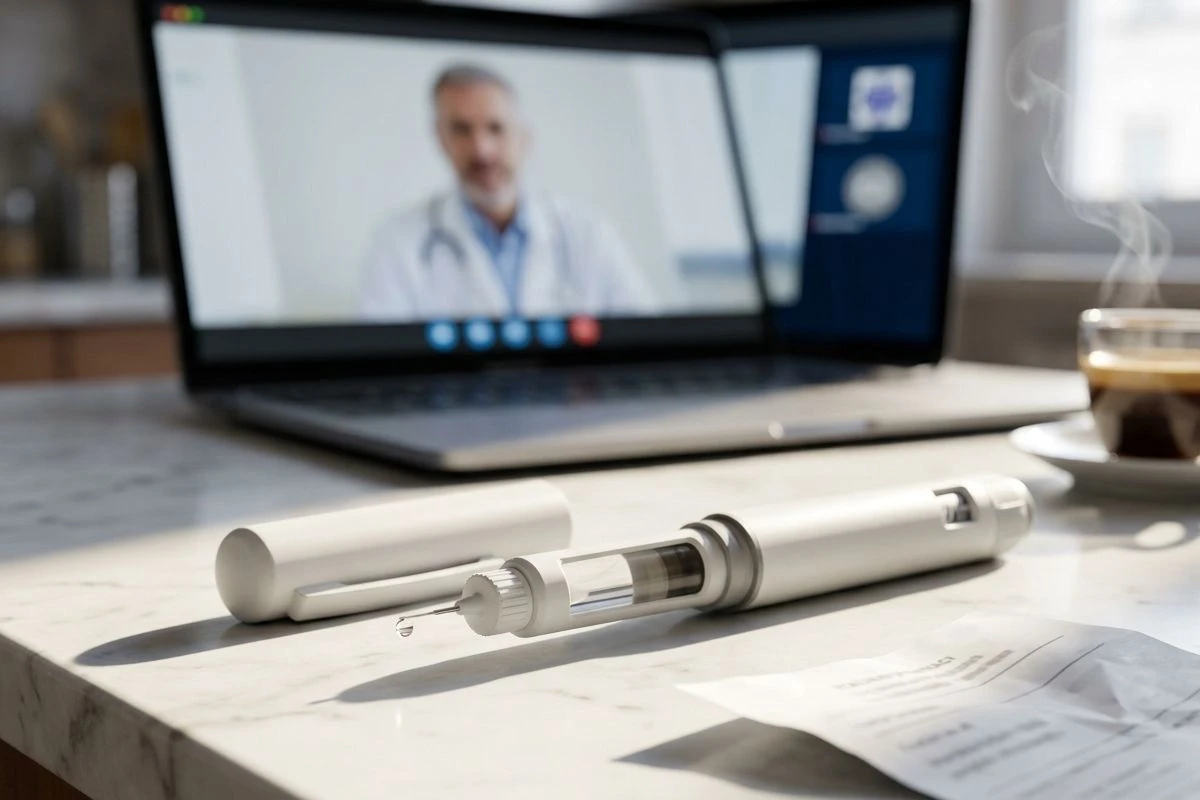
Italy Named Obesity a Disease Without Paying
Parliament finished the job in the autumn. Law 149 of 3 October 2025 states that obesity, tied to other social-interest illnesses, is a progressive and relapsing disease. It entered force on 24 October 2025. Patients are supposed to receive the essential care levels the SSN already lists. An observatory sits at the health ministry. A national prevention and care programme got €700,000 for 2025, €800,000 for 2026, and €1.2 million a year from 2027, plus €400,000 a year for training from 2025.
Roberto Pella, the Forza Italia deputy who first signed the bill, called obesity a national priority. The envelope for 2026 is about what 222 patients would spend on a year of Wegovy at €300 a month. Implementing decrees and a Lea update are still required before that legal status turns into a paid pathway.
THE PATH FROM STATUTE TO THE PHARMACY
- 3 October 2025: Law 149 recognises obesity as a progressive, relapsing disease and funds a national programme.
- 24 October 2025: The law enters force; essential-care rights are stated, with decrees still to come.
- 18 May 2026: AIFA publishes its guide on the new diabetes and obesity drugs and keeps weight-loss indications off the SSN.
- 15 June 2026: France starts reimbursing Wegovy and Mounjaro for severe obesity (BMI 35 with a related illness, or BMI 40), through specialist centres.
- 1 September 2026: Holifya closes the €2 million round to sell wraparound care in a market that still bills the patient for the pen.
Silvio Buscemi, president of the Italian Society for the Study of Obesity, wrote to political and health authorities after Paris moved, asking Rome to open a similar debate for the most severe cases.
All too many patients today meet the clinical criteria for treatment but are unable to access the available therapies solely for financial reasons.
Silvio Buscemi, president, Italian Society for the Study of Obesity
ISTAT’s 2025 health-risk report counts 5.75 million adults with obesity, or 11.6 percent of people aged 18 and over. A further 34.8 percent are overweight, so 46.4 percent of adults, about 23 million people, carry excess weight. Obesity peaks at ages 65 to 74 (16.4 percent of men, 14.1 percent of women). Holifya’s own pitch puts about 11 million adults in the GLP-1-eligible pool and says fewer than 1 percent are on treatment, against 2 percent in Germany and over 4 percent in the UK.
What a Month of Treatment Costs
AIFA’s May 2026 guide is the clean split. Ozempic, Rybelsus, and Mounjaro for type 2 diabetes are Class A under Nota 100, so the SSN can pay. For body-weight management, Wegovy, Saxenda, and Mounjaro used for that indication are not reimbursed. Those obesity drugs sit in Class C, with the cost on the citizen.
WHO PAYS FOR THE PEN IN ITALY
| Product | Use | SSN pays? | Typical monthly patient cost |
|---|---|---|---|
| Wegovy (semaglutide 2.4 mg) | Obesity | No, Class C | €200 to €400 |
| Mounjaro for weight | Obesity | No, Class C | €250 to €400 |
| Ozempic (semaglutide) | Type 2 diabetes | Yes, under Nota 100 | €0 if eligible; about €200 to €350 if bought privately |
| Holifya medical path | Clinic wraparound | No | €79, with the drug extra |
Holifya’s site prices the path at €79 a month, or €73 on three months and €71 on six, cancel anytime. A one-off specialist visit is €70. The first 20-minute consult is free. Titration prices listed on its membership pages run about €200 to €250 at 0.25 mg and €240 to €300 at 0.5 mg in the first months. Add the clinic fee and a patient who stays on a maintenance pen is looking at roughly €280 to €480 a month, all cash.
Company FAQs are explicit that the drug is bought at a pharmacy on a Holifya doctor’s prescription, including through a partner network. Holifya does not sell the pen. That is the business: a membership around a Class C medicine.
People are already buying. AIFA’s 18 May 2026 note says SSN-reimbursed semaglutide packs went from about 322,000 in 2020 to over 4 million in 2024, up 48.9 percent in a year. Private semaglutide packs went from about 29,700 to over 326,000, up 78.4 percent on 2023. Tirzepatide passed 30,000 packs in its first commercial year. The OsMed 2025 report, published by AIFA on 6 August 2026, put 2025 antidiabetic spending at €1.59 billion, up 34.9 percent. In Fascia C, consumption of semaglutide and tirzepatide rose 85.7 percent and spending 75.8 percent. Semaglutide ran €430 million on the SSN and €162.7 million privately. Tirzepatide’s private bill, €225.5 million, already exceeded its SSN bill of €123.4 million.
A Third of Patients Stop in the First Month
Holifya’s pitch treats dropout as the product problem. It says about 30 per cent of patients stop in the first month and more than half within 12 months when side effects, dosing, and follow-up are left unmanaged. That matches what large US pharmacy managers have been telling employers, and it is in the same band as trial attrition: in SELECT, 26.7 percent of people on semaglutide 2.4 mg left early, against 23.6 percent on placebo, with gut side effects a main driver.
AIFA president Robert Nisticò used the May guide to say the drugs are a valuable tool and should never be treated as a risk-free shortcut to a healthy lifestyle. Technical-scientific director Pierluigi Russo said the document exists because use is spreading and has to stay appropriate. The agency lists nausea, vomiting, abdominal pain, diarrhoea, and constipation as the common early effects, plus rarer pancreatitis and gallbladder disease, and it warns that stopping without a locked-in change in diet and activity brings a fast rebound.
WHY THE FIRST MONTH BREAKS THE COURSE
- Gut effects: Nausea and related symptoms hit hardest as the dose rises, which is when uncoached patients quit.
- Dosing: AIFA and Holifya both treat titration as a medical act, not a fixed schedule copied from a leaflet.
- No pathway: A white prescription without diet, movement, and a person to message leaves the patient alone with the pen.
- The bill: A Class C product at €200 to €400 a month is easy to abandon after a bad week.
- Rebound: AIFA notes that weight returns quickly if the drug stops and habits have not changed.
Digital clinics elsewhere leak for the same reasons. Embla, a Nordic online programme that pairs semaglutide with a clinical team, reported 16.3 percent mean weight loss at 12 months among people still enrolled, with 69 percent still in the programme at a year; a later cut put about 40 percent remaining. A German Juniper cohort of 4,535 starters saw 88 percent attrition in an unsubsidised setting, with 15.13 percent loss among the adherent minority and a 2.40 percent mean for everyone who began. Online GLP-1 funnels that price a first call near zero and then hand the patient a pharmacy bill behave like a quick-commerce checkout. The expensive part is still in the bag from the chemist.
Twice the Weight Loss, if You Stay
Holifya’s homepage chart is the specimen it wants investors to remember. It plots drug-alone loss at -1 percent, -3.6 percent, and -7.1 percent at one, three, and six months, against -5 percent, -11 percent, and -17 per cent on its path. The company repeats that six-month pair in the raise materials and says adherence runs up to three times the market standard. A footnote on the site says the figures come from real Holifya patients monitored during the path. That is completer language until a paper shows the other denominator.
Other marketing pages on the same domain still say 15 to 20 percent, or -20 percent in six months, citing SELECT-scale literature for cardiovascular and diabetes-risk cuts that belong to the drug trials, not to Holifya’s 3,000-person book. The honest read is narrower: a private Italian clinic reports that people who stay on its programme lose more than people taking the drug with no wrap, and it has not put a peer-reviewed intent-to-treat table in public. Oviva’s NHS-linked UK extract, by contrast, showed 8.53 percent loss at six months in the subset still being measured. The gap between a monitored membership and a national waiting list is real. So is the gap between a chart of stayers and a census of starters.
Prescribing rules on Holifya’s own pages follow AIFA’s clinical line: BMI 30 or above, or BMI 27 with a related condition such as type 2 diabetes, high blood pressure, high cholesterol, or sleep apnoea. Aesthetic use is out. That is the same gate the SSN would use if Class C ever moved.
A Silver-Economy Fund Takes the Lead
Next Age is not a generalist health-tech cheque. It is Europe’s first silver-economy accelerator, set up by CDP Venture Capital and AC75 in Ancona for products aimed at people over 50. ISTAT’s obesity peak in the 65-to-74 band is why that mandate fits a GLP-1 clinic better than a consumer diet app. Italy is already one of the oldest countries after Japan. A chronic, relapsing disease that the statute now names, and that the SSN still does not buy the drug for, is a long-duration private market sitting on an ageing population.
Stefano Molino, head of the accelerators fund at CDP Venture Capital, said the team had already built a structured model that pairs the drug with continuous monitoring from diagnosis through follow-up.
The systematic use of data and artificial intelligence enables support for the physician in decisions on dosage, adherence, and therapy effects, improving the quality and continuity of care.
Stefano Molino, head of the Accelerators fund, CDP Venture Capital
Cestaro’s family background is the other half of the pitch. She has said she comes from doctors and researchers who spent their careers on metabolic health, and that she got tired of watching lab insight die before it reached a patient. The 2021 DNA kit was that impulse in consumer form. The 2023 clinic is the same impulse after Wegovy and Mounjaro arrived and the SSN did not.
Sixty Hires Before December, Still a Membership Clinic
The raise pays for three lines of spend, and none of them is a reimbursement negotiation with AIFA.
WHERE THE NEW CAPITAL GOES
- Tech and data: Hire into the model shop so dose and dropout predictions improve each time a doctor accepts or overrides a suggestion.
- Distribution: Grow direct-to-patient sales and strike pharmacy, clinic, and insurer deals across Italy, not only in Milan.
- Clinicians: Expand the internal medical network so a 48-hour screen still has a human at the end of the chat when volume rises.
The target of more than 60 people by the end of 2026 is a clinical-network plan first, with tech, data, and growth seats around it. Cestaro’s 2025 goal of one million lives helped by 2030 remains a founder line, not a run-rate. At a little over 3,000 patients treated since launch, the arithmetic only works if the wraparound becomes the default way an Italian starts a Class C pen, or if France-style reimbursement arrives and someone needs a vendor to run the pathway the SSN does not have.
Until that happens, the offer stays a membership. The path is €79. The pen is still the larger invoice, and the SSN still does not pay it.
Disclaimer: This article is news reporting and analysis of a company funding round and of Italian rules on obesity drugs. It is informational only and is not medical advice, a treatment recommendation, or investment advice. Readers considering GLP-1 or GIP medicines should speak with a licensed physician, and anyone weighing a stake in a private clinic should consult a qualified financial adviser. Figures, list prices, reimbursement classes, and company claims reflect the cited sources as of 2 September 2026 and can change with AIFA decisions, regional practice, and later clinical data.


Flower Labs Puts Endeavor 1.0 on Customer Servers

Cummins Bets on Emerald to Scout the Next Power Shift

Holifya Raises €2 Million to Wrap Italy’s GLP-1 Care

INLEAP Photonics Places a Factory Bet on Laser Defences

Instarc Takes €1.25 Million After a Quiet July Recap

nordIX Bets €21 Million on ID Finance’s Spanish Loans

Space Cargo Buys Into France’s Zero-G Flight Company

The $399 Omni Walks Away, Then Asks for a Dock

TECNO’s 0mm Bezelless Phone Still Needs a Rim

The Ryobi Tools That Unblocked a Garage Workbench

30-Year Yield Hits 5.32% Highest Since 2007 as Debt Supply Locks In Costs

Walter’s TWG Insists No Fraud as Insurer Probes Force Cleanup

Astute’s $1.2M bet makes B2B creator deals feed AI discovery

Strategy Parks $1.59B Cash While Bitcoin Stack Stays Flat

BlackRock Turns Cash Empire Into Stablecoin Reserve Rails

The 20% Savings Ideal Meets a 2.7% Reality Check

SpaceX Stock Rebound Tests Real Demand Before Huge Unlock

Amber’s €7M locks Mittelstand knowledge inside Europe

PCE Stays at 3.7% as Gas and Tariffs Outrun Coming Revisions

Monzo chair Gary Hoffman exits after board revolt fallout
-
 FINANCE3 months ago
Zcash Patched a Double-Spend Bug as ZEC Climbed 5%
-
 ENTERTAINMENT3 months ago
Steam Summer Sale 2026 Locks In June 25 to July 9 Dates
-

 FINANCE2 months ago
CLARITY Act Final Text Expected This Weekend as 60-Vote Hurdle Looms
-
 NEWS4 months ago
Meta Adds AI Replies to Threads, But Users Can’t Block It
-

 NEWS3 months ago
YouTube Shorts is testing a heart in place of the thumbs-up
-

 NEWS1 month ago
Senators Force Apple Off Chinese Memory as Big Three Cash In
-

 NEWS3 months ago
NEURA Robotics’ $1.4B Series C Redraws Europe’s Physical AI Bet
-
 ENTERTAINMENT5 months ago
Extraction 3 Is Officially Coming to Netflix in 2027