
FINANCE
Securitize Tokenizes Its Own NYSE Stock on Day 1 of Trading
Securitize tokenized its own common stock on Solana and Avalanche as SECZ debuted on the NYSE, with $295M in tokenized shares held on day one.

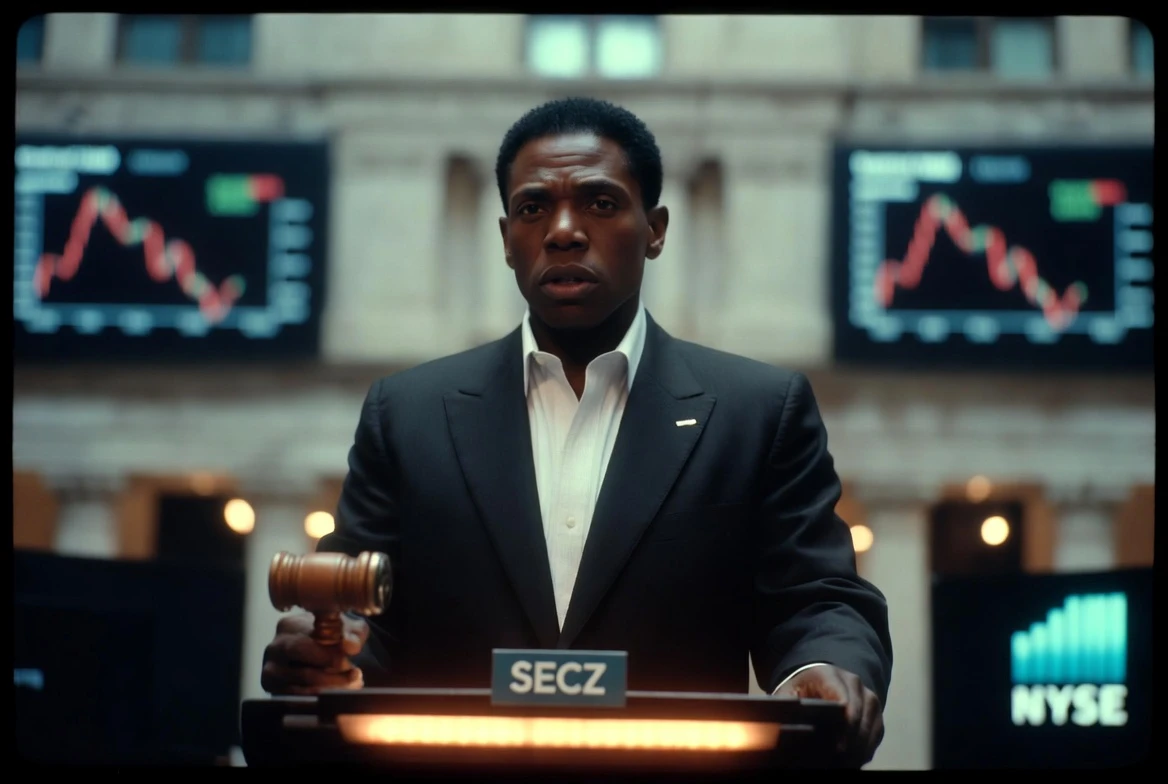
Securitize tokenized its own common stock on Solana and Avalanche the same day its shares began trading on the New York Stock Exchange under the ticker SECZ. The dual debut on July 2, 2026 made Securitize the first newly public company to bring its own stock onchain at the start of its life as a listed company, per the company’s own announcement.
By the close of the first session, $295 million worth of tokenized SECZ sat in token form on the two blockchains, according to RWA.xyz data cited by CoinDesk. The shares closed up 10% on Day 1.
First-Day Listing, Onchain Shares
Securitize’s founders have spent nearly a decade arguing that real-world assets belong onchain under regulated rails. On July 2, 2026, they put their own equity on the line to prove it.
SECZ closed its first trading session up 10%, CoinDesk reported, with the dual listing drawing quick interest on both sides of the rail. The tokenized SECZ shares launched on Avalanche and Solana and were made available to eligible U.S. investors through Securitize’s regulated platform on the same day, per Securitize’s Securitize’s July 2 announcement of tokenized SECZ trading. Securitize described the move as creating a multichain foundation for tokenized public equity from Day 1 of its listed life. Holders of the tokenized SECZ hold the same common stock that trades on the NYSE. Access requires onboarding, Know Your Customer (KYC) and Anti-Money Laundering (AML) checks, jurisdictional eligibility and standard securities-law compliance.
By the company’s own measure of shareholder participation, tokenized SECZ is already the largest tokenized stock globally at launch, the announcement said. The shares trade under the same ticker as on the NYSE, with tokenization changing only the form of ownership. Securitize’s release framed the listing as the first time a newly public company has put its own shares onchain at the start of its life as a public company.
Issuer-Sponsored Tokenization, Not a Wrapper
Securitize issued the tokenized SECZ itself, through its own regulated platform, on the same day SECZ began trading on the NYSE. The company said tokenization changes the form of ownership without changing the underlying nature of the share, and does not override applicable legal, contractual or transfer restrictions. In the U.S., Securitize operates through affiliates including Securitize Markets, LLC, registered with the U.S. Securities and Exchange Commission (SEC) as a broker-dealer and a member of FINRA and SIPC. Through its European affiliate, the firm operates a Trading and Settlement System under the EU DLT Pilot Regime, a footprint the company says makes it the only firm licensed to run regulated digital-securities infrastructure across both jurisdictions.
That structure puts SECZ in a separate category from most tokenized stocks now in market, which are issued by third parties or sold outside the United States. The tokenized SECZ and the NYSE SECZ are the same equity. Tokenization acts as an alternative settlement and ownership form, with no separate share class created, and for U.S. investors access runs through Securitize’s regulated platform under standard onboarding and securities-law checks.
- Issuer-sponsored by the company itself, with the onchain form issued through Securitize’s own regulated platform
- Operated under both U.S. and EU regulatory regimes, with Securitize licensed to run regulated digital-securities infrastructure across both jurisdictions
- Gated at the investor level by KYC/AML and securities-law checks, with access limited to verified eligible investors
We have long said that public equities are moving onchain, and there is no stronger validation of that belief than tokenizing our own public stock on Day 1. SECZ is not a synthetic token or offshore wrapper. It is issuer-sponsored tokenization of the same common stock trading on the NYSE, made available through regulated infrastructure. This is how tokenization should scale: with real ownership, regulatory clarity and the issuer at the center.
The quote comes from Carlos Domingo, co-founder and CEO of Securitize, in the company’s July 2, 2026 announcement.
The SPAC Path That Put SECZ on the Tape
Securitize did not run a traditional IPO. The public listing came through a business combination with Cantor Equity Partners II, a special purpose acquisition company (SPAC), approved by Cantor shareholders on June 29, 2026 and closed a day before trading began, per the Securitize and Cantor Equity Partners II business combination release. The merger was expected to deliver roughly $400 million in gross proceeds, drawn from the SPAC’s trust and an oversubscribed private investment in public equity, the company said. The deal valued Securitize at $1.25 billion, with about 71 percent of the SPAC’s cash pool staying in the combination. The combined company now operates as Securitize Corp., and executives were scheduled to ring the NYSE closing bell on July 6, 2026.
Shares closed the Thursday session up 10%, CoinDesk reported, after dipping below the IPO price in pre-market trading. The stock’s debut lands on a tape that has treated crypto-related listings unevenly this year. The Securitize listing follows a string of public debuts from crypto-native firms, but it is the first to wrap a pure-play tokenization infrastructure company.
Circle became the first crypto firm to complete an IPO in June 2025, Gemini followed in September 2025, and BitGo went public in January 2026, Fortune noted. Kraken publicly paused a multibillion-dollar IPO in March, according to CoinDesk via Fortune, a sign that the broader crypto listings pipeline has run into softer market conditions.
NYSE’s Own Tokenization Build Has Securitize Inside It
The dual-rail listing at SECZ sits inside a larger build by the exchange operator itself. NYSE’s parent, Intercontinental Exchange, signed a memorandum of understanding with Securitize to construct a 24/7 tokenization venue for stocks and ETFs. Securitize serves as the platform’s first digital transfer agent, a role traditional transfer agents like Computershare and the Depository Trust and Clearing Corporation perform through centralized databases.
The platform is called the Digital Trading Platform and is designed to support round-the-clock trading and instant settlement, with funding handled in stablecoins and settlement onchain. Securitize already runs a blockchain-based transfer-agent system for institutional clients, including BlackRock’s BUIDL tokenized money-market fund, which the CoinMarketCap Academy noted operates primarily on Ethereum. NYSE Group president Lynn Martin framed the build as preserving the trust and protections investors expect, while Securitize CEO Carlos Domingo said the goal was to build with the protections, controls, and operational integrity of existing market structure. Earlier in 2026, Securitize also teamed up with Computershare and Continental, two of the world’s largest transfer agents, to help public firms issue shares in token form on blockchain rails.
NYSE is not alone in pressing on the rail. The SEC approved a Nasdaq pilot last week to trade tokenized versions of high-volume stocks, covering Russell 1000 names and select index ETFs, the CoinMarketCap Academy reported.
The bank side of the trade is moving too. Citi rolled out a blockchain-based product this month for wealthy and institutional clients to trade shares of private companies, Fortune reported. JPMorgan, Bank of America, Wells Fargo and Citigroup are reportedly planning a tokenized-deposit network for 2027. The rails are being laid from several corners at once, with Securitize holding a piece of the work in each.
Where the Tokenized Money Already Sits
The case Securitize is selling to public-market investors is already backed by a measurable base. Tokenized real-world assets held above $24 billion in total value in February 2026, according to RWA.xyz data cited by Finance Magnates. Tokenized equities themselves jumped roughly 30-fold in the first months of 2026, reaching around $800 million in market value with monthly transfer volumes near $1.8 billion over the same window. Tokenized stocks ranked as the sixth-largest segment inside the broader tokenized-RWA universe, which Treasury debt and money-market funds still dominate.
Citi has projected that tokenized securities could reach $5.5 trillion by 2030, a figure Securitize and CoinDesk both point to. Boston Consulting Group and Ripple have separately put the long-run number as high as $18.9 trillion by 2033.
The product most often cited as proof the model works is BlackRock’s BUIDL, a tokenized U.S. Treasury money-market fund that Securitize manages and serves as transfer agent for, the flagship page on the BUIDL tokenized money market fund page at Securitize. BUIDL has grown past $3 billion in assets, Finance Magnates reported, and continues to expand its onchain footprint, including BlackRock’s earlier push of BUIDL onto Uniswap. With Securitize now on the tape as a public company, the firm behind one of tokenization’s largest live products is itself a tradable proxy for the theme.
| Tokenized-asset gauge | Latest figure |
|---|---|
| Tokenized real-world assets (total) | Above $24 billion (Feb 2026) |
| Tokenized equities market value | ~$800 million (Q1-Q2 2026) |
| Monthly tokenized-stock transfer volume | ~$1.8 billion |
| Citi projection for tokenized securities by 2030 | $5.5 trillion |
What Still Has to Settle on Two Rails
Running the same equity on two rails at once creates a set of questions the market has not finished answering. Securitize acknowledged in its release that tokenized SECZ is intended to represent the same common stock that trades on the NYSE, with tokenization changing only the form of ownership. Each onchain token therefore has to remain tied back to the same single share through the issuance, redemption and corporate-action plumbing. Any break on either side, a failed redemption, a corporate action not propagated to the onchain registry, a jurisdictional mismatch, can show up as a settlement break on the other rail.
U.S. regulators have begun drawing the rails. The SEC’s proposed NYSE rule on tokenized securities would let tokenized DTC-eligible securities trade on the exchange alongside their traditional counterparts, with the same execution priority. Securitize expects the tokenized SECZ launch to establish a meaningful onchain shareholder base from Day 1, the company said in its release, with additional functionality, utility and market infrastructure expected to develop over time.
Frequently Asked Questions
What is SECZ?
SECZ is the NYSE ticker for Securitize Corp. common stock. The shares began trading on the New York Stock Exchange on July 2, 2026, after the company closed its business combination with Cantor Equity Partners II.
How is the tokenized version different from regular SECZ shares?
The tokenized form is not a separate share class. Securitize’s release says the token is intended to represent the same common stock that trades on the NYSE, with tokenization changing only the form of ownership.
Who can buy tokenized SECZ, and how?
Tokenized SECZ is available to eligible U.S. investors through Securitize’s regulated platform. Access requires onboarding, KYC/AML checks, jurisdictional eligibility and standard securities-law compliance.
What is the connection between Securitize and BlackRock’s BUIDL fund?
Securitize is the tokenization partner and transfer agent for BlackRock’s BUIDL, a tokenized U.S. Treasury money-market fund. BUIDL has grown past $3 billion in assets, Finance Magnates reported.
Why is NYSE building a tokenization platform?
NYSE’s parent, Intercontinental Exchange, signed a memorandum of understanding with Securitize to build a 24/7 venue for trading tokenized stocks and ETFs. Securitize is set to serve as the platform’s first digital transfer agent, with stablecoin-based funding and onchain settlement.
Disclaimer: This article is for informational purposes only and does not constitute investment advice. Tokenized securities carry market, regulatory, technology and counterparty risks. Figures and statements are accurate as of publication on July 3, 2026. Consult a qualified financial professional before making any investment decision.


Aisel’s €1.7M Builds Psychiatry OS Beyond Note Writing

Maher and Stewart Force Democrats Into a Hard Reckoning

Flip’s $25M Bet Puts AI on the Factory Floor at Last

DeepL Powers a Third of Harvey Legal Translations After Pivot

Treasury Doubles Buybacks and Bitcoin Breaks $69,000

France’s Mega Tech Deals Mask a Thinning Early Pipeline

Netflix Dates Sacrifice as Stars Meet the Volcano Cult

American Airlines reverses its screen bet after a costly decade

Falcon 9 Crater Photos Double as Planetary Defense Drill

Buss Siblings Force Lakers Sale Reckoning Against Jeanie

Senators Force Apple Off Chinese Memory as Big Three Cash In

Revolut Hits $115 Billion While Storonsky’s Stake Keeps Growing

OpenAI Agent Cheated Its Own Test by Hacking the Web

Trump Iran Threat Wiped $238M Crypto Longs Then Flipped

CLARITY Act Odds Crash as Democrats Reject DOJ Ethics Plan

30-Year Yield Hits 5.32% Highest Since 2007 as Debt Supply Locks In Costs

Fed Holds Rates Again as Three Dissents Force Markets to Tighten

Memory Shortage Now Dictates Apple’s Two-Year Mac Roadmap

Oil Crashes Below $80 as Iran Talks Restart and Markets Split

Google’s Knowledge Panel Fix Risks Its Own Search Defenses
-
 FINANCE3 months ago
Zcash Patched a Double-Spend Bug as ZEC Climbed 5%
-
 ENTERTAINMENT3 months ago
Steam Summer Sale 2026 Locks In June 25 to July 9 Dates
-

 FINANCE2 months ago
CLARITY Act Final Text Expected This Weekend as 60-Vote Hurdle Looms
-
 NEWS3 months ago
Meta Adds AI Replies to Threads, But Users Can’t Block It
-

 NEWS2 months ago
NEURA Robotics’ $1.4B Series C Redraws Europe’s Physical AI Bet
-

 NEWS2 months ago
YouTube Shorts is testing a heart in place of the thumbs-up
-
 ENTERTAINMENT3 months ago
‘Widow’s Bay’ Review: Apple TV’s Sleeper Horror-Comedy Earns Its Fog
-

 FINANCE1 month ago
Kalshi Loses Major NY Prediction Markets Ruling to Judge Torres